Vop Cables | Cable Trading Company in Acharnes
Interior Design:
Photography:
ek Issue:

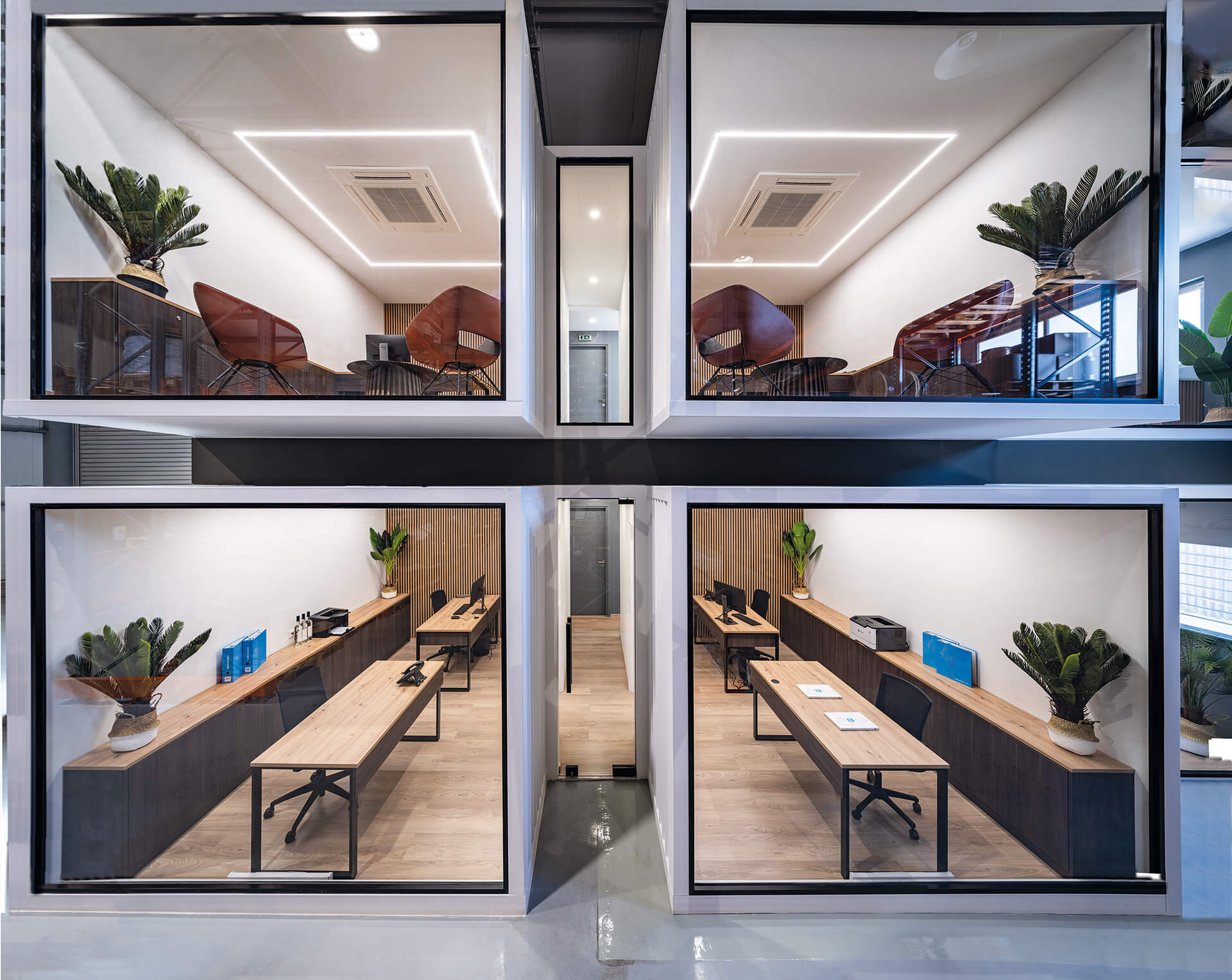
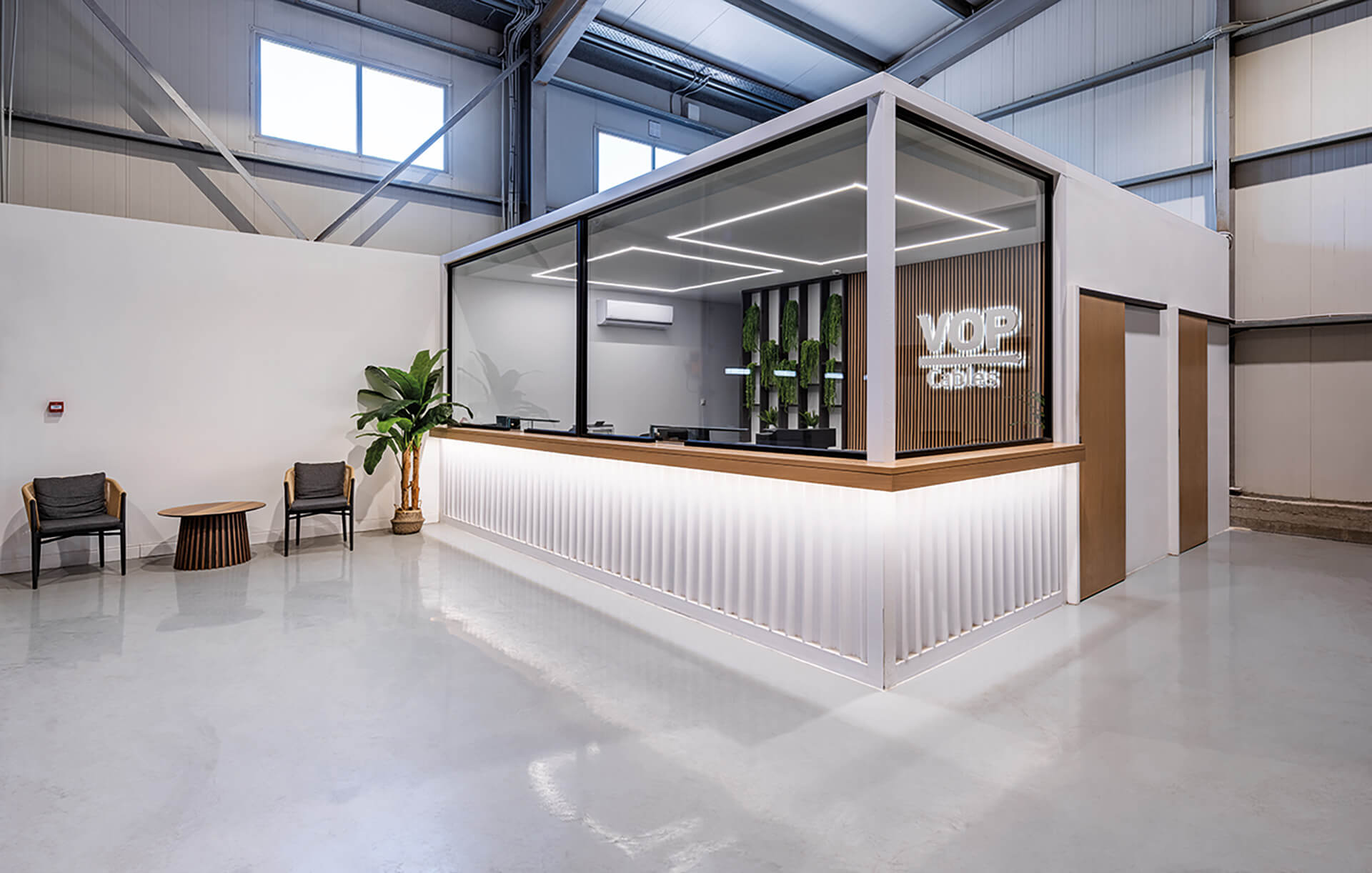
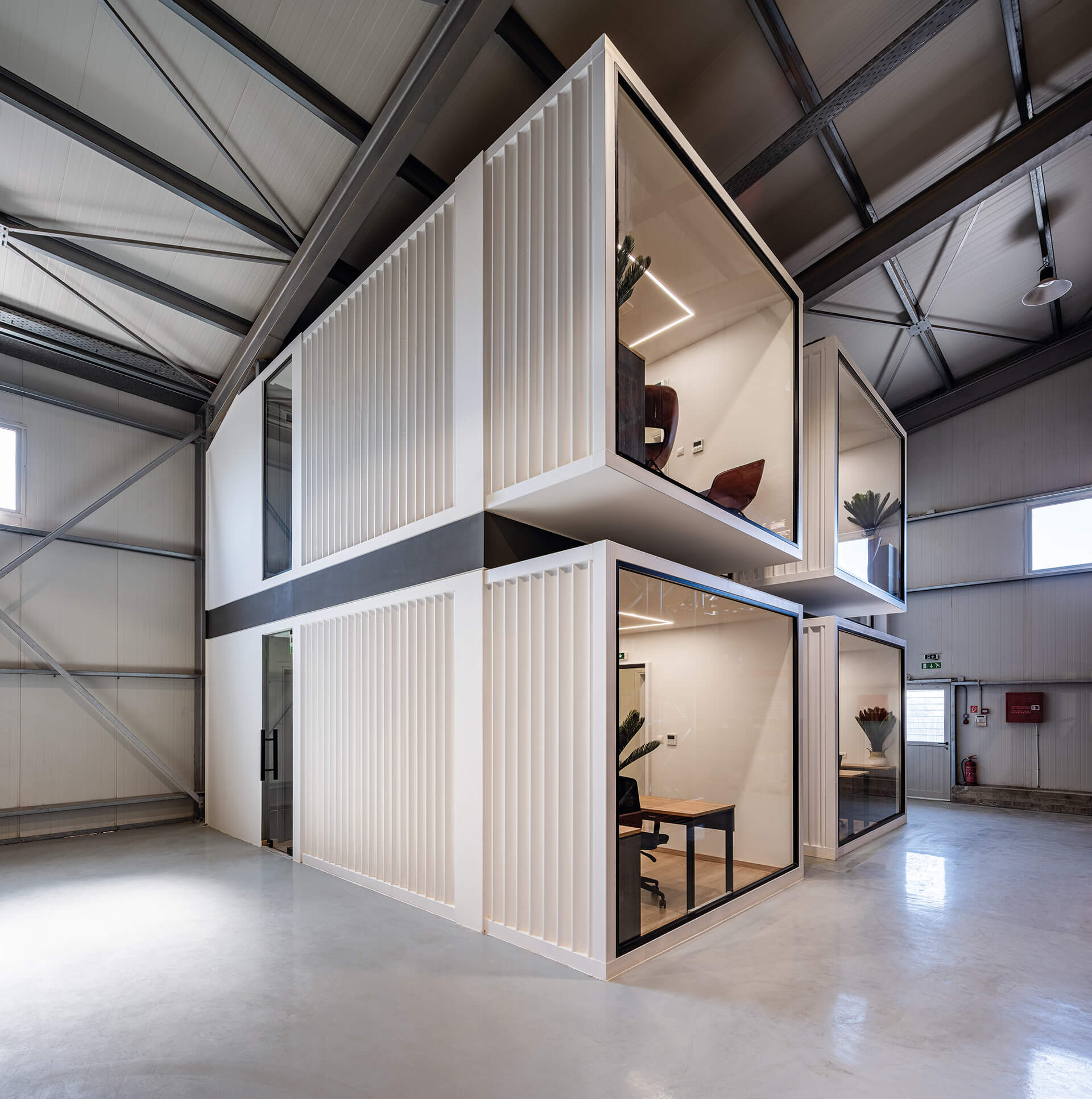
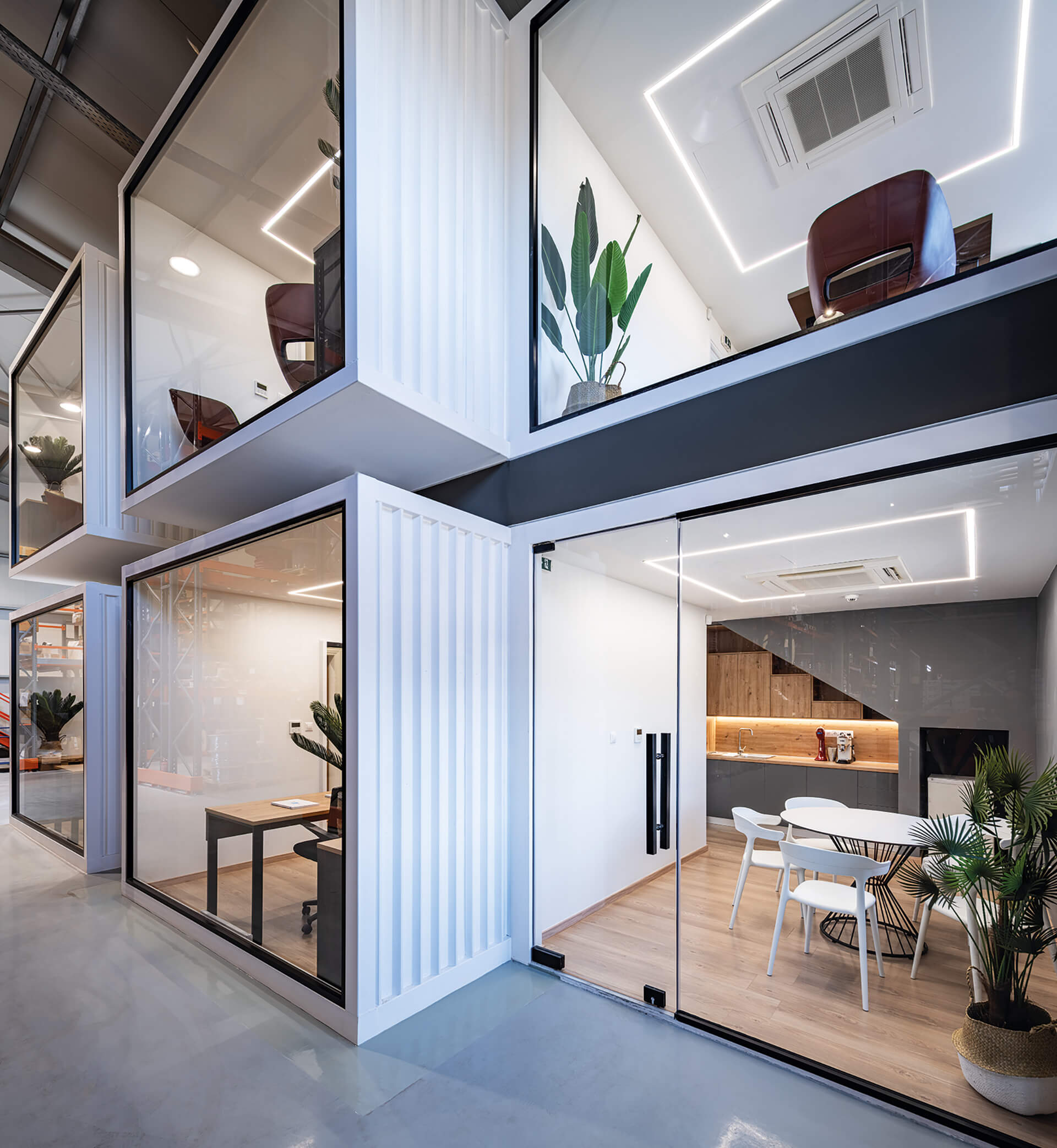
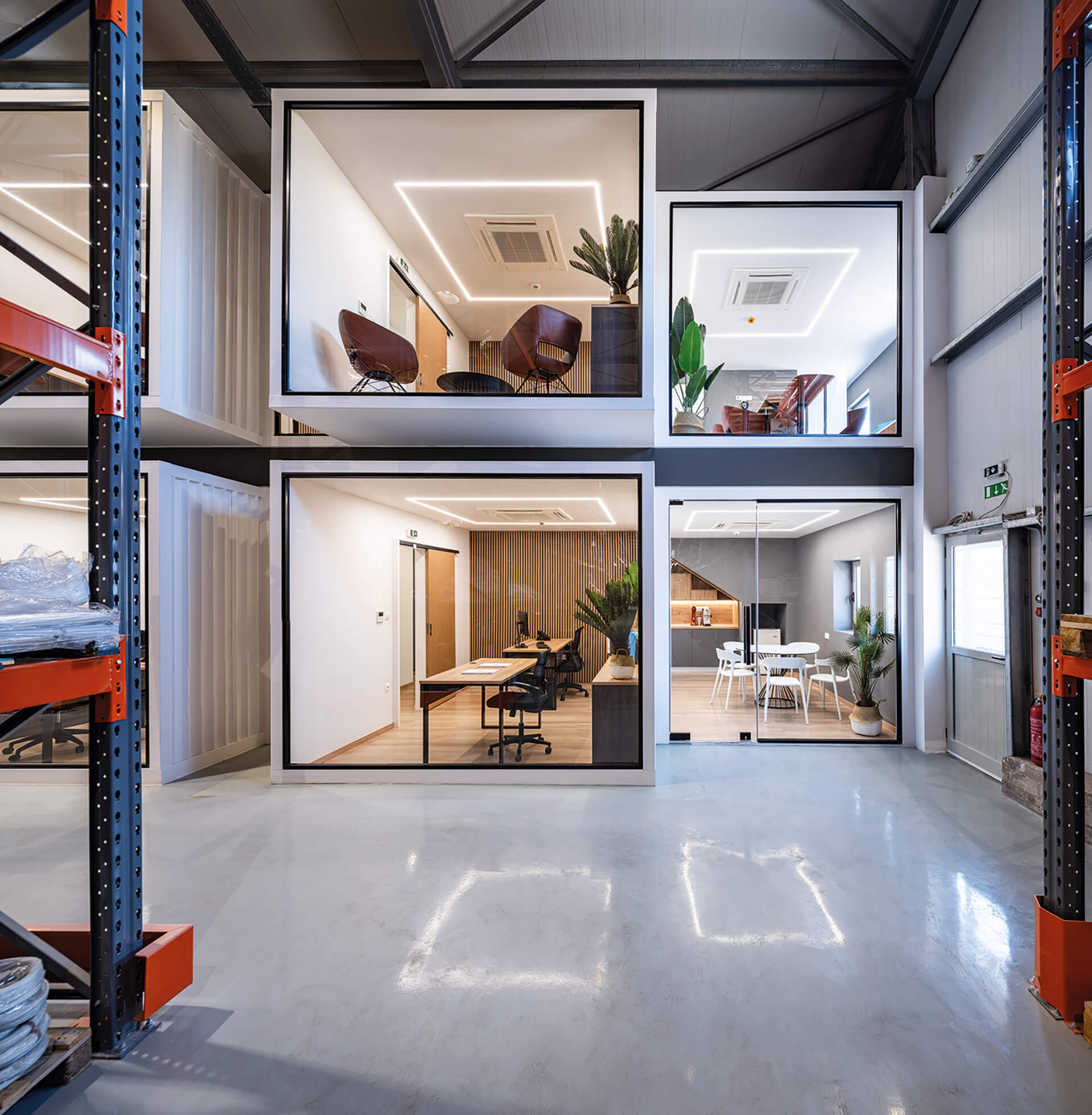
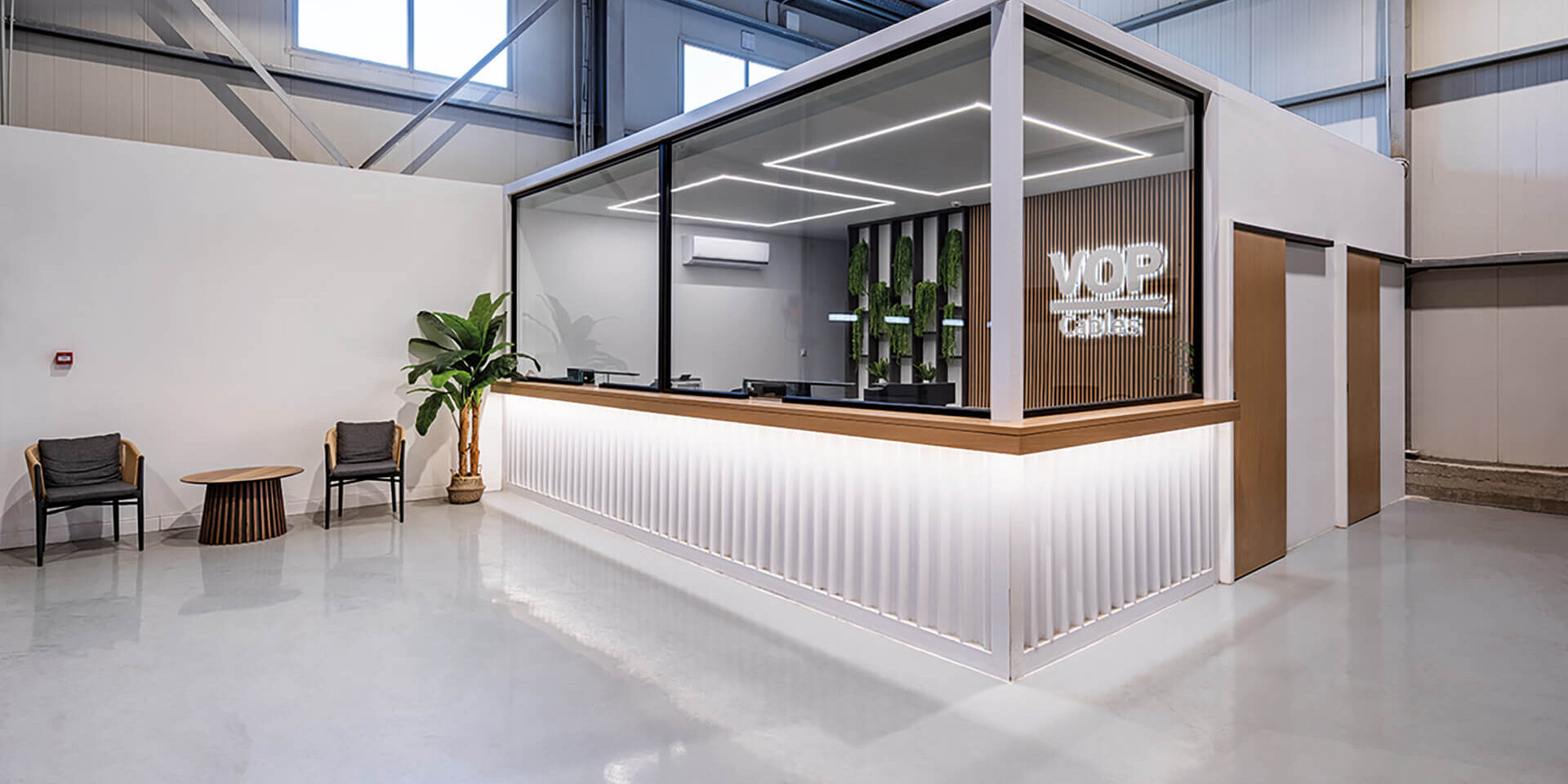
The new offices are housed within an industrial shell of 1,200 m², where tall metal racks for cable storage dominate the space from floor to ceiling. The central design idea focuses on the strategic placement of “work containers” that accommodate the staff offices.
Corporate Identity & Design
The container form was chosen as a characteristic expression of the company’s industrial identity and environmental ethos. Just as the company’s products are designed to be fully recyclable, the container, originally used for their storage and transport, is repurposed and transformed into office space. Two distinct zones are created on either side of the central storage and packaging area to ensure the uninterrupted circulation of machinery and personnel.
Spatial Organization
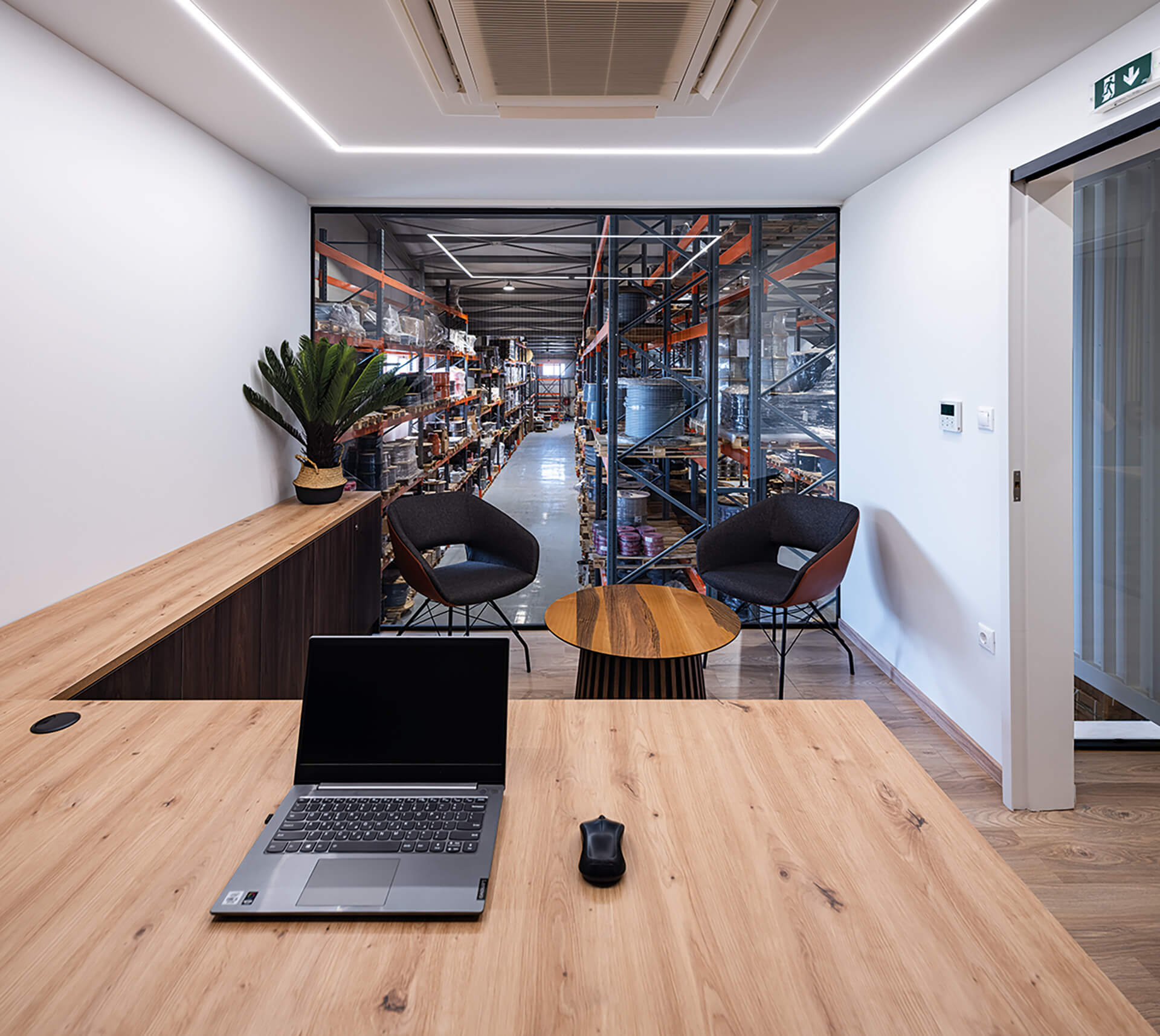
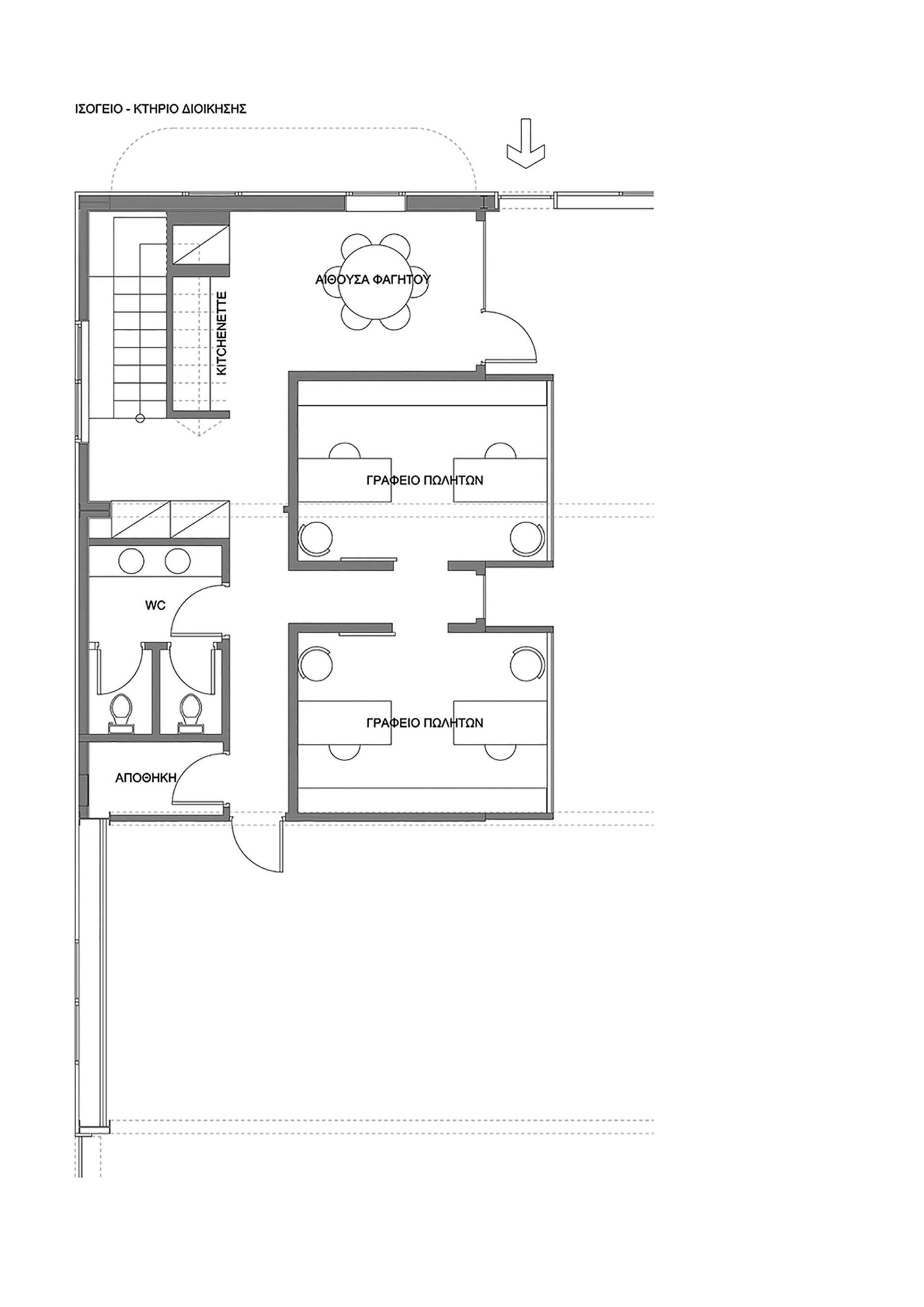
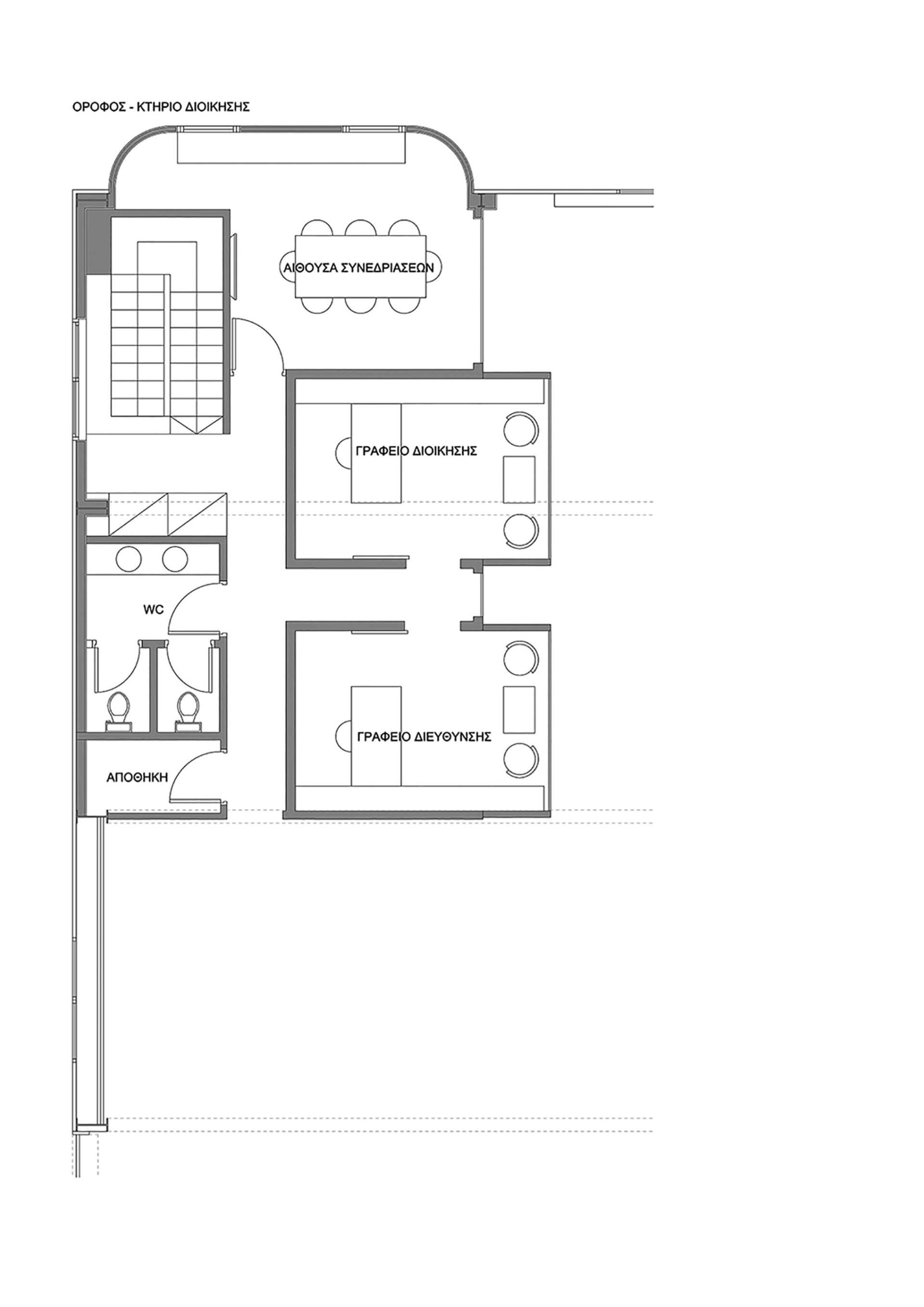
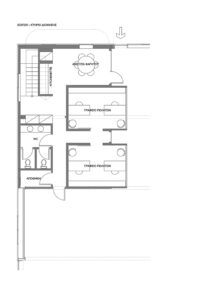
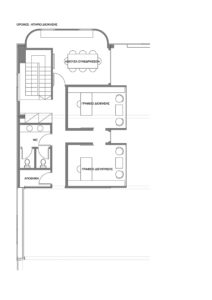
On the west side of the building, the largest container is positioned to function as a customer waiting area and goods reception zone, along with a dispatch office, staff locker area, and archive. On the east side, a cluster of containers arranged across two levels accommodates the remaining needs of the administrative staff, positioned to ensure optimal visual connection with the production area.
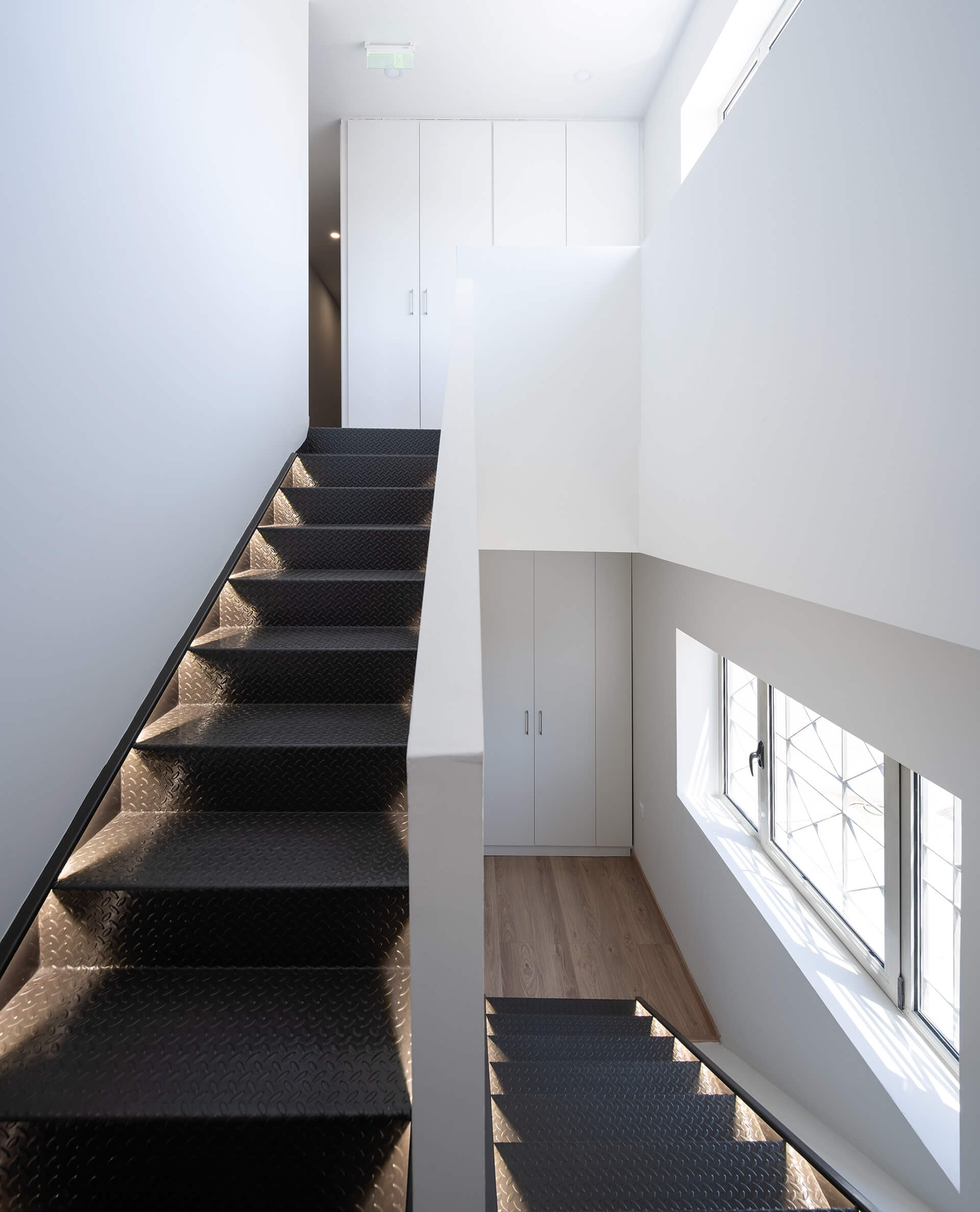
On the ground floor of the eastern cluster are two sales offices, a dining room, staff restrooms, and storage. The upper level includes two offices, a meeting and presentation room, and additional storage space. Access to the offices is provided through two opposing entrances, with an internal metal staircase connecting the two floors.
Materials & Lighting
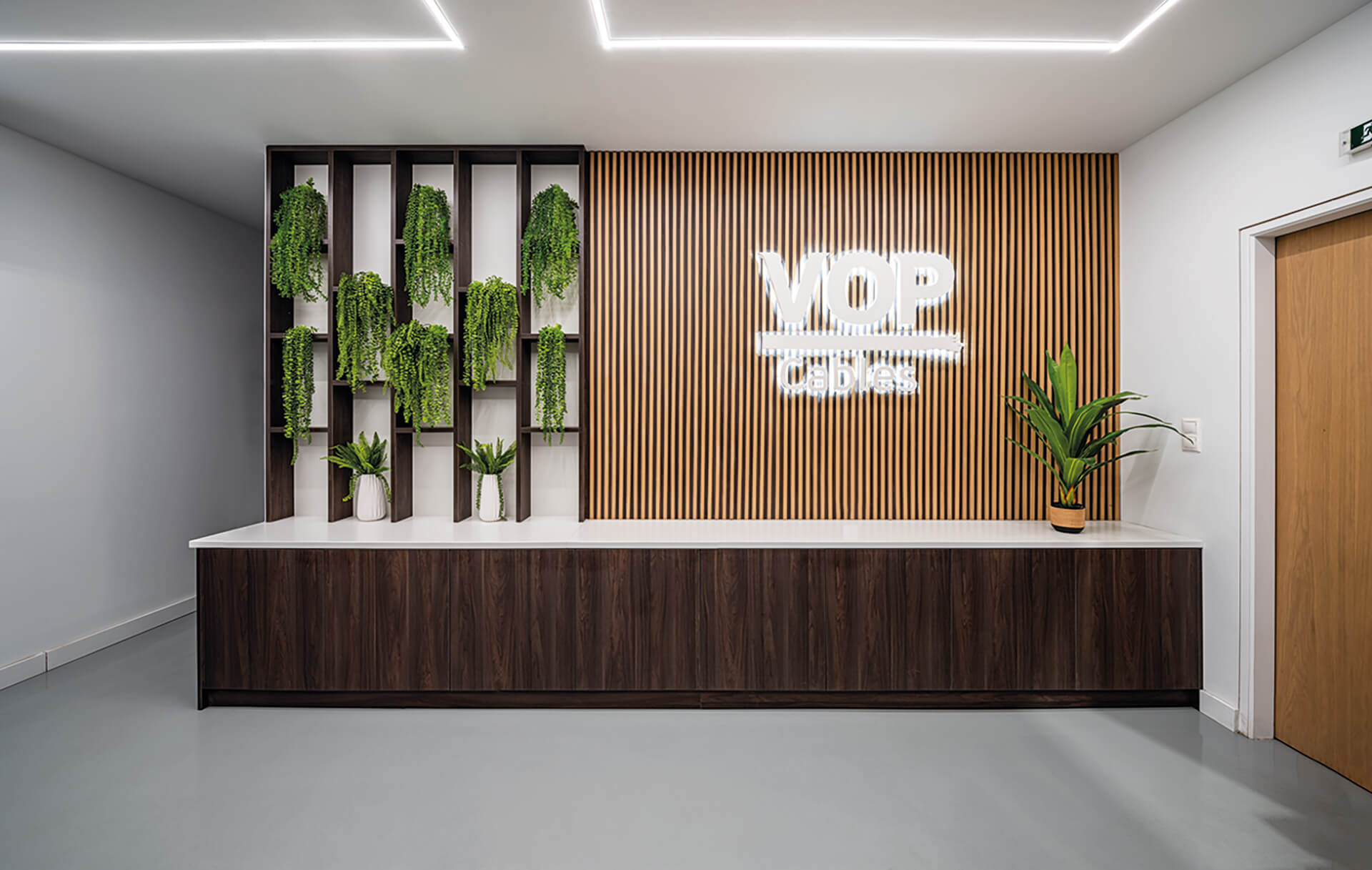
The material palette consists of metal, wood, and glass -materials commonly used in industrial environments. Metal and glass surfaces form the architectural volumes, while wood is applied in flooring and furniture to complement the construction. The exterior white and gray tones highlight the wooden finishes used inside.
Linear warm-white lighting follows the rectangular surfaces of the containers. Containers serve as a contemporary method of creating workspaces in facilities requiring direct proximity to production. With the appropriate configuration, they allow for efficient workflow while offering the possibility of expansion to meet a company’s future needs, without compromising the overall design.