Apartment in Kolonaki
Interior Design:
Agapi Proimou, Lefteris Michaloutsos
Photography:

The calmness, transparency, and clarity of this project create an atmosphere of repose within the heterogeneous and burdened environment of the city and the apartment building.
Existing Layout
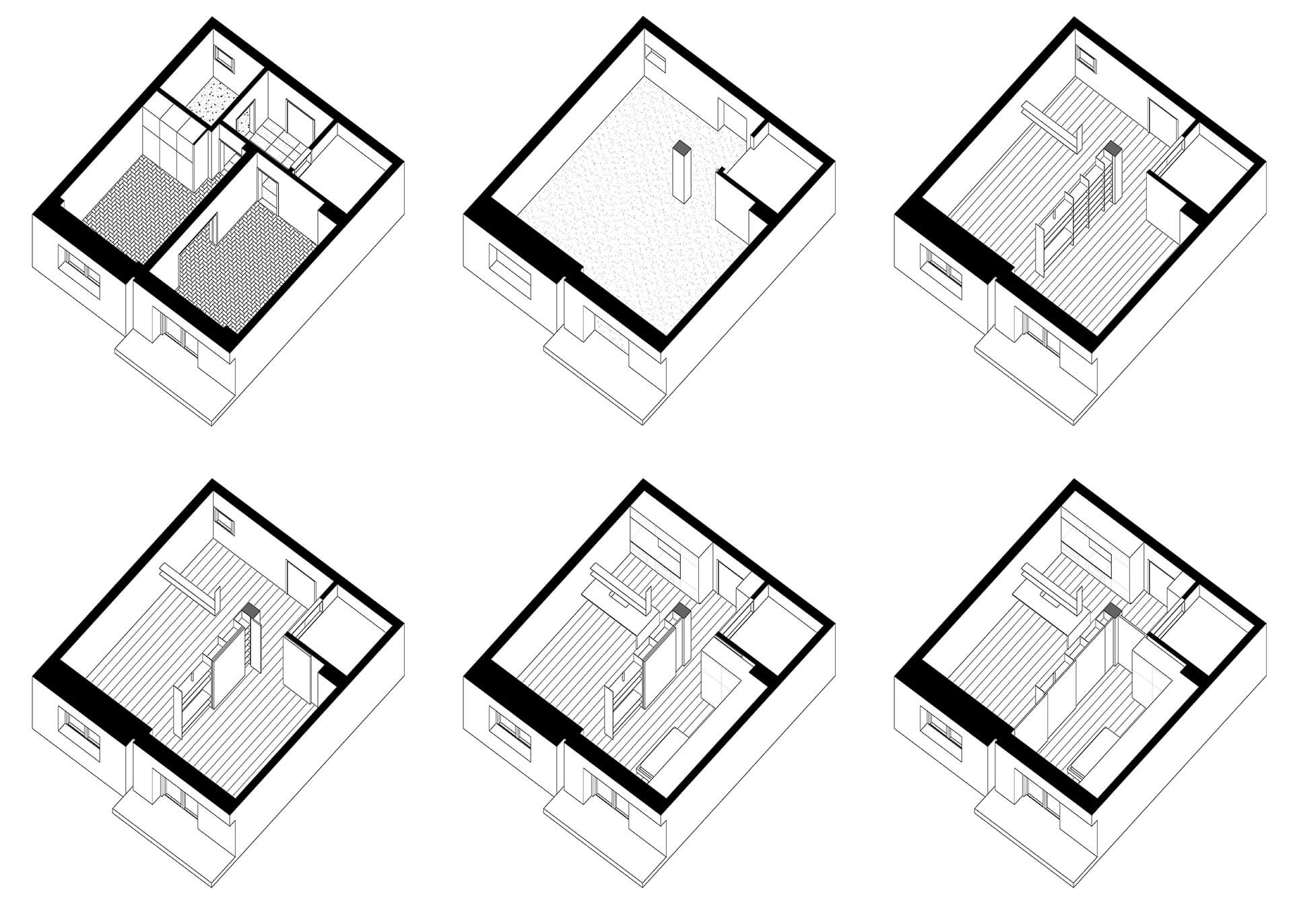
The apartment is located in an apartment building dating back to 1967, in Kolonaki. The typical floor plan of the period defined five distinct spaces: bedroom, living room, kitchen, bathroom, and entrance hall. A double-leaf sliding door between the bedroom and the living room unified, to a certain extent, the two main spaces, while all areas were connected through the hall. Under these conditions, the service zone of the entrance and wet areas was cut off from natural light and from views toward the exterior environment. The equal distribution of surface area between the two main spaces, along with their rigid boundaries, limited habitation to small rooms with restricted visual connections and natural light.
Spatial Organization
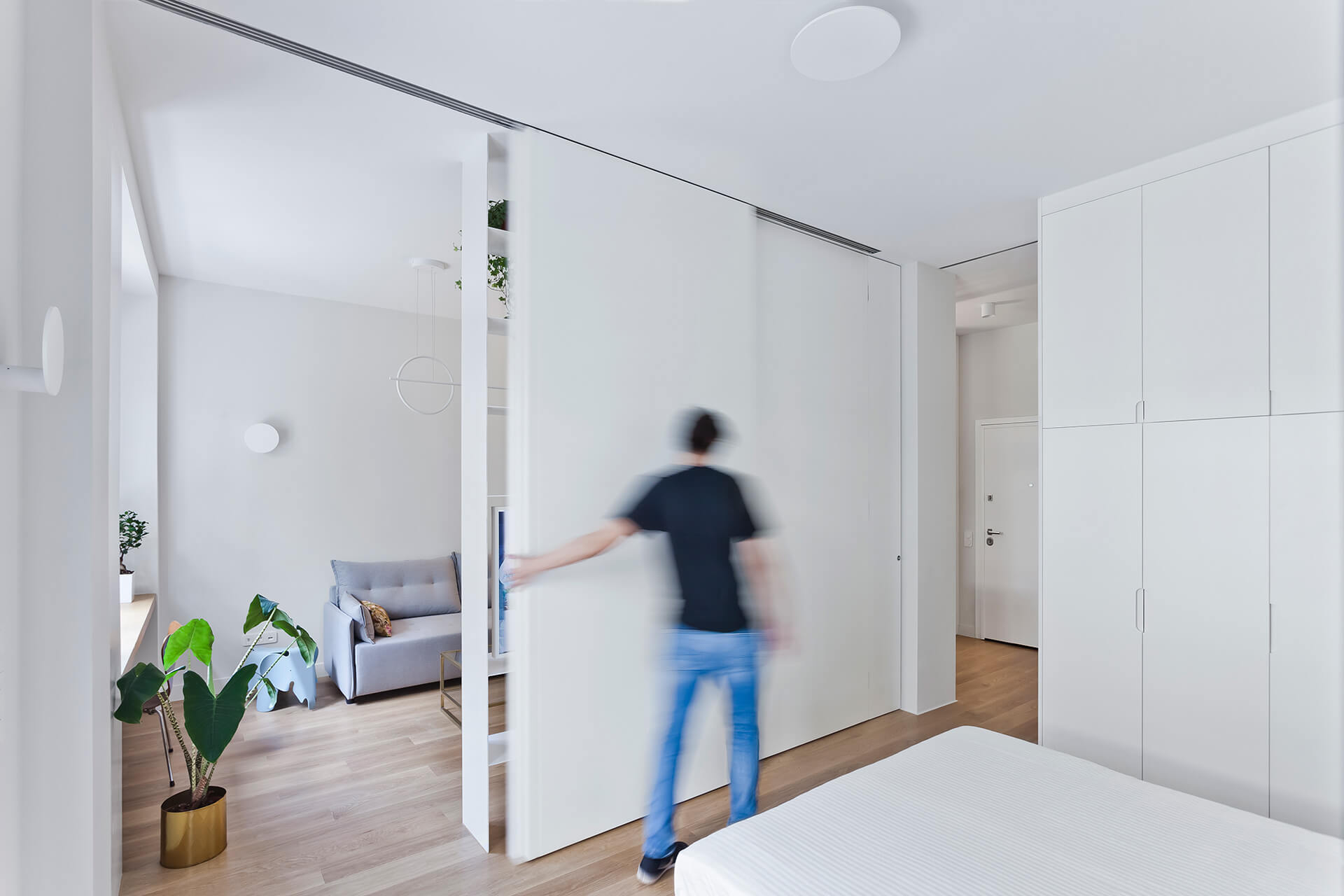
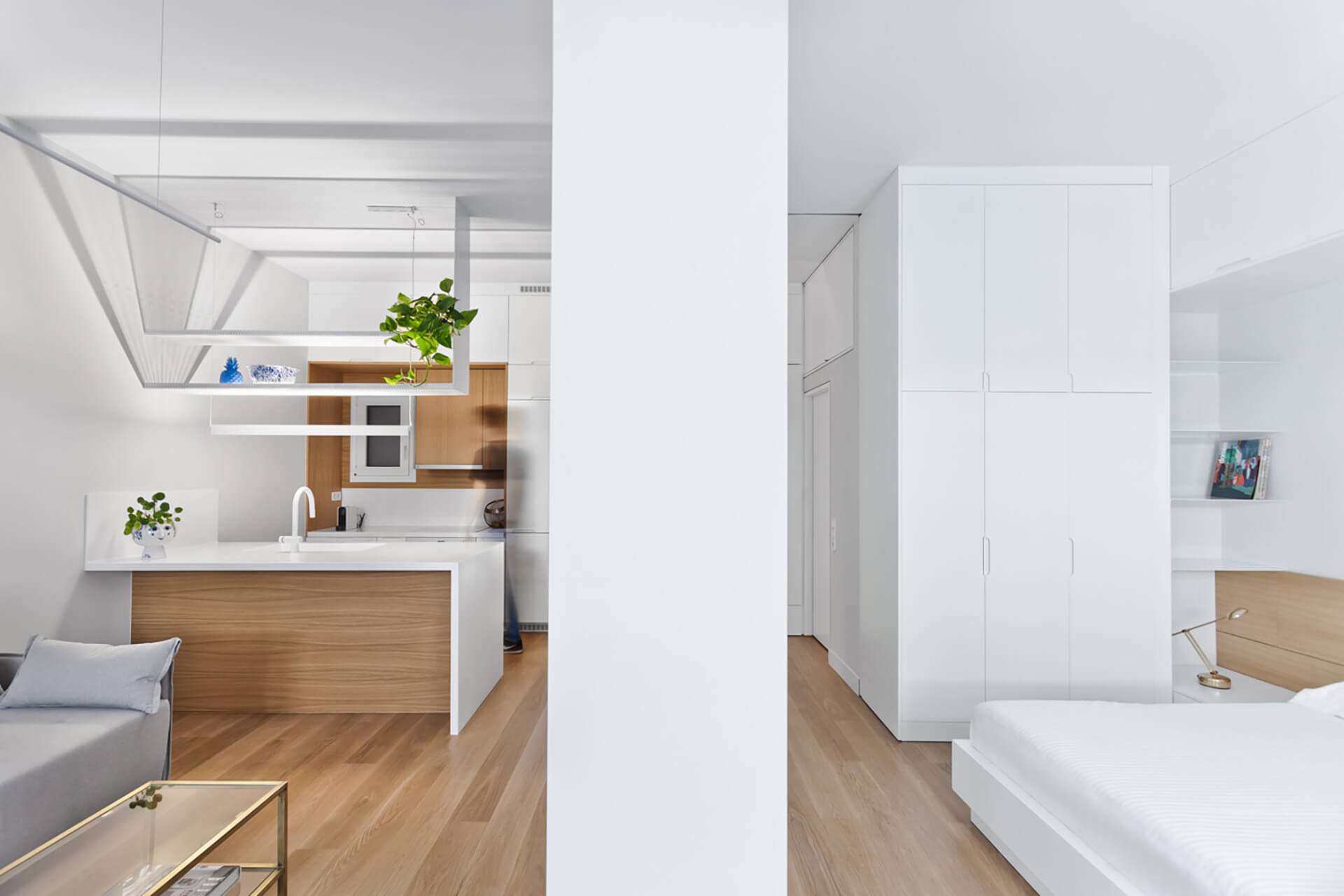
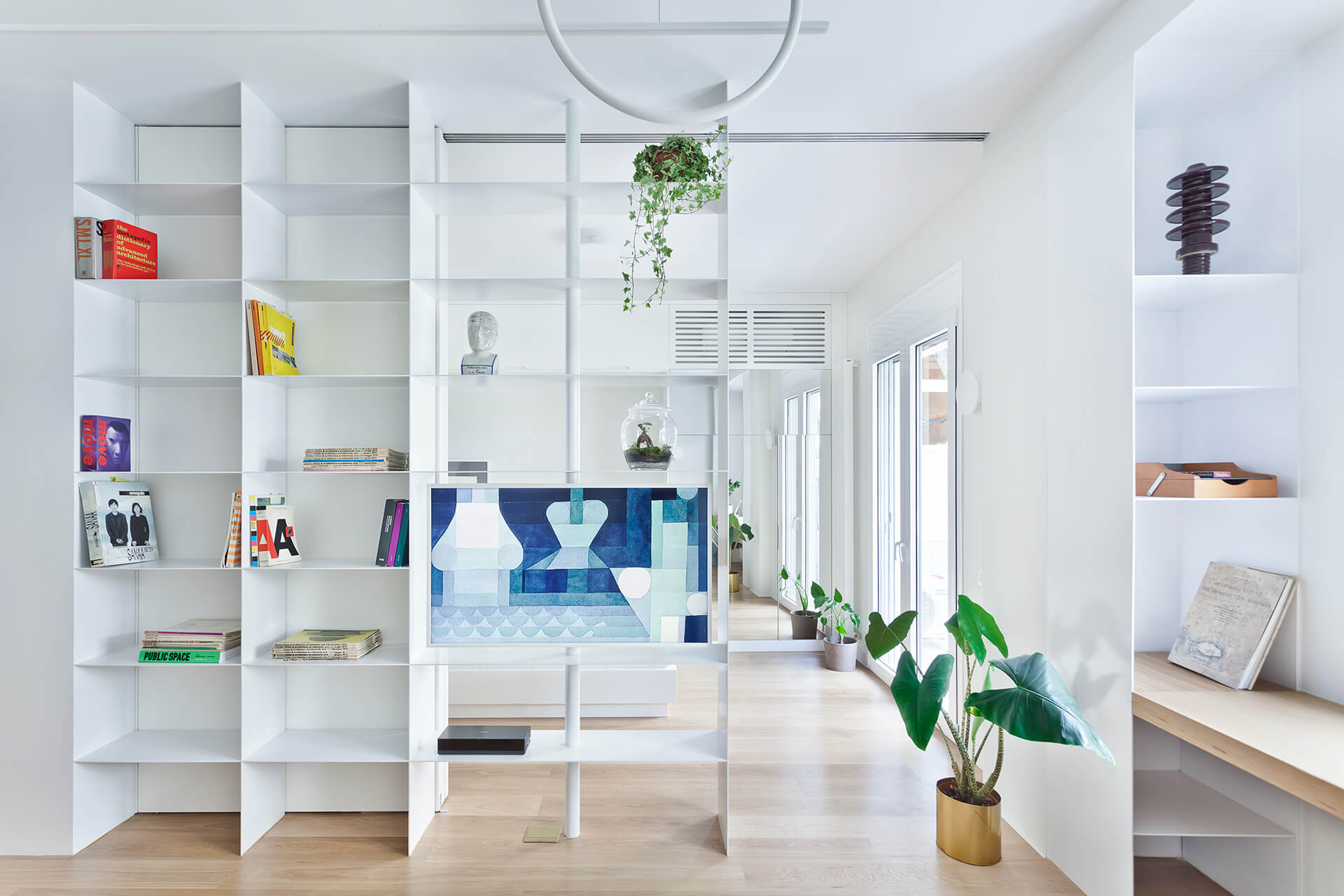
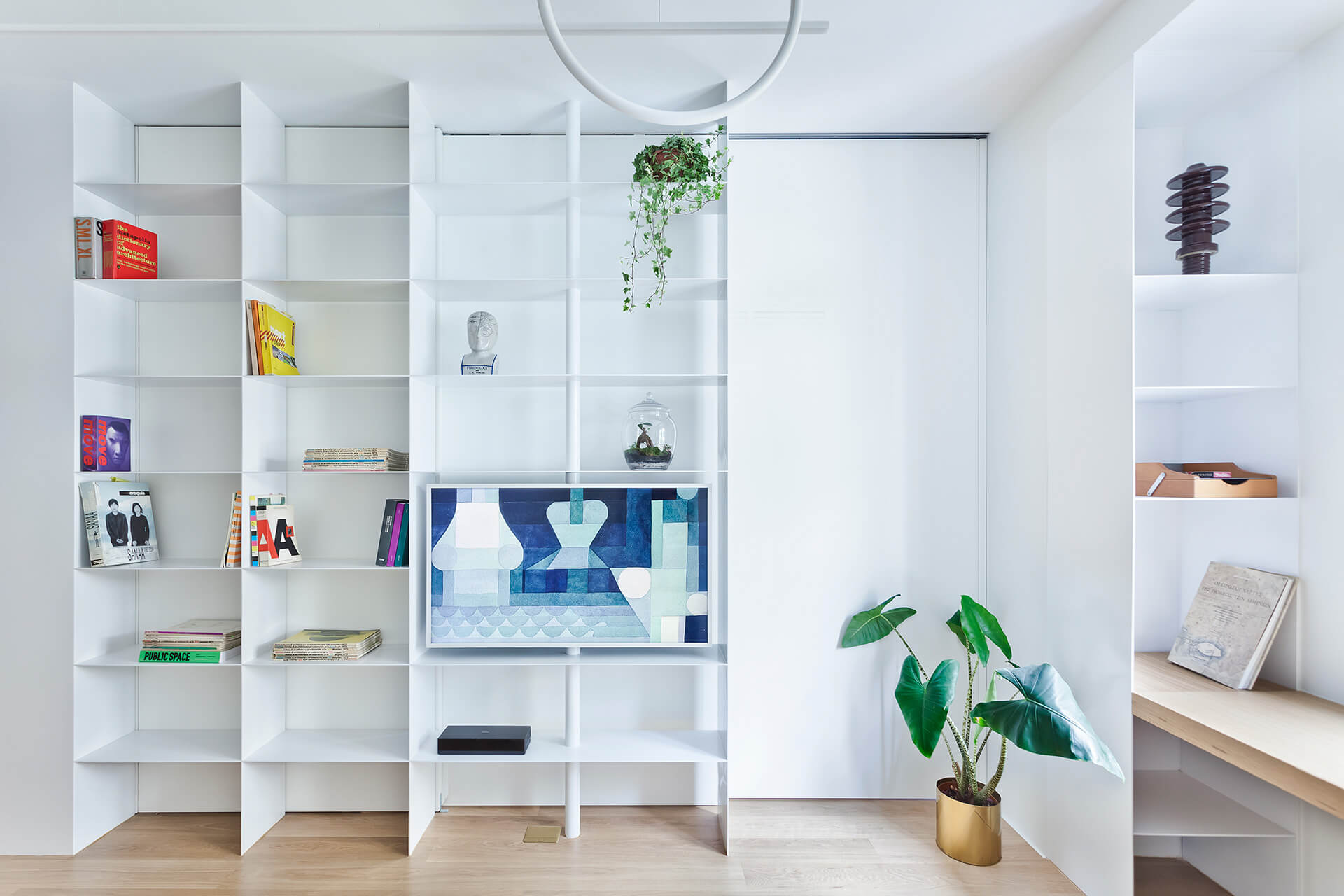
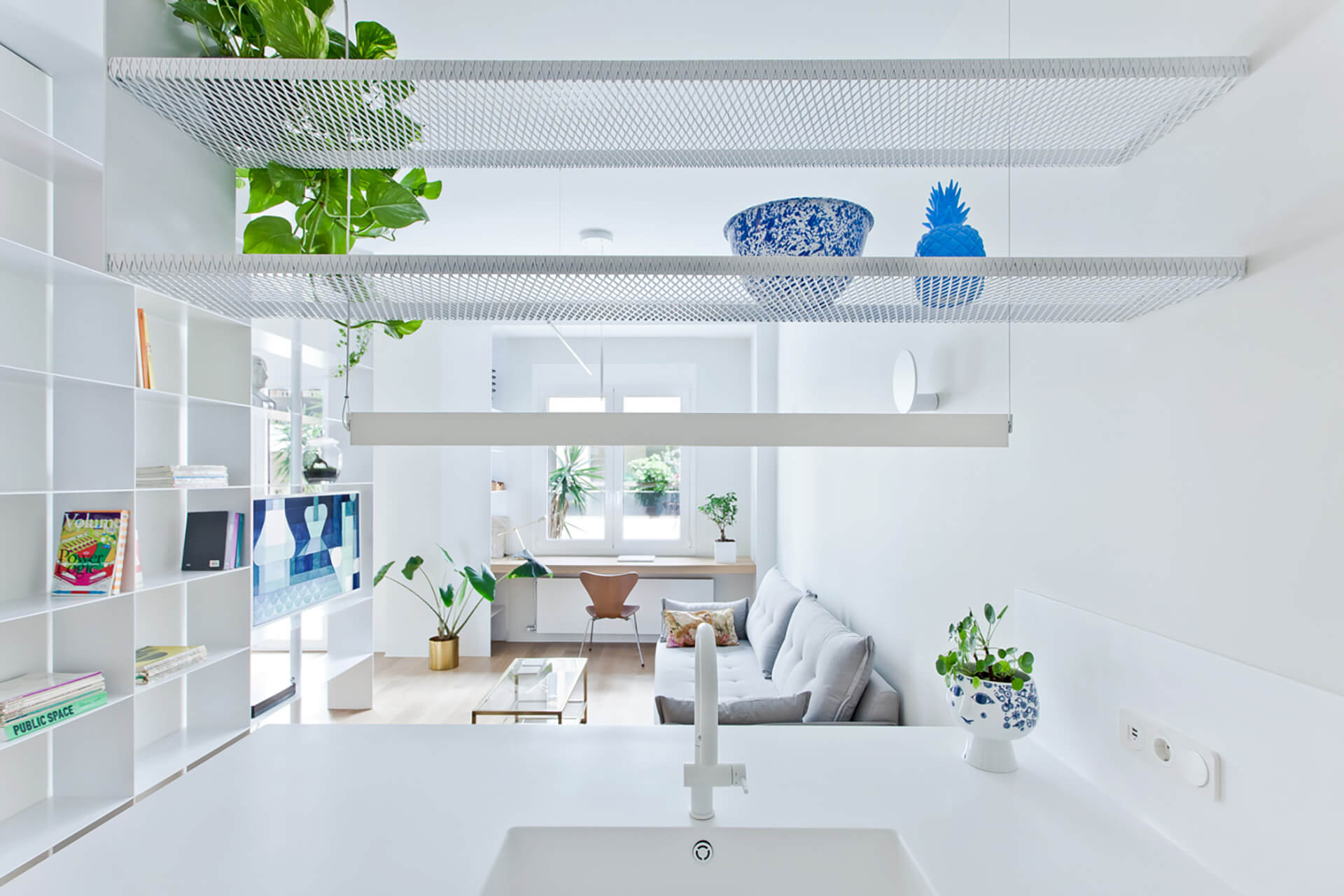
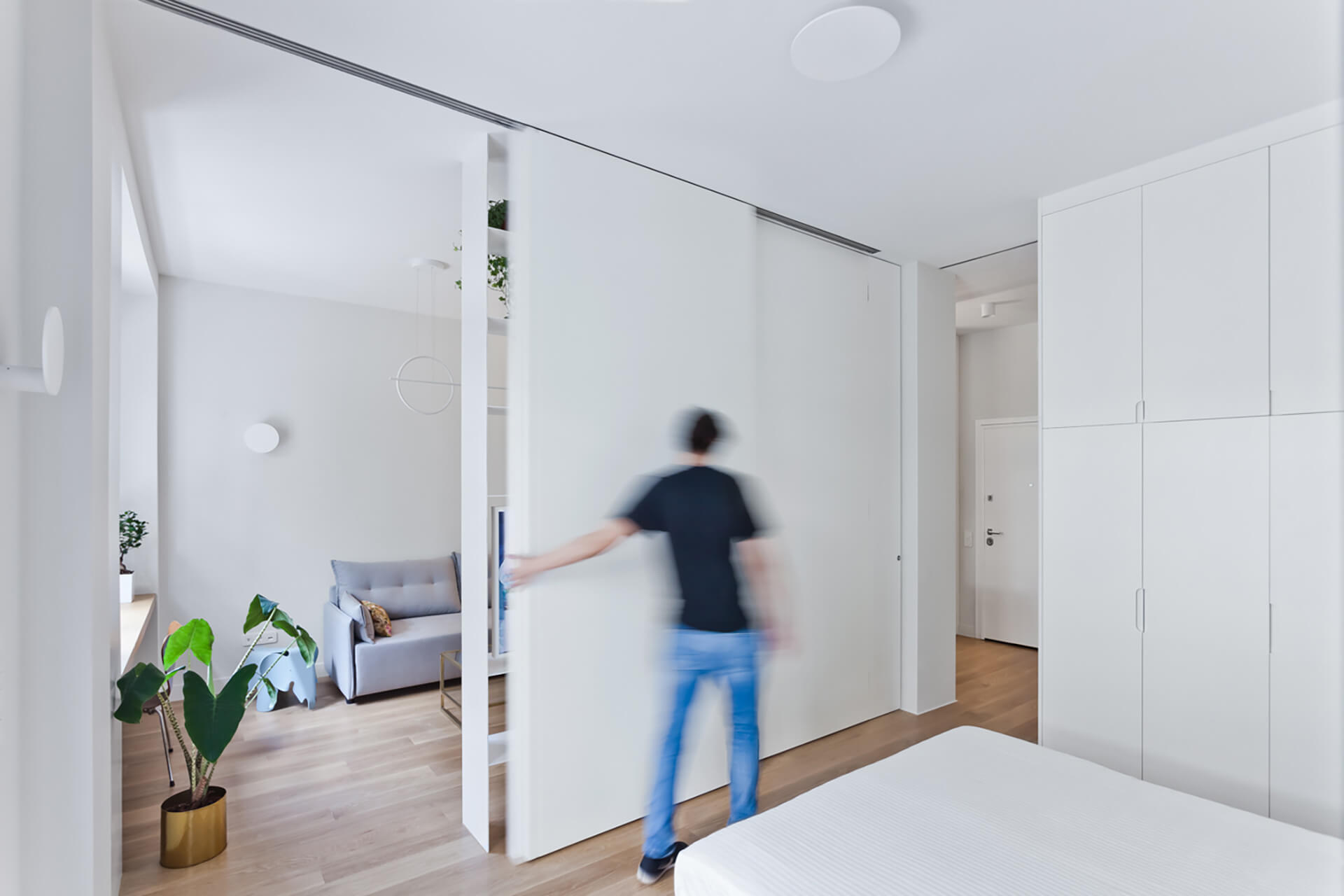
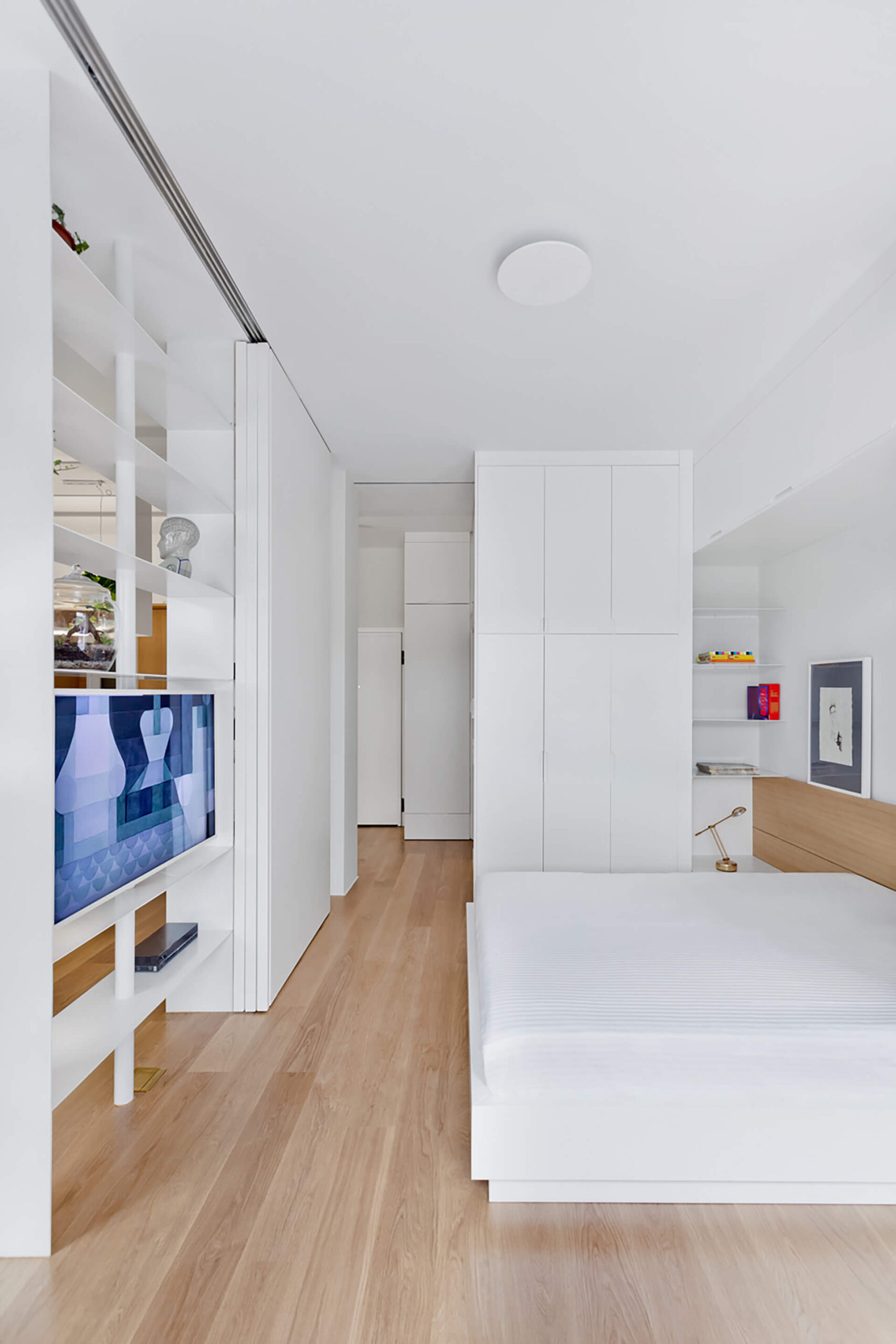
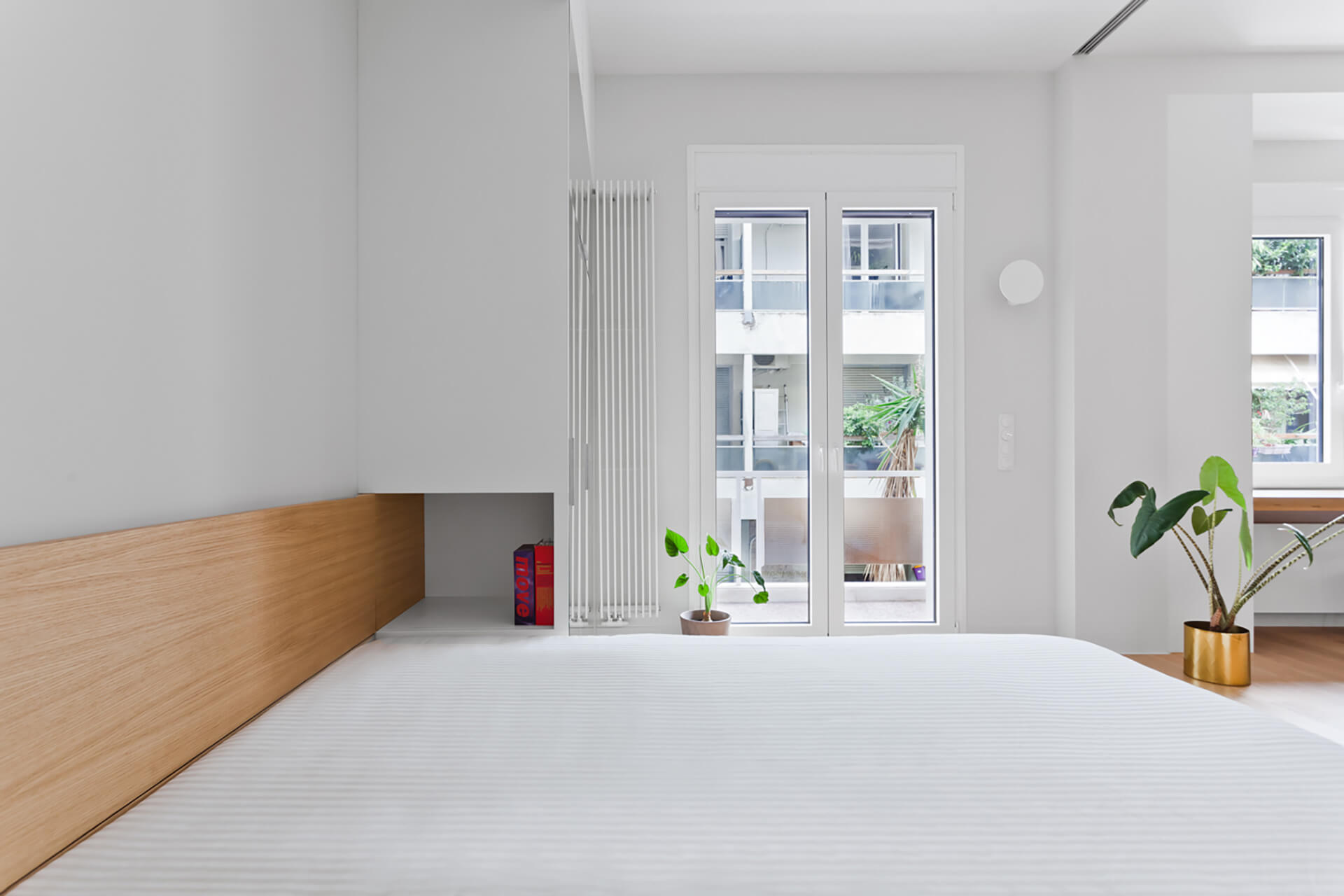
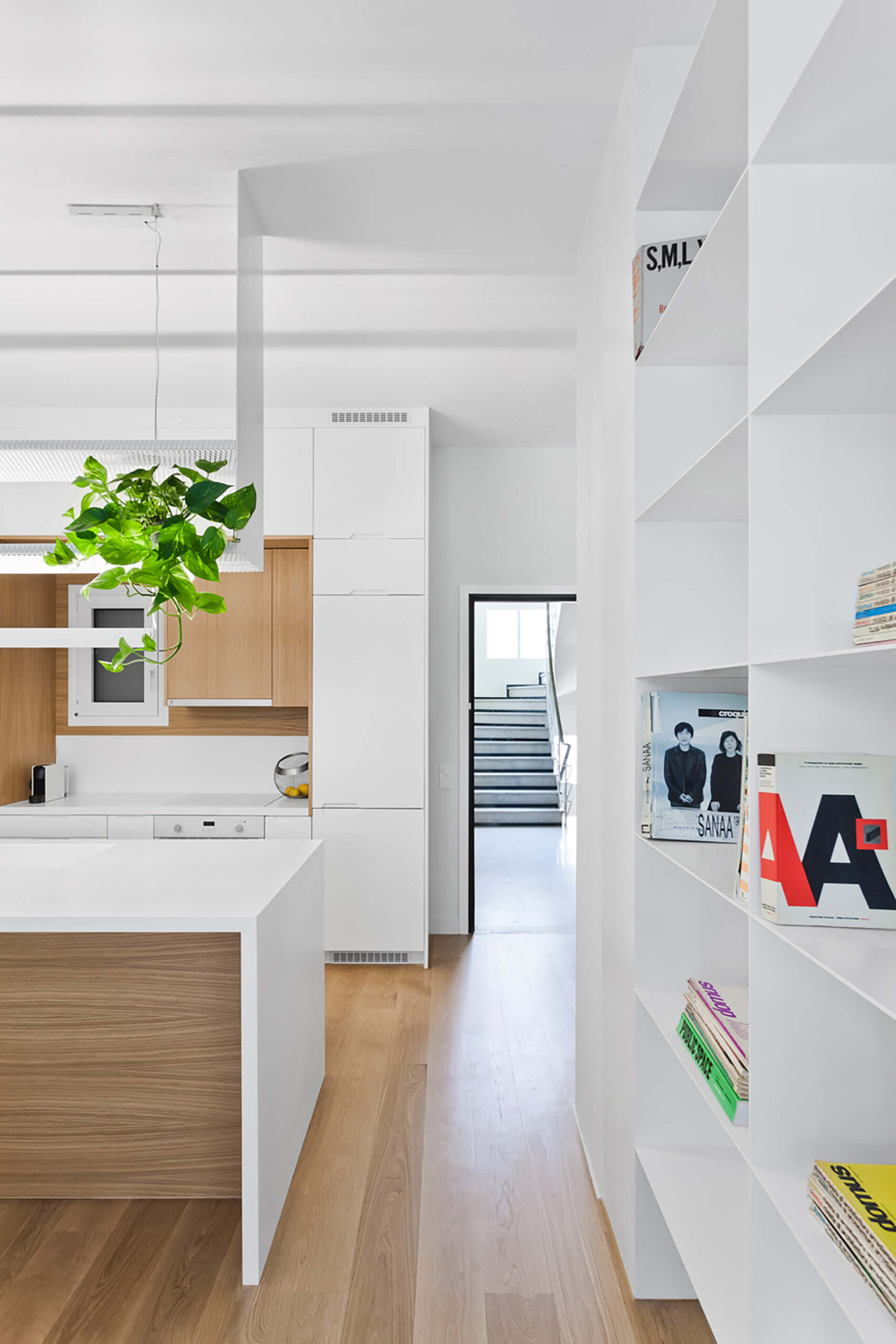
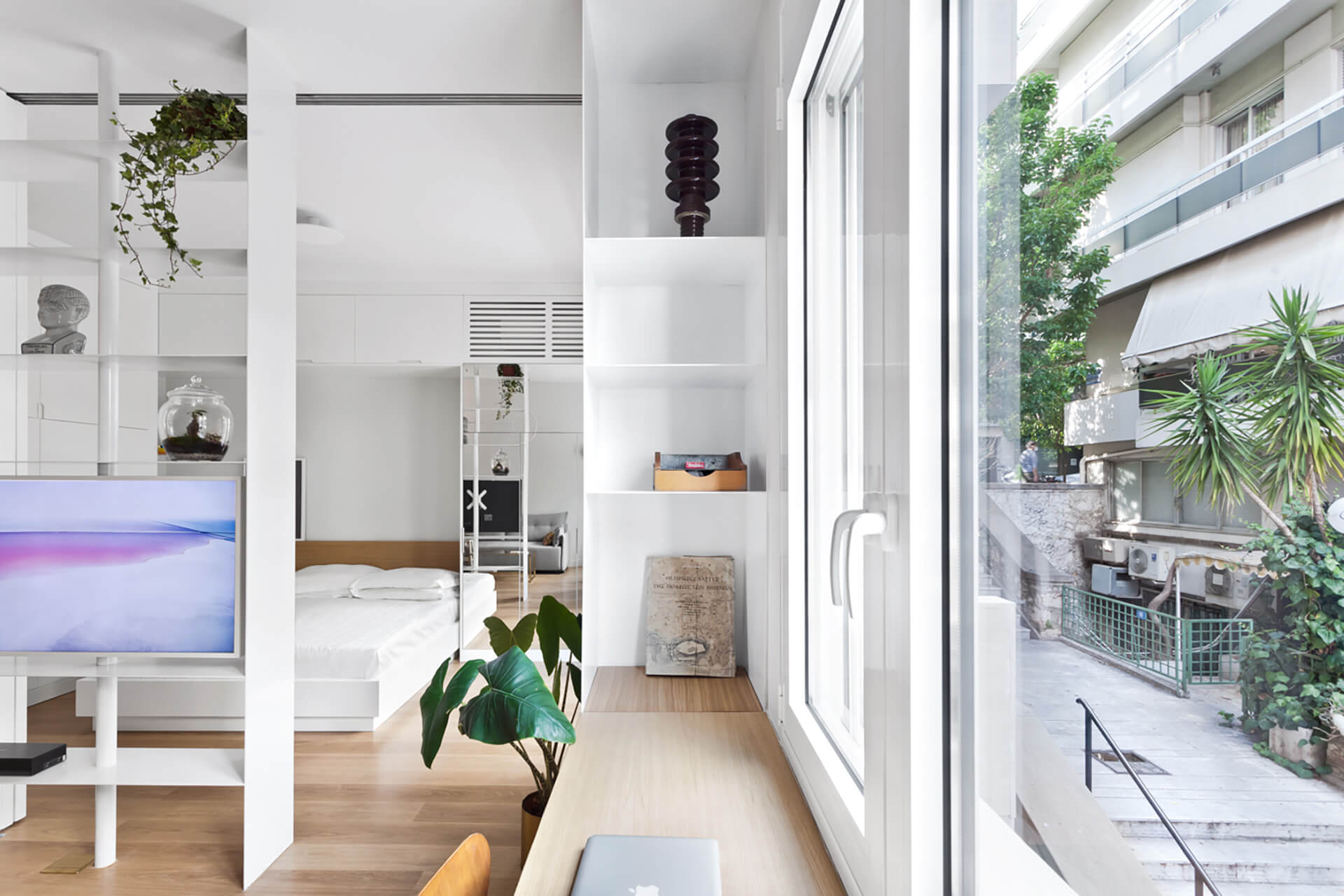
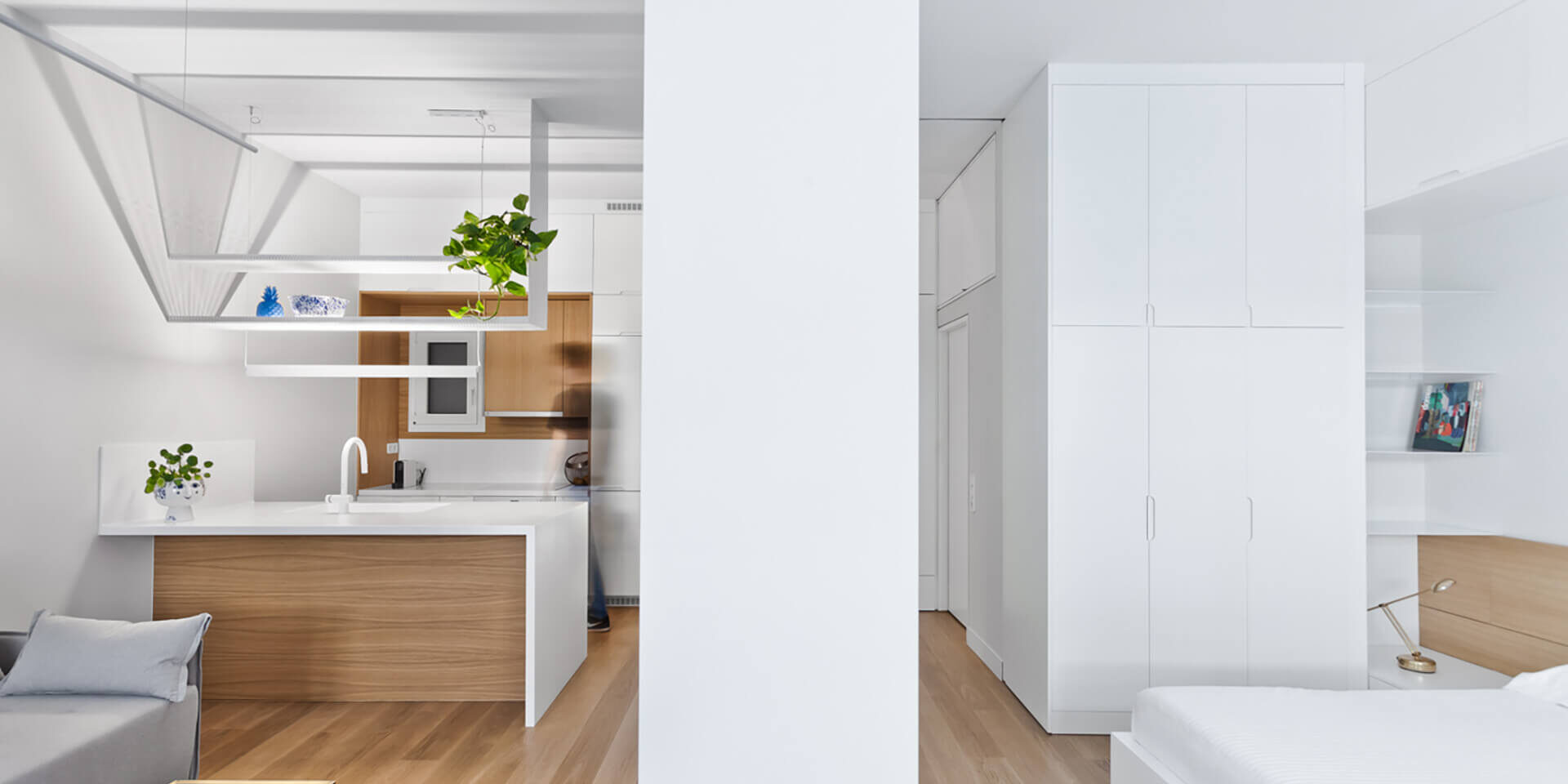
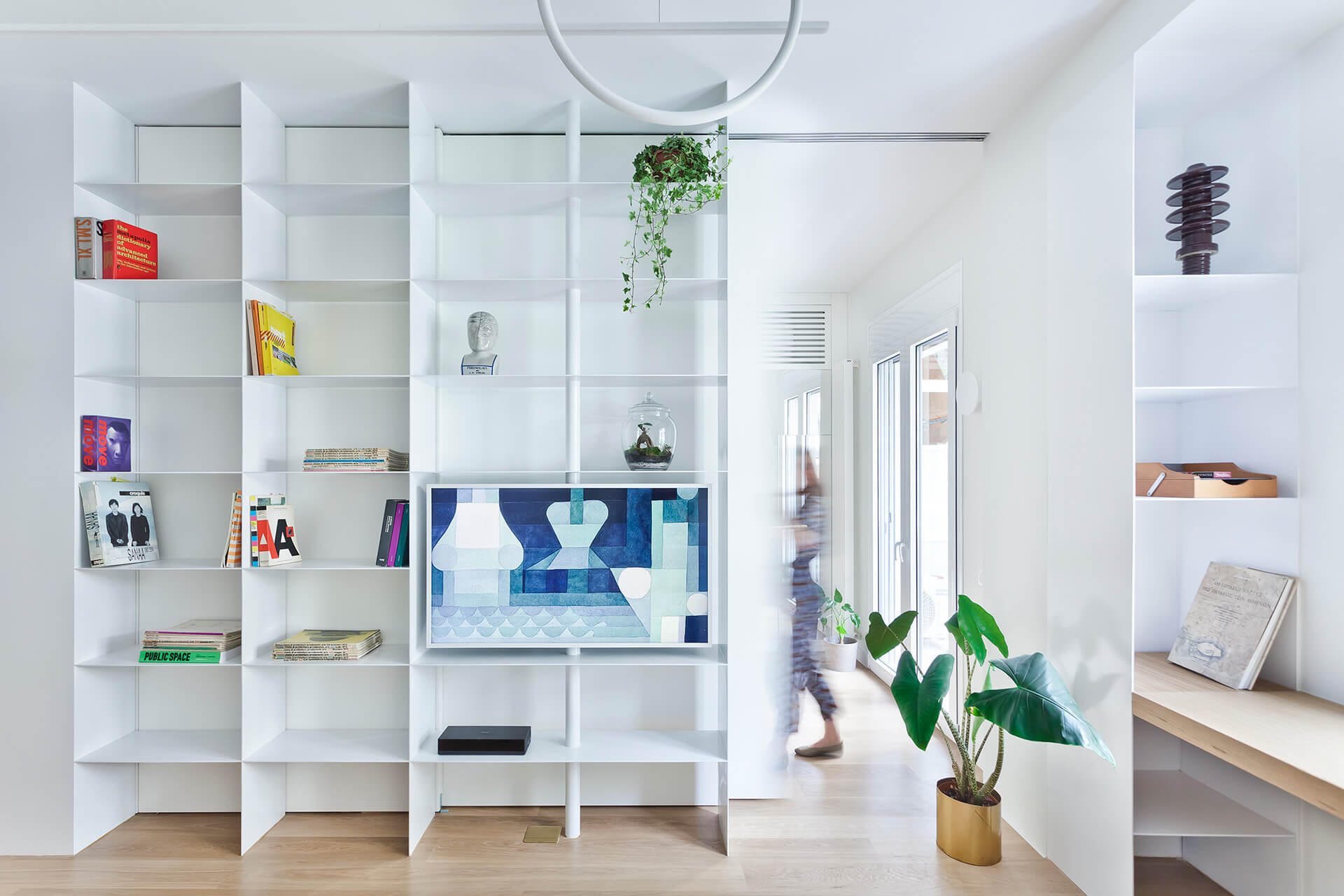
The new layout unifies all individual spaces of the apartment, retaining only the bathroom as a separate room. From the entrance, the city becomes visible through the balcony door and window, which are now aligned consecutively along the interior façade facing the street. Solid partition walls are replaced by perforated metal elements of slender sections, such as the bookcase that occupies the center of the plan, as well as by movable elements, including sliding and concealed doors, allowing natural light to diffuse throughout the space and visual connections to multiply. All new vertical surfaces -sliding partitions, metal bookcase, wardrobes, cabinets, and curtains- extend from floor to ceiling, unifying the space in section as well and creating hidden niches and storage areas.
Materials & Custom Structures
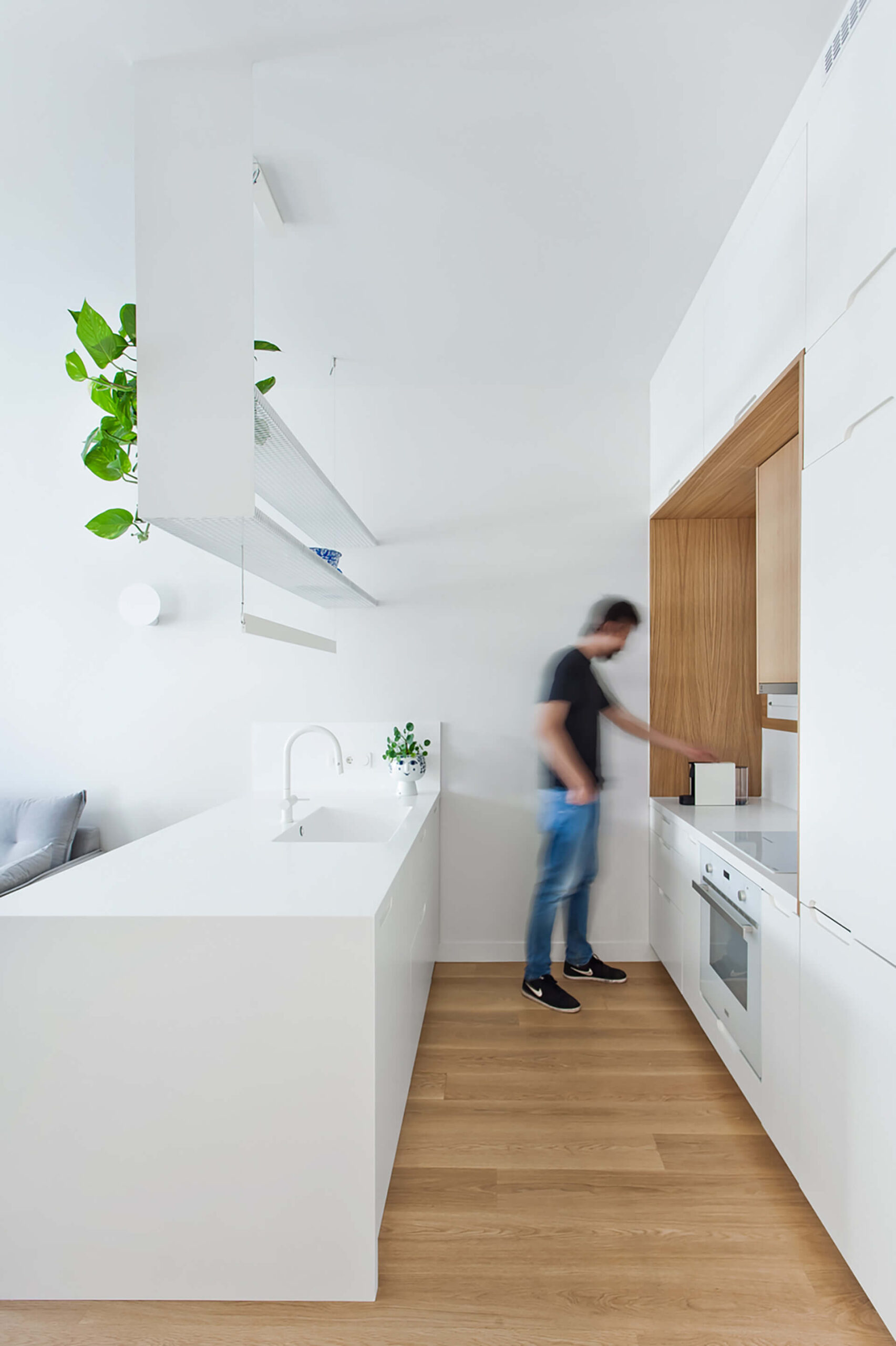
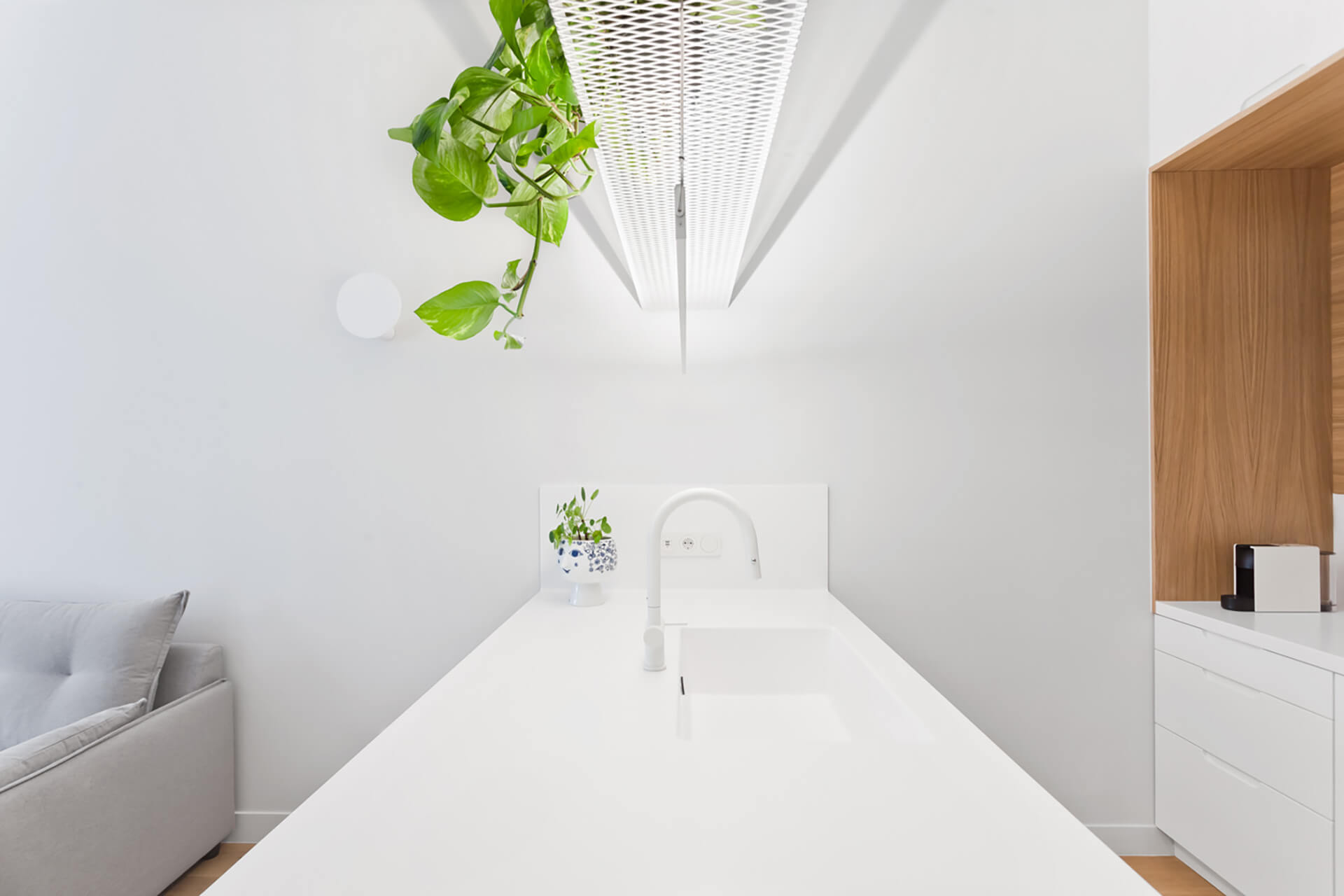
Each individual point of this small dwelling accommodates more than one activity. The kitchen worktop also functions as a dining table, while the desk doubles as a seat for gazing out of the window. During the day, the bed becomes part of the living area, while at night it is isolated within a quiet white sleeping box. The central metal structure has two faces, and the television, as part of it, rotates 180 degrees around a vertical pole.
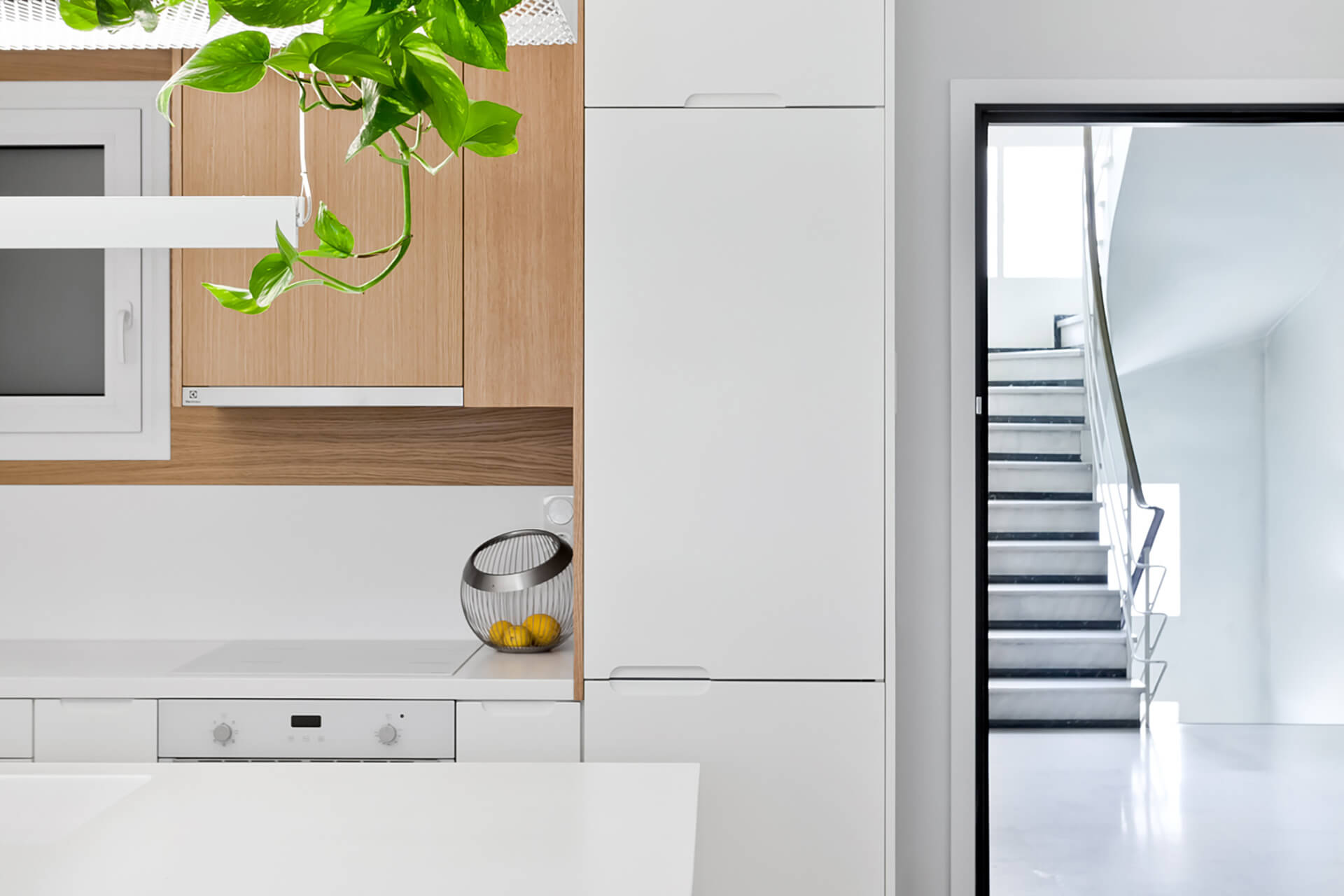
The walls, ceiling, structures, movable partitions, and fittings are all white, aiming for homogeneity and clarity within a small space composed of multiple elements. A mirror surface, placed perpendicular to the exterior façade, expands the space, multiplies the opening of the balcony door, and reflects the city’s exterior into the interior.