Roma Cassia 570 Apartment in Rome by STUDIO8 Architects
Interior Design:
Photography:

In northern Rome, STUDIO8 Architects transforms a 155 m² apartment from the 1950s into a family home where Roman architectural memory meets East Asian references. Original stucco ceilings and dark timber floors are preserved, while targeted interventions reorganize the plan around everyday family life.
The project is conceived as a dialogue rather than a stylistic fusion. Travertine, metal and new built-in elements are introduced alongside existing architectural details, while artworks and objects from different cultural traditions establish a more personal layer within the interior.
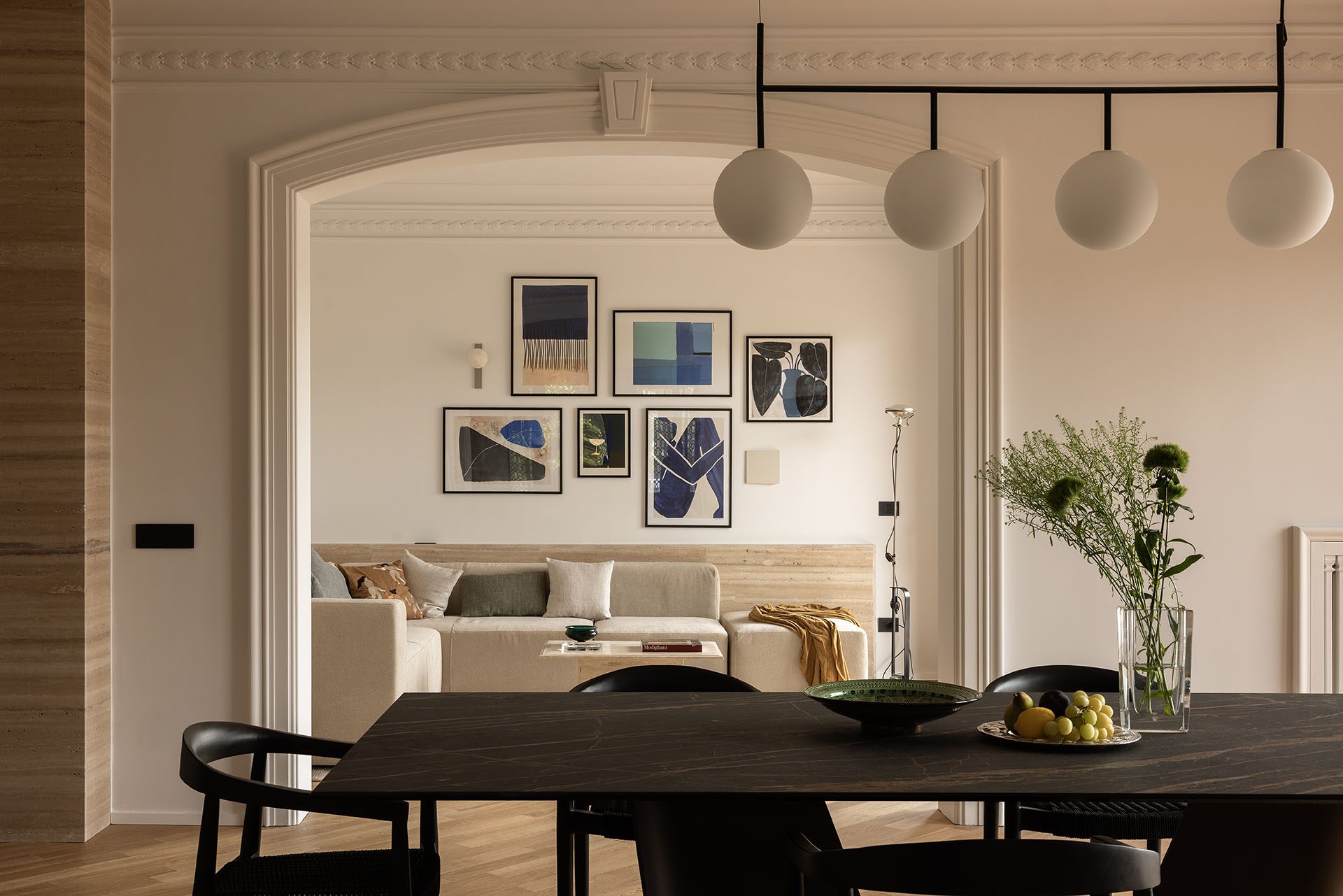
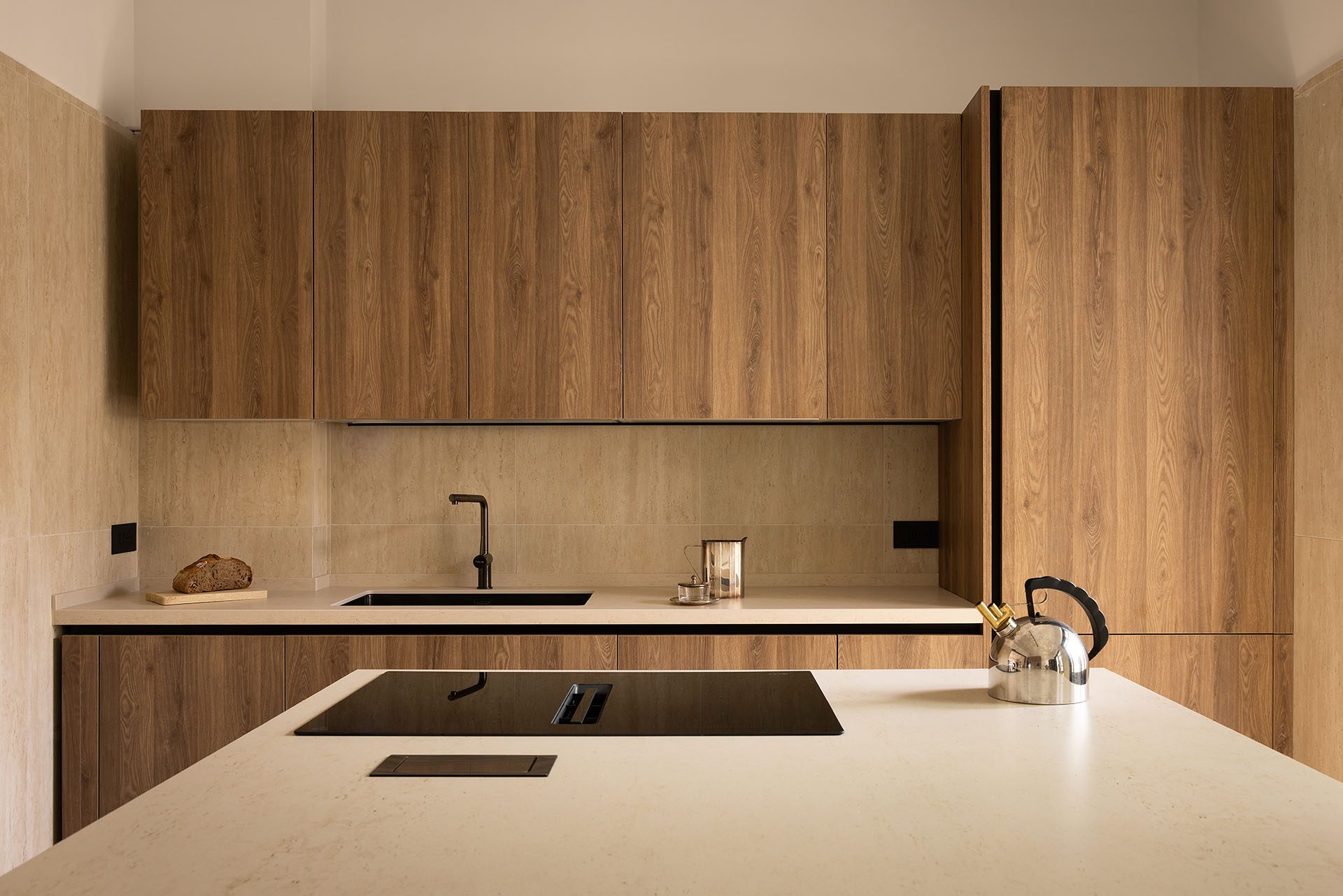
The clients wanted the home to encourage shared daily life, with the dining table acting as its centre. To support this arrangement, the wall between the living room and kitchen was removed, while a former service bedroom was converted into a guest bathroom.
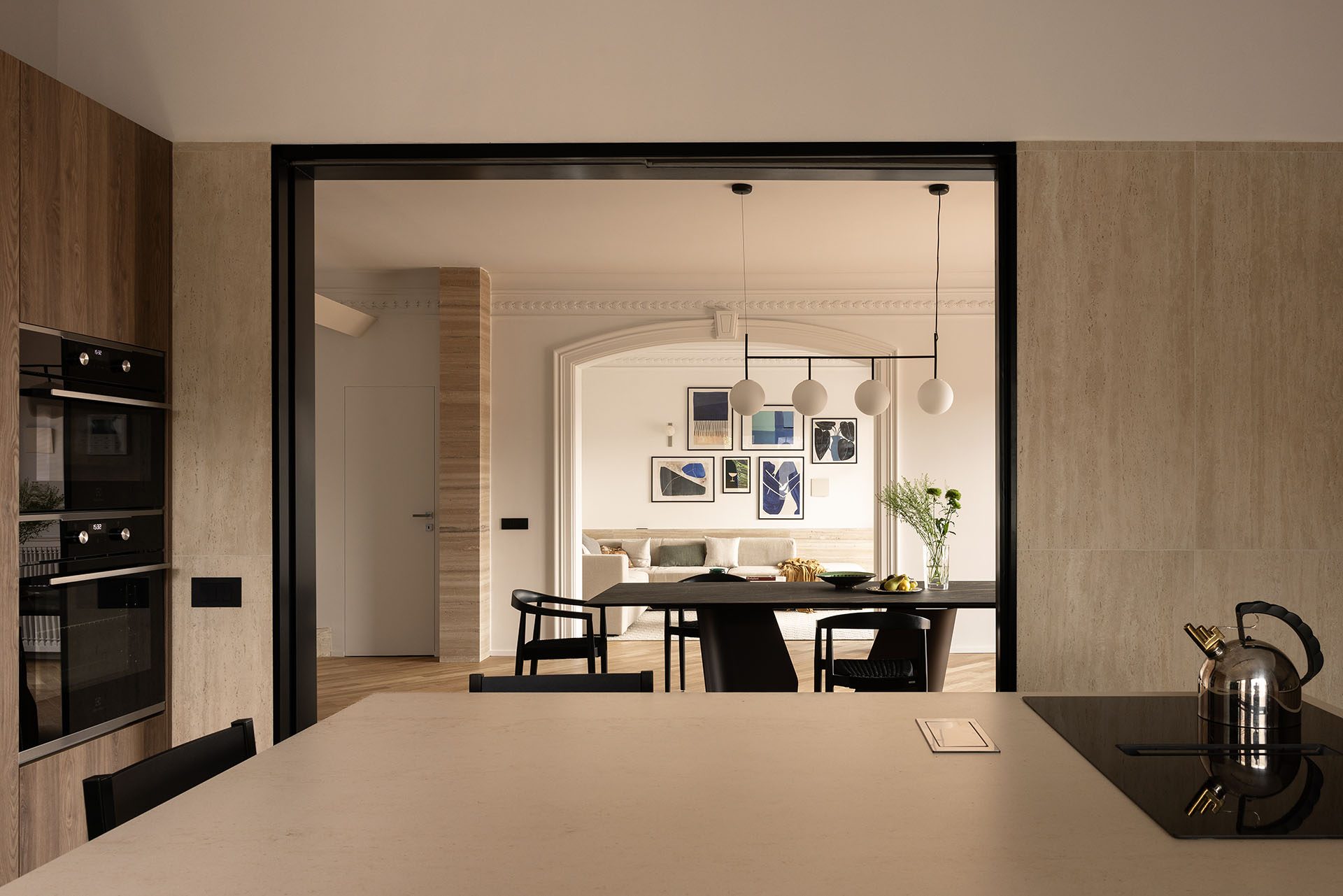
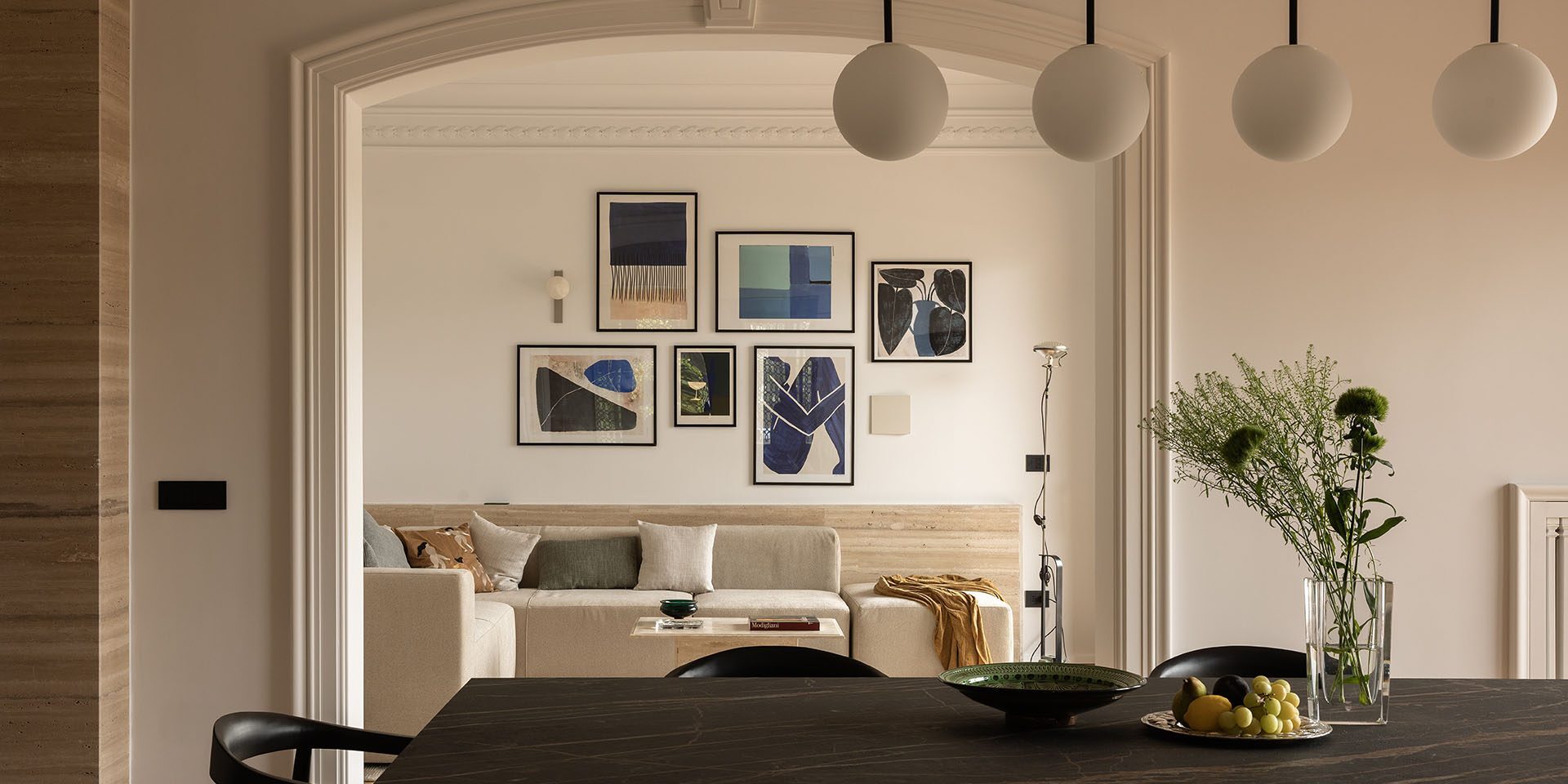
A generous kitchen and dining area now develops around a large island designed for a family with a strong interest in cooking. Beyond the existing archway, the living room remains more intimate, creating a deliberate balance between social activity and retreat.
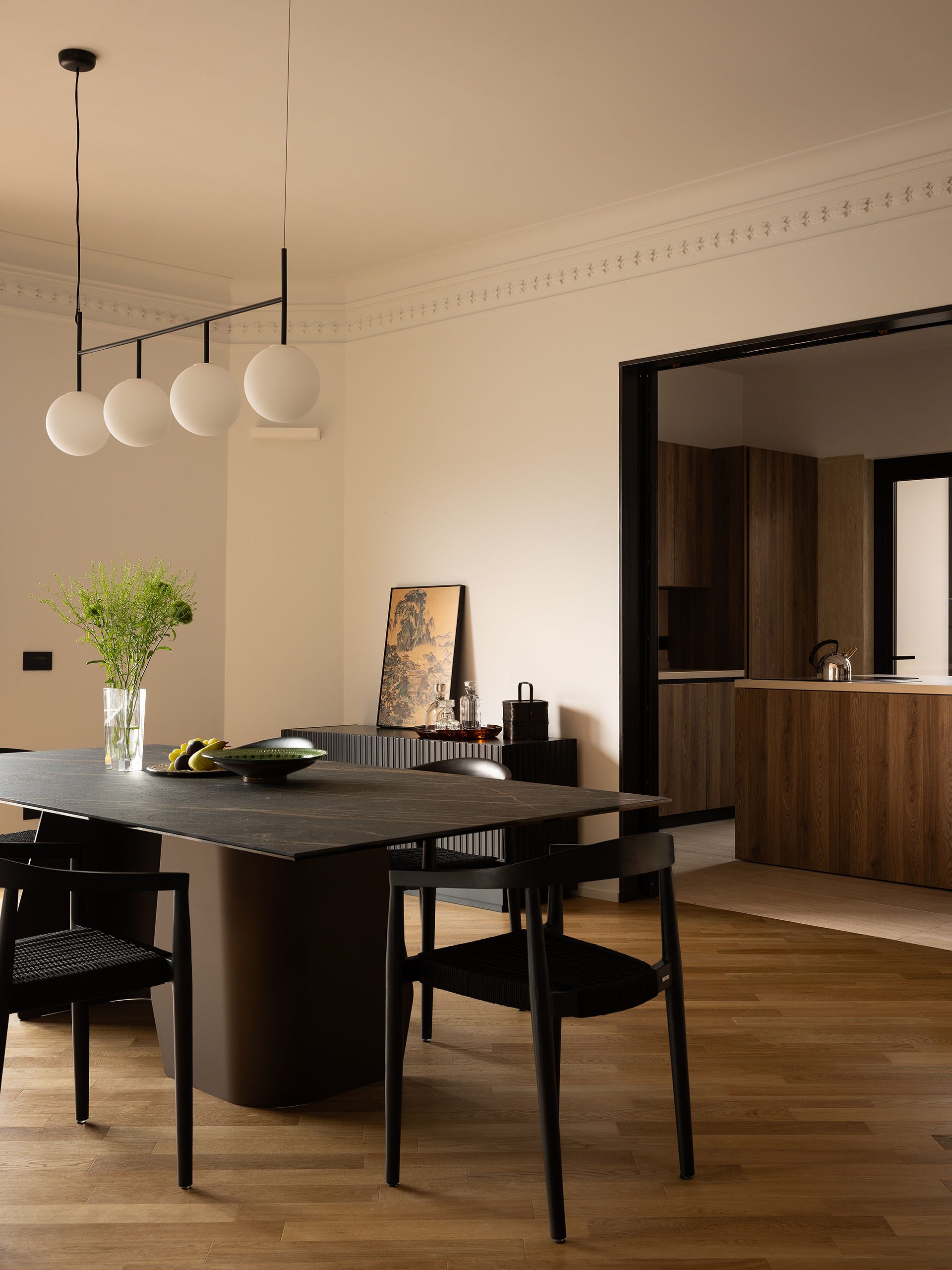
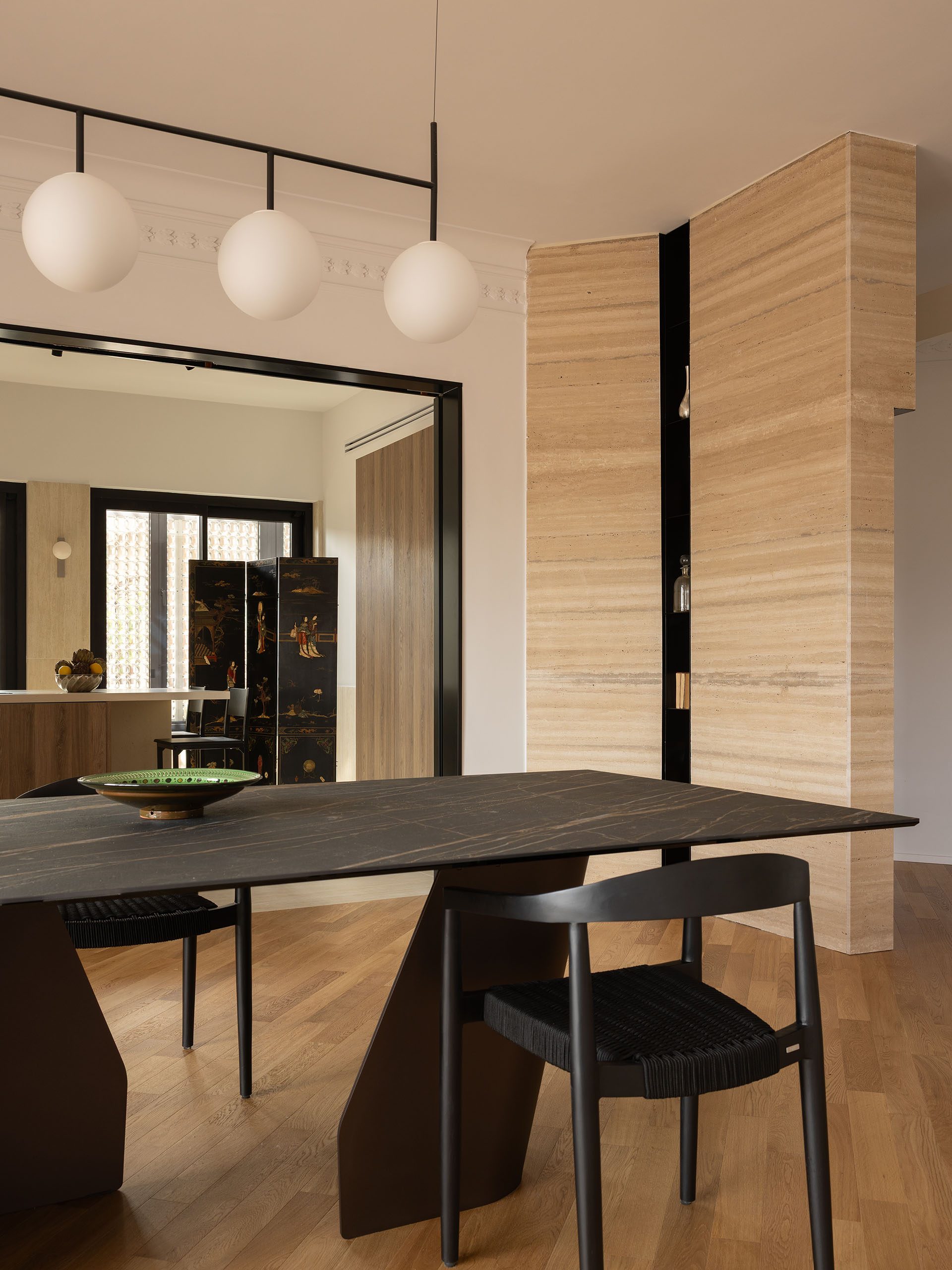
The dining table sits between these two conditions. Rather than merging the entire apartment into a single open plan, the intervention establishes visual continuity while allowing the kitchen and living room to retain distinct identities.
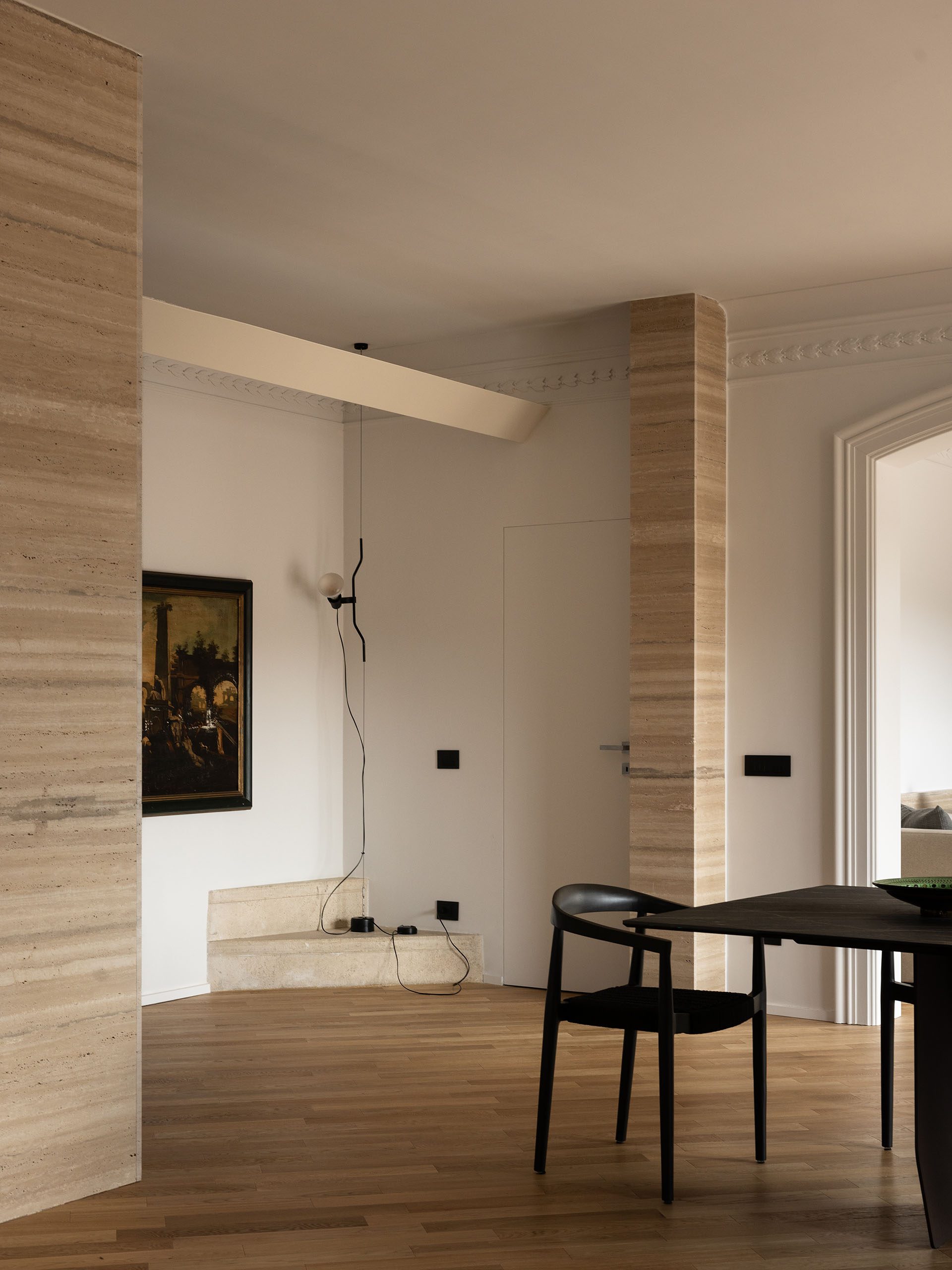
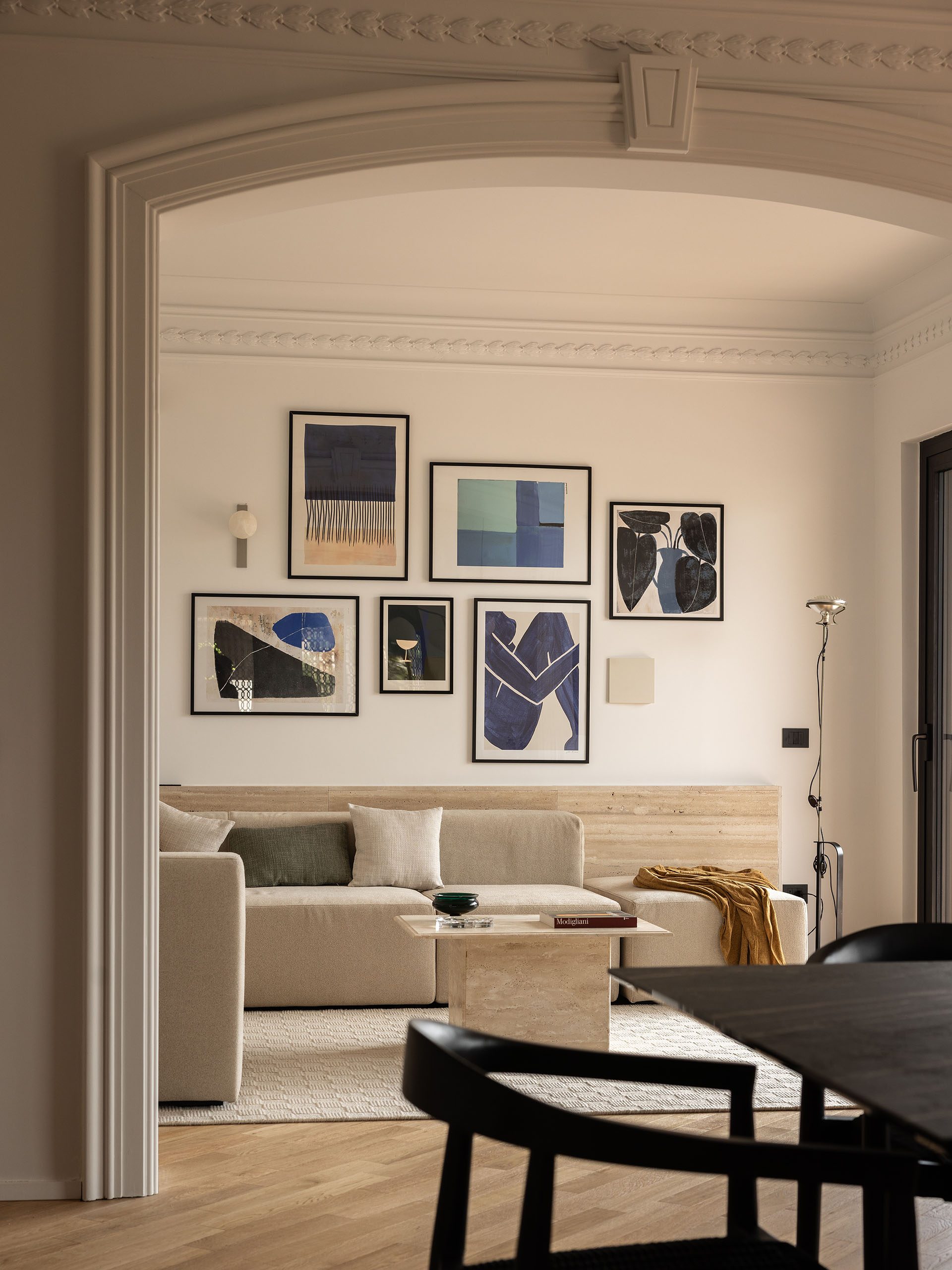
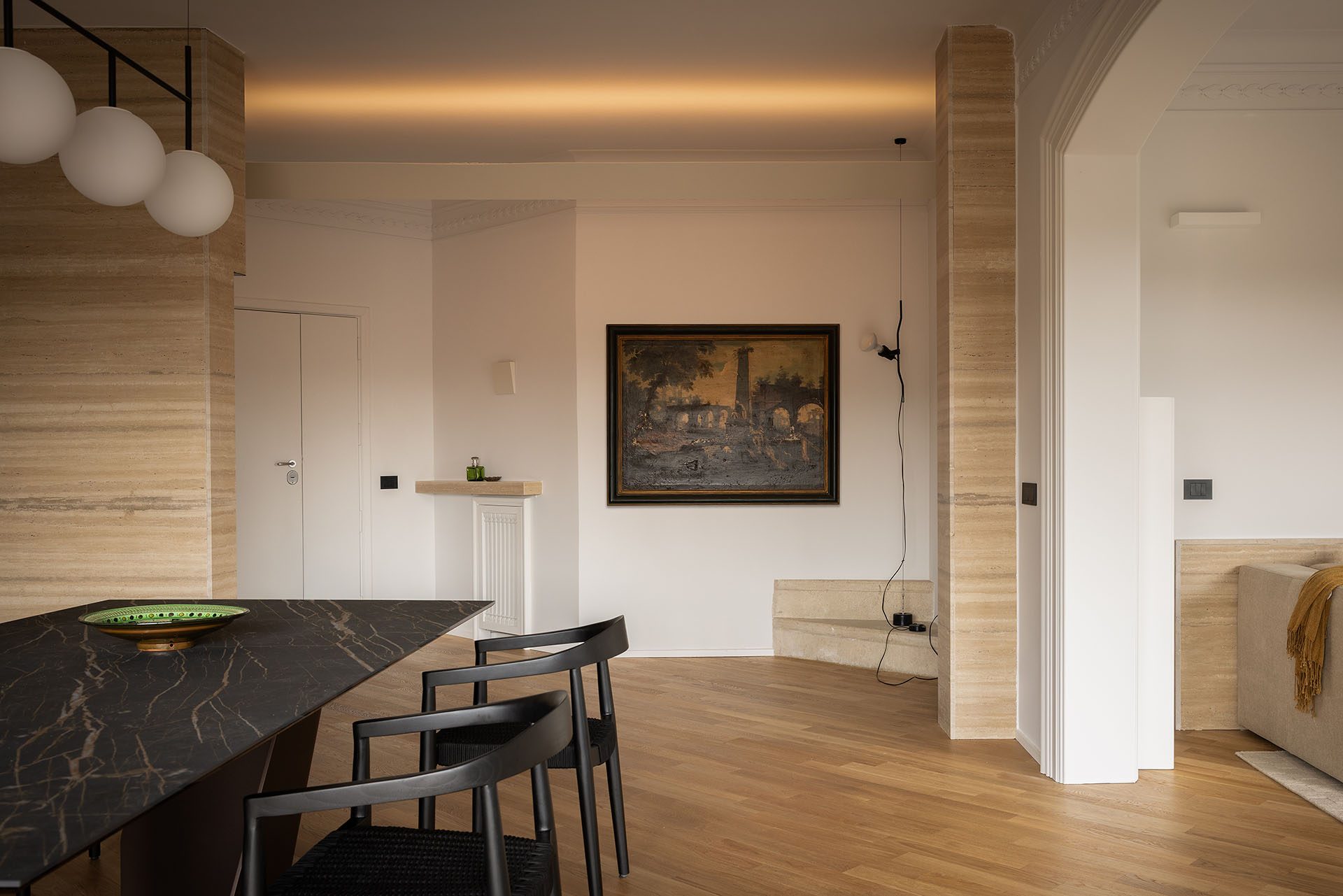
Travertine becomes the main connecting material throughout the entrance, kitchen, living room and bathrooms. Its association with Roman architecture anchors the new interventions within the local context, while its use in partitions, wall cladding and fixed elements gives it a contemporary role.
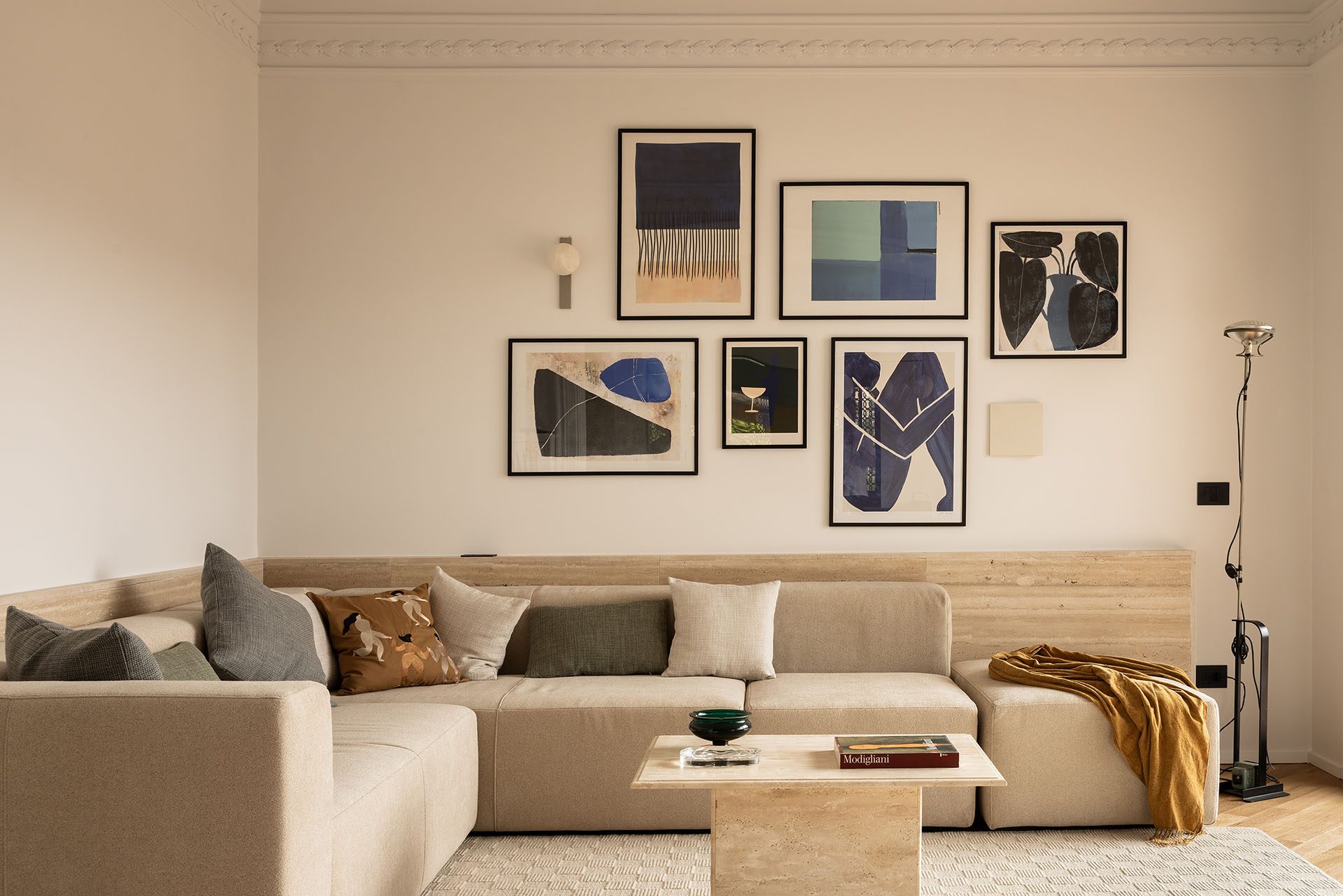
At the entrance, a new travertine wall replaces the former solid partition. Chamfered corners reduce its apparent weight, while a metal bookcase inserted at its centre allows views to pass through.
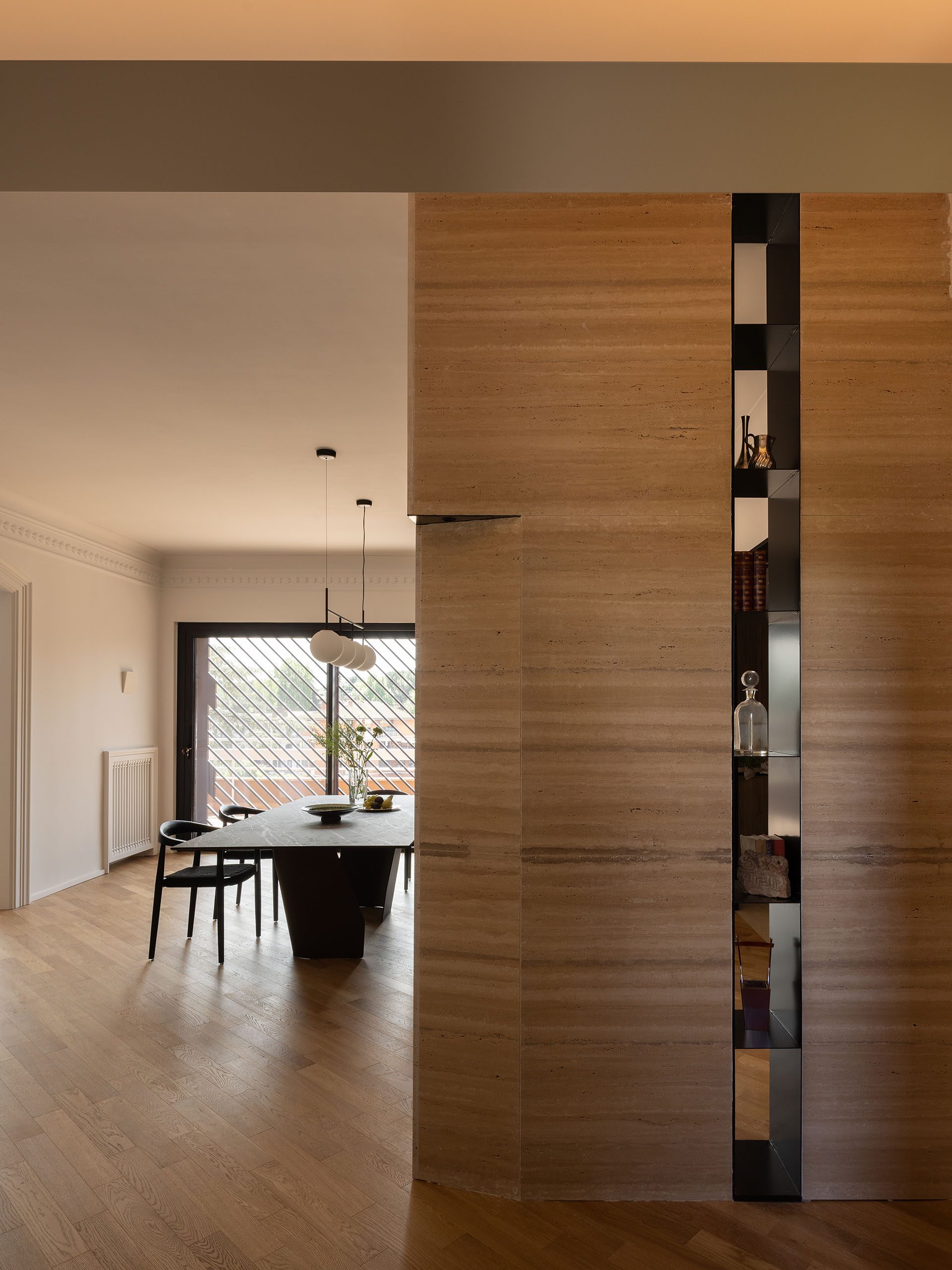
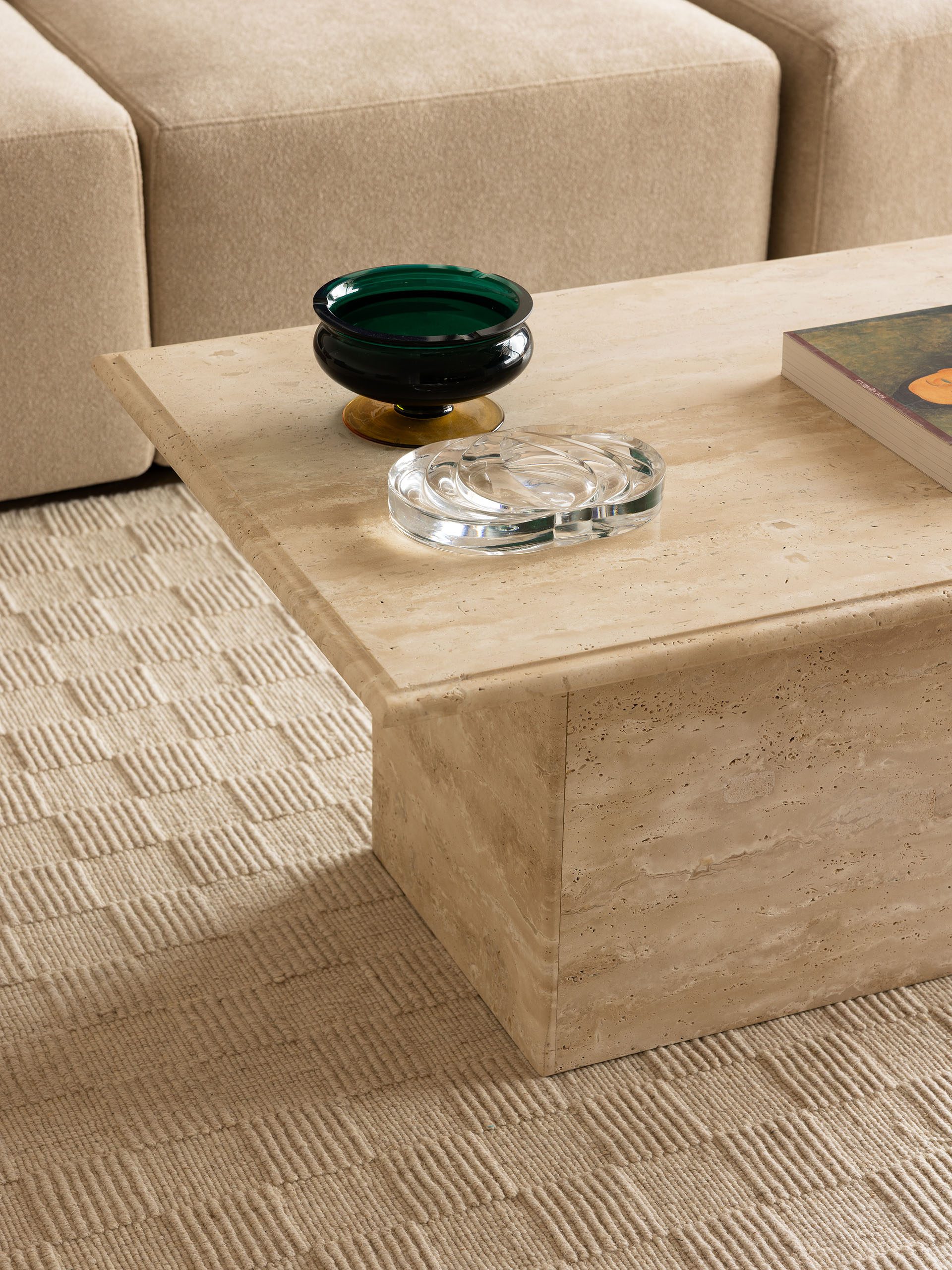
The element functions simultaneously as divider and filter, combining privacy with visual permeability. This dual role reflects the broader design approach, in which Roman material references are brought into dialogue with spatial principles associated with feng shui.
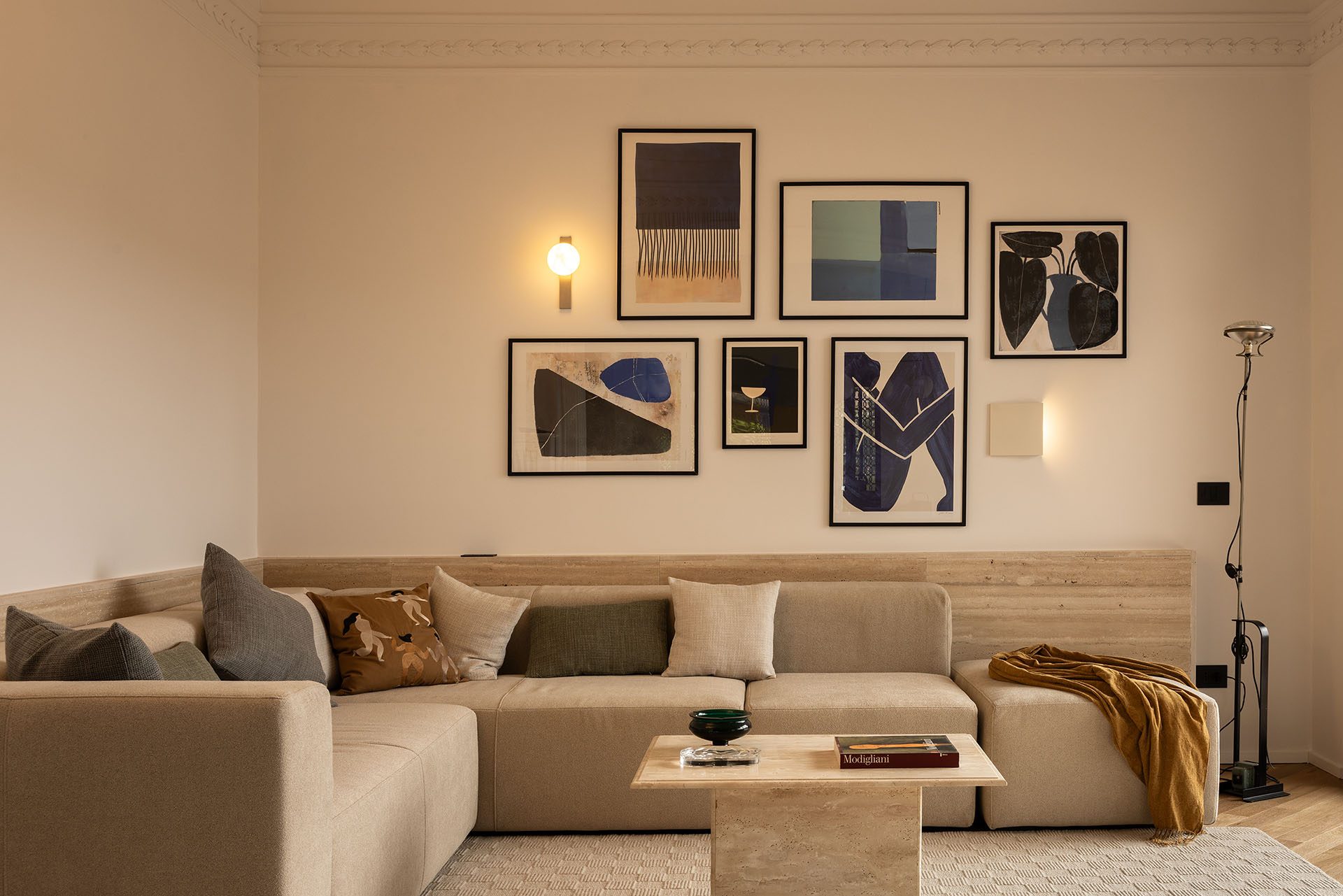
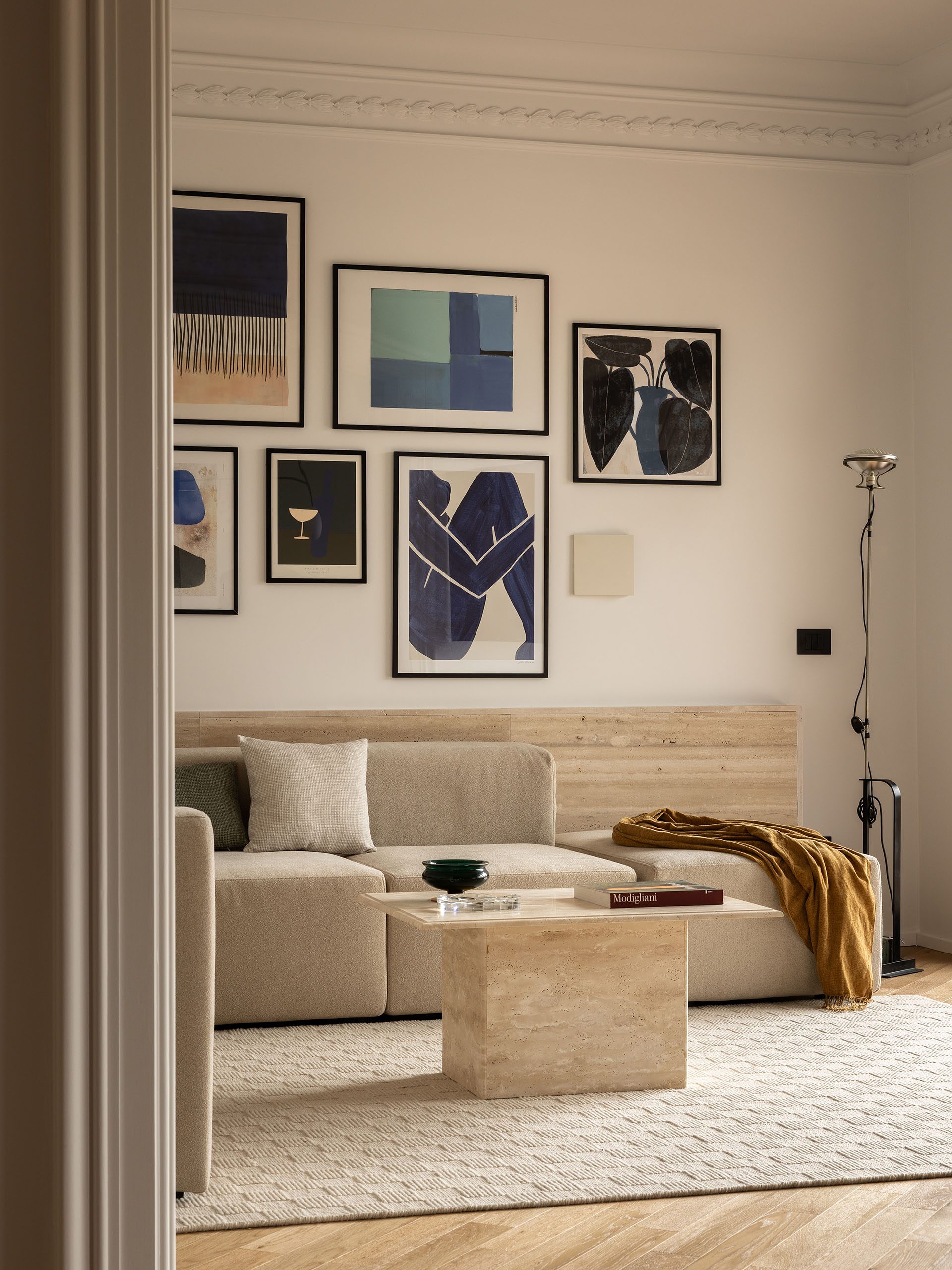
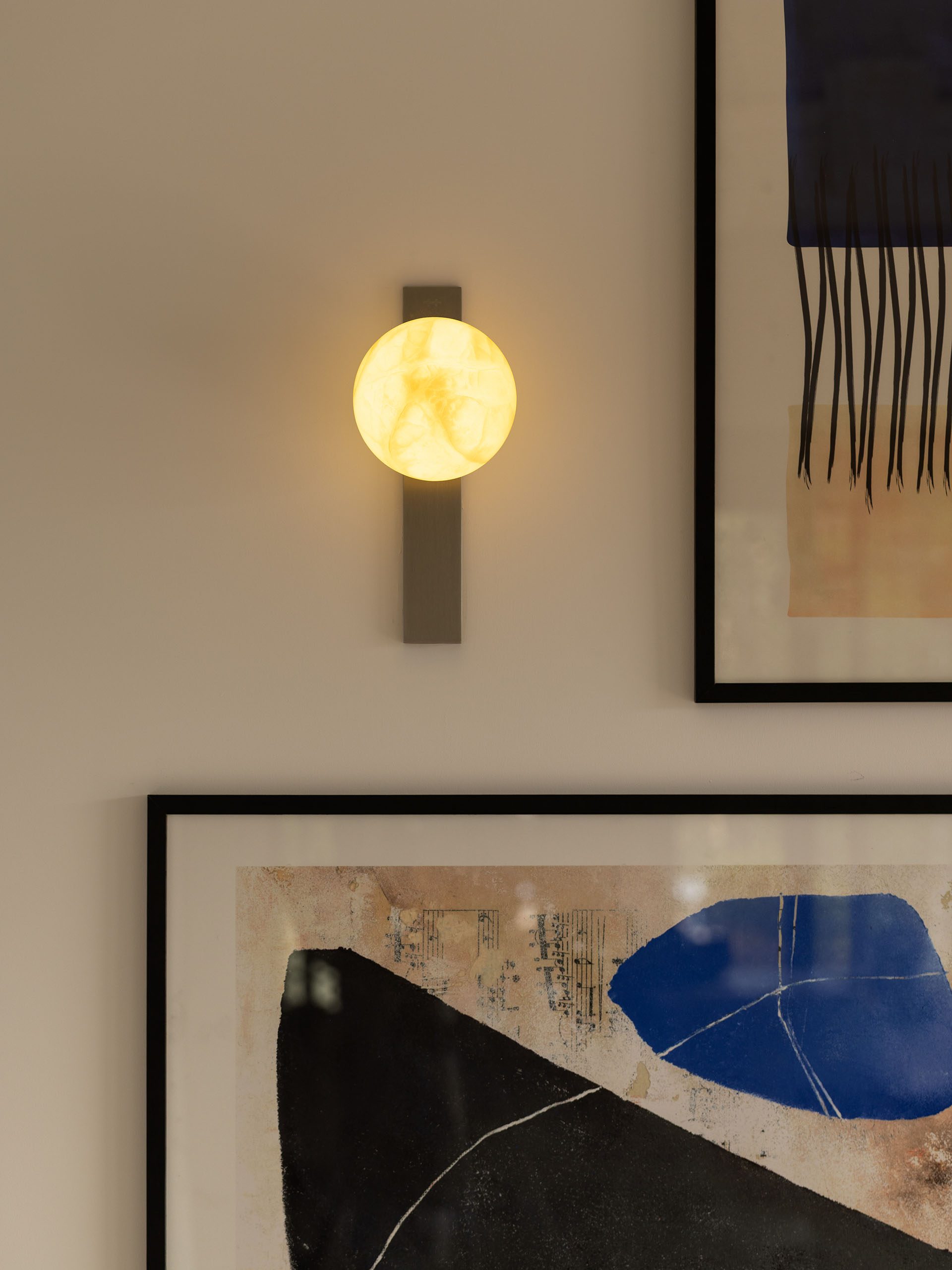
Technical requirements are integrated with minimal disruption to the apartment’s historic features. Suspended ceilings are restricted to circulation and service areas in order to preserve the original decorative ceilings in the principal rooms.
At the entrance, a V-shaped metal element connects building services between the day and night zones while also incorporating lighting. A necessary technical intervention therefore becomes part of the architectural language rather than remaining concealed.
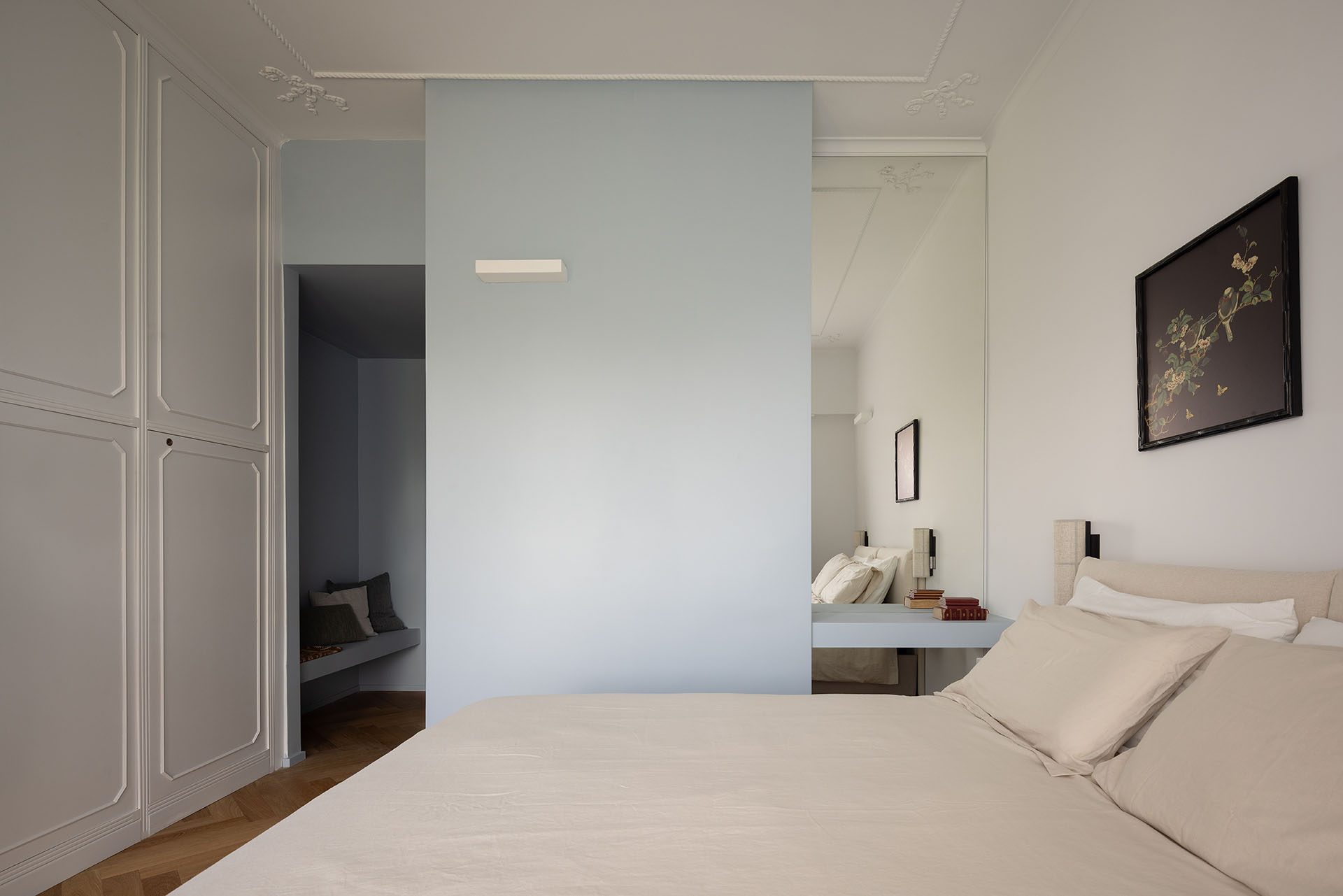
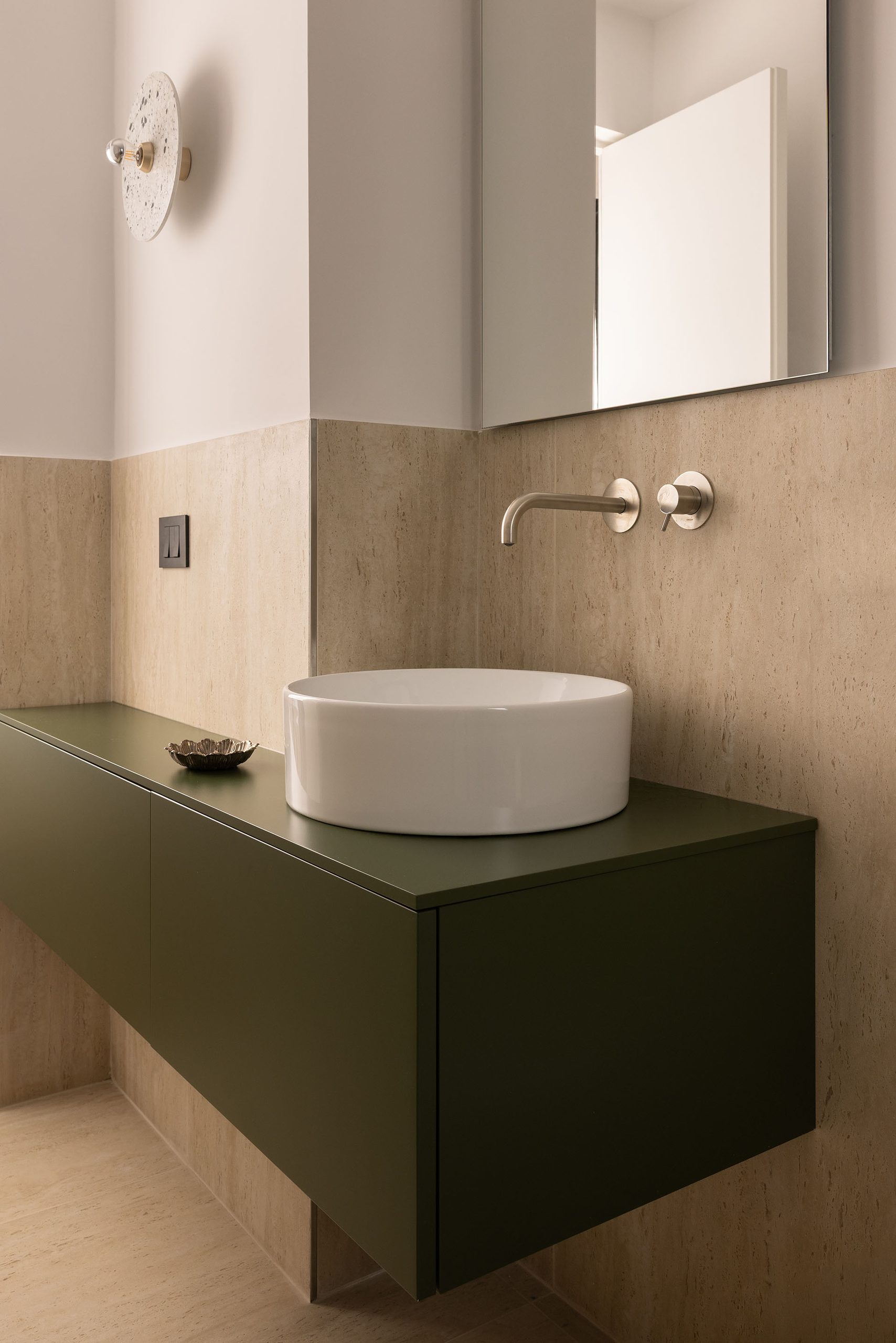
In the main bathroom, the wall is recessed along the line of the original ceiling decoration, creating additional space for the vanity area. A blue finish distinguishes this new volume and connects it visually with artworks and decorative elements elsewhere in the apartment.
The cultural references remain visible through selected objects rather than through an overarching decorative theme. An antique Eastern folding screen inlaid with jade is placed in the kitchen, while Chinese-themed artworks in bamboo frames appear in the bedroom. In the living room, a painting depicting the mythological island of Penglai introduces another connection with East Asian culture.
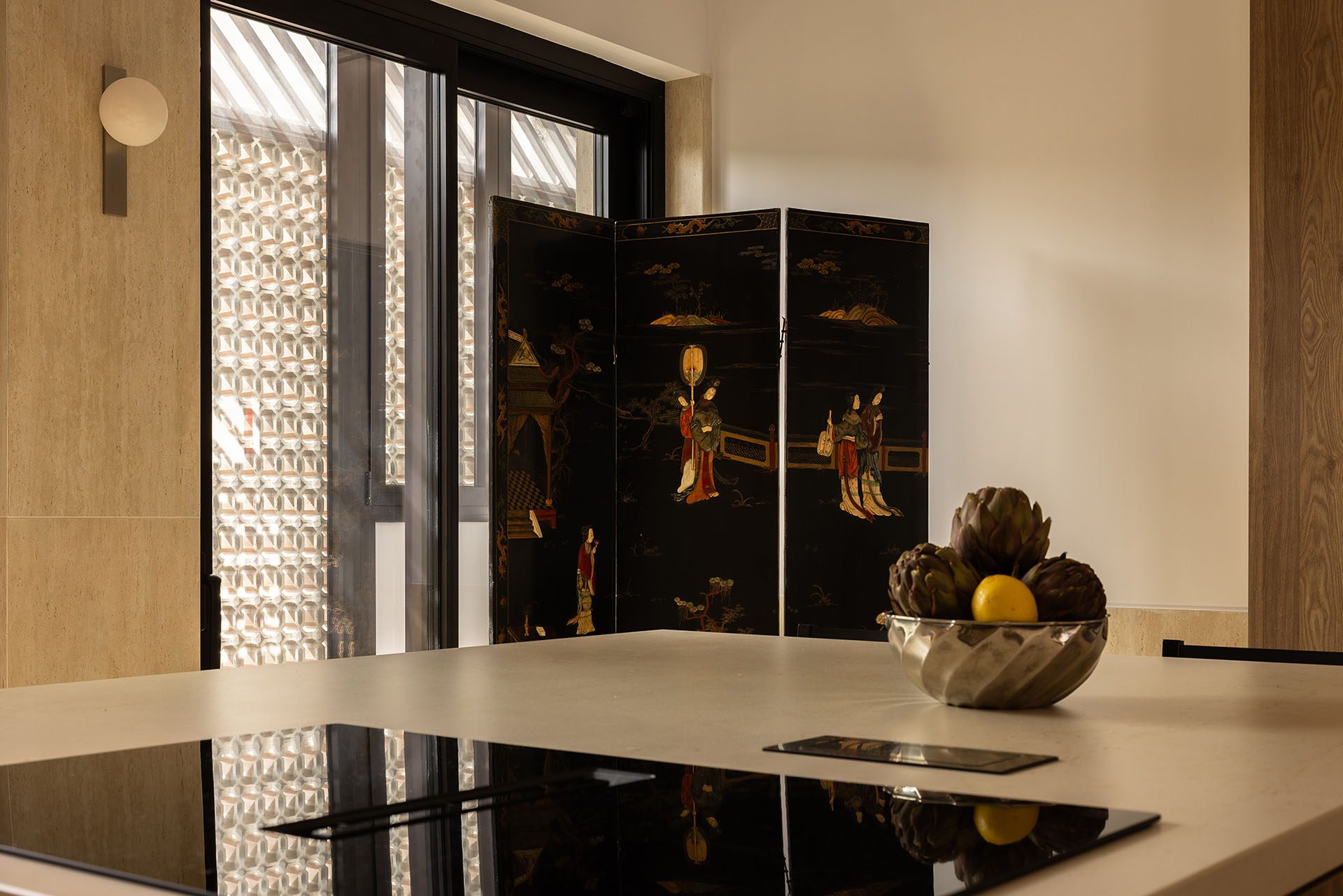
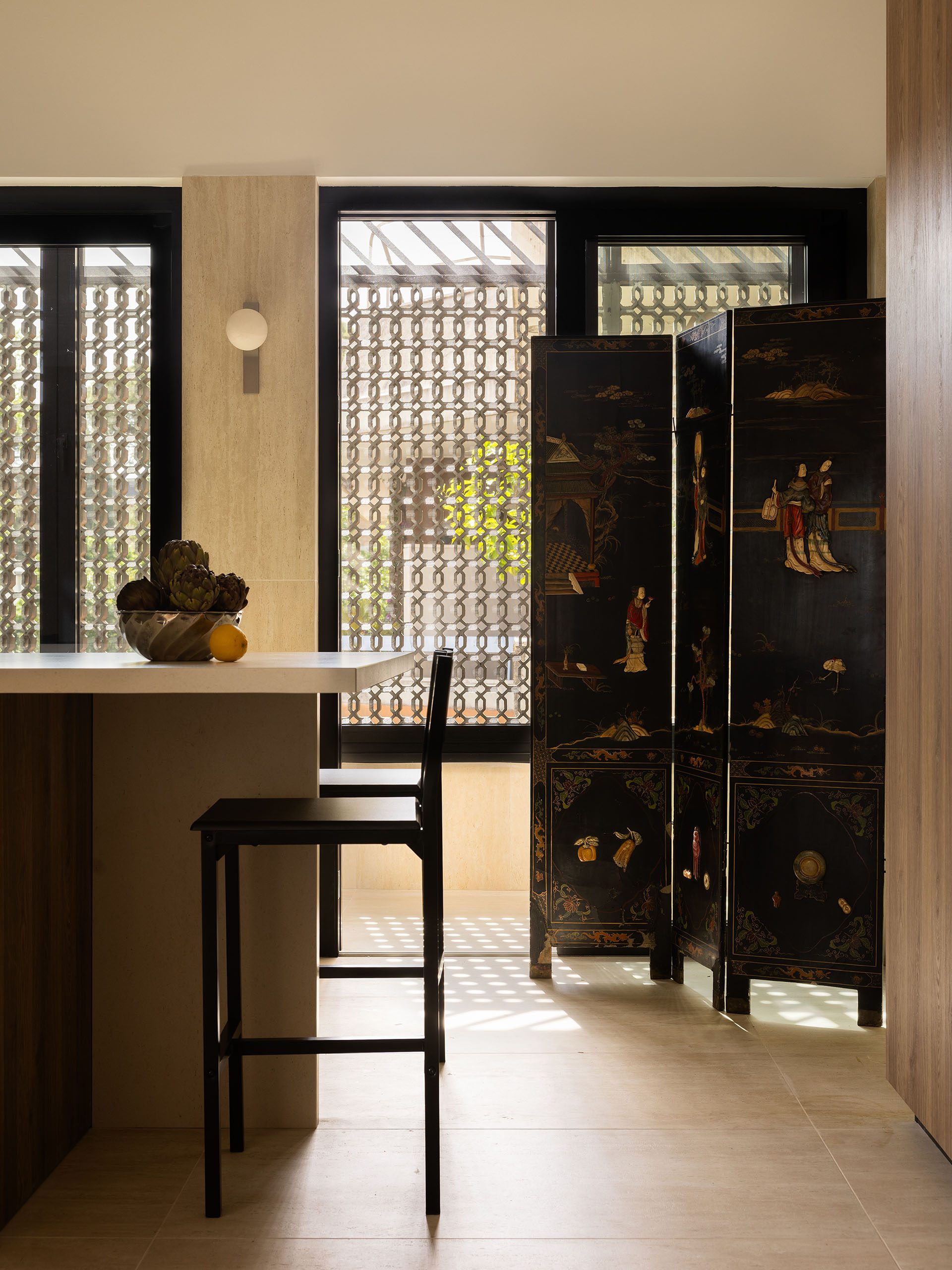
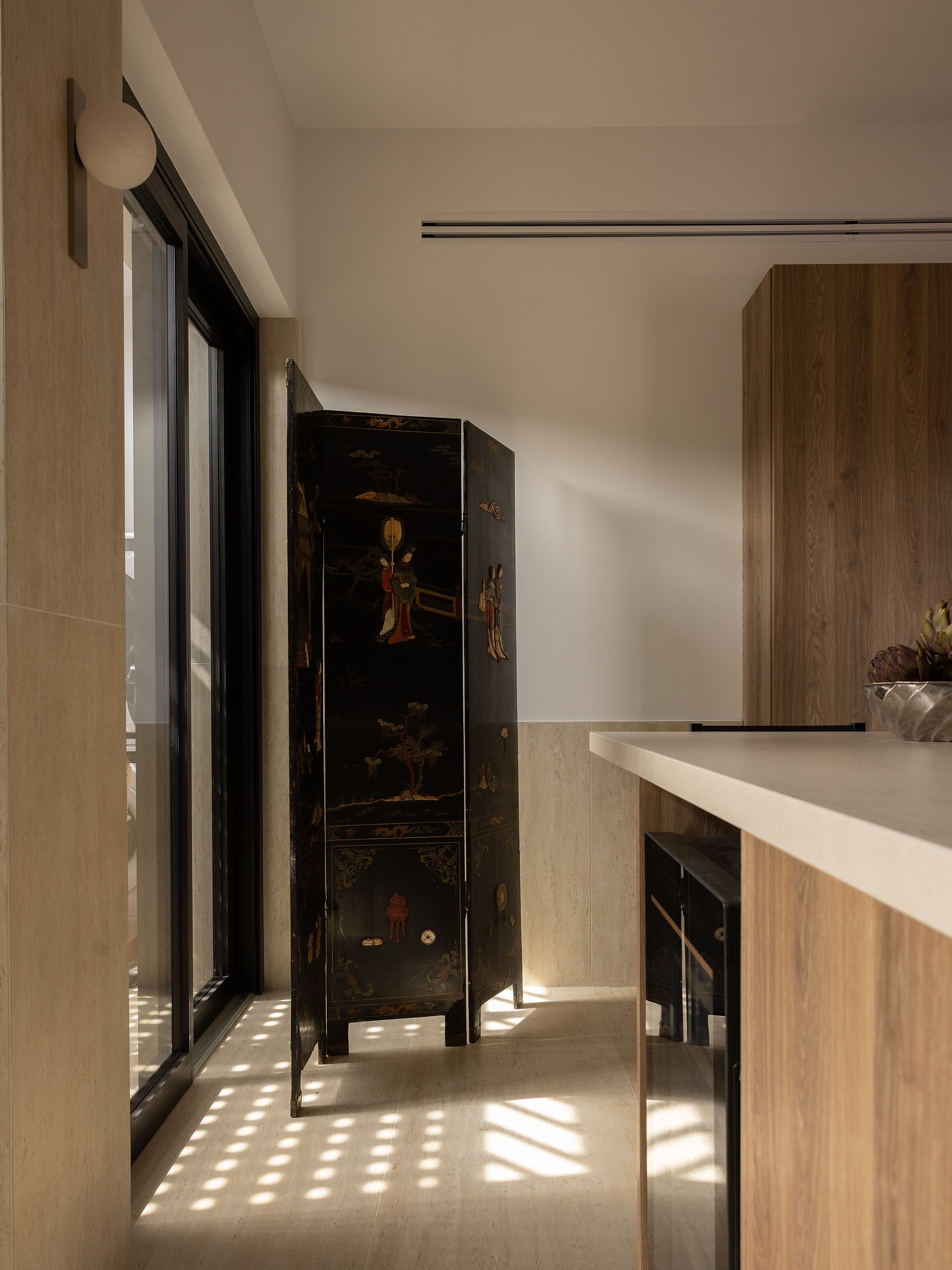
These objects coexist with the apartment’s Roman character, local travertine and original plasterwork. Their presence is based on contrast and balance rather than imitation.
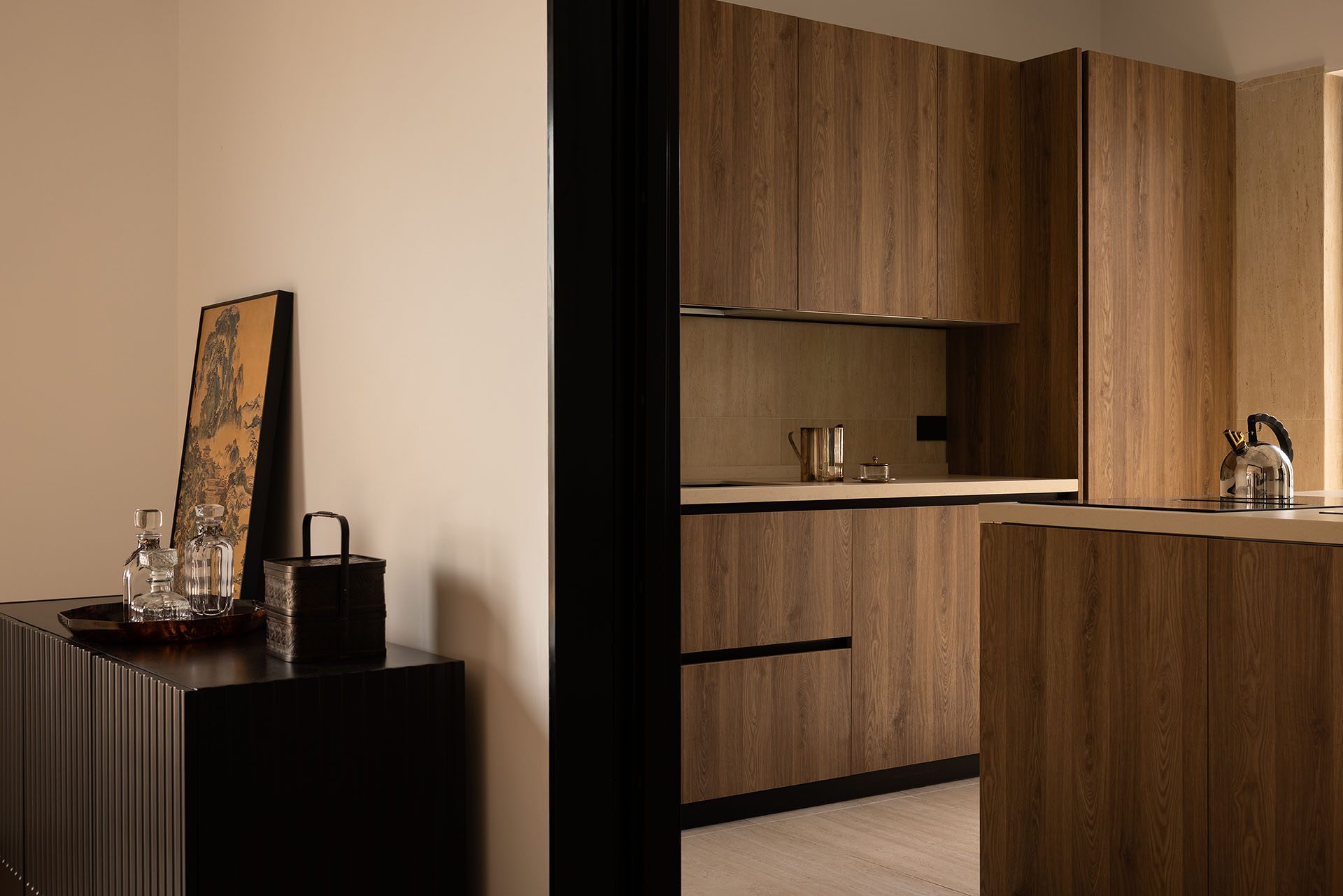
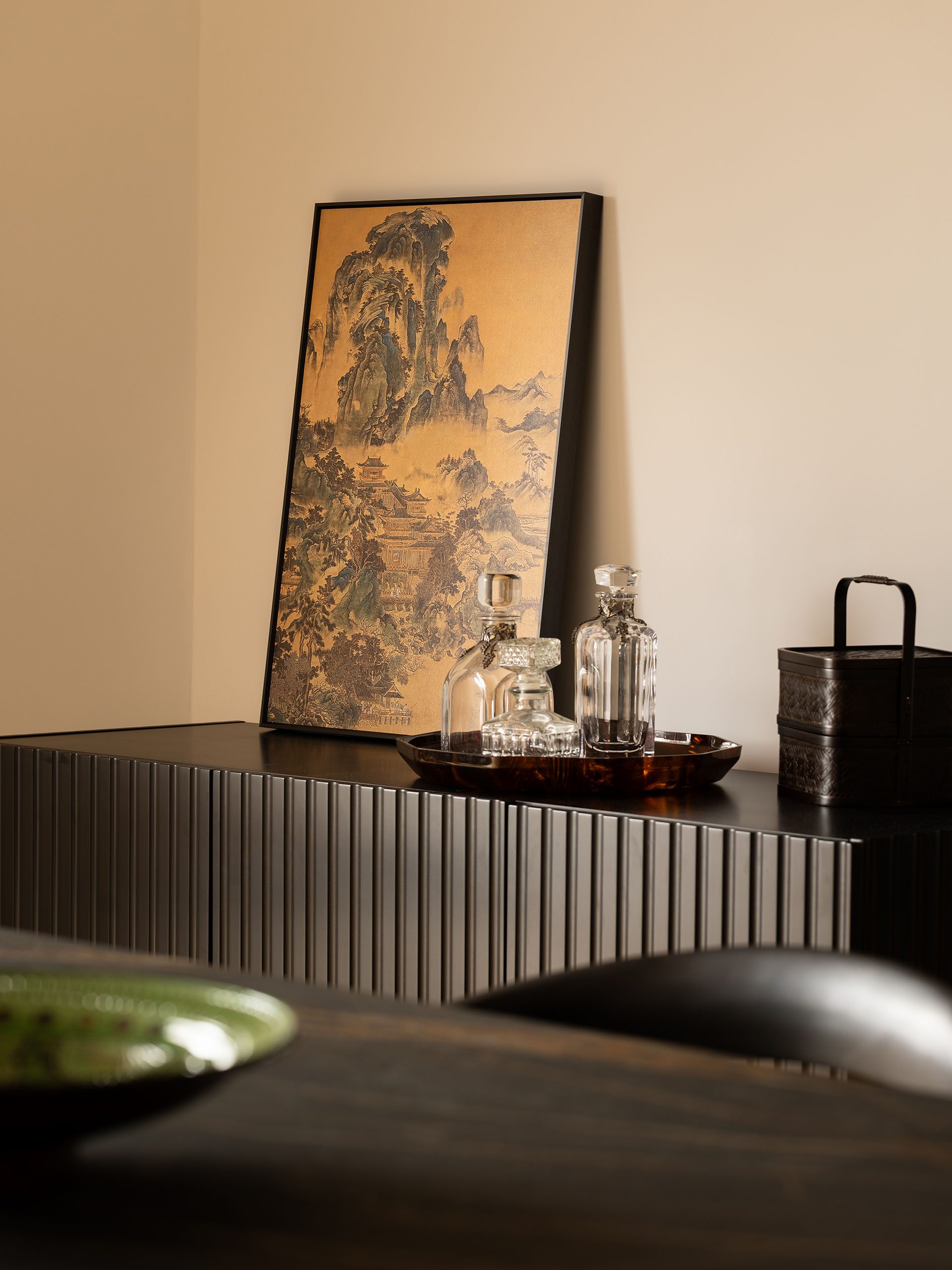
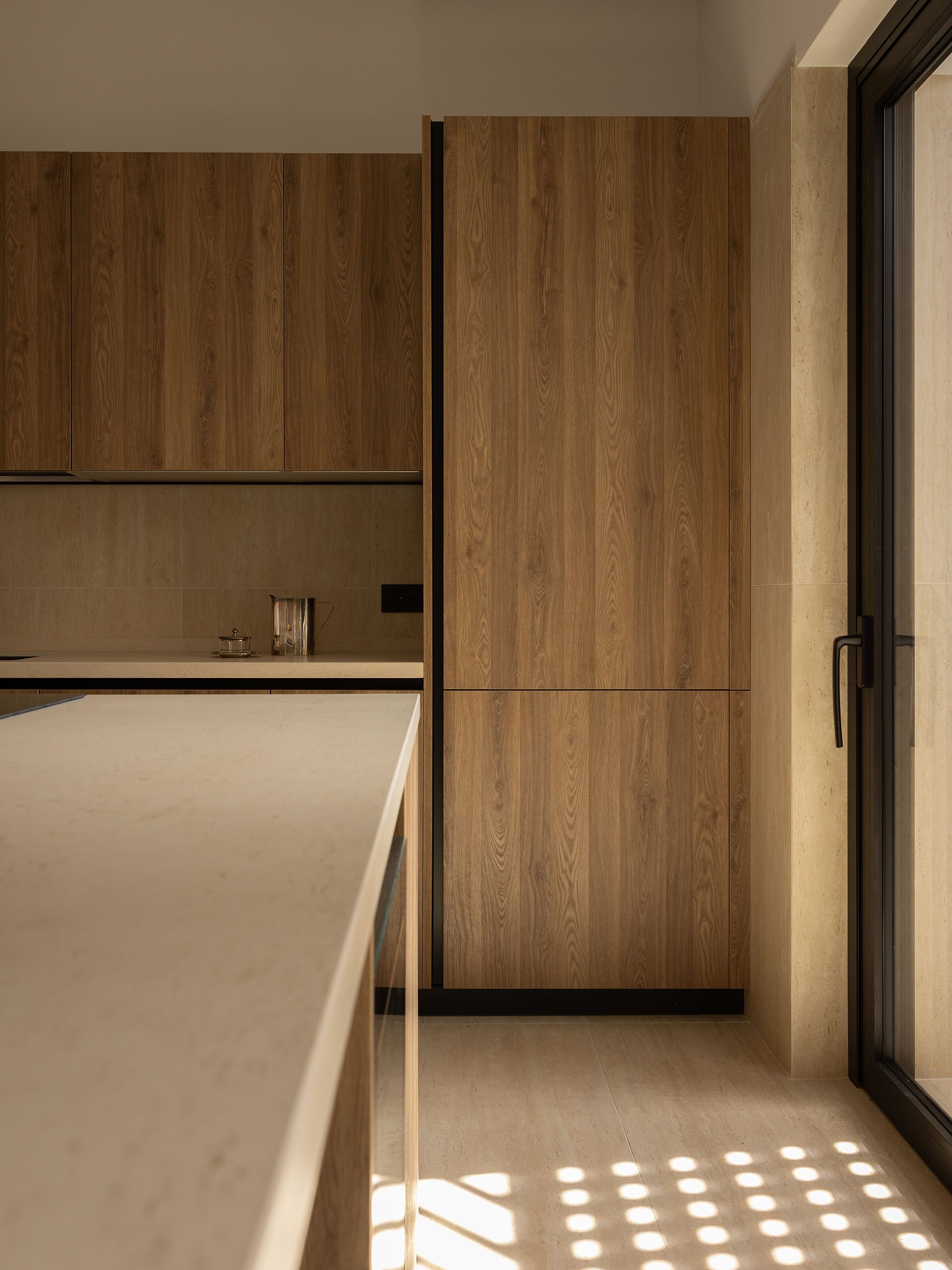
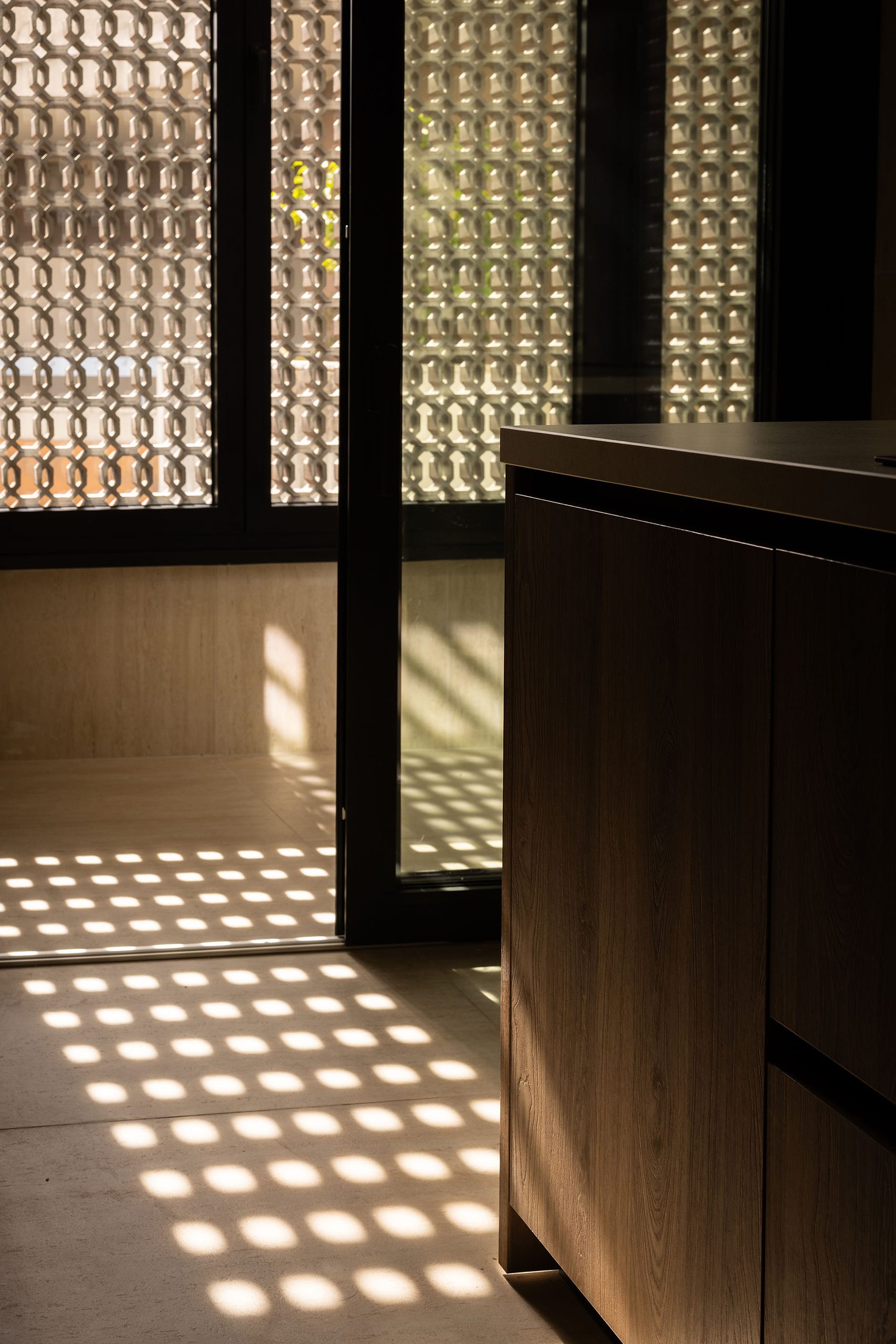
Natural light reinforces this relationship. In the kitchen, daylight enters through the original geometric louvers of the service balcony, creating changing patterns across the interior. Warm stone and timber are set against darker furniture and predominantly white surfaces, allowing old and new, East and West, to remain distinct while belonging to the same domestic environment.