AC Apartment by Arthur Casas in São Paulo
Interior Design:
Photography:

An Architect’s Own Apartment in São Paulo
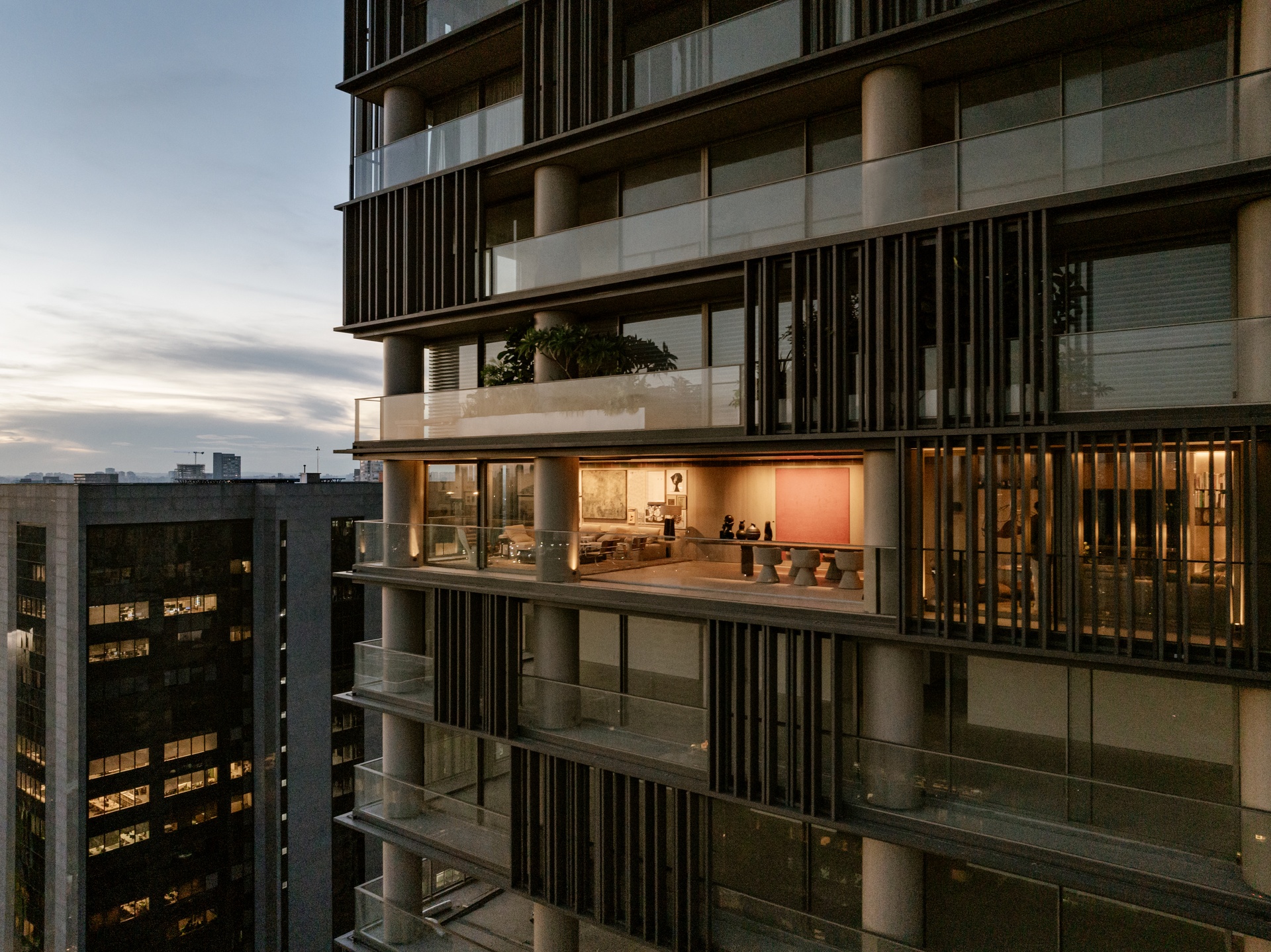
Designed as his own residence, AC Apartment by Arthur Casas is a synthesis of technical precision, functionality and personal narrative. Located in Praça Henrique Monteiro, a mixed-use complex also designed by the architect, the apartment is conceived as a direct extension of his thinking on architecture, design and urban life.
Every decision, from the organization of the plan to the detailing of the carpentry, reflects a conscious adaptation to everyday use. The result is a residence that combines spatial fluidity, integrated systems and aesthetic intention, while marking a significant shift in the architect’s way of living: from a 1940s house in Pacaembu, designed by Artigas, to a more compact, contemporary and practical urban apartment.
A 300 sq.m. Plan Without Residual Space
With an area of approximately 300 sq.m., the apartment was designed to eliminate unused spaces and prioritize direct circulation, functional clarity and versatile environments. Full automation, custom-made solutions and extensive use of natural materials create an atmosphere that is precise but welcoming, controlled but lived-in.
The interior also functions as a calm background for Arthur Casas’ personal collection of artworks, sculptures, books, photographs, cherished objects and design pieces. As the architect notes, designing for himself was, in his words, easy: he knew what he liked and how he lived.
A Continuous Social Area
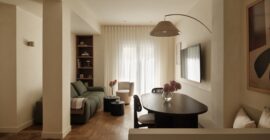
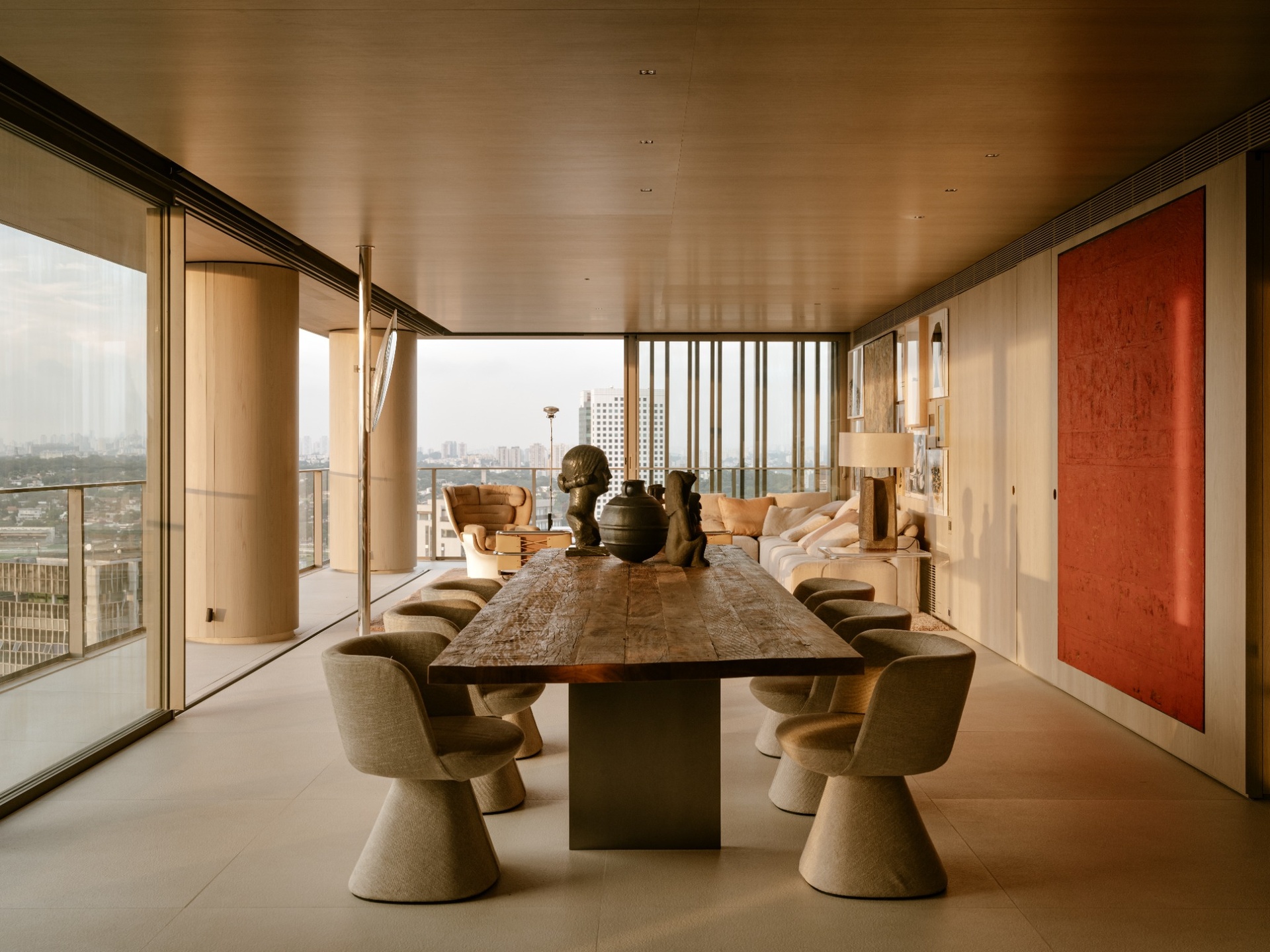
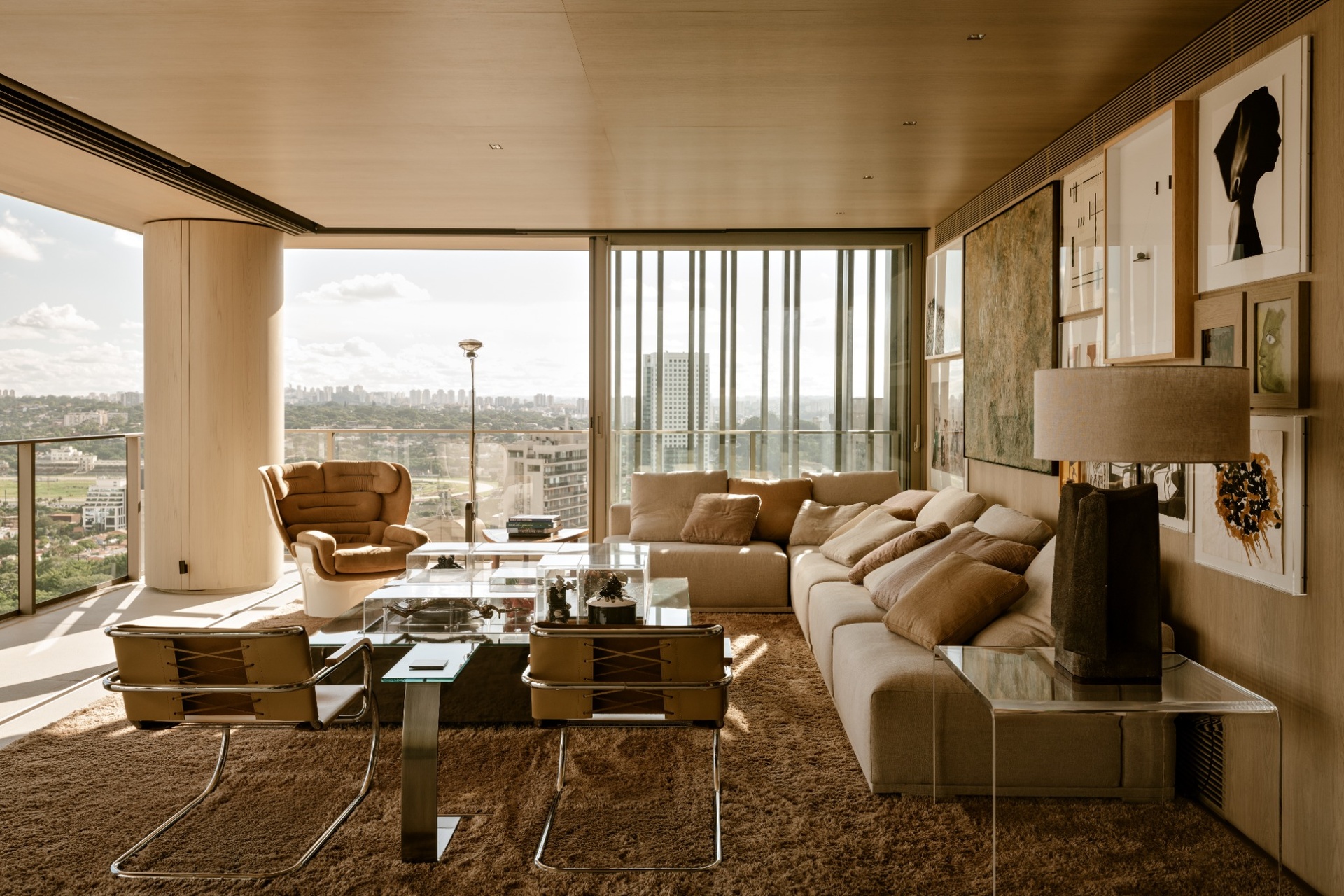
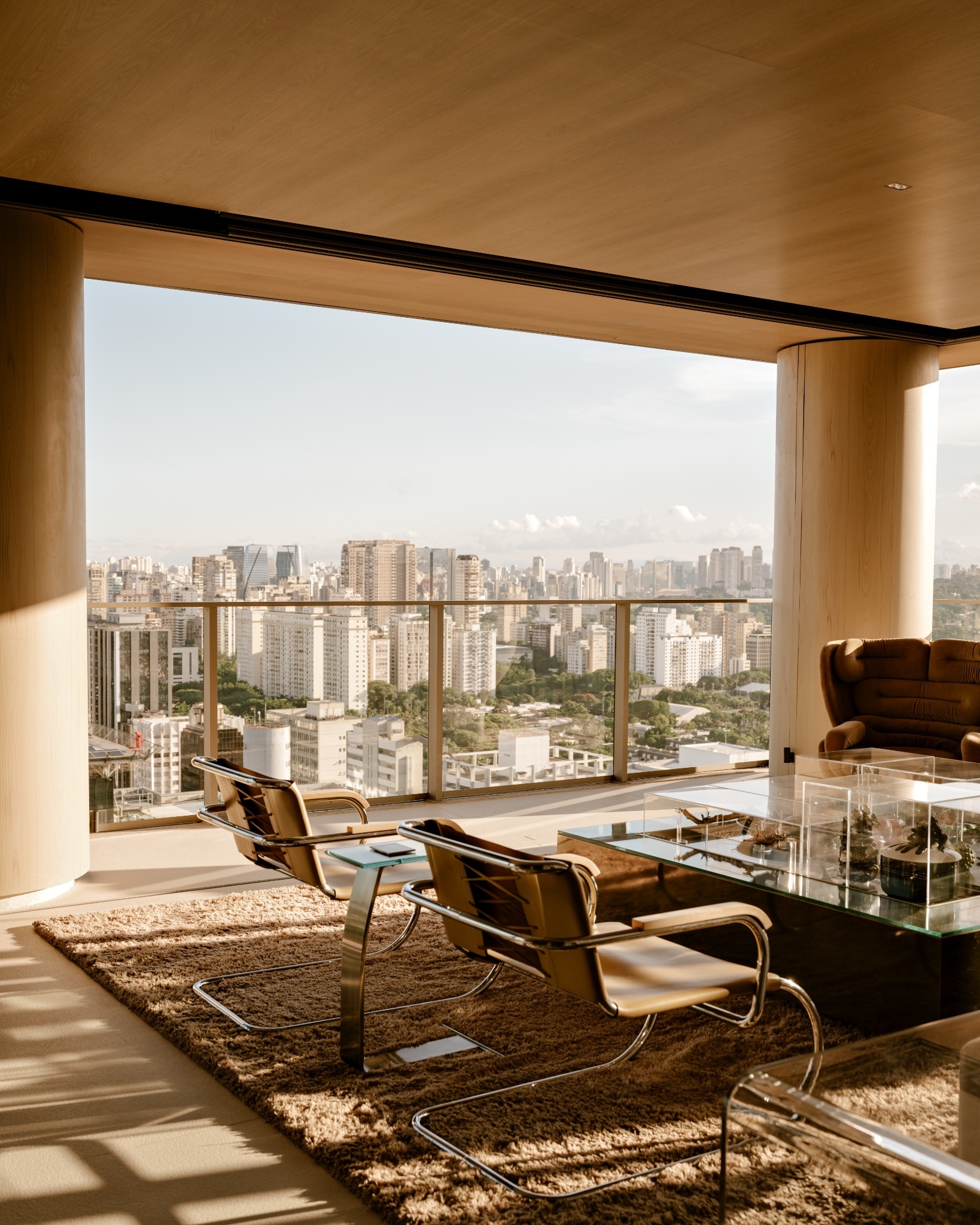
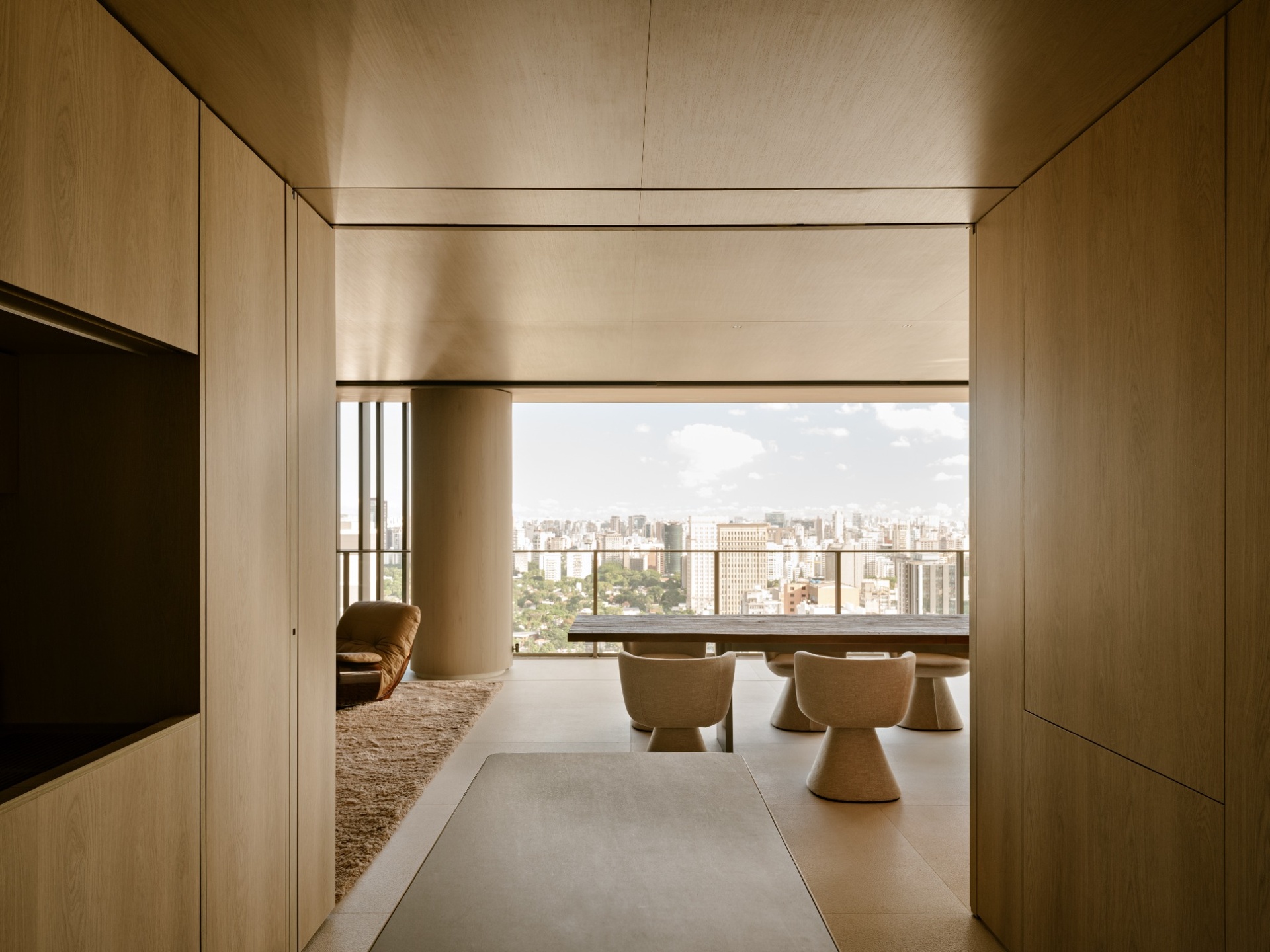
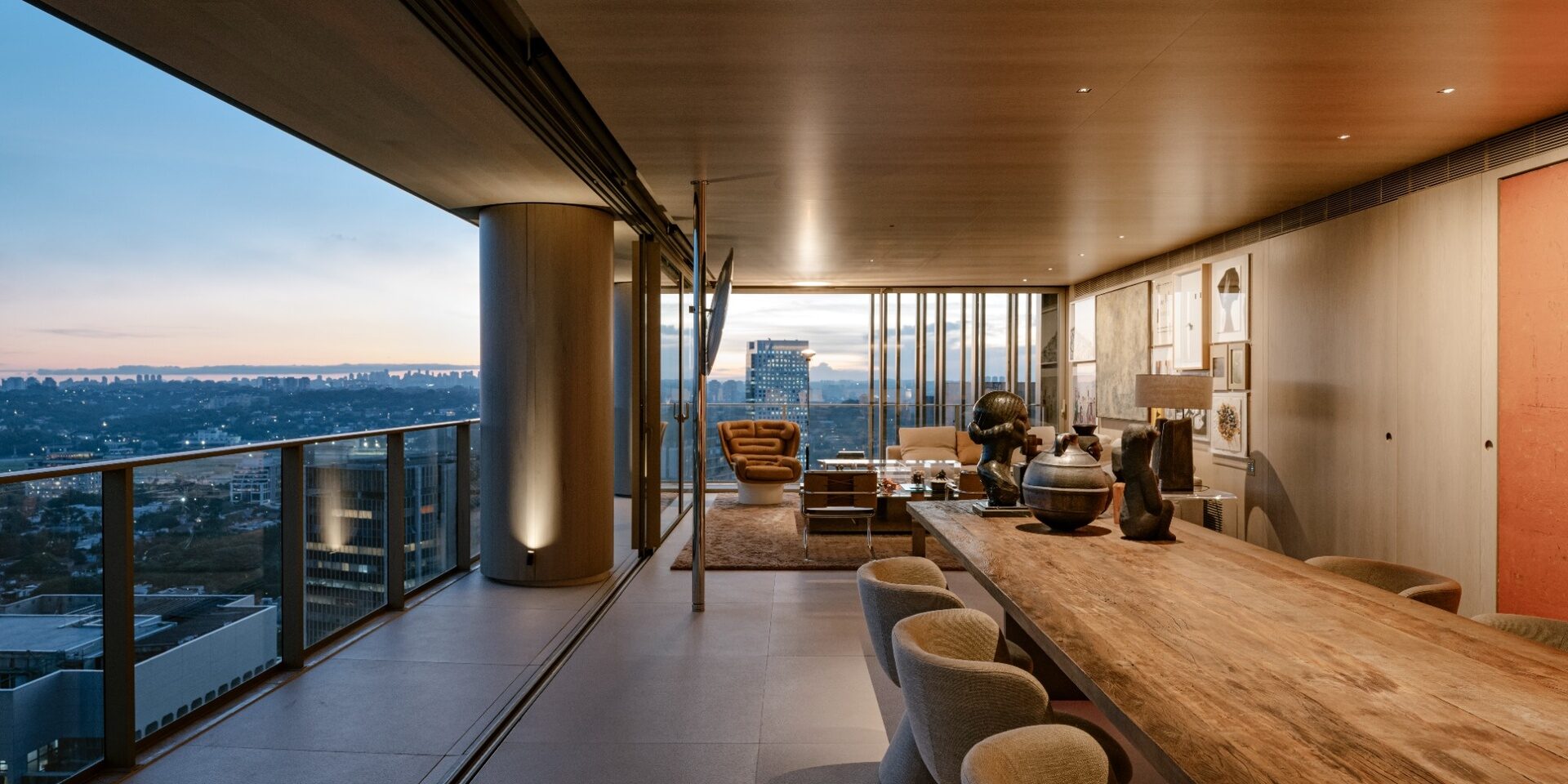
Upon entering the apartment, the integration of spaces is immediately apparent. The door opens into a continuous social area, where the living room, dining room, home theater and kitchen are connected through a single architectural gesture. Circulation is fluid and unobstructed, while fixed elements organize the space naturally.
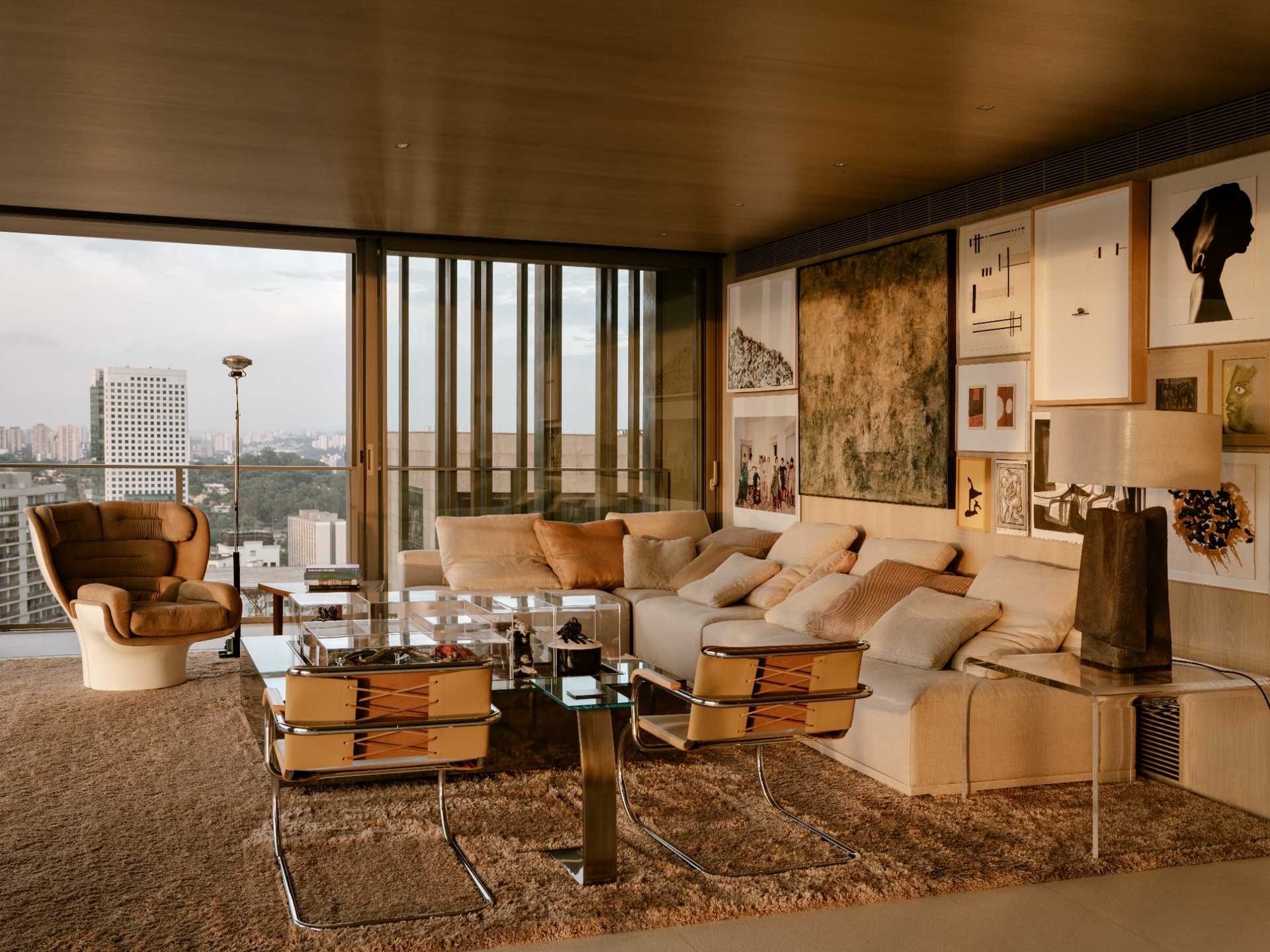
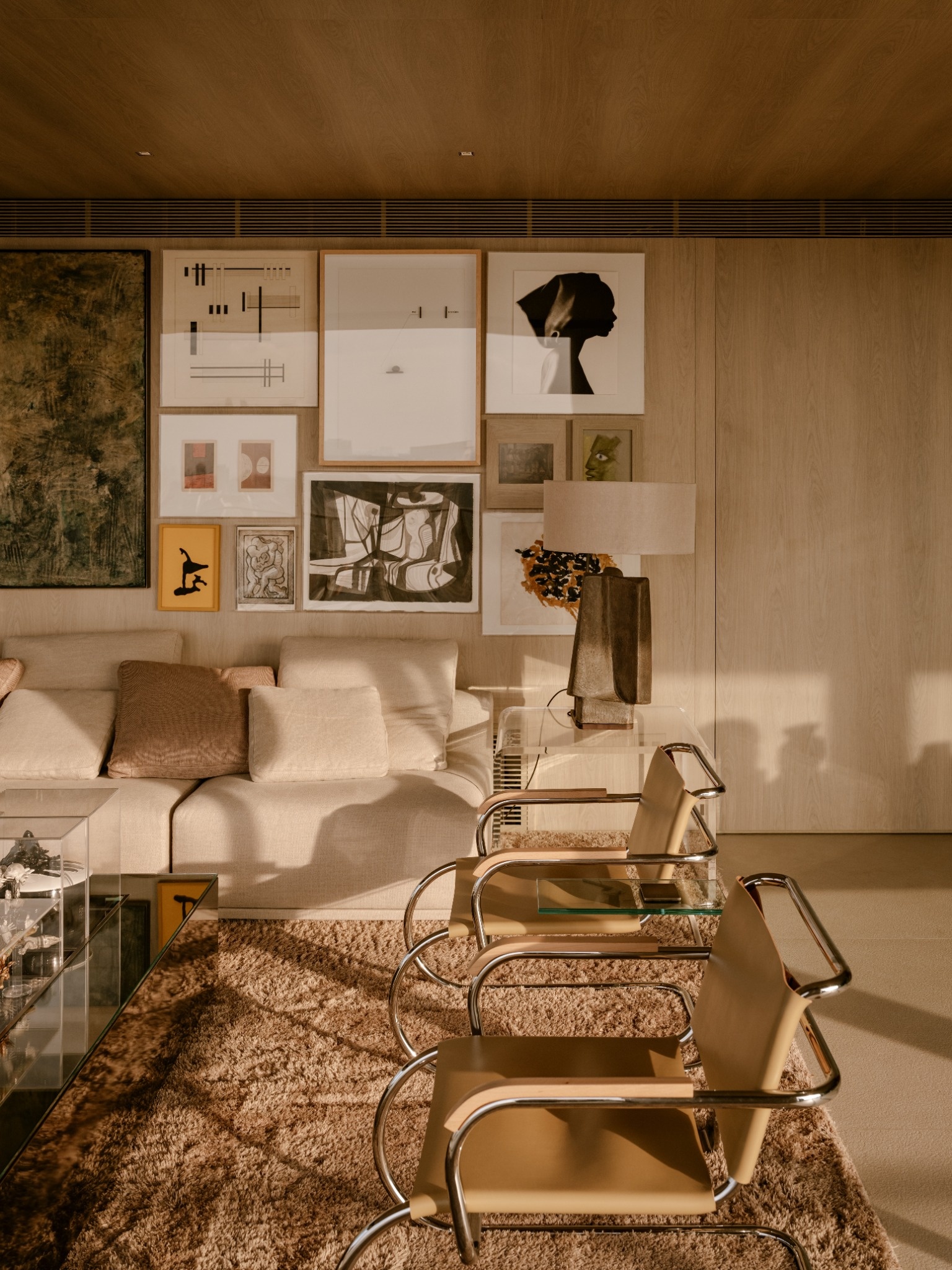
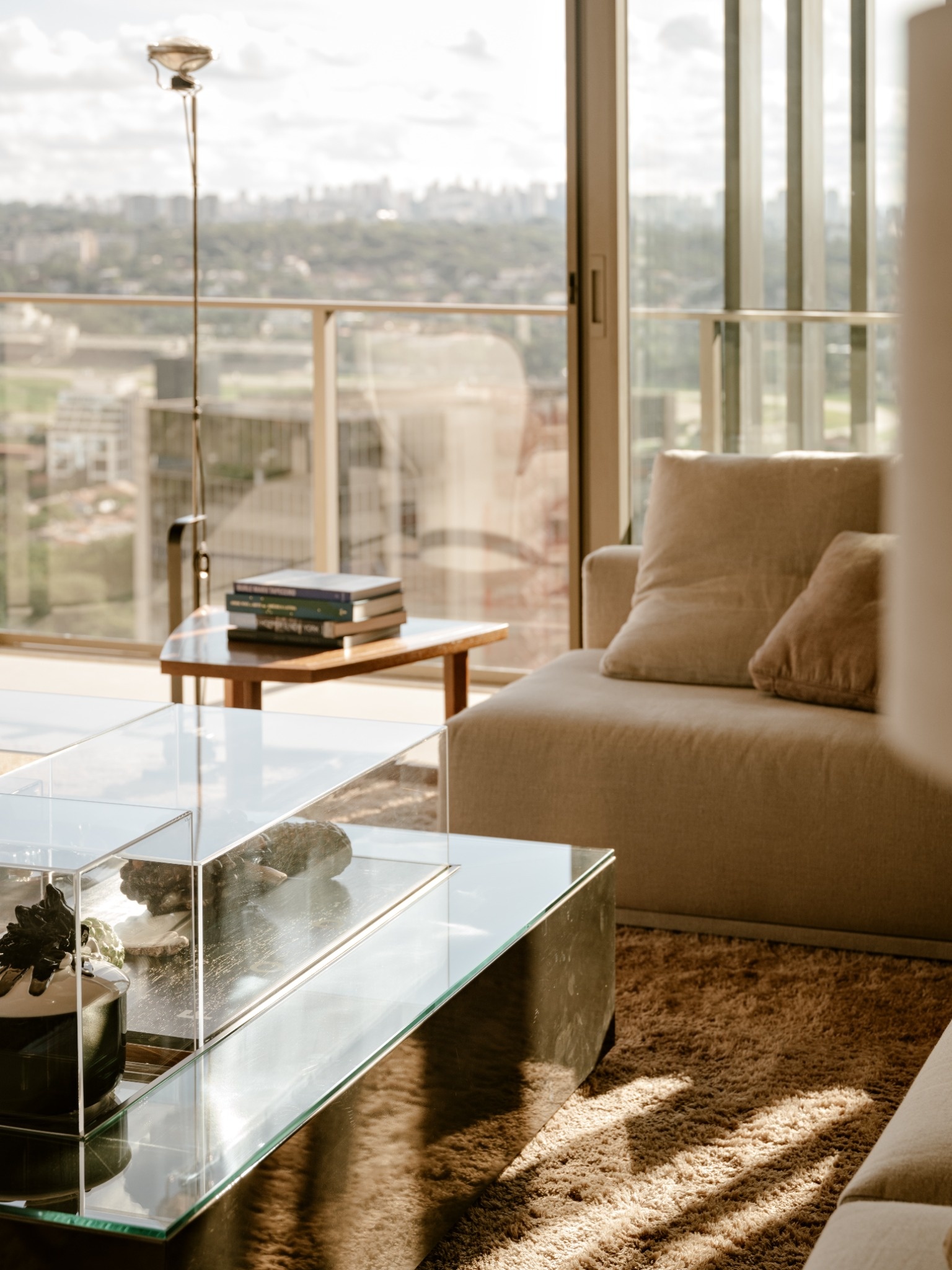
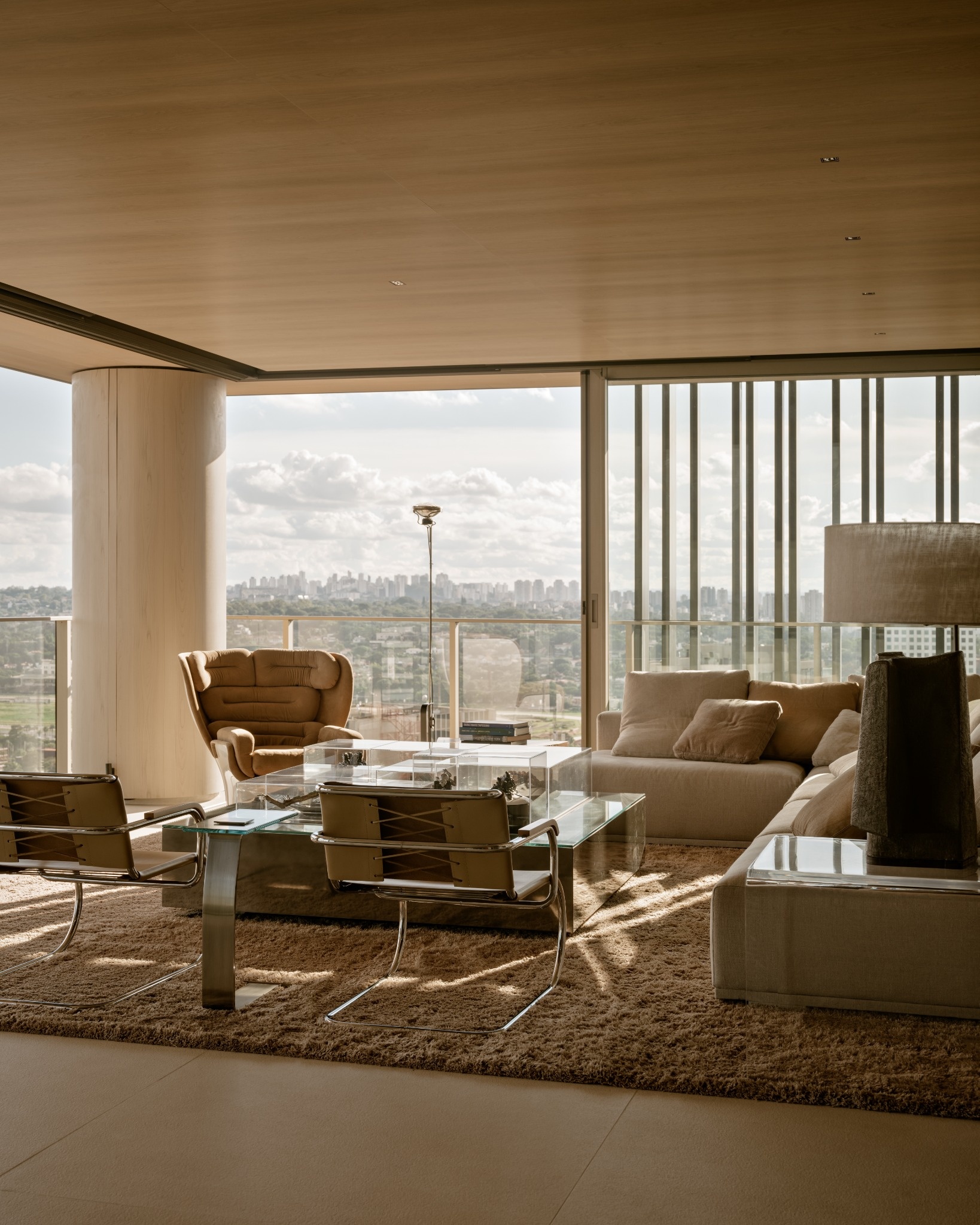
In the living room, the Fusca sofa by Arthur Casas for Micasa occupies a central position, accompanied by Bauhaus chairs by Franco Albini, the Elda armchair by Joe Colombo and a Desenho coffee table by Arthur Casas. The atmosphere is strongly shaped by art, with works by Mira Schendel, Carlito Carvalhosa, Anna Maria Maiolino and Waltércio Caldas, among others.
Dining Room, Kitchen and Integrated Carpentry
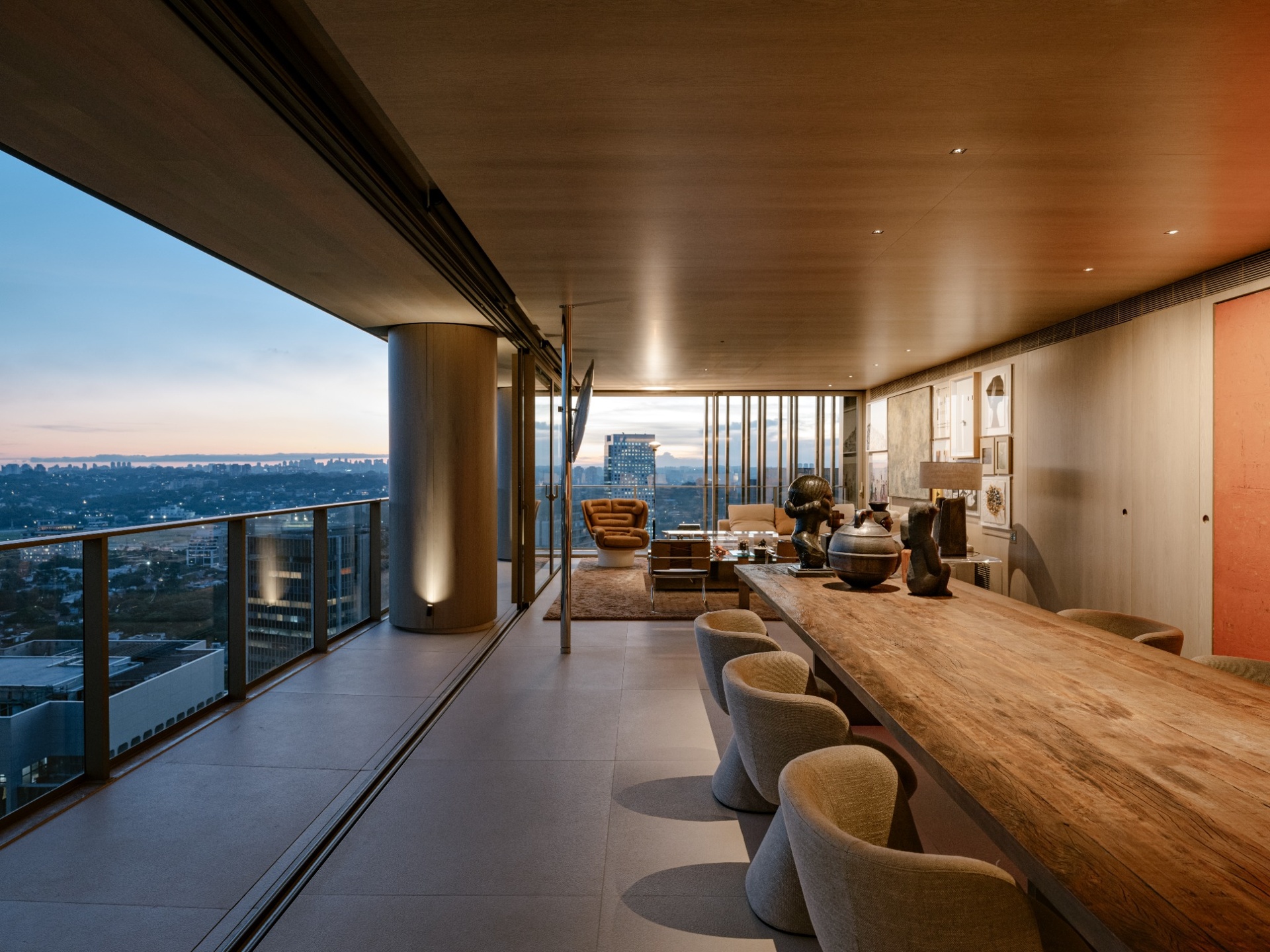
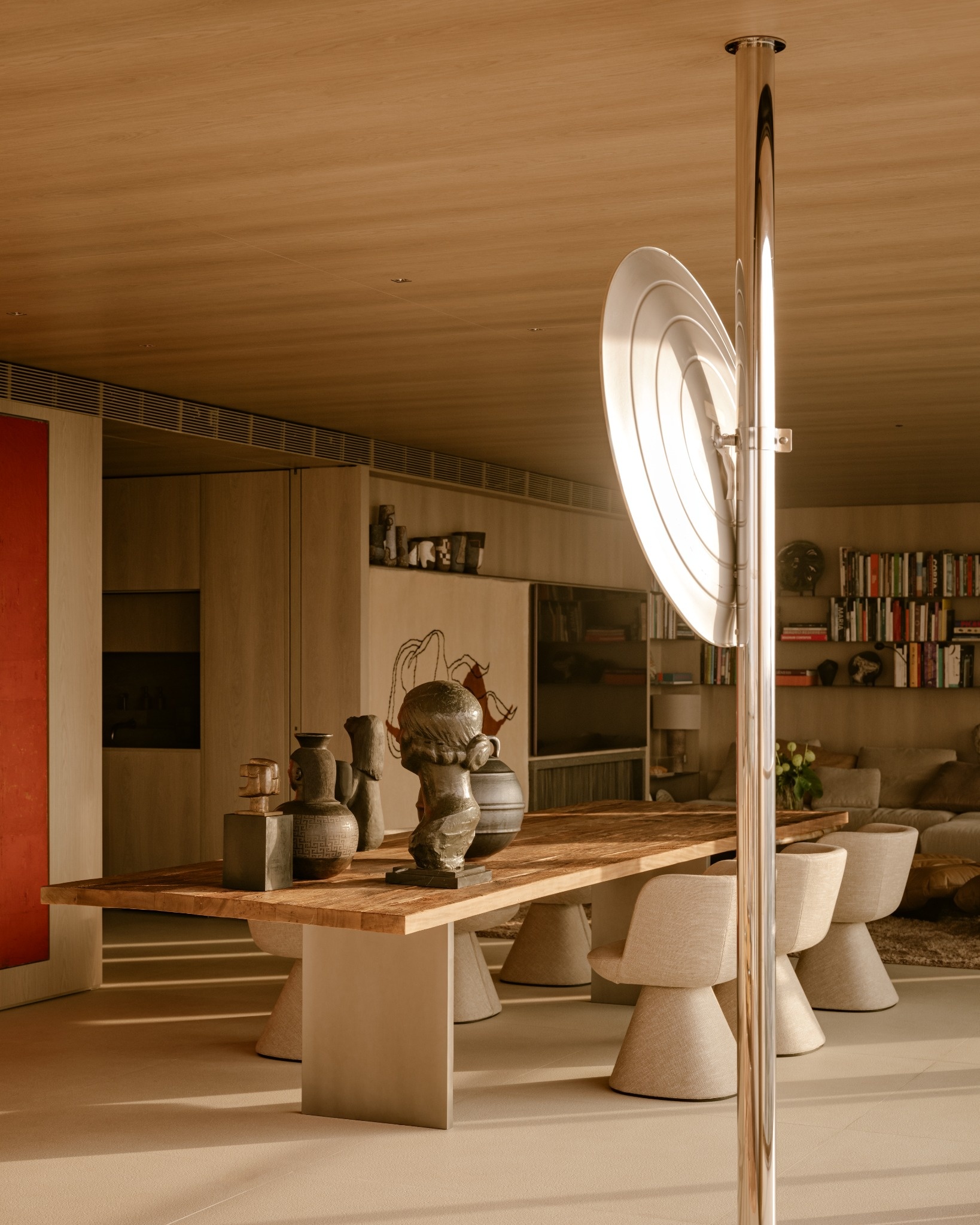
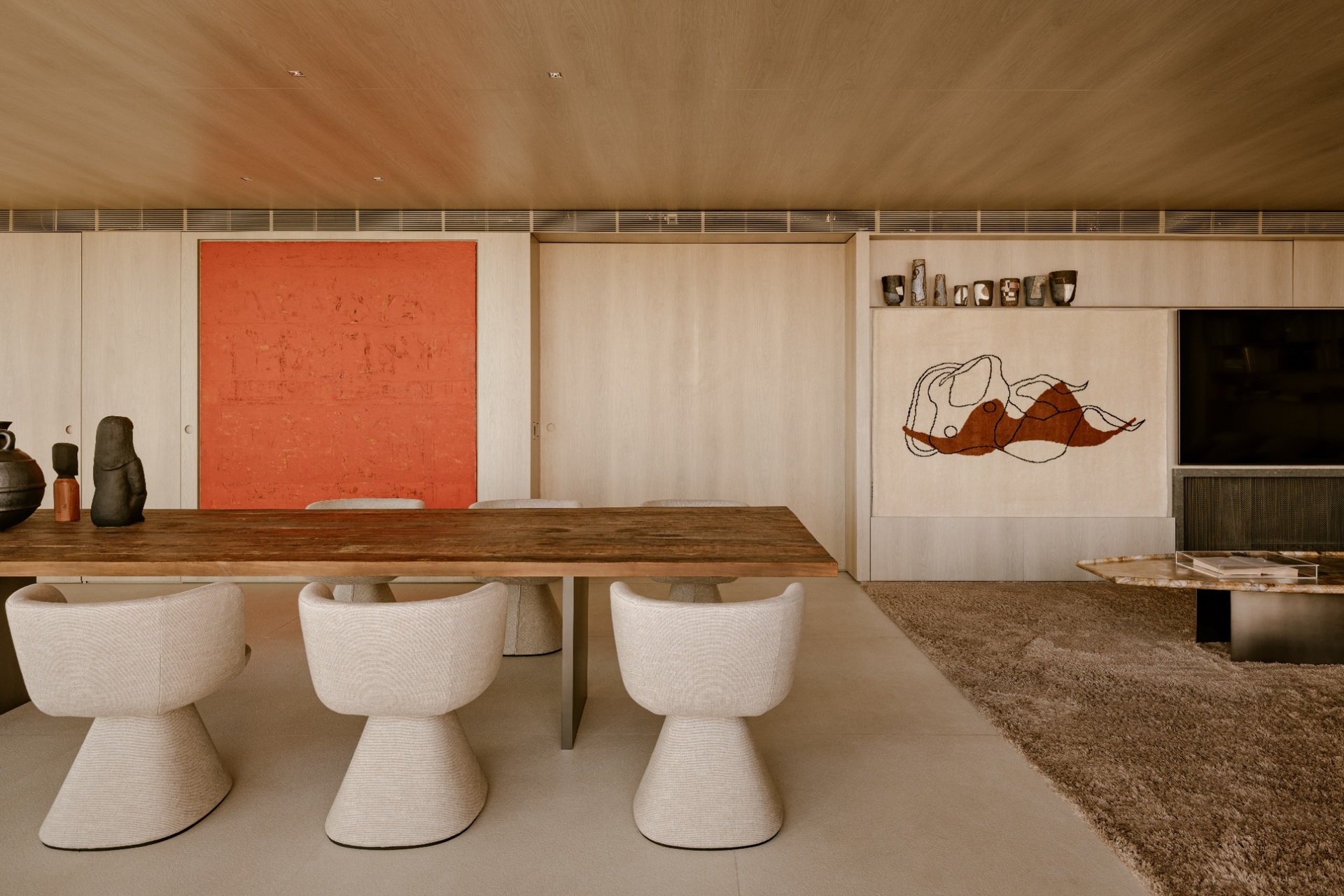
The transition to the dining room is seamless. A dining table in canela wood slats, designed by Arthur Casas, is surrounded by Flair’o chairs from B&B Italia, while sculptures by Rafael Oboé, Liuba Wolf, Ilha do Ferro and Rhodes contribute to the layered character of the space. A painting by Paulo Pasta marks the wall, while embedded fixtures in the continuous wooden ceiling provide precise lighting throughout the apartment.
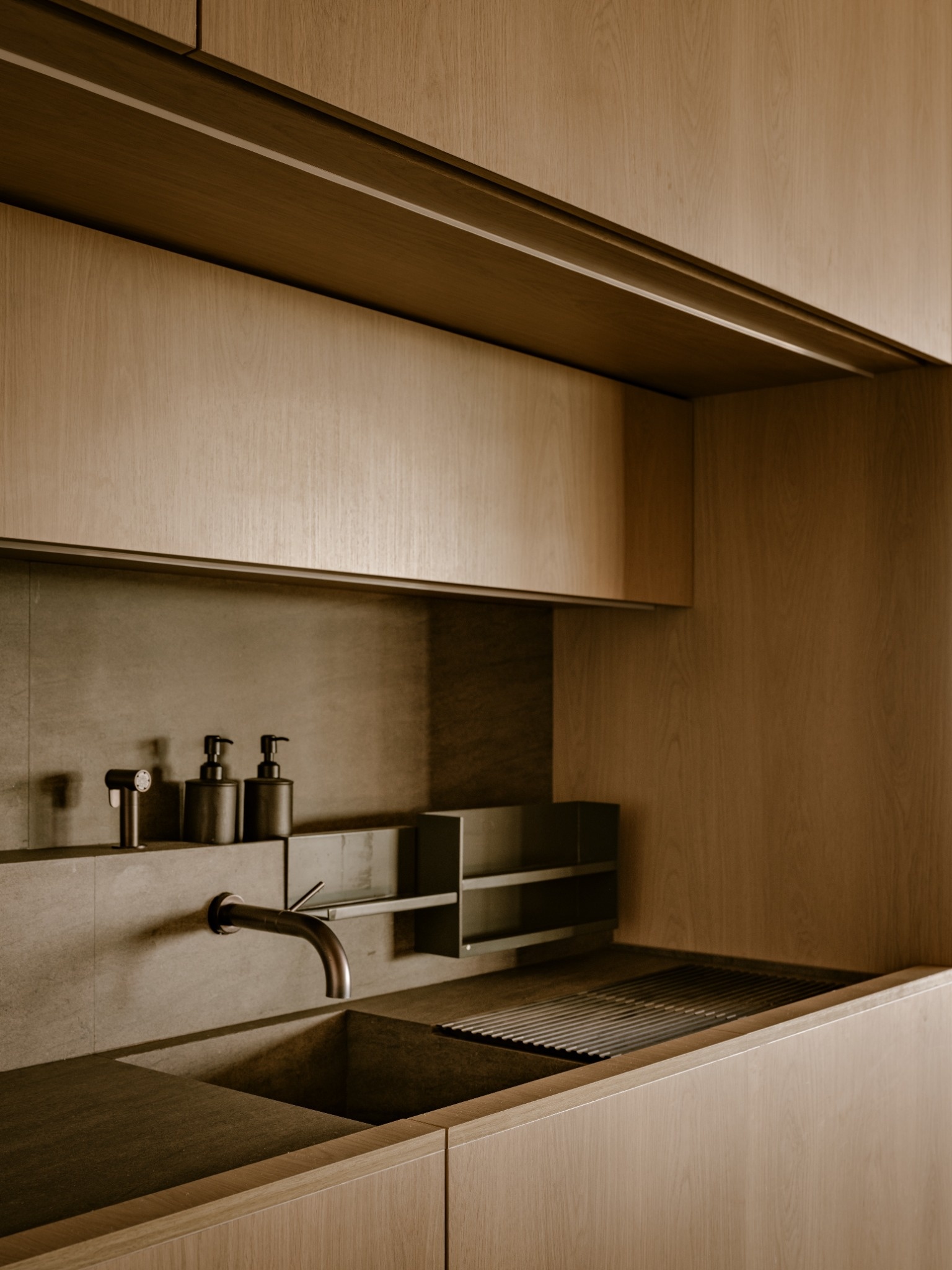
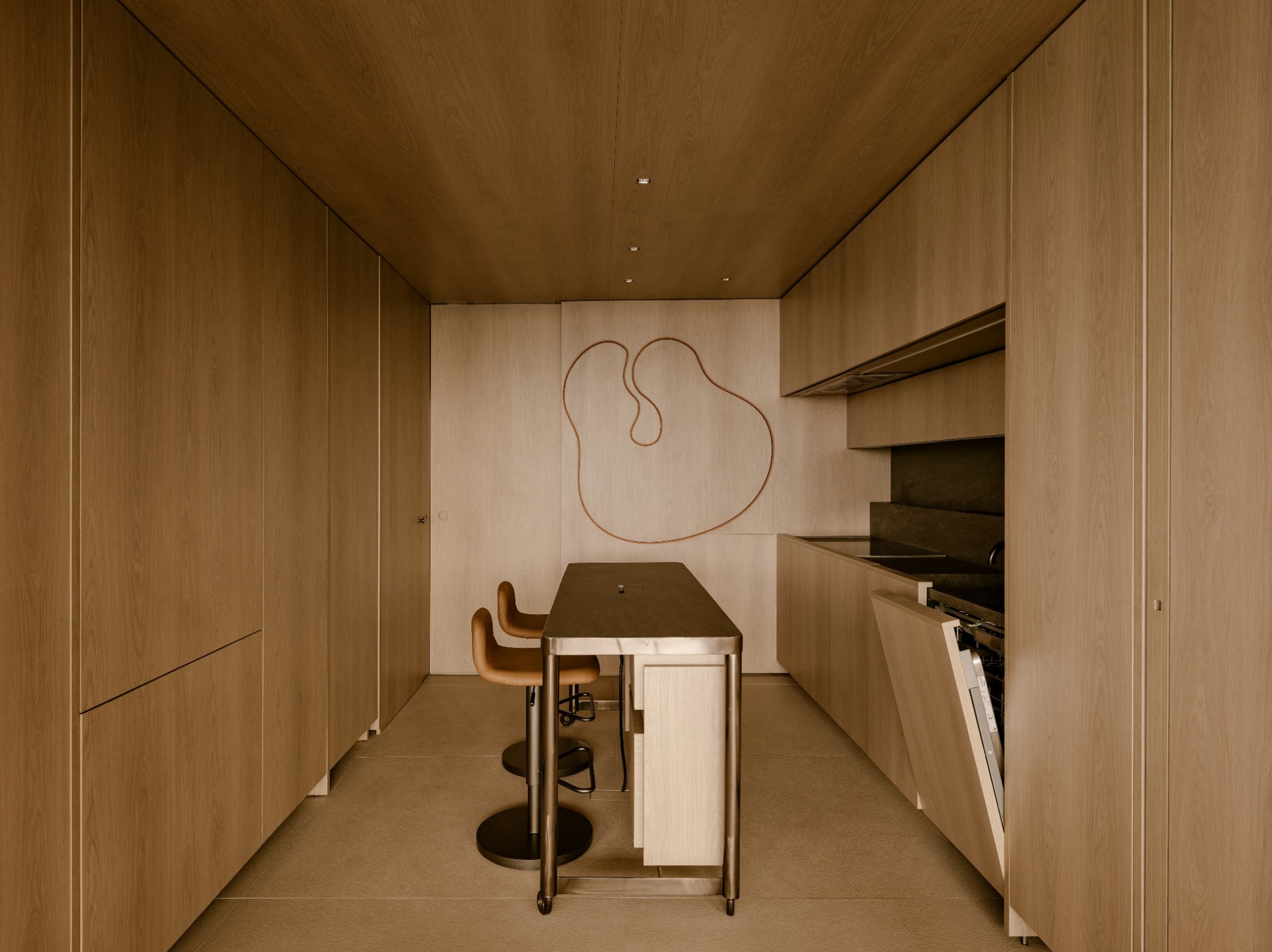
The kitchen features the Disco stool by Arthur Casas for Studio Objeto and Neolith Basalt Grey countertops, integrated into a custom carpentry structure designed by the architect. The cabinetry conceals appliances and optimizes storage, allowing the kitchen either to merge with the social area or to be closed off by a sliding door, according to use.
Home Theater and Multifunctional Office
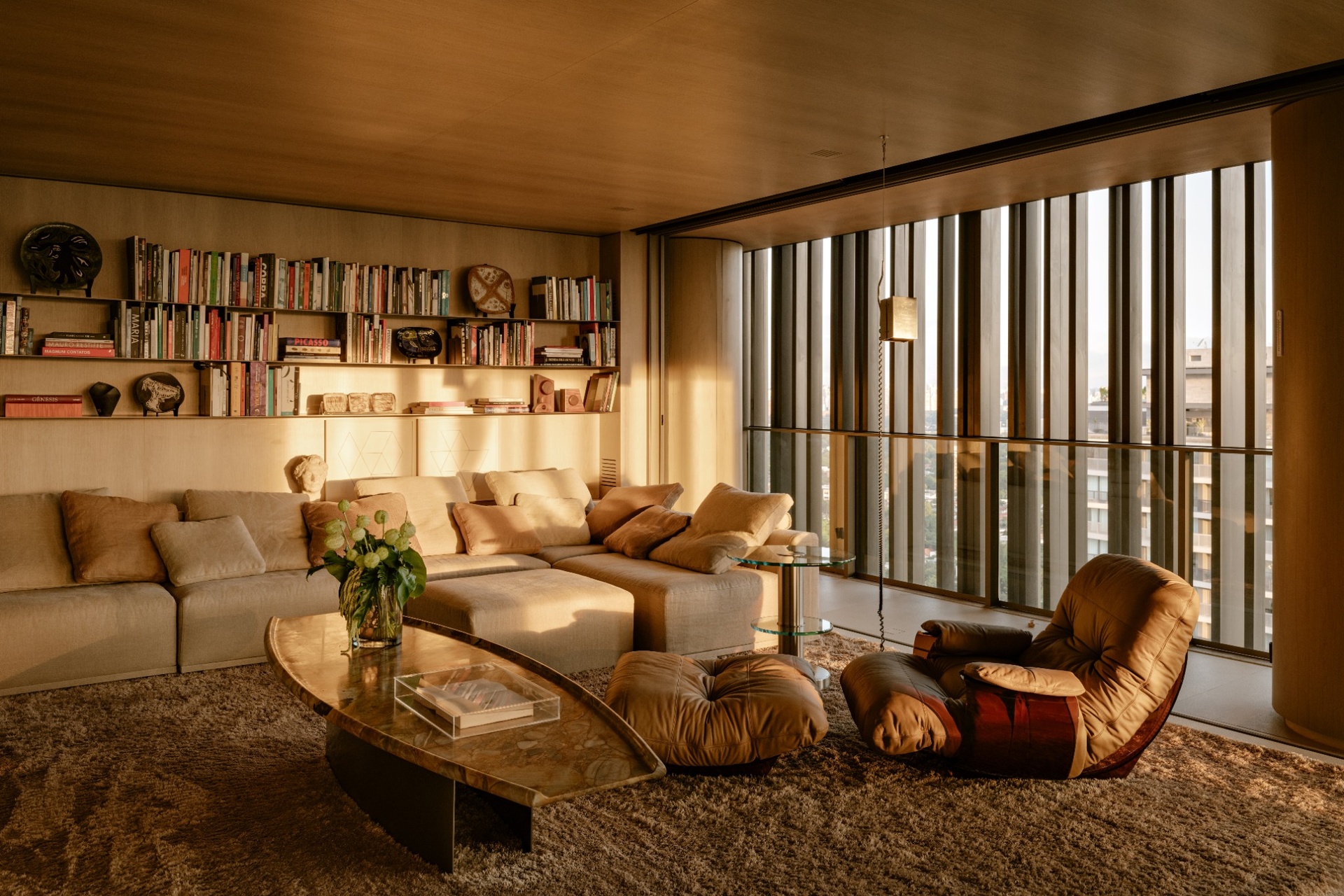
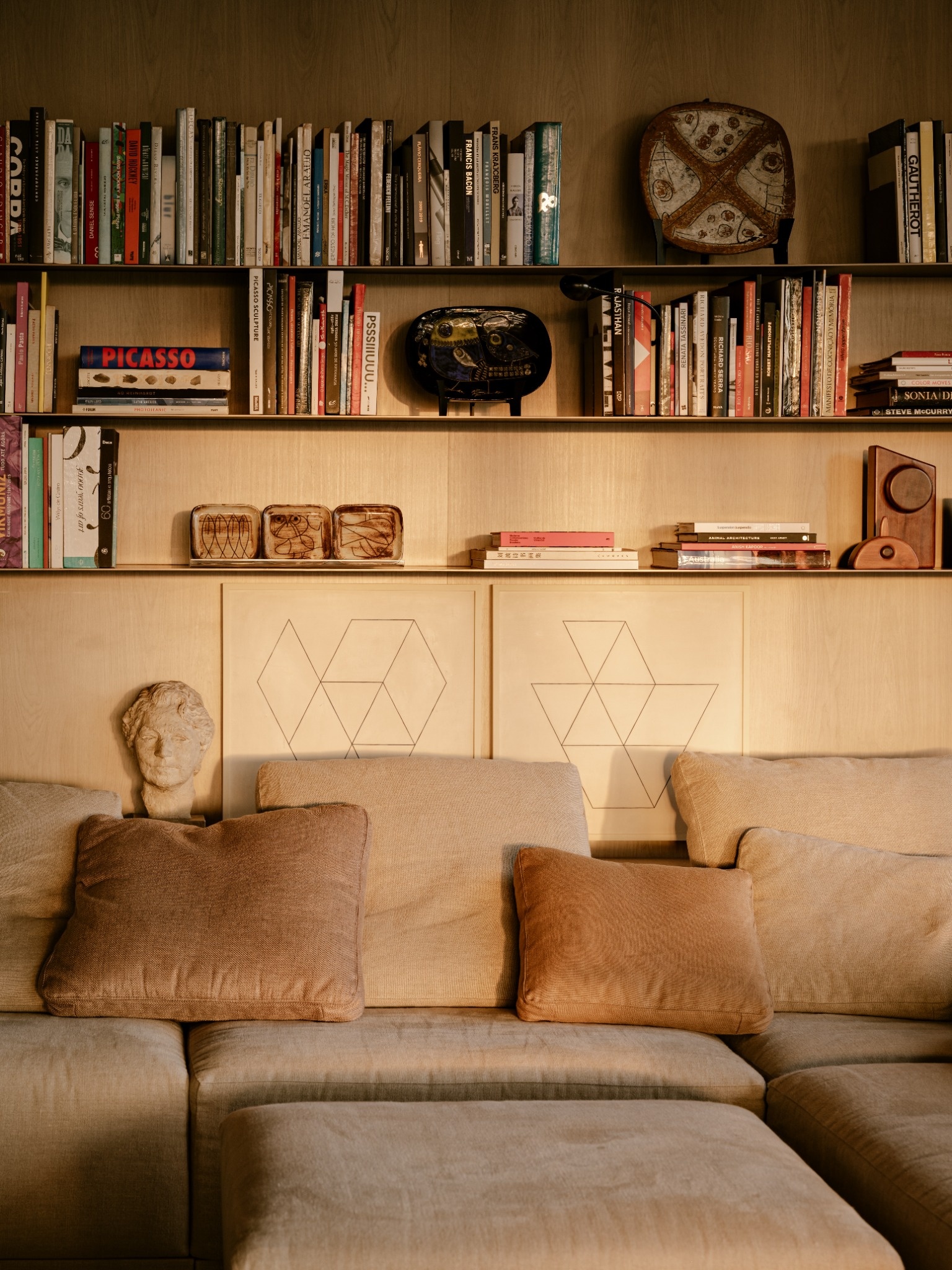
Adjacent to the kitchen, the home theater revisits the Fusca sofa, now combined with the Tavolino 1932 side table by Gio Ponti, the Marsala armchair by Michael Ducaroy for Ligne Roset and a tapestry by Henri Laurens. Shelves display sculptures, ceramics and plates by Livia Gorka, Pablo Picasso and Jean Lurçat, alongside books and personal objects.
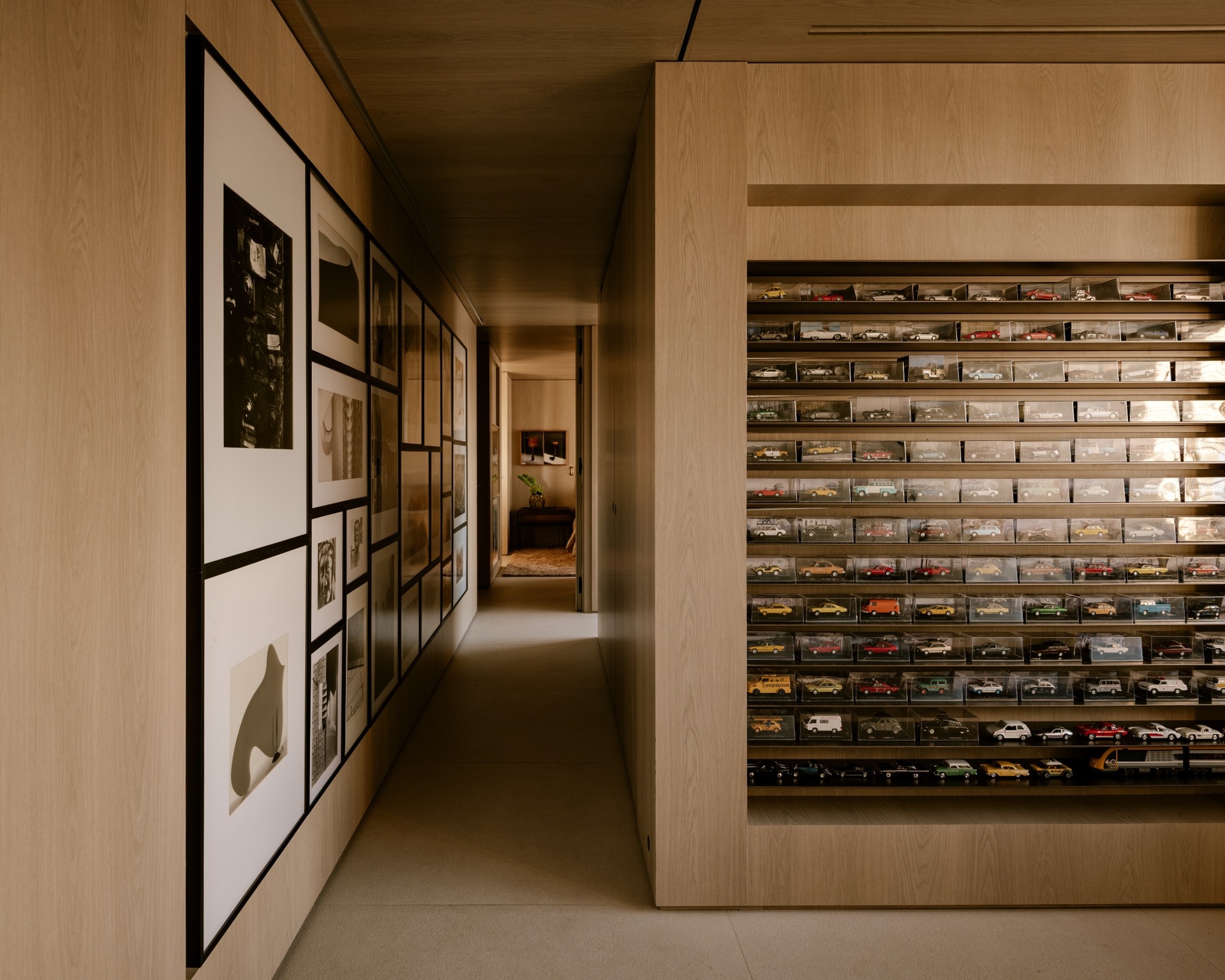
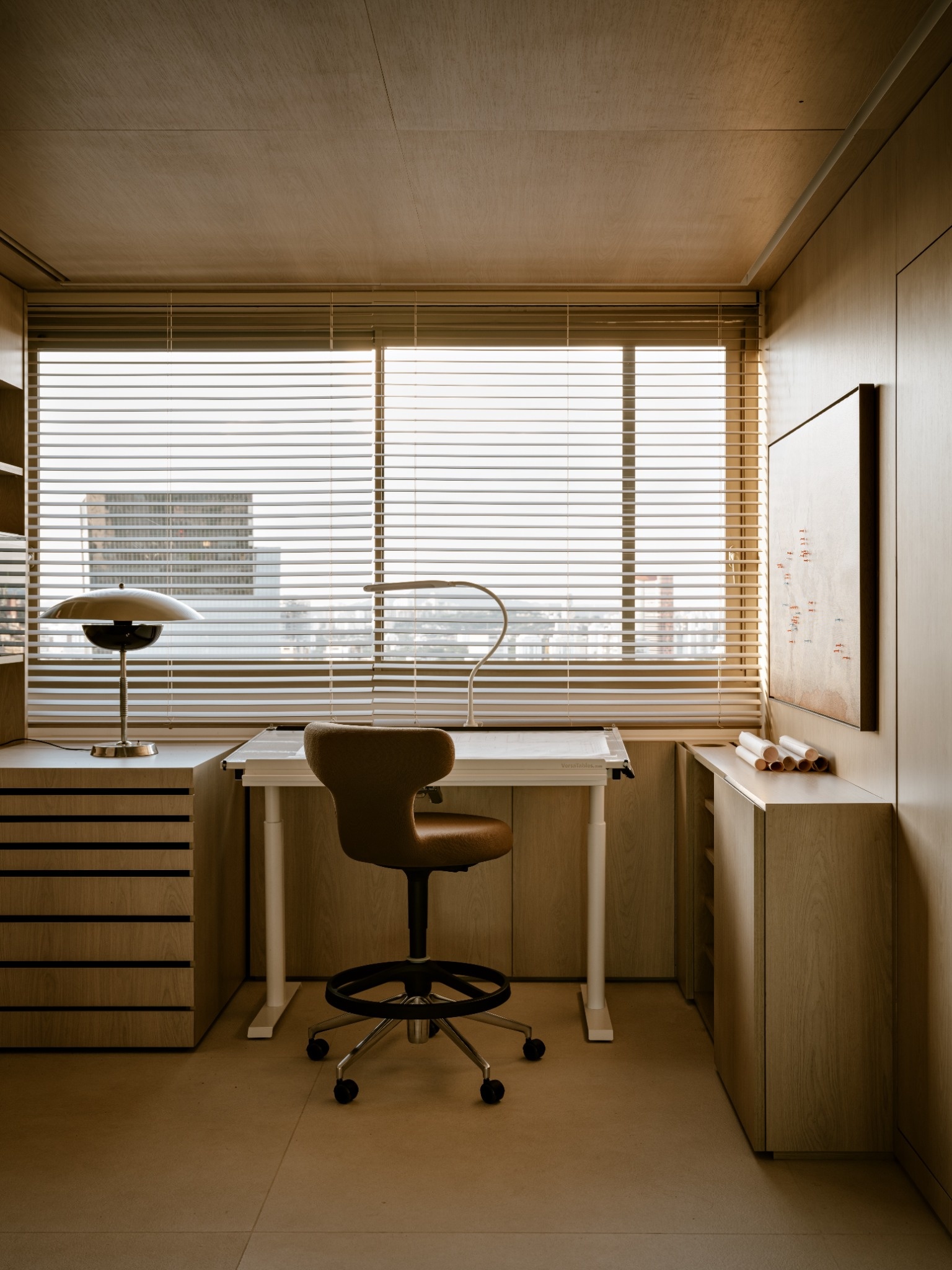
Between the social and intimate areas, the office operates as a multifunctional room. It serves as a workspace, while also accommodating a bed for visits from one of the architect’s children. The room features the Pivot High stool by Vitra and a collection of Arthur Casas’ miniature cars, displayed in custom-designed niches.
A Wooden Transition to the Private Areas
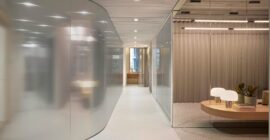
The corridor leading to the bedrooms is lined in wood, creating a quiet transition toward the private areas of the apartment. Along the walls, a collection of photographs includes works by Pierre Verger, Mario Cravo Neto, Bob Wolfenson and Cristiano Mascaro, turning circulation into a gallery-like sequence.
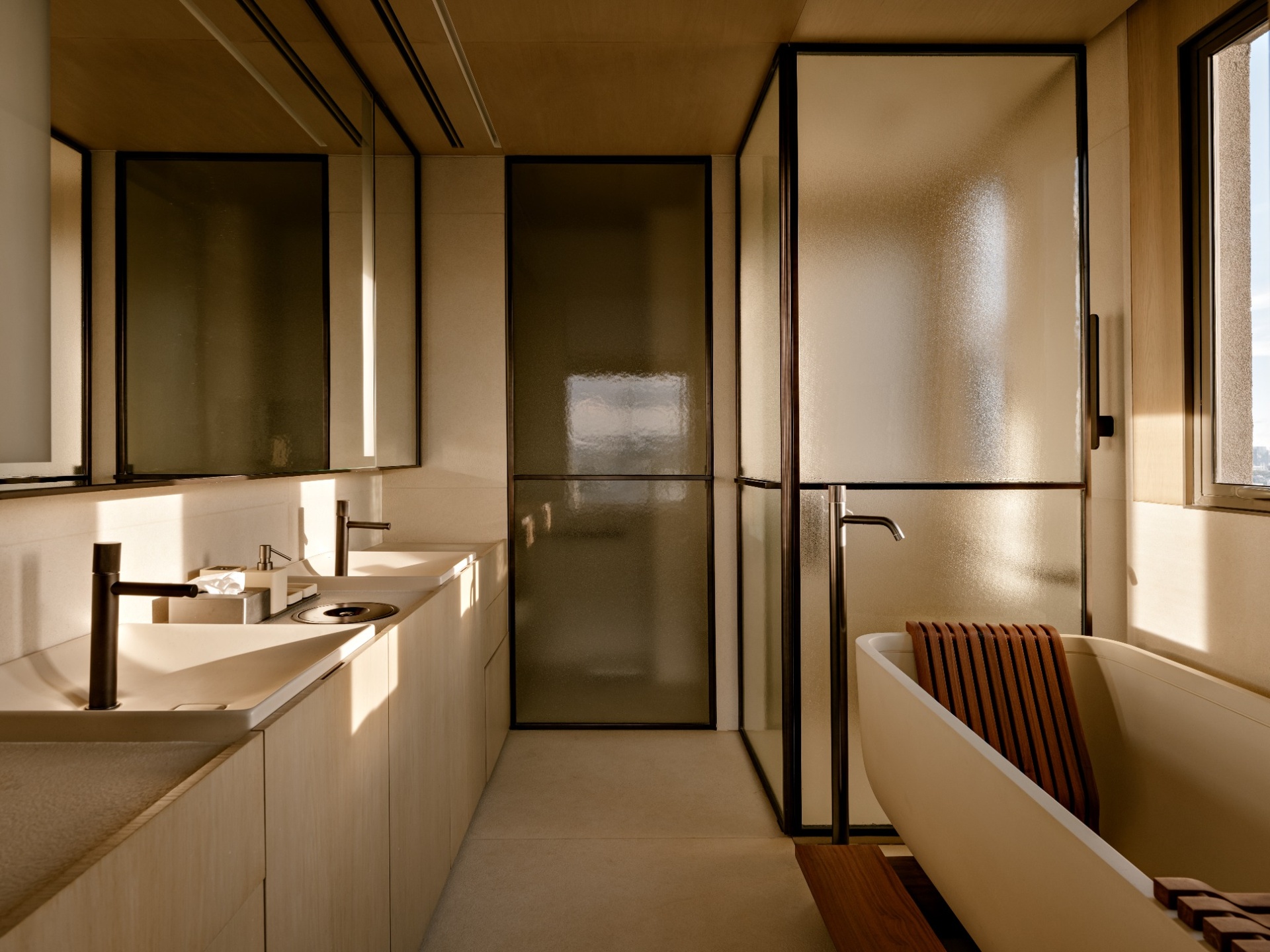
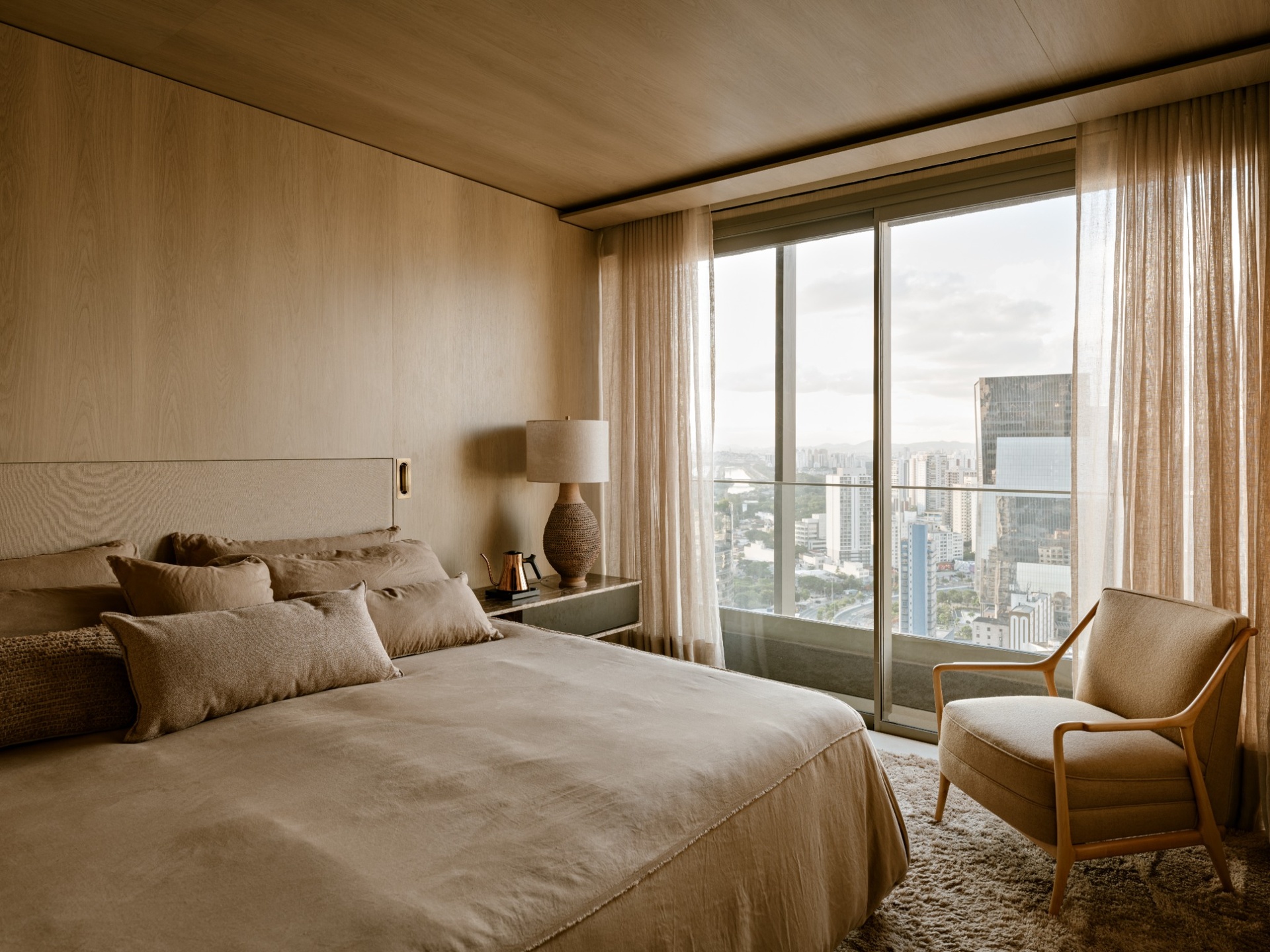
In the master suite, the atmosphere is defined by subtle lighting, vintage table lamps, technical fixtures such as the Ledtube by Marset, a continuous wooden ceiling and custom-designed furniture. A Giuseppe Scapinelli armchair and a Via Appia marble nightstand complete the room, alongside works by artists including Tarsila do Amaral, Emiliano Di Cavalcanti, Athos Bulcão and Flávio de Carvalho.
Technology, Precision and Atmosphere
Every technical detail was integrated with precision: central vacuum, embedded sound system, invisible air conditioning, anti-moisture system, intelligent sensors and full automation. Lighting fixtures by XAL highlight the artworks and materials with precise light distribution, without competing with the architecture.
This technical control supports the apartment’s broader atmosphere. The project is not only about efficiency or display, but about creating a living environment where infrastructure disappears into the architecture and allows materials, art and daily life to take the foreground.
Architecture Experienced at Scale 1:1
Living in an apartment he designed himself, from the building and plan to finishes and furniture, gives Arthur Casas the opportunity to experience his architecture at full scale. Praça Henrique Monteiro, which brings together hotel, restaurant, boulangerie, jazz club and residences within one complex, is understood by the architect as a living organism in constant adaptation.
For Casas, the apartment could not be separated from the wider project. Its meaning lies in the continuity of language between the residence, the tower and the other programs of the complex. AC Apartment is therefore both a private home and a lived manifesto: a compact urban residence shaped by architecture, art, memory and the routines of everyday life.