Office in Hashima by Permanent and Atelier Nagara in Japan
Architecture:
Photography:

An Office Rooted in the Everyday Landscape
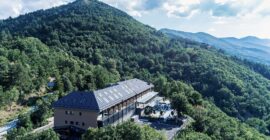
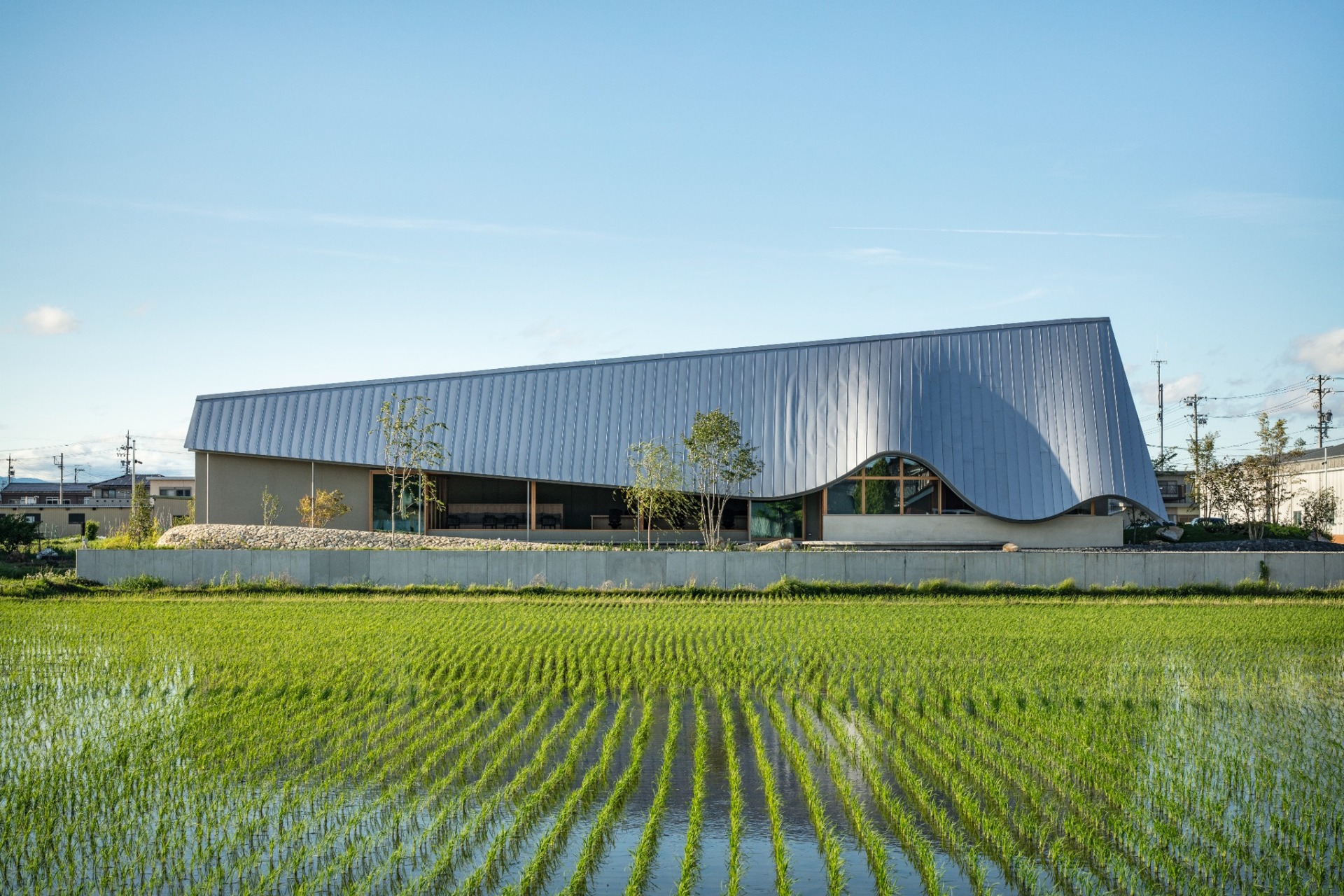
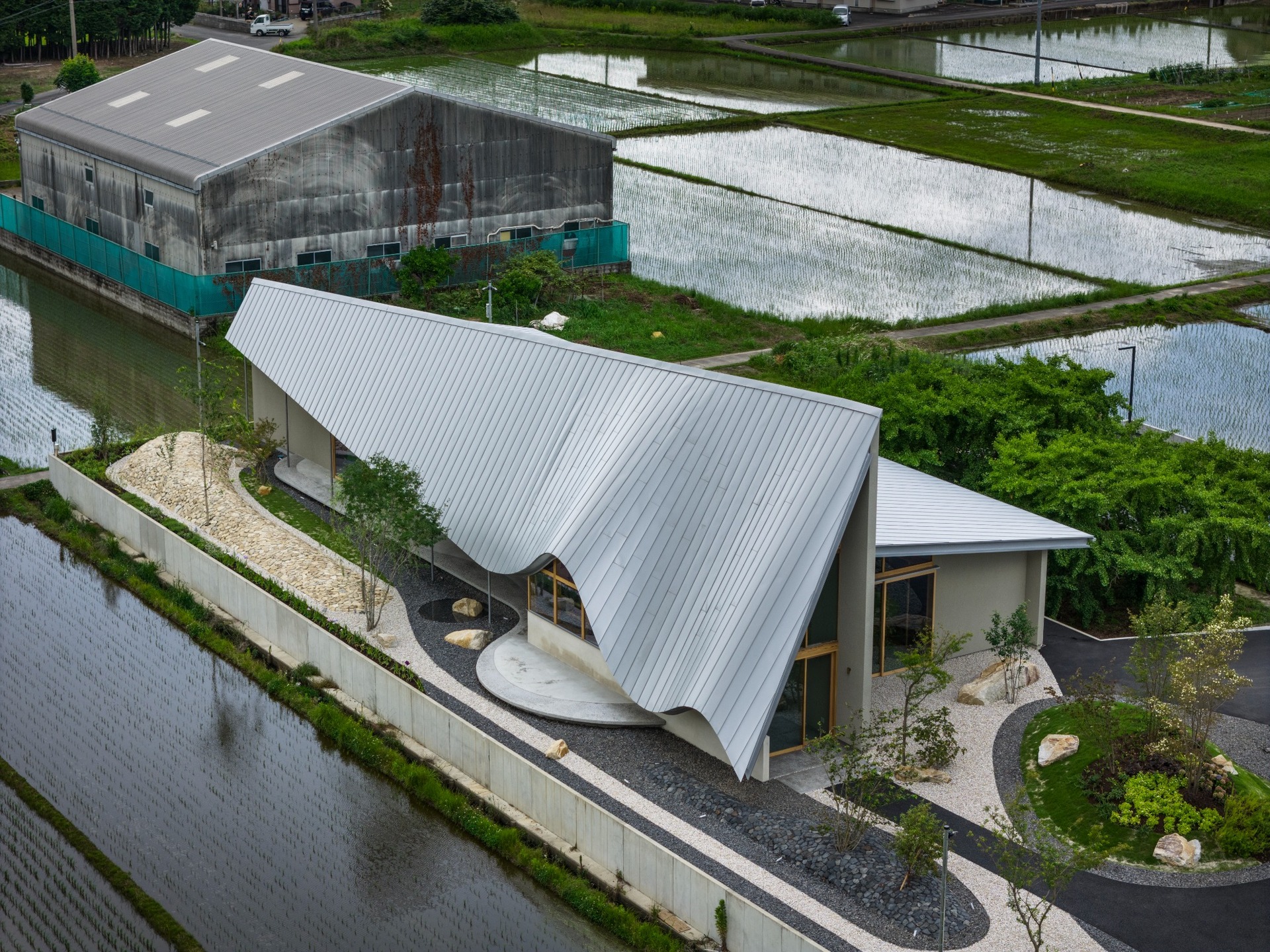
Located in Hashima City, in Japan’s Gifu Prefecture, Office in Hashima by Permanent and Atelier Nagara Architectural Design Office is a new headquarters for a company active in civil engineering and real estate. Set within a calm rural landscape of rice fields, the building was designed to be rooted in the local community and appreciated over time.
The project begins with the quiet value of the ordinary. The seasonal path of the sun, the movement of rice grasses in the wind, and the ripples forming on the water of the fields during rain are treated not as background scenery, but as the material of the architectural experience.
Architecture as a Device for Noticing
Rather than simply blending the building into its surroundings, the architects conceived it as an architectural “device” that makes people more aware of the landscape. Its role is not to disappear, but to sharpen perception: to bring light, wind, rain and seasonal change into focus through the presence of the building itself.
This approach is especially appropriate for a company closely connected to land, infrastructure and construction. The office becomes a place where work, community and landscape are not separated but drawn into a continuous everyday relationship.
A Roof That Frames Natural Phenomena
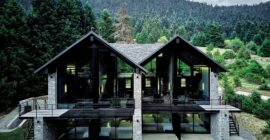
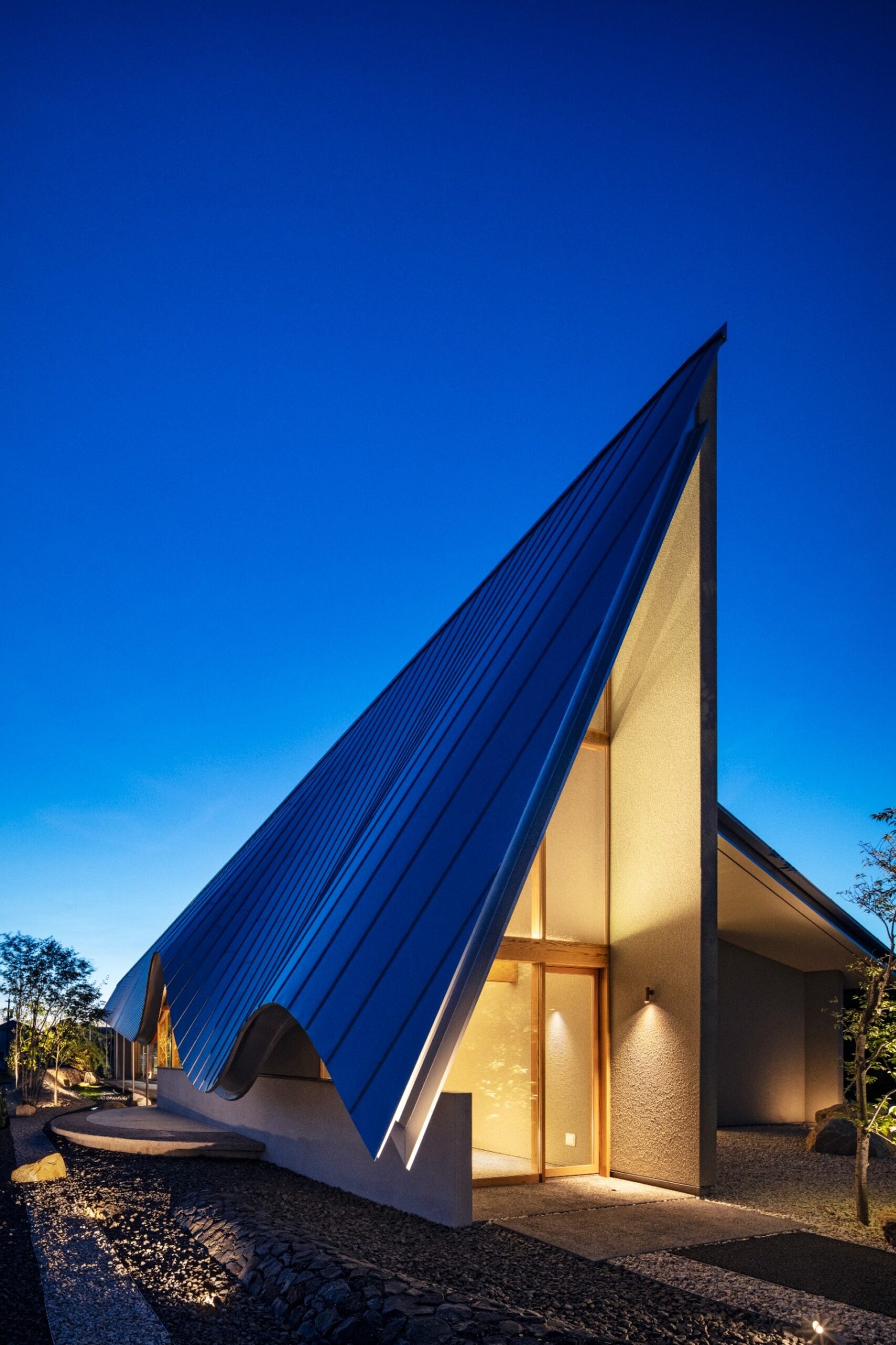
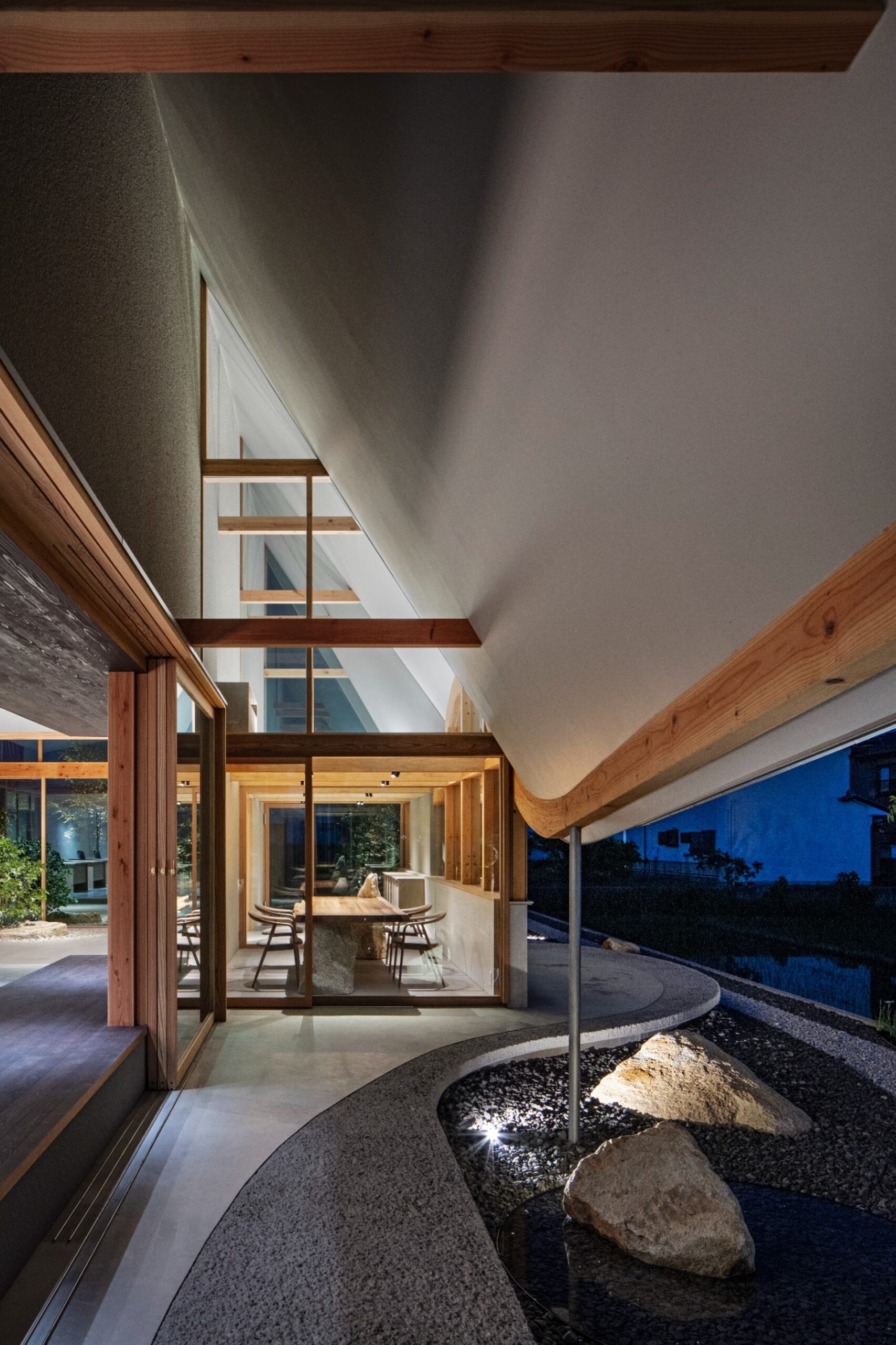
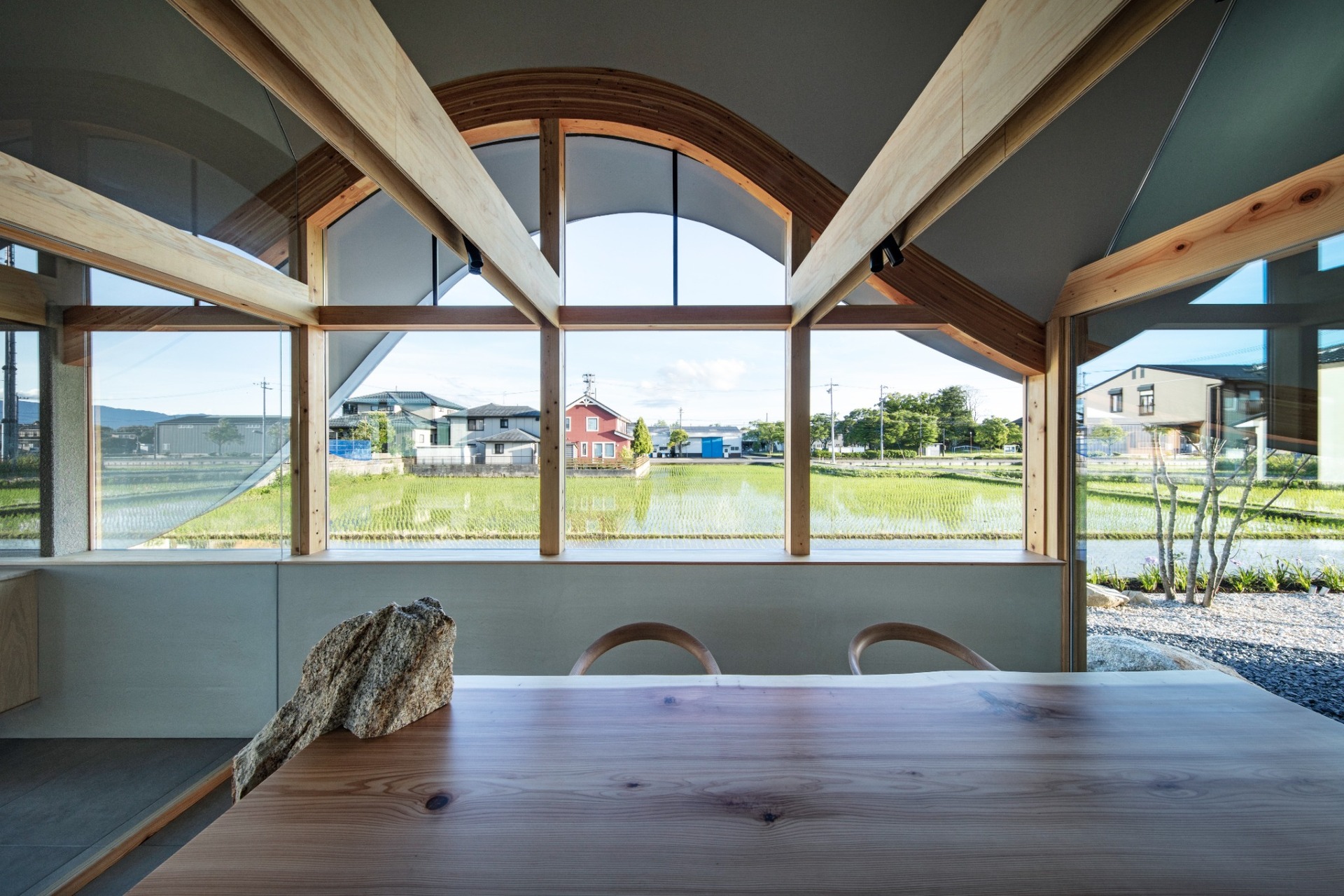
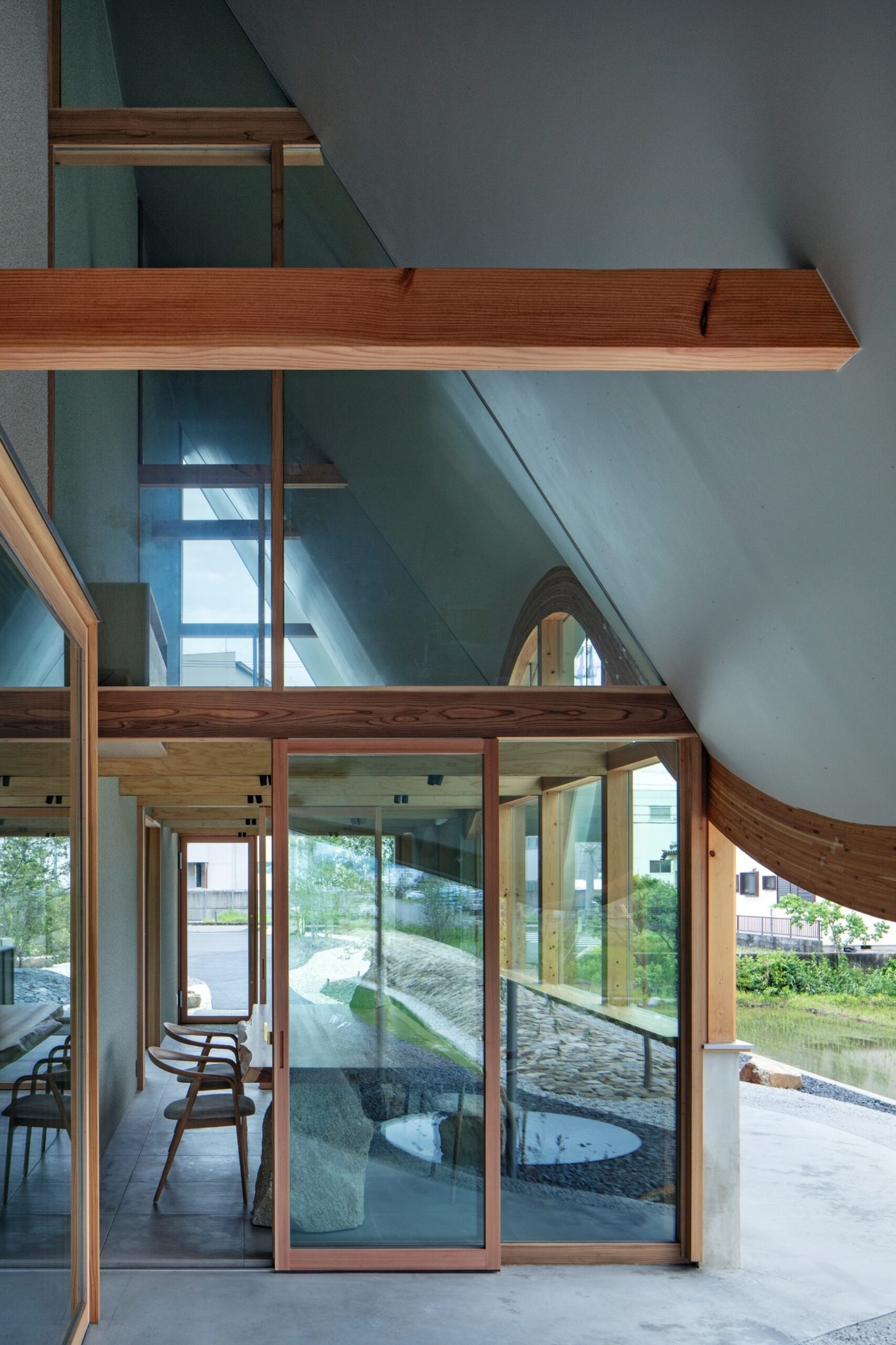
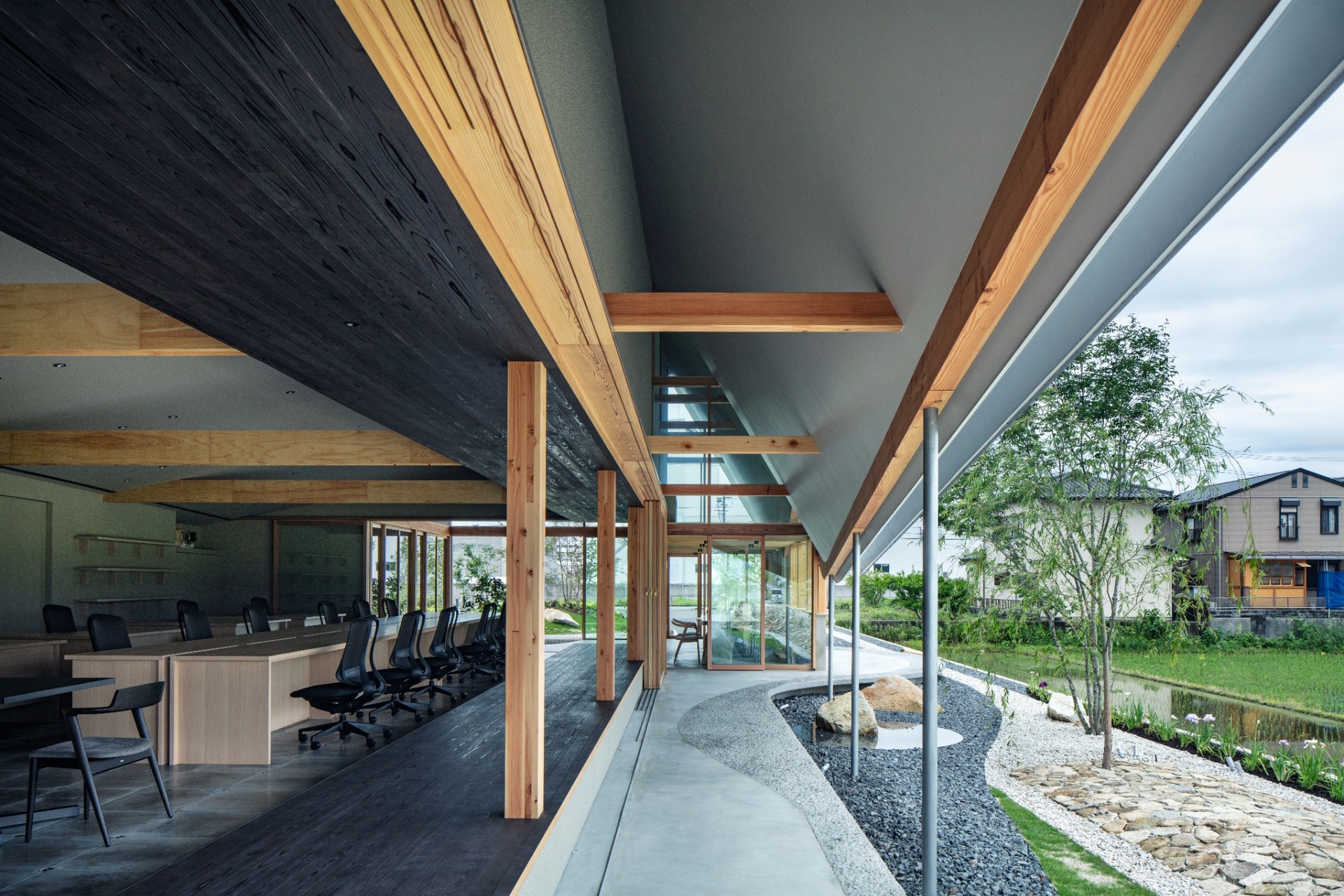
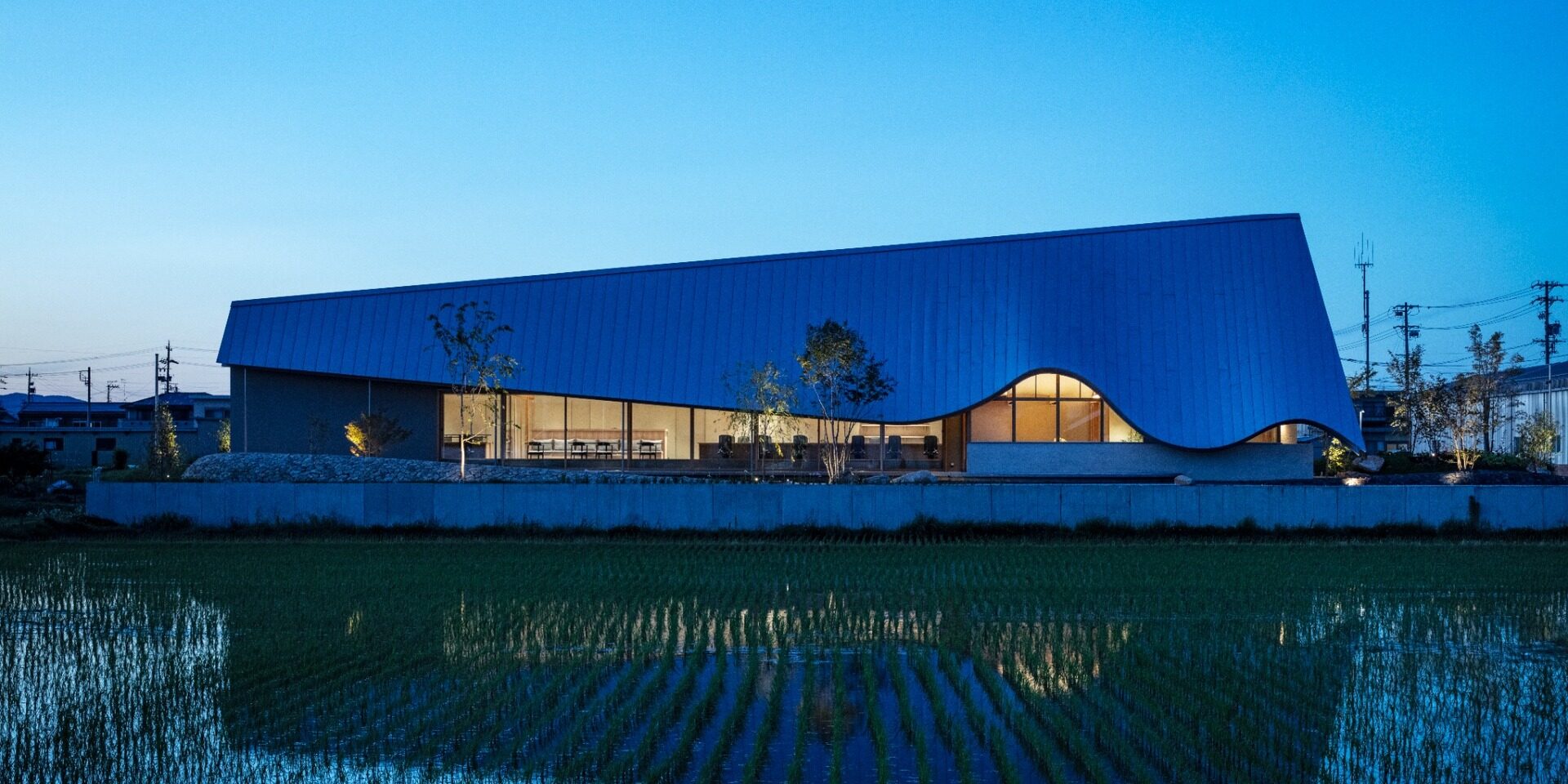
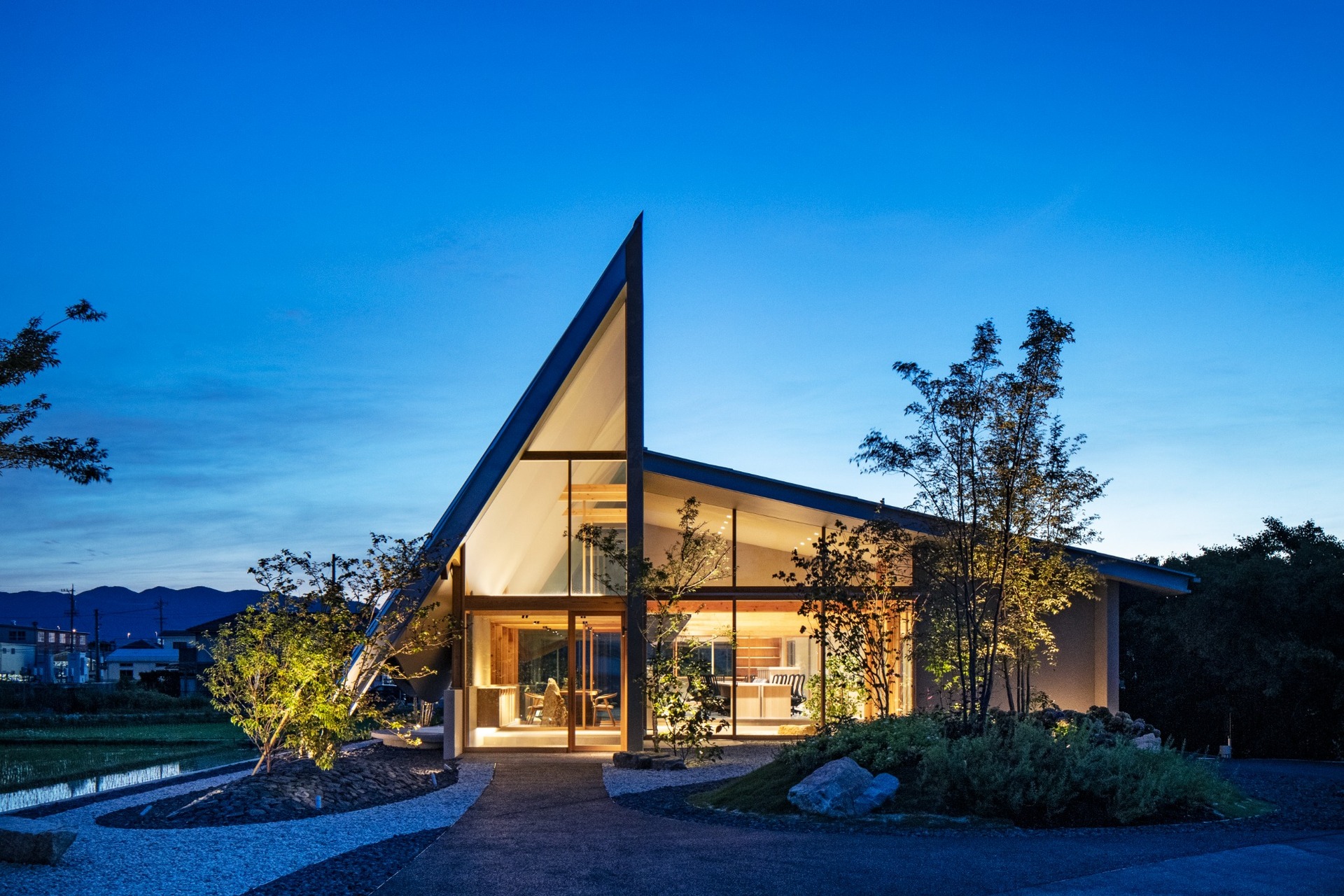
The roof is the building’s defining feature. Rising dramatically toward the east, it cuts a bold profile against the sky, while its eaves descend close to the ground. This strong gesture gives the building a recognizable silhouette without overwhelming the rural scale of the site.
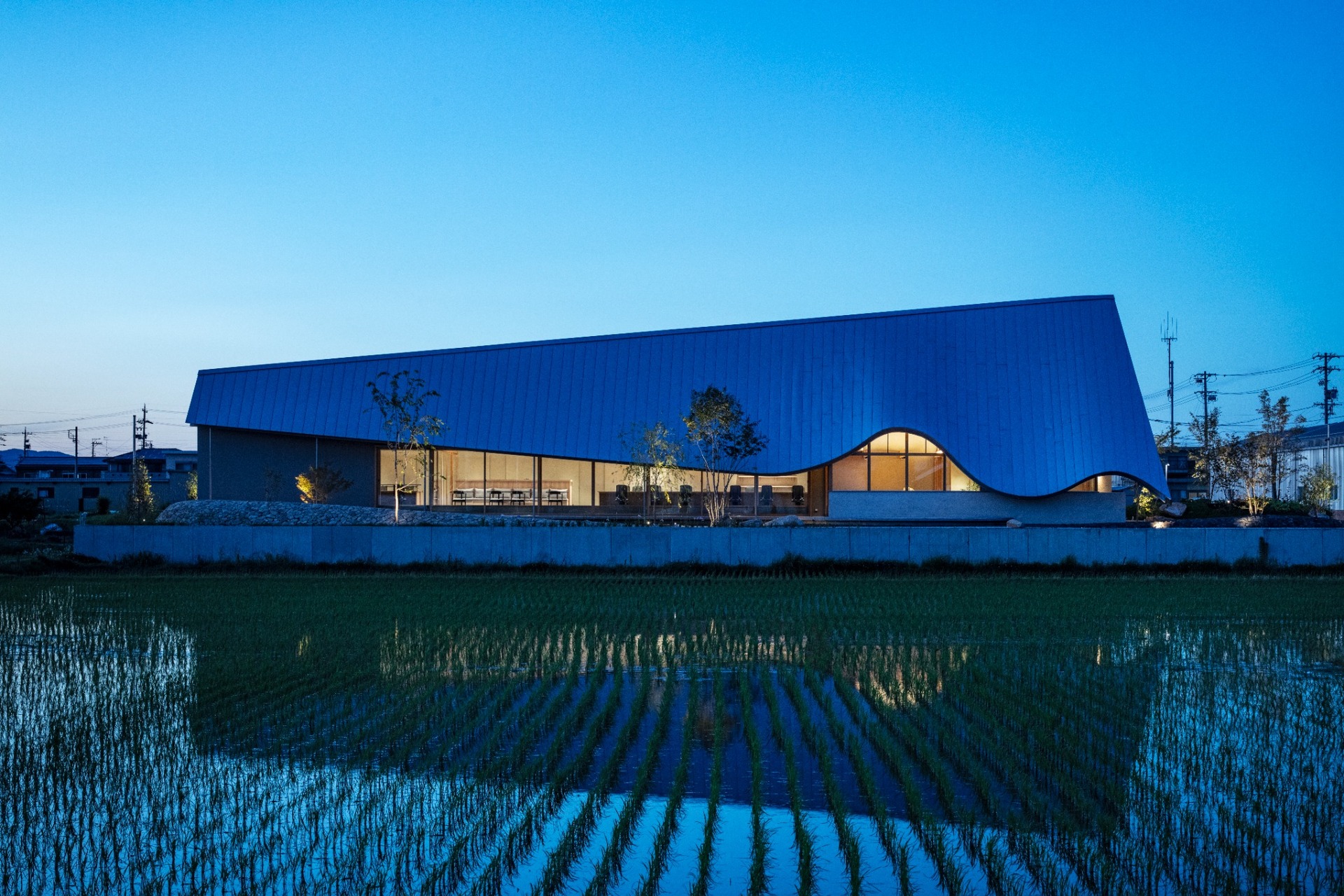
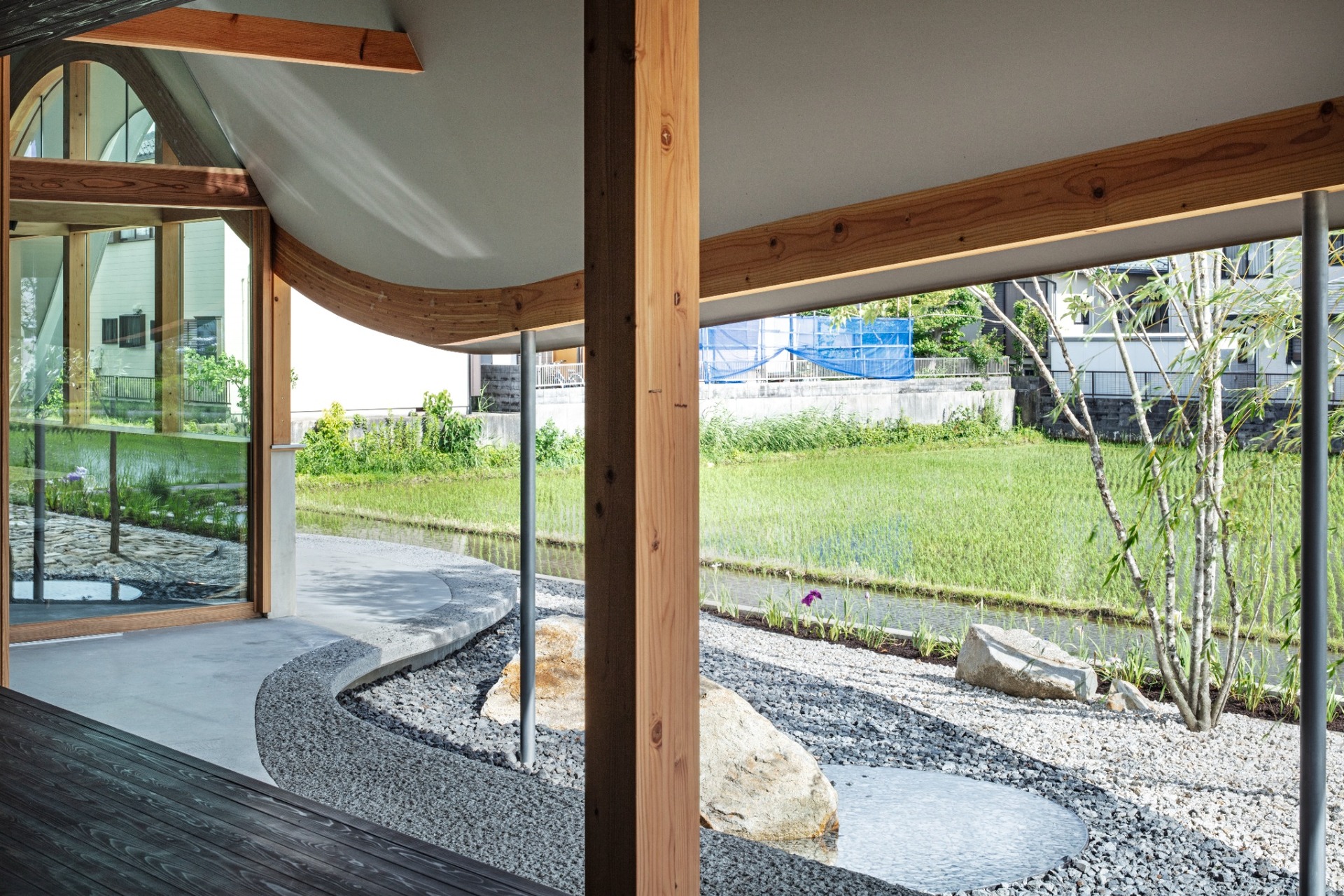
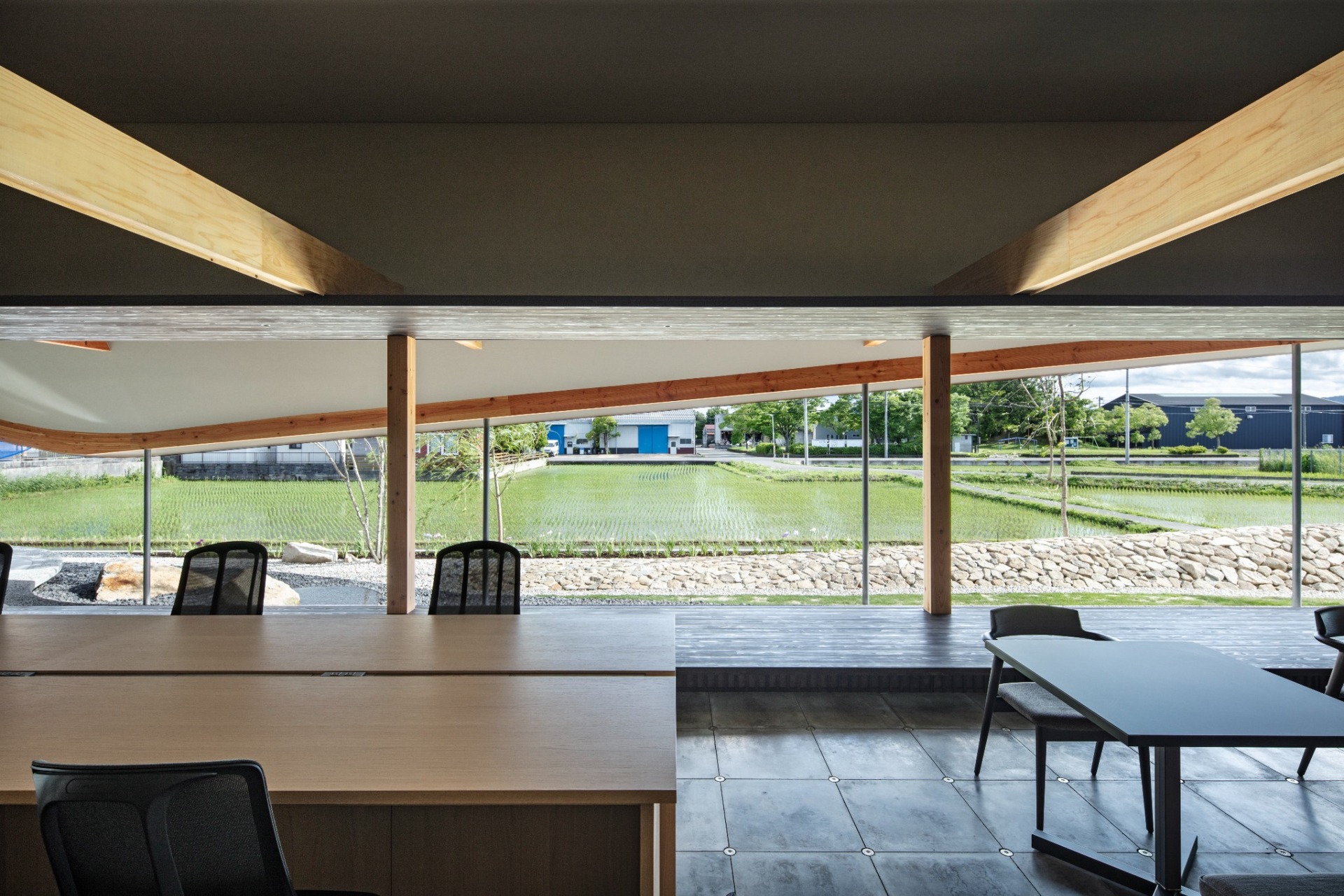
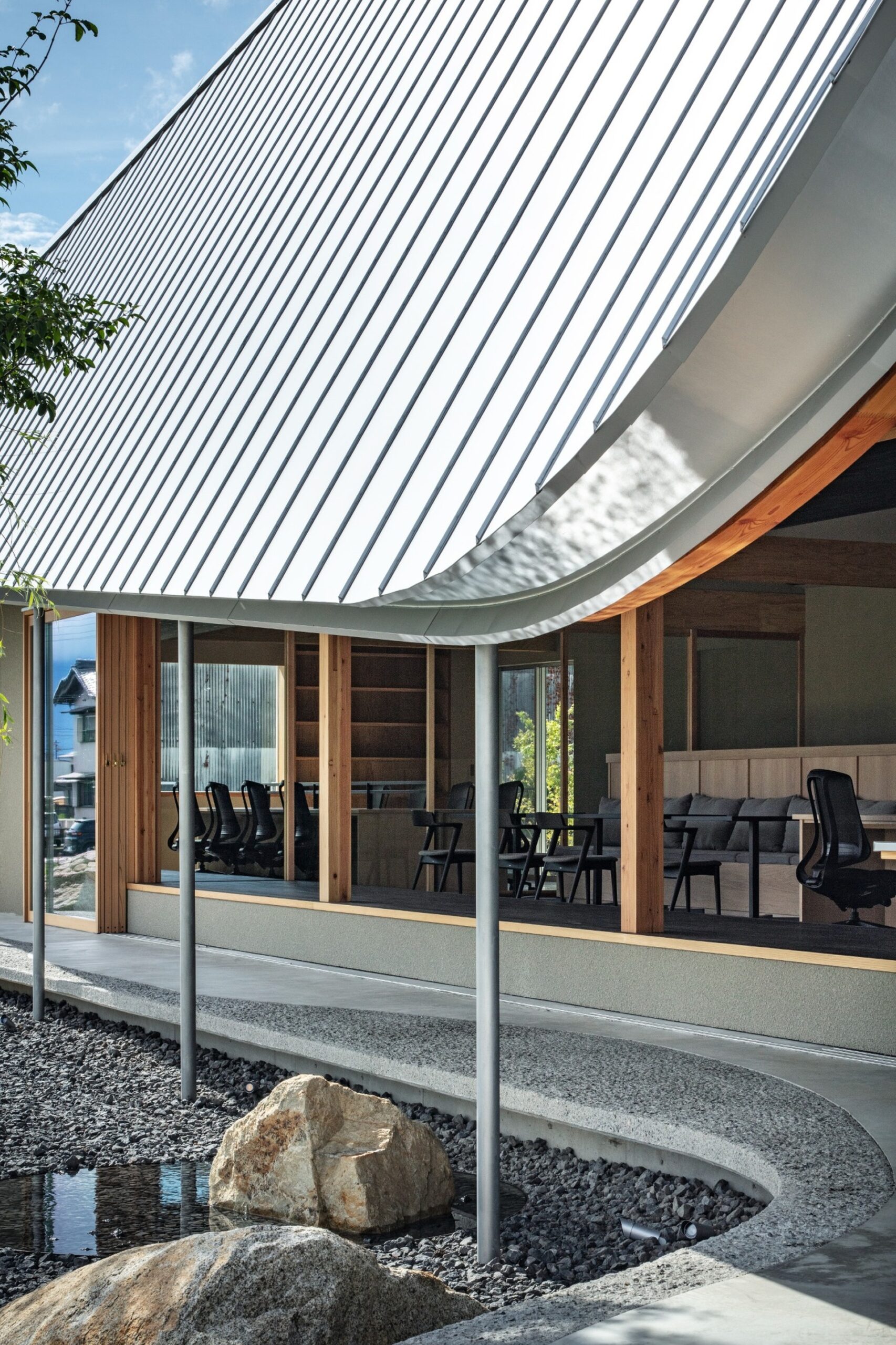
A gentle undulation in the roofline introduces a subtle irregularity. Reflected light, the color of the sky and the movement of raindrops are brought into focus, allowing natural phenomena to become part of the architectural expression. The roof does not simply cover the building; it registers the changing conditions of the place.
Intermediate Spaces Beneath the Eaves
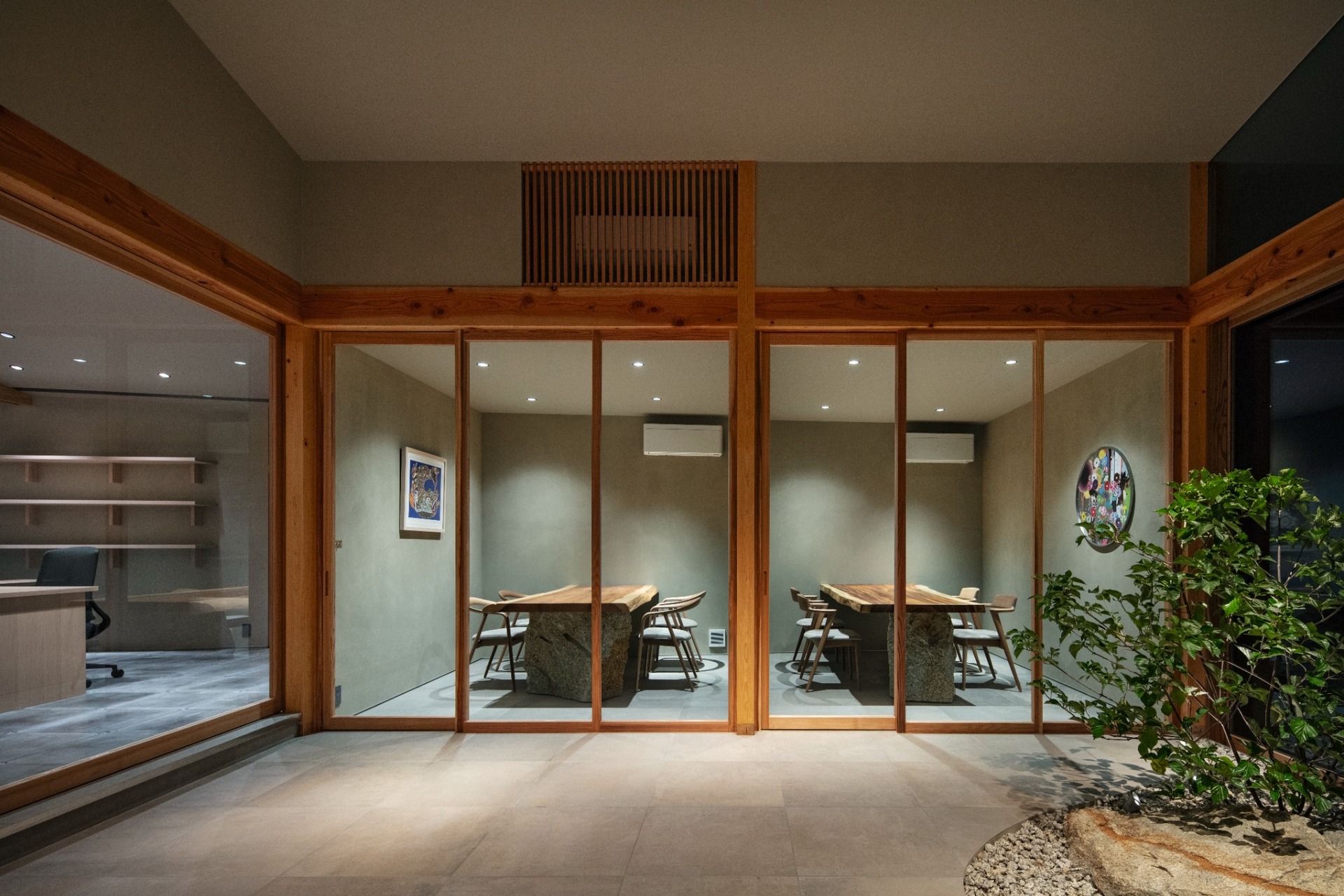
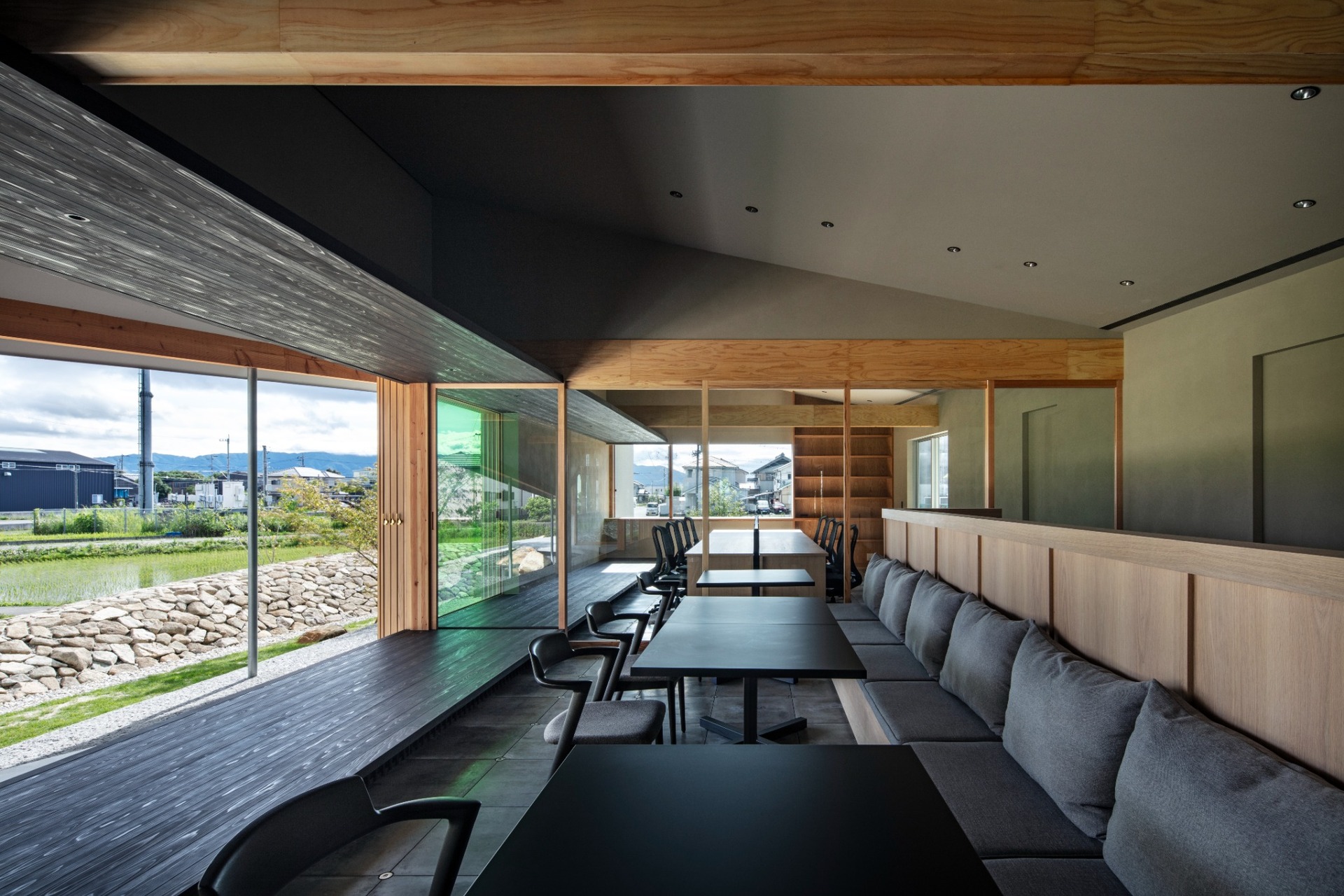
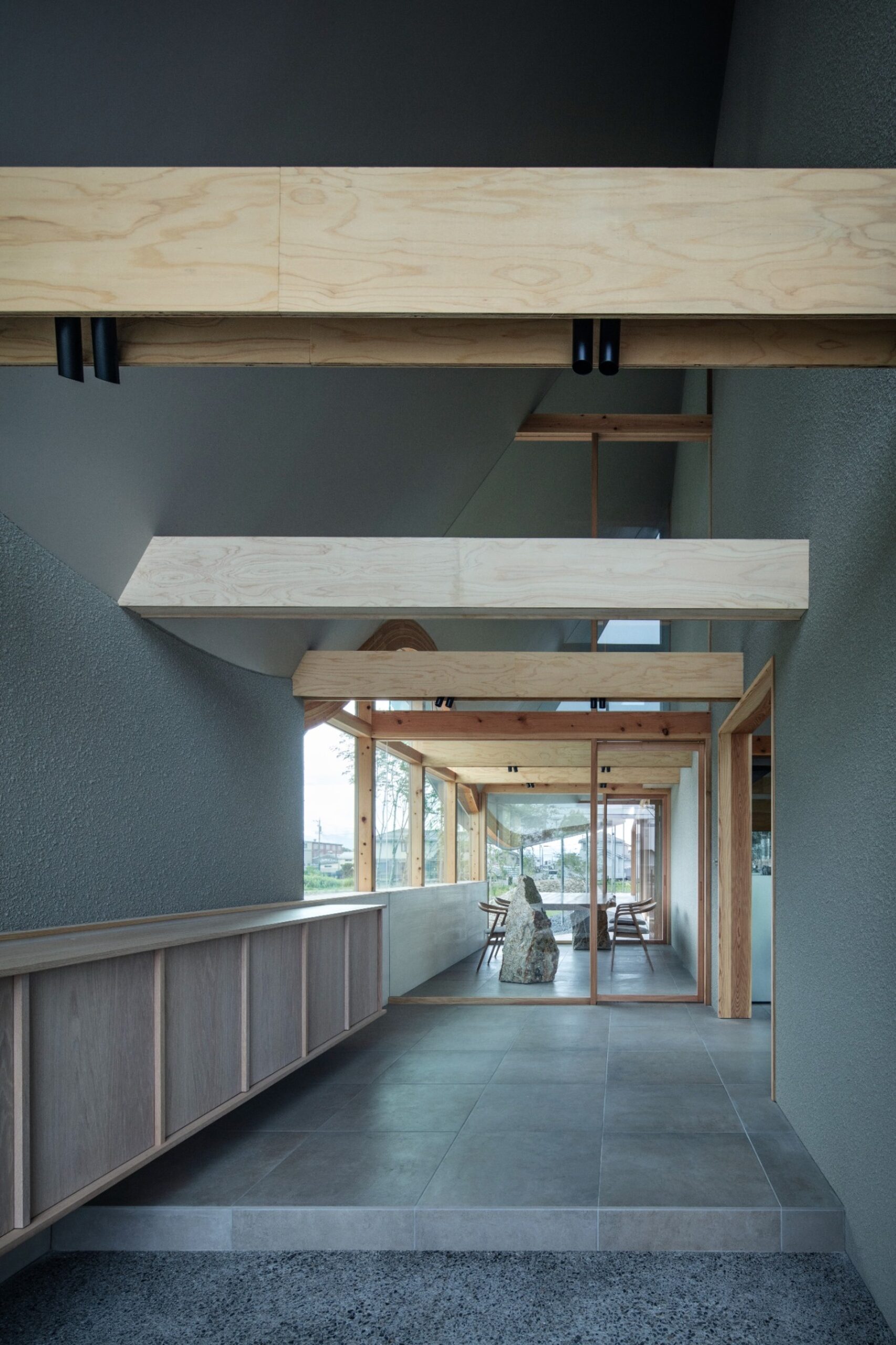
Inside, spatial organization is designed to remain closely connected with the exterior. Beneath the raised roof, the entrance and meeting rooms occupy a tall space that naturally draws the outside inward.
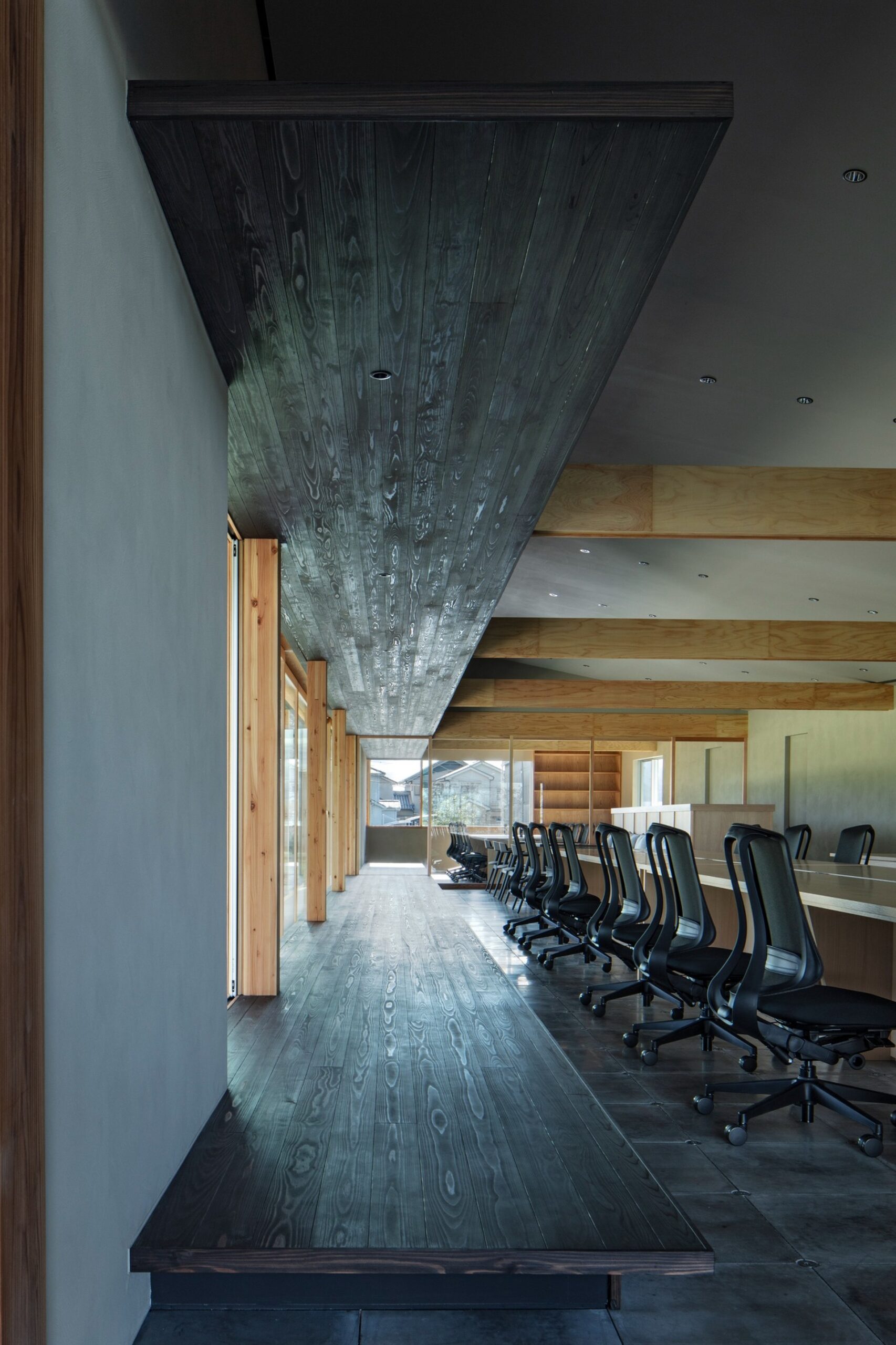
Courtyards and verandas are placed under the undulating roof, creating intermediate spaces between interior and exterior. These zones soften the transition from work environment to landscape, offering places for movement, pause and informal encounter.
Margins, Gardens and Interior Continuity
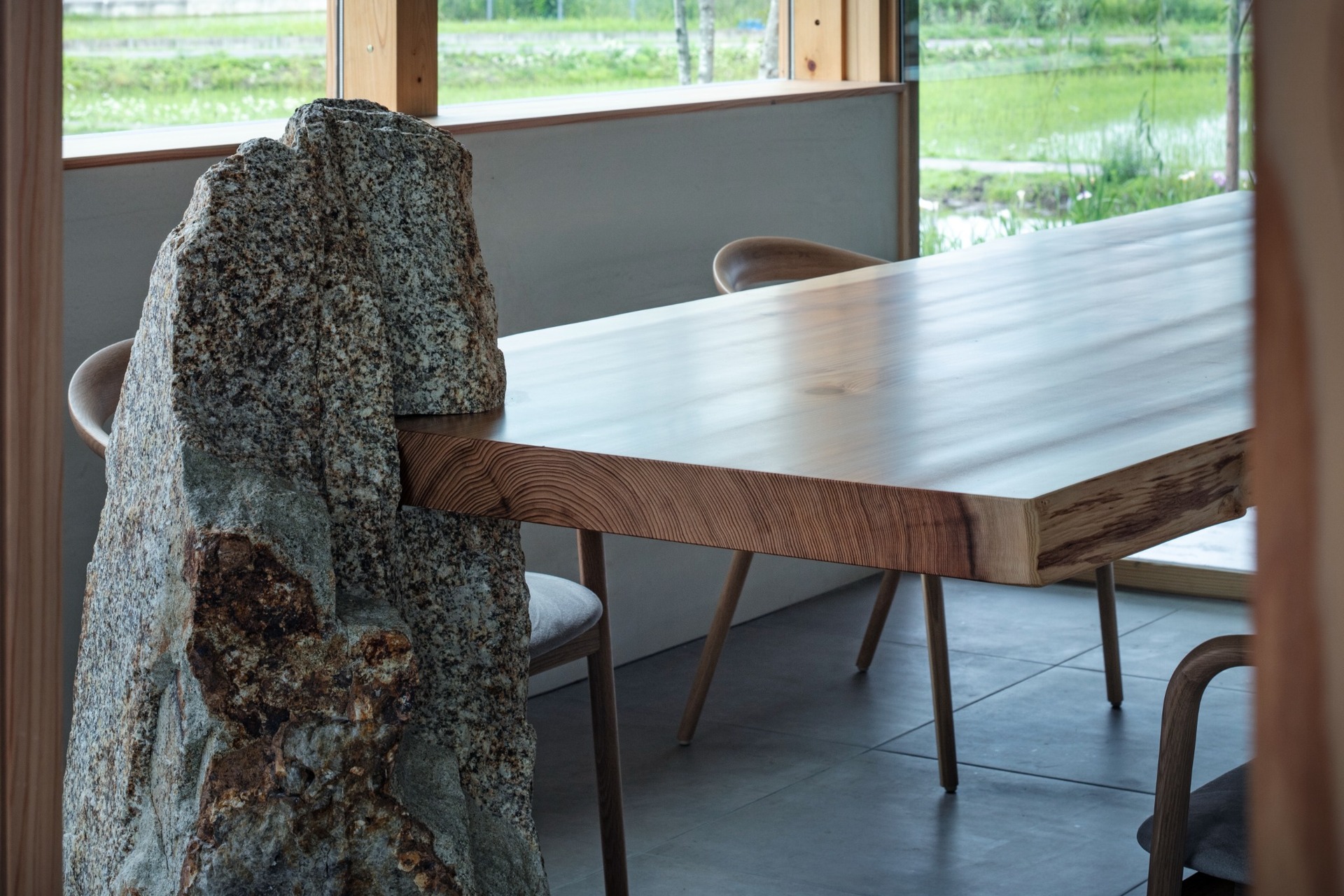
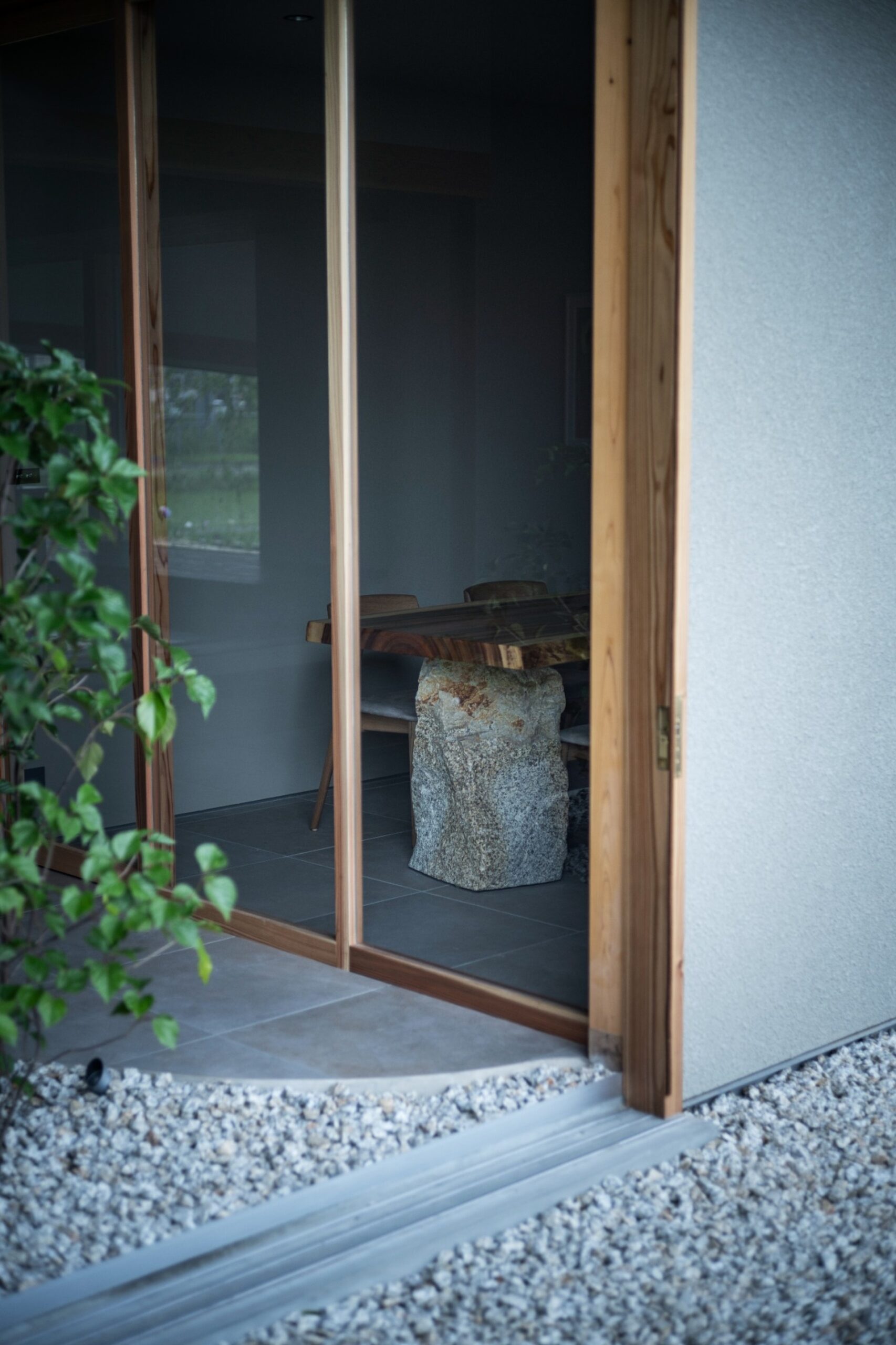
Throughout the building and the site, small margins and resting places are carefully arranged. Stones and greenery are introduced into the interiors, producing a sense of continuity with nature even while indoors.
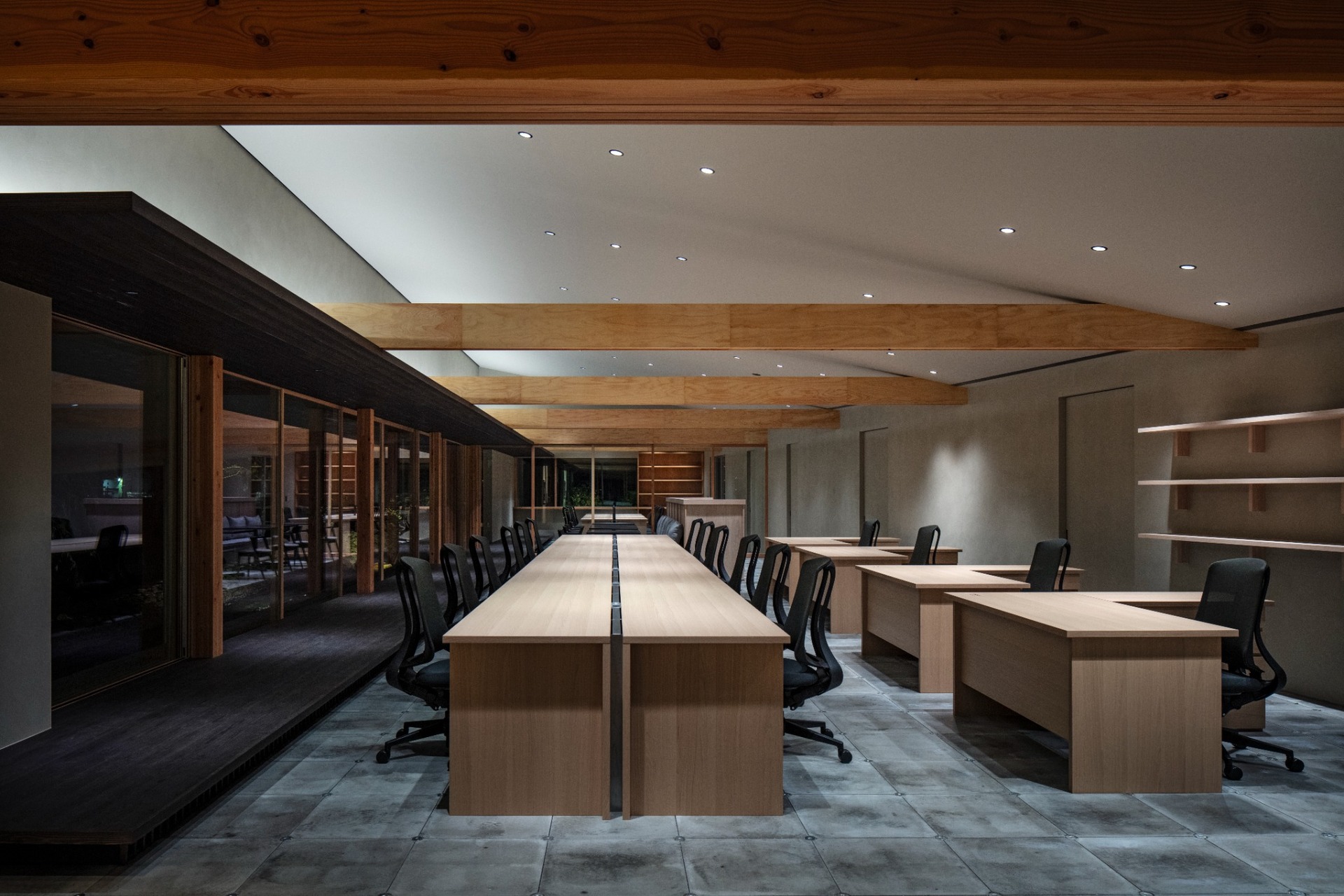
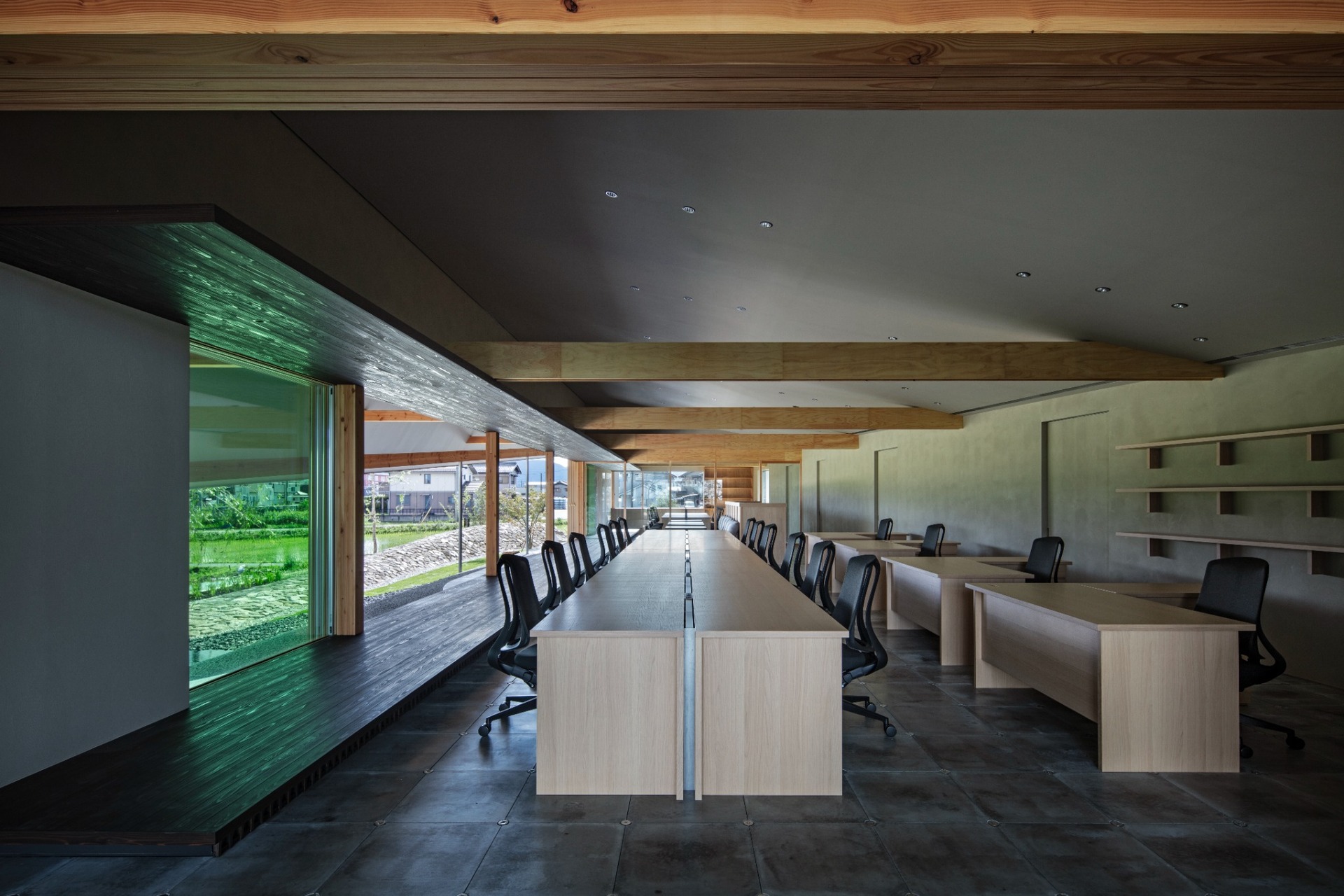
The result is a flexible work environment that supports meetings, breaks and moments of observation. The office is not defined only by productivity, but also by the possibility of noticing seasonal change, light, rain and wind as part of daily working life.
Light, Wind and the Southern Openings
On the south side, large openings are combined with low eaves, balancing solar control with an intimate relationship to the garden. The building does not rely on a hard boundary between inside and outside. Instead, wind, light and other natural elements are softly drawn into the interior.
Through this calibrated relationship, the office creates a new everyday scenery for the people who work there, the local community and first-time visitors. It gives form to a quiet ambition: to make the familiar landscape visible again.