Apartment Renovation in Kolonaki
Architecture:
Visuals:

Located in the heart of Kolonaki, the 115m² apartment renovation reinterprets classical interior architecture through a contemporary spatial narrative. Rather than imposing contrast, the proposal establishes continuity between inherited decorative elements and modern living conditions, preserving ornamental ceiling moldings, wall paneling and symmetrical proportions while introducing a calmer, more minimal architectural vocabulary. The intervention approaches the apartment as a layered spatial composition where historical references and contemporary clarity coexist in balance.
Design Philosophy
The project positions itself within a contemporary neo-classical framework, where proportion, material permanence and spatial coherence become the primary design tools. Existing architectural details are neither concealed nor replicated nostalgically; instead, they are carefully reframed within a restrained interior atmosphere that prioritizes rhythm, tactility and long-term relevance over temporary stylistic gestures.
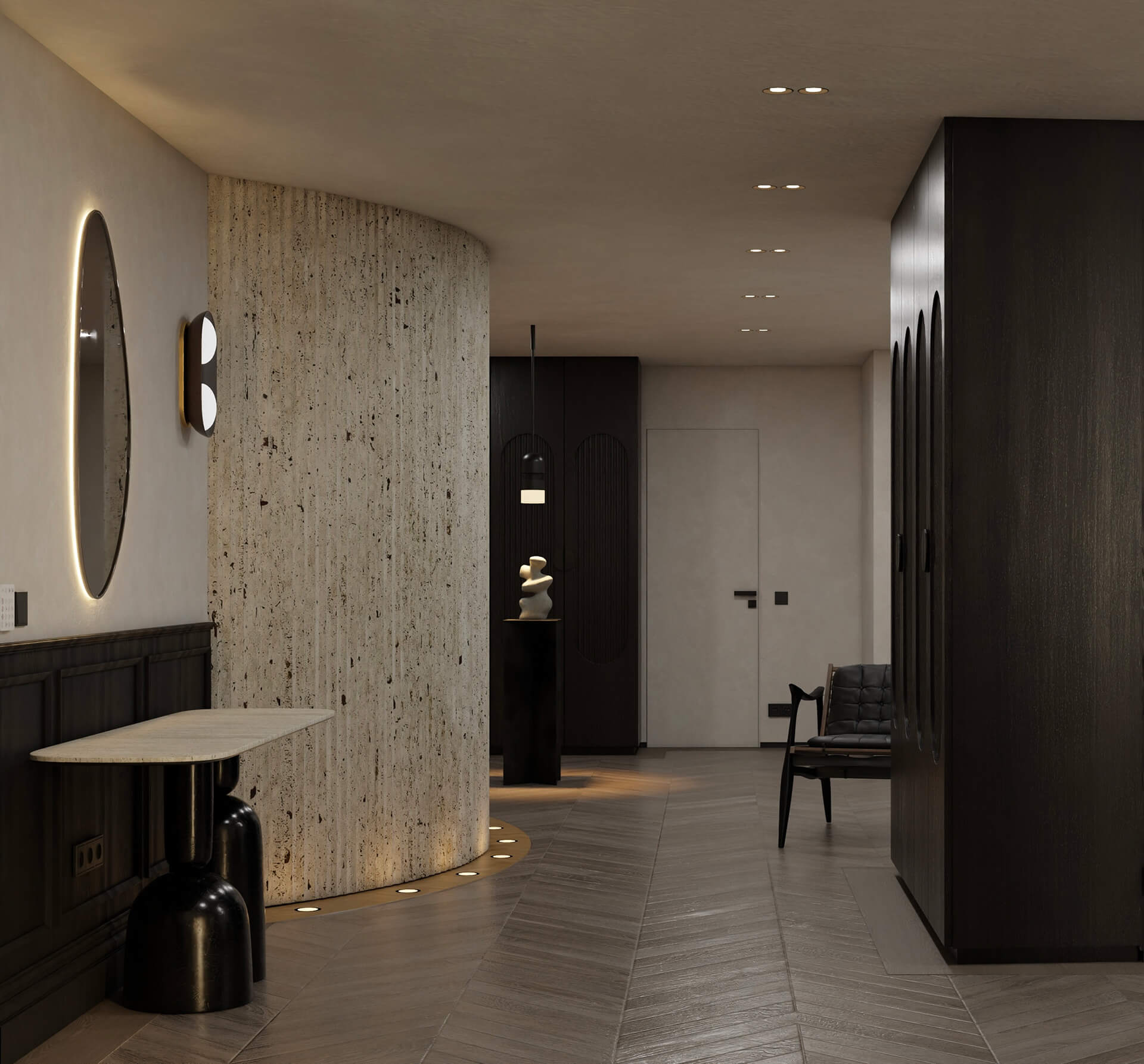
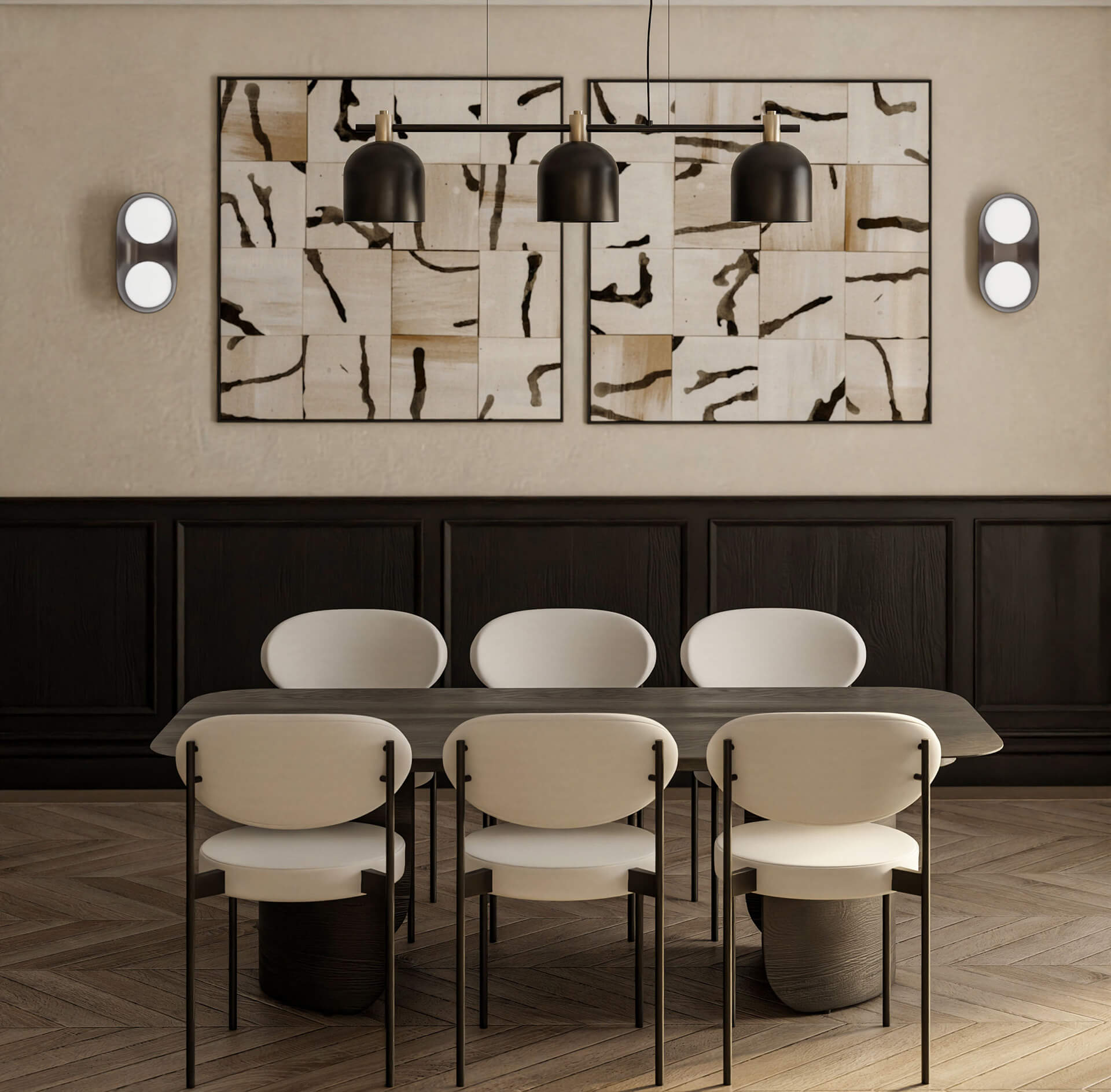
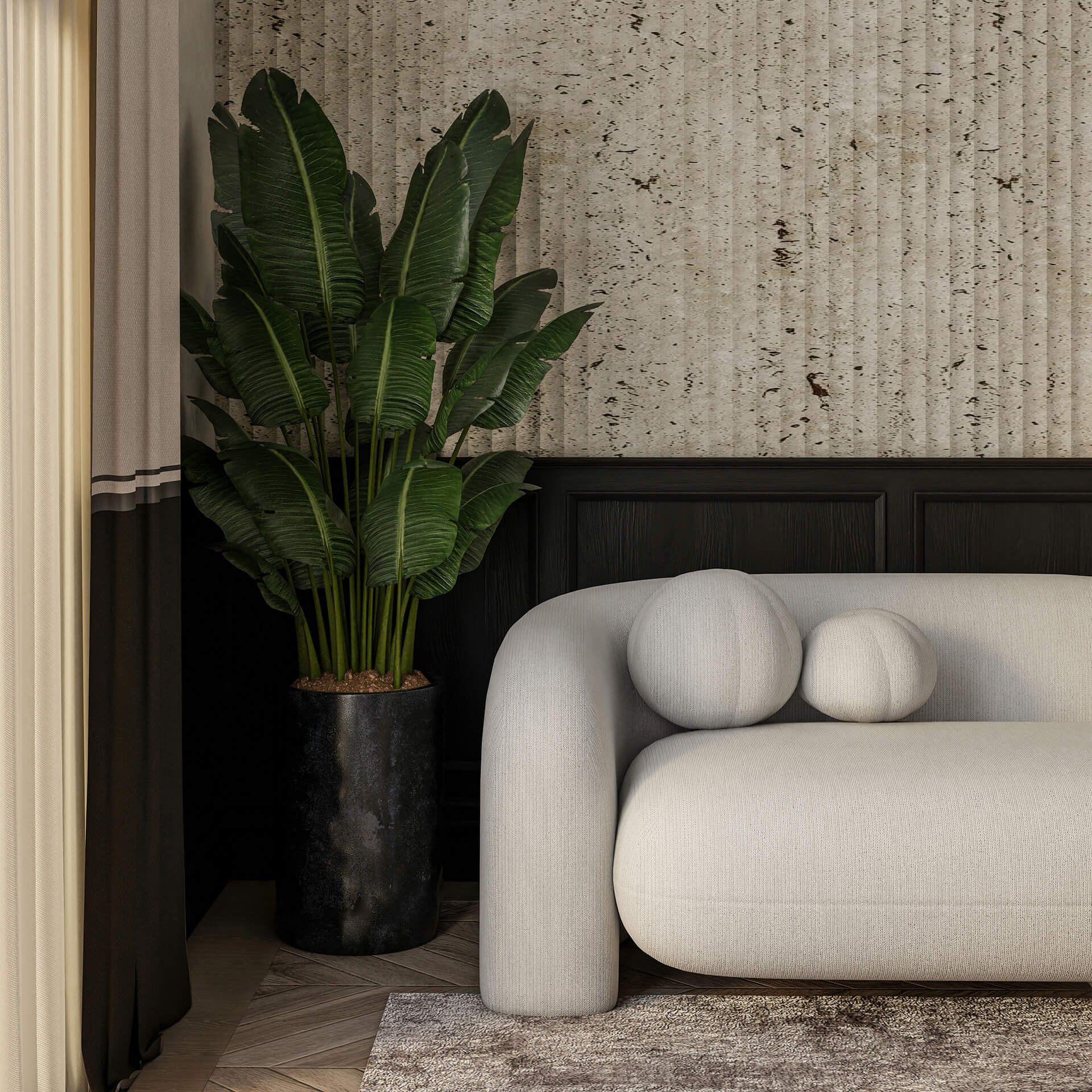
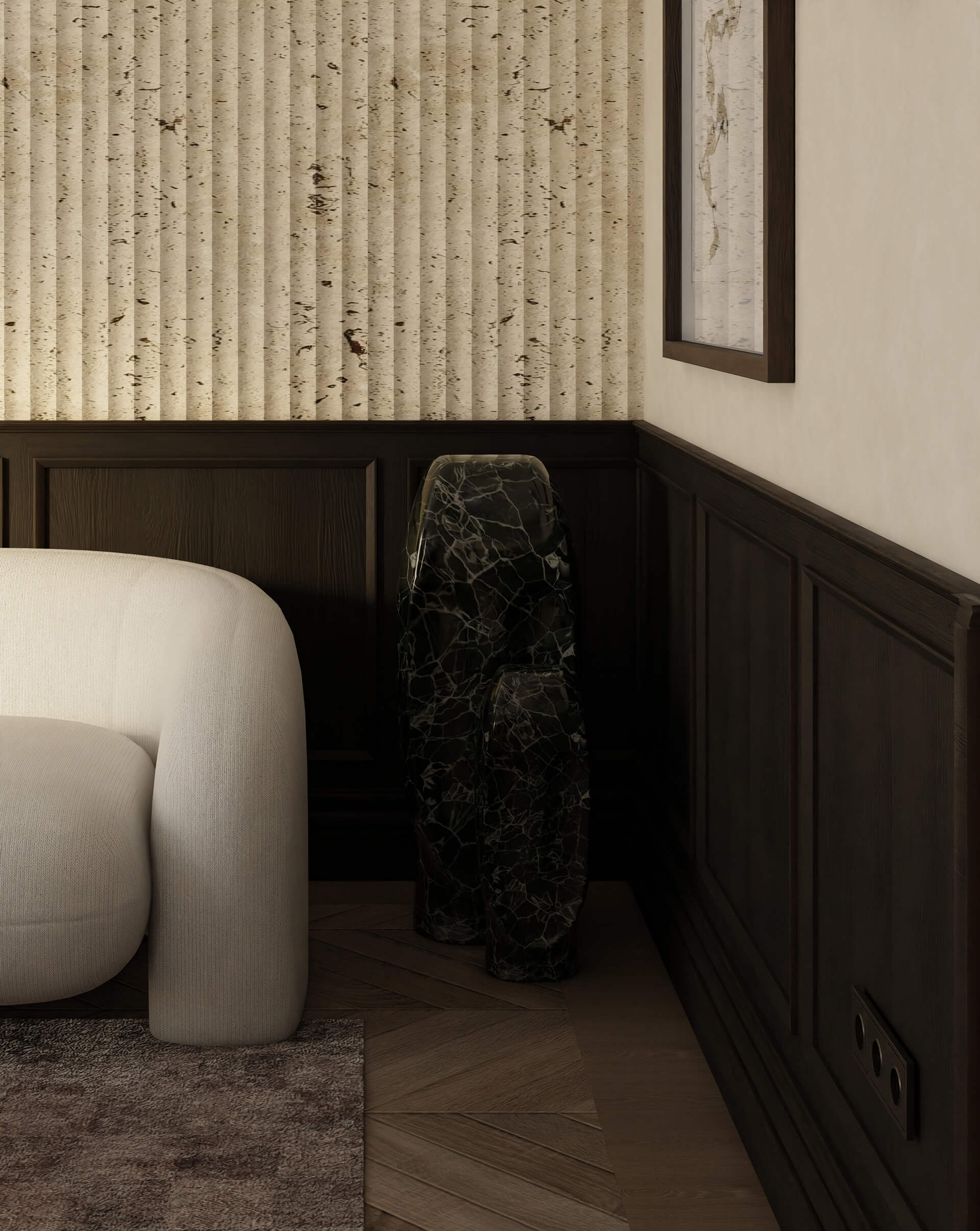
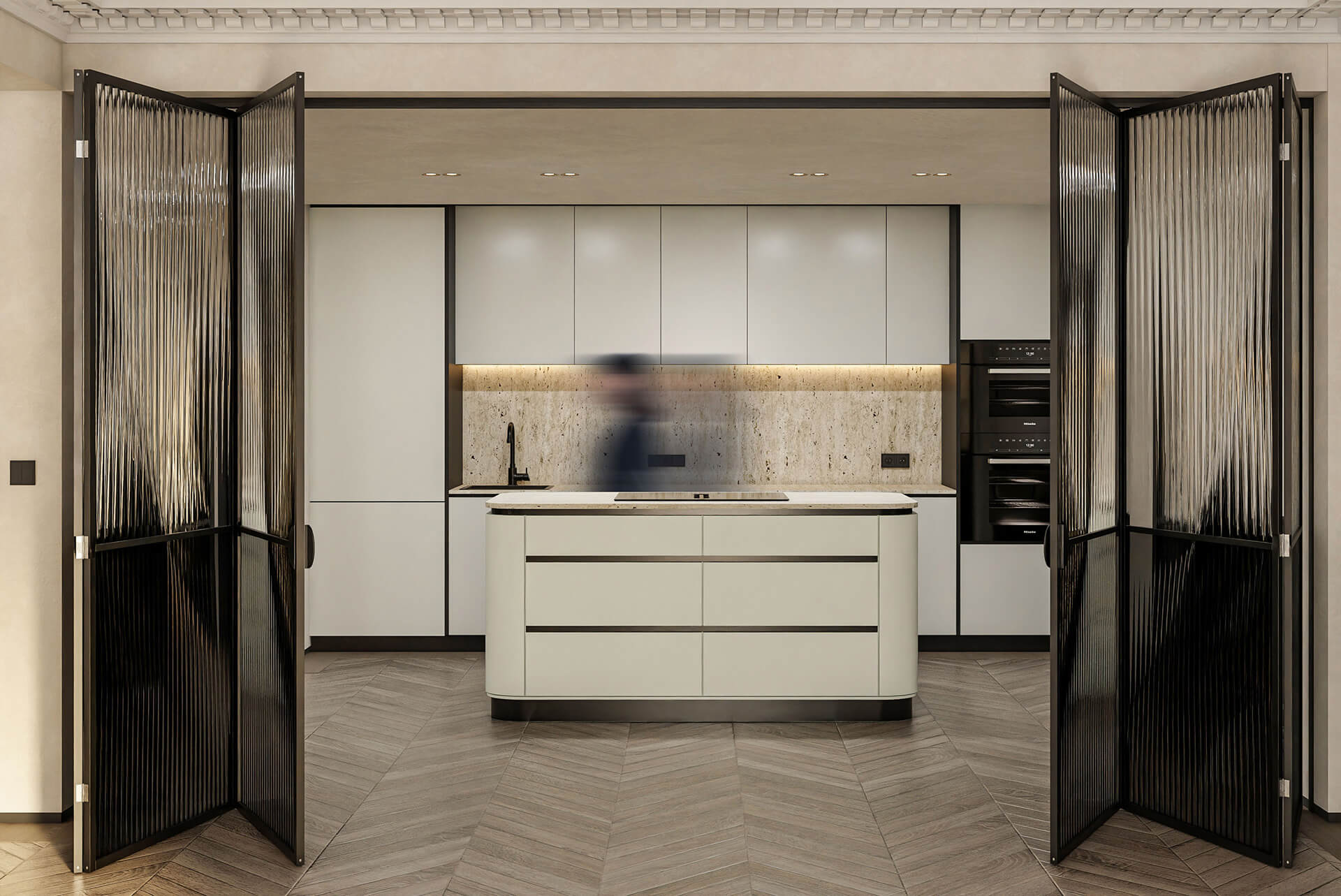
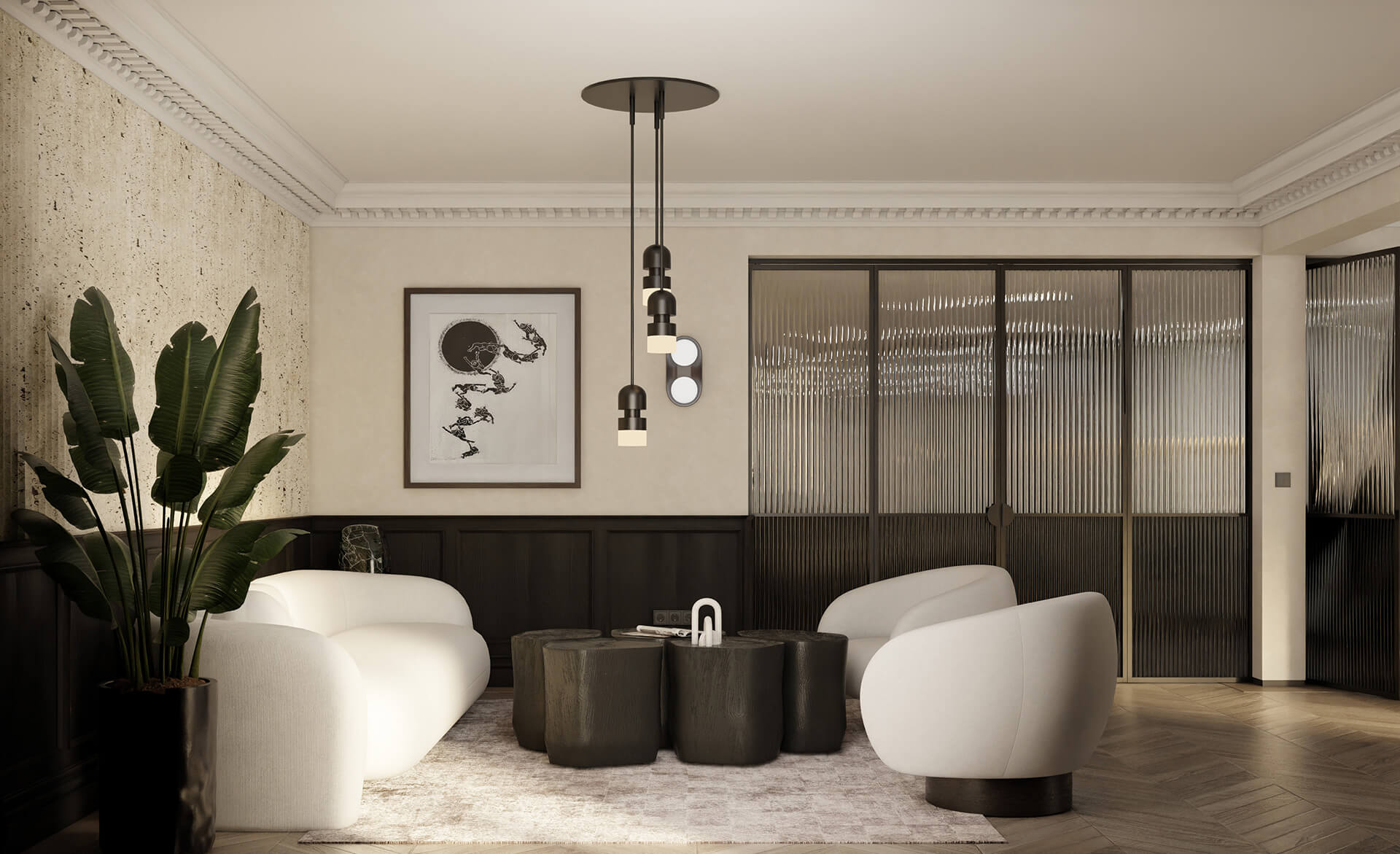
Dark timber wainscoting introduces depth and visual grounding throughout the residence, while curved travertine surfaces soften transitions between spaces and generate sculptural movement within the plan. Herringbone wood flooring reinforces the apartment’s refined domestic character, establishing continuity across the different living zones. Minimal kitchen surfaces and integrated detailing maintain spatial calmness, allowing materials and proportions to define the architectural experience. Artworks and sculptural objects are positioned as integral spatial components rather than decorative additions, contributing to the composition of each room.
Spatial Organization
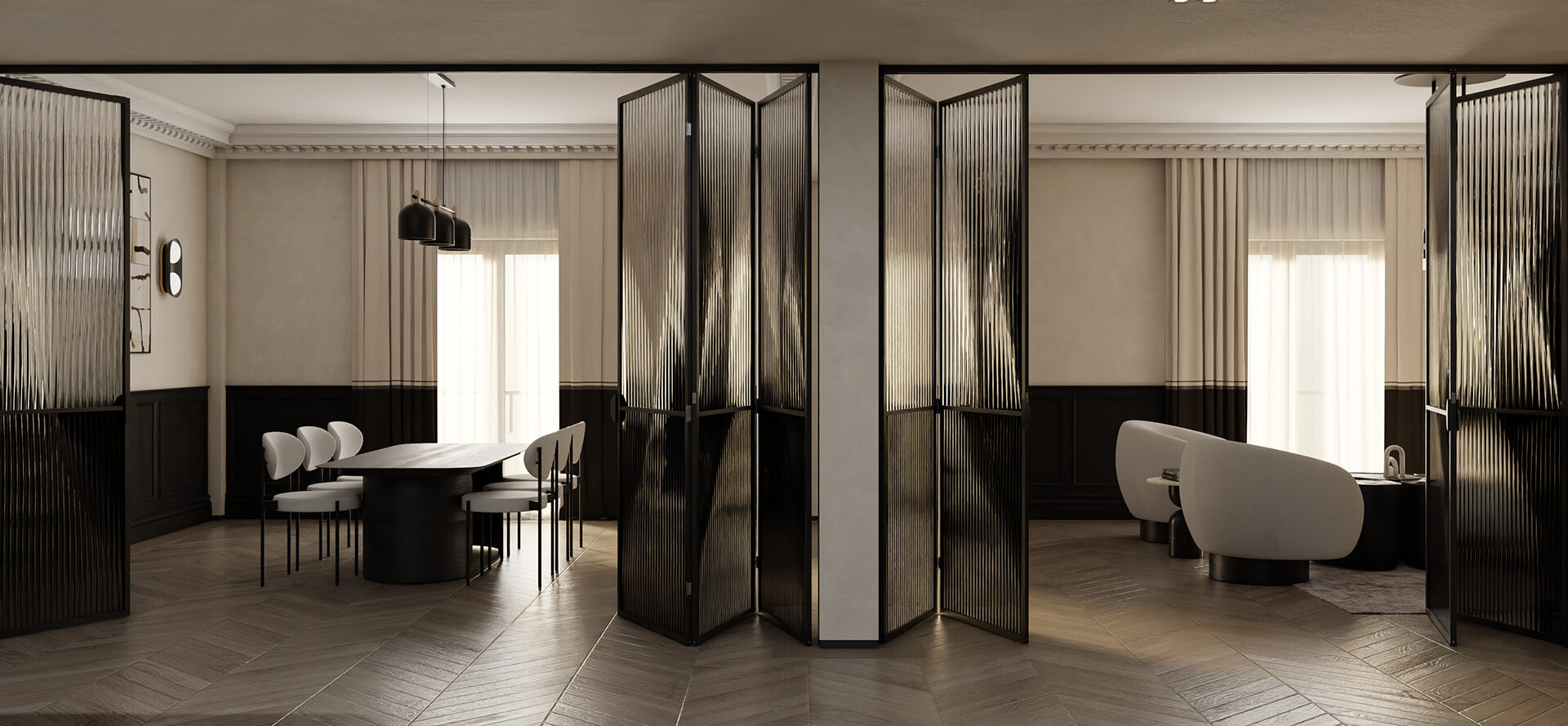
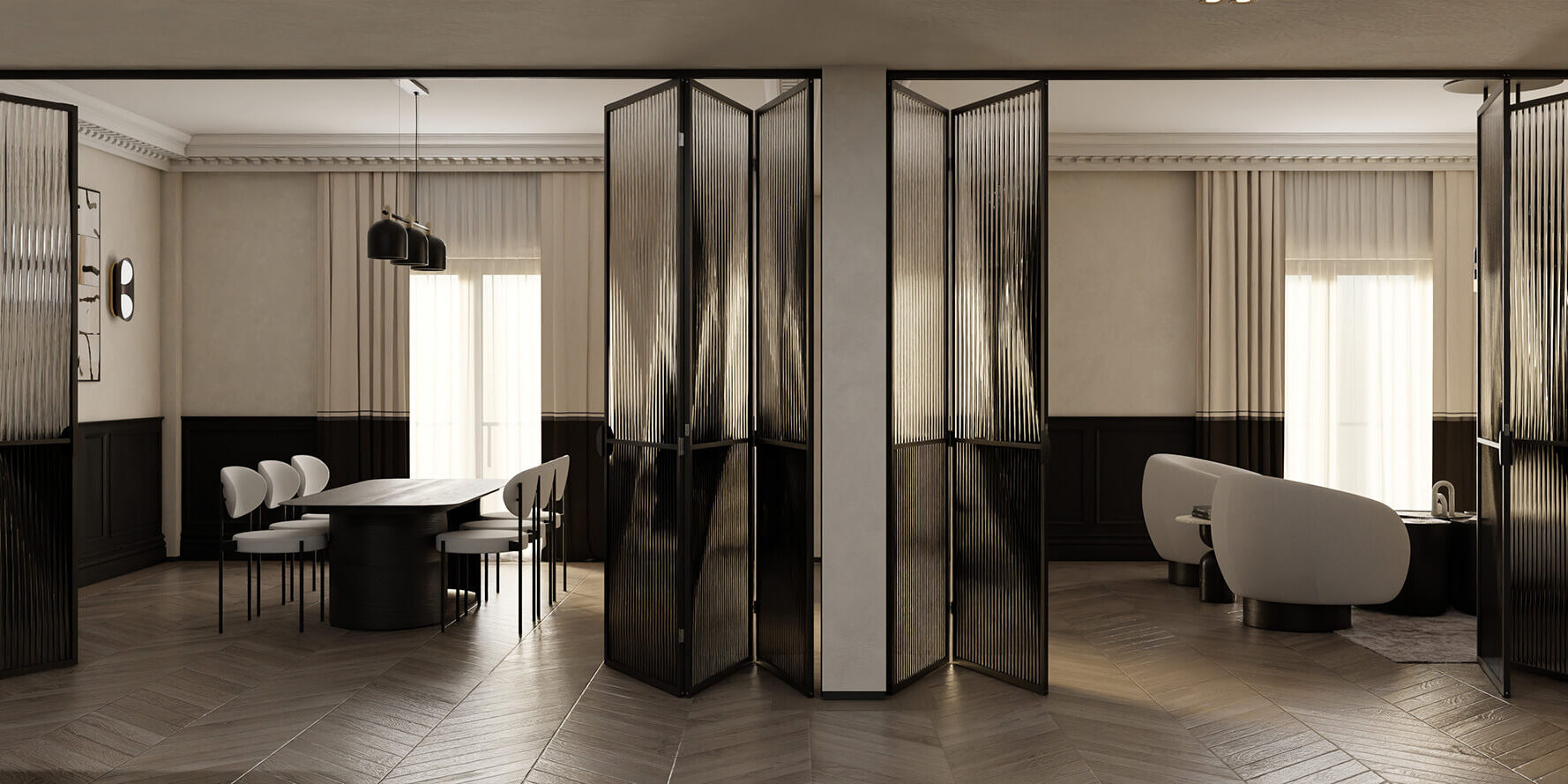
The organization of the apartment is defined by flexibility and controlled permeability. Folding partitions composed of metal frames and fluted glass operate as transitional thresholds between the living room, dining area and kitchen. These movable boundaries enable the interior to alternate between openness and privacy without interrupting the continuity of natural light or visual connection.
The spatial arrangement avoids rigid separations, instead supporting changing patterns of everyday habitation through adaptable configurations. Circulation unfolds organically through layered thresholds and framed visual axes, while the interplay between transparency and opacity creates a dynamic relationship between collective and private functions within the residence.
Material Palette
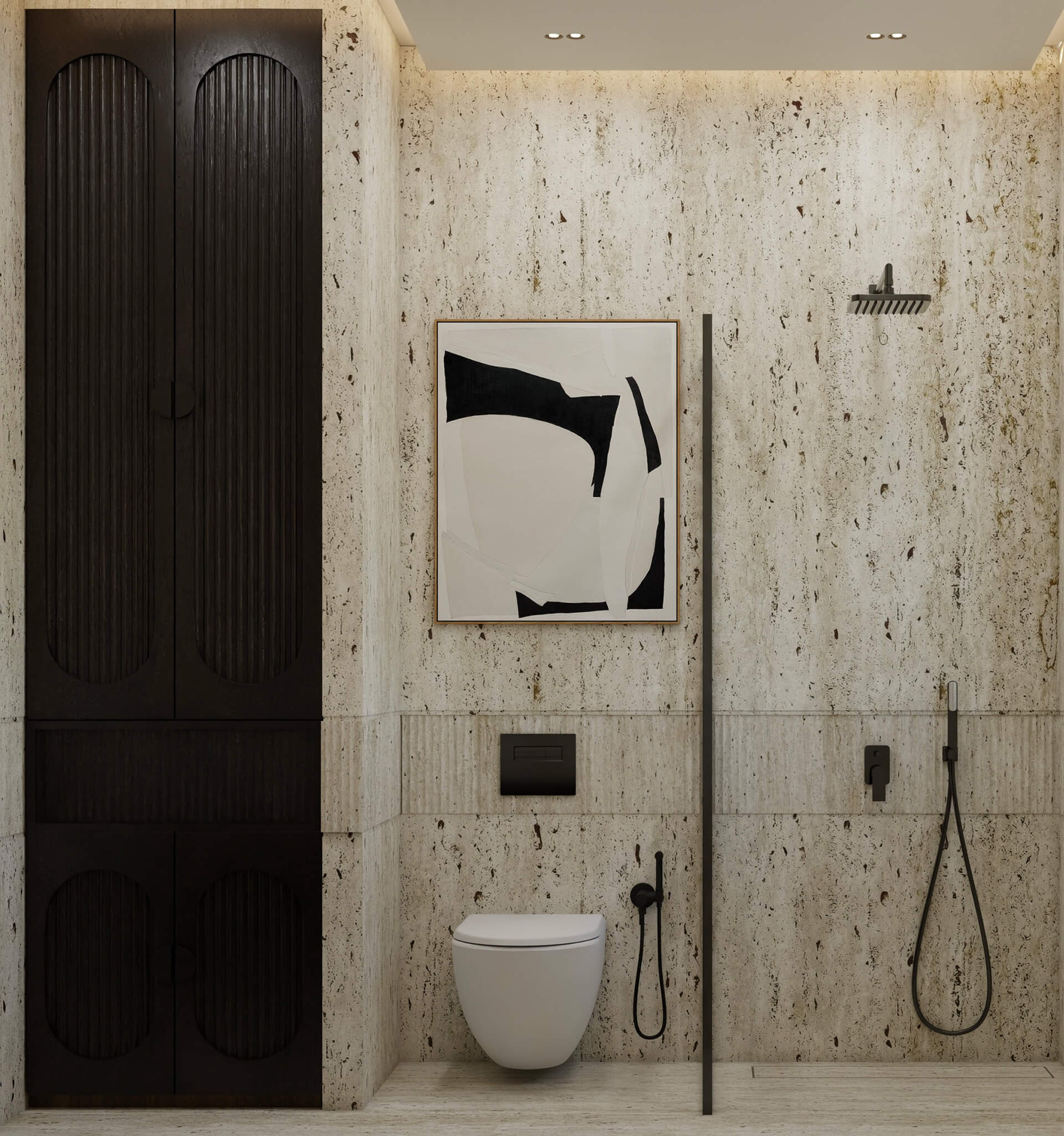
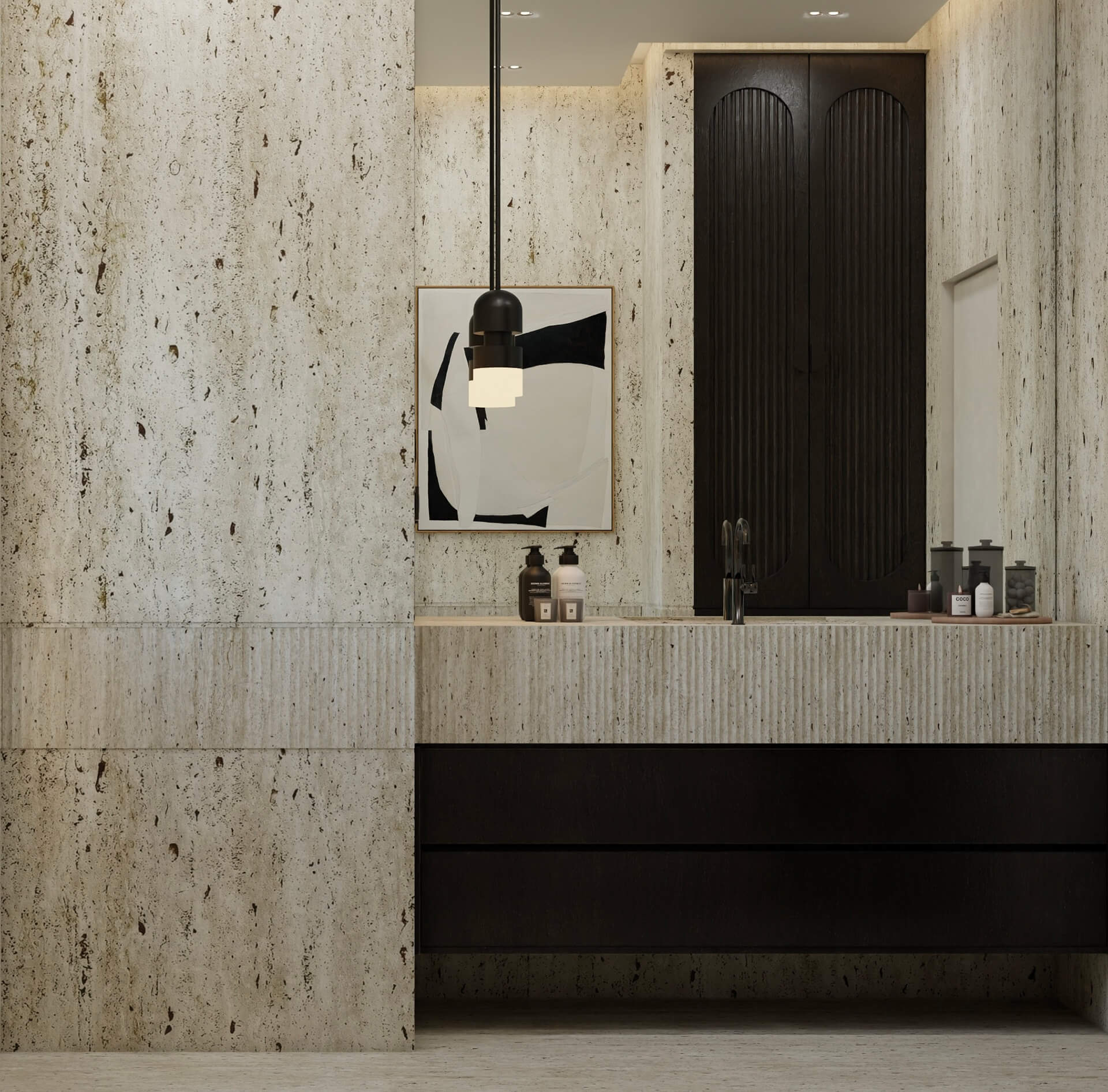
Materiality functions as the central architectural language of the project. Travertine surfaces, dark wood textures and muted tonal palettes establish a tactile environment rooted in permanence and restraint. The bathroom spaces continue this material dialogue through vertically articulated stone textures and contrasting dark timber cabinetry, maintaining consistency across the apartment’s interior identity.
Furniture selections further reinforce the sculptural quality of the spaces, introducing rounded geometries and soft forms that balance the architectural rigidity of the classical envelope. Lighting is integrated discreetly throughout the project, emphasizing texture, curvature and depth while preserving the calm atmospheric quality of the interiors.
Through a careful negotiation between preservation and reinterpretation, the project proposes a residential environment where contemporary domesticity unfolds within the enduring framework of Athenian neo-classical architecture.