Mandarin Oriental, Costa Navarino by Tombazis Architects and K-Studio
Architecture:
Photography:

A Global Resort Rooted in Place
Mandarin Oriental, Costa Navarino is a luxury destination resort that upholds the standards of a global hospitality brand while remaining deeply rooted in its context. Set above the bay of Navarino in Messinia, Greece, the resort balances large scale with an intimate experience, luxury with restraint, and high-end amenities with a meaningful connection to land, culture and environment.
The project engages with a site of historical significance, ecological value and powerful natural beauty. Rather than treating the resort as an object placed in the landscape, the design develops a system of habitation, hospitality and environmental adaptation.
A Masterplan Inspired by Rural Typologies
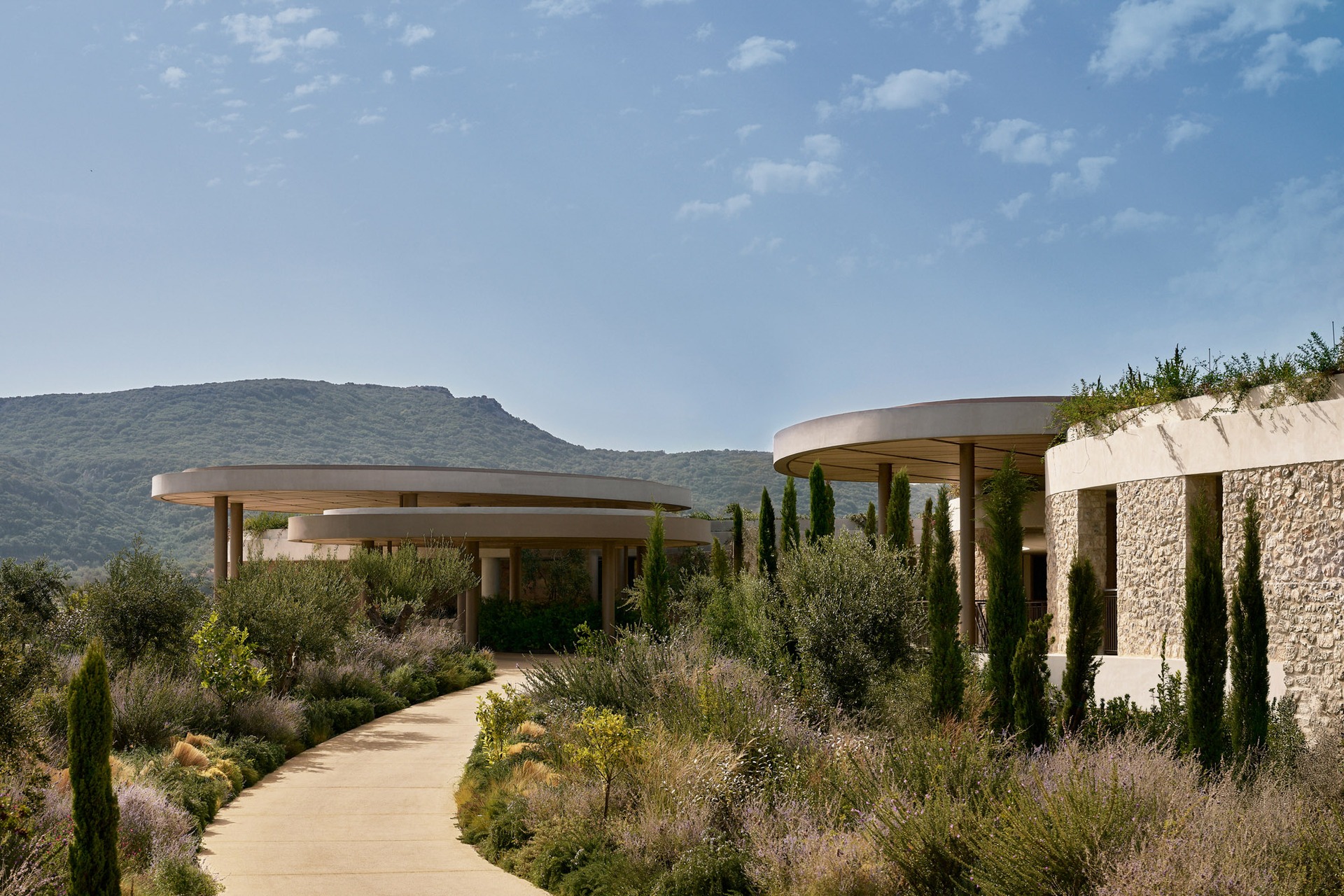
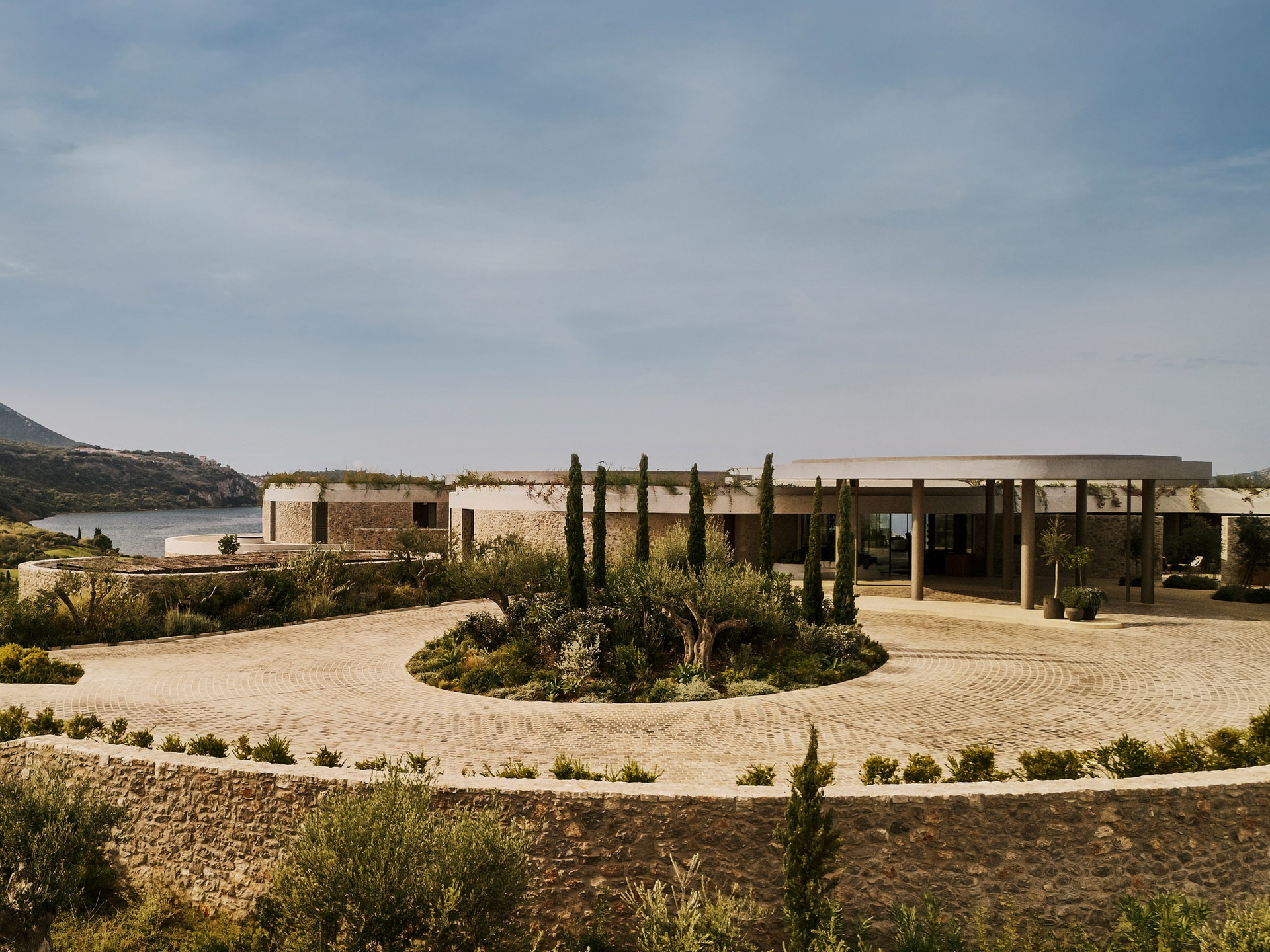
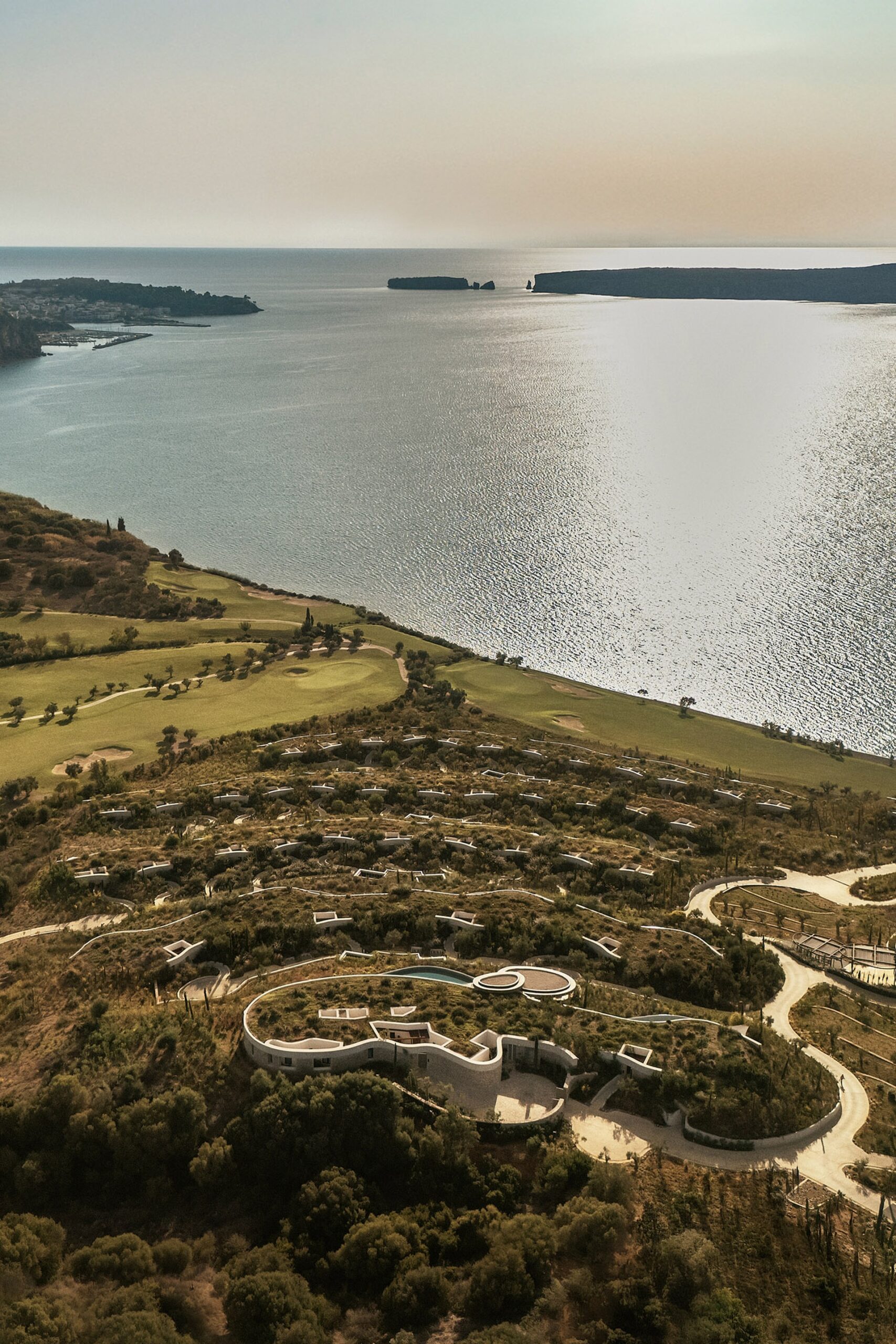
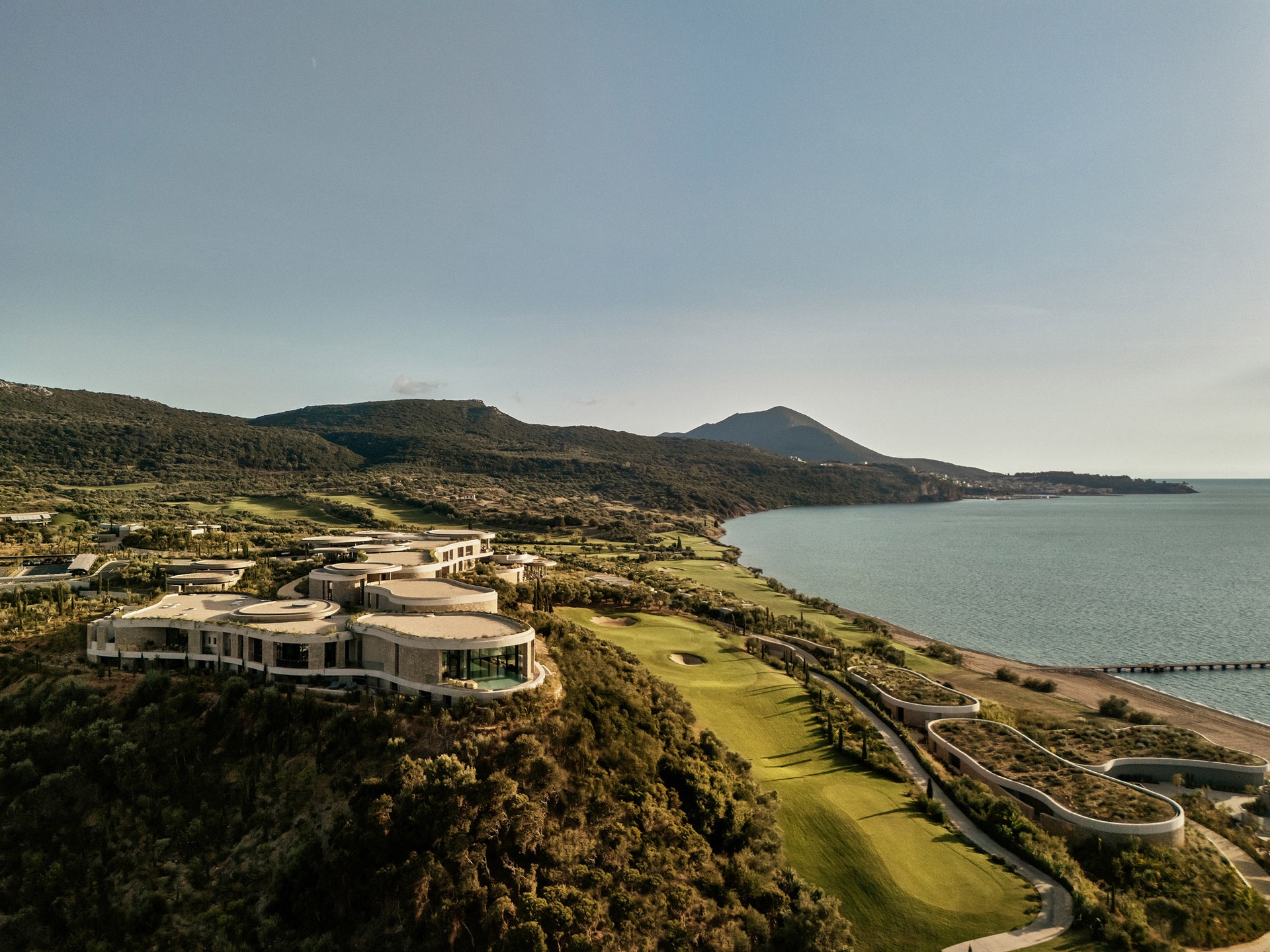
The masterplan draws inspiration from Greek rural typologies, particularly the mandria: organic stone enclosures that adapt to the terrain and organize sloping land with quiet pragmatism.
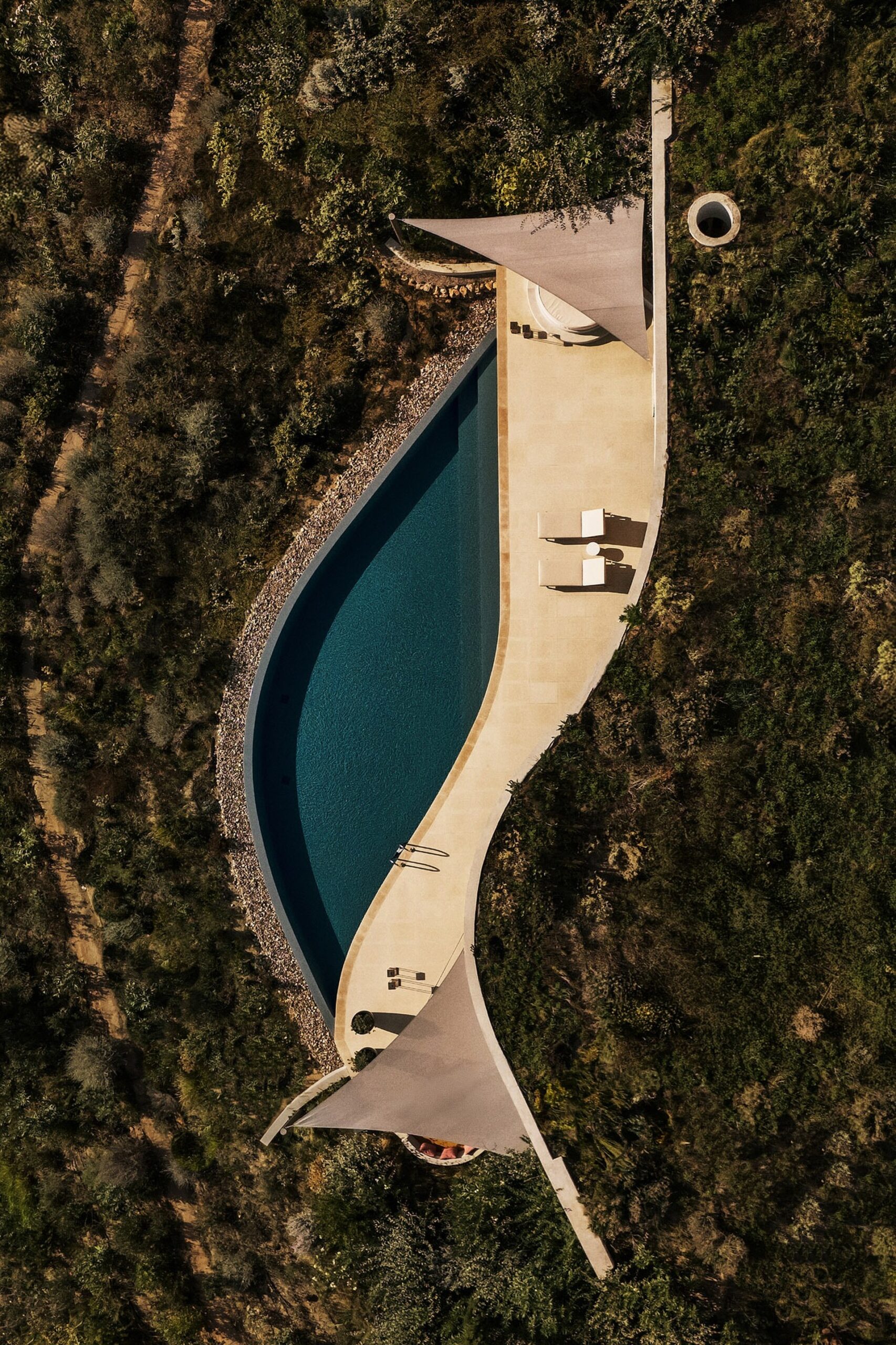
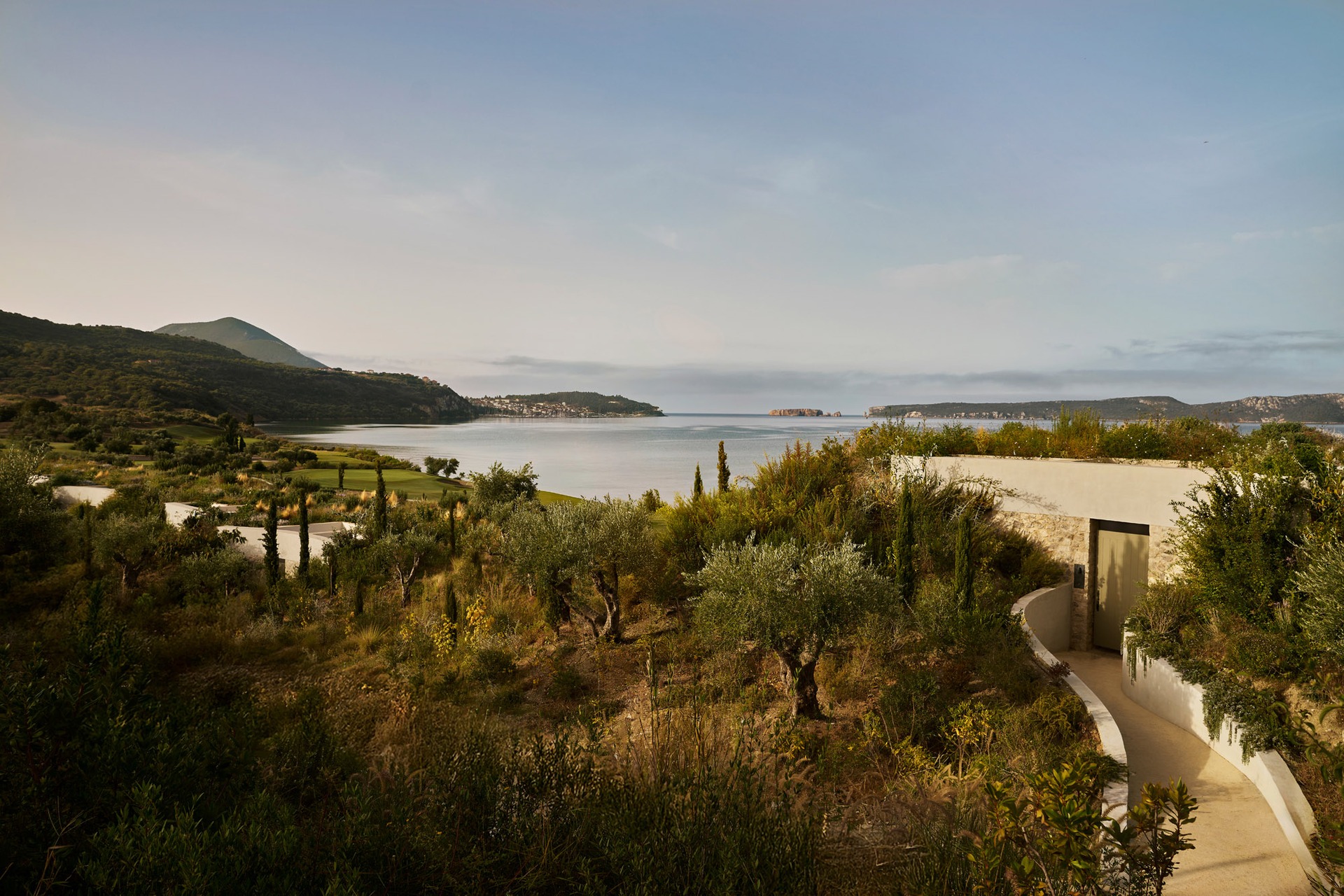
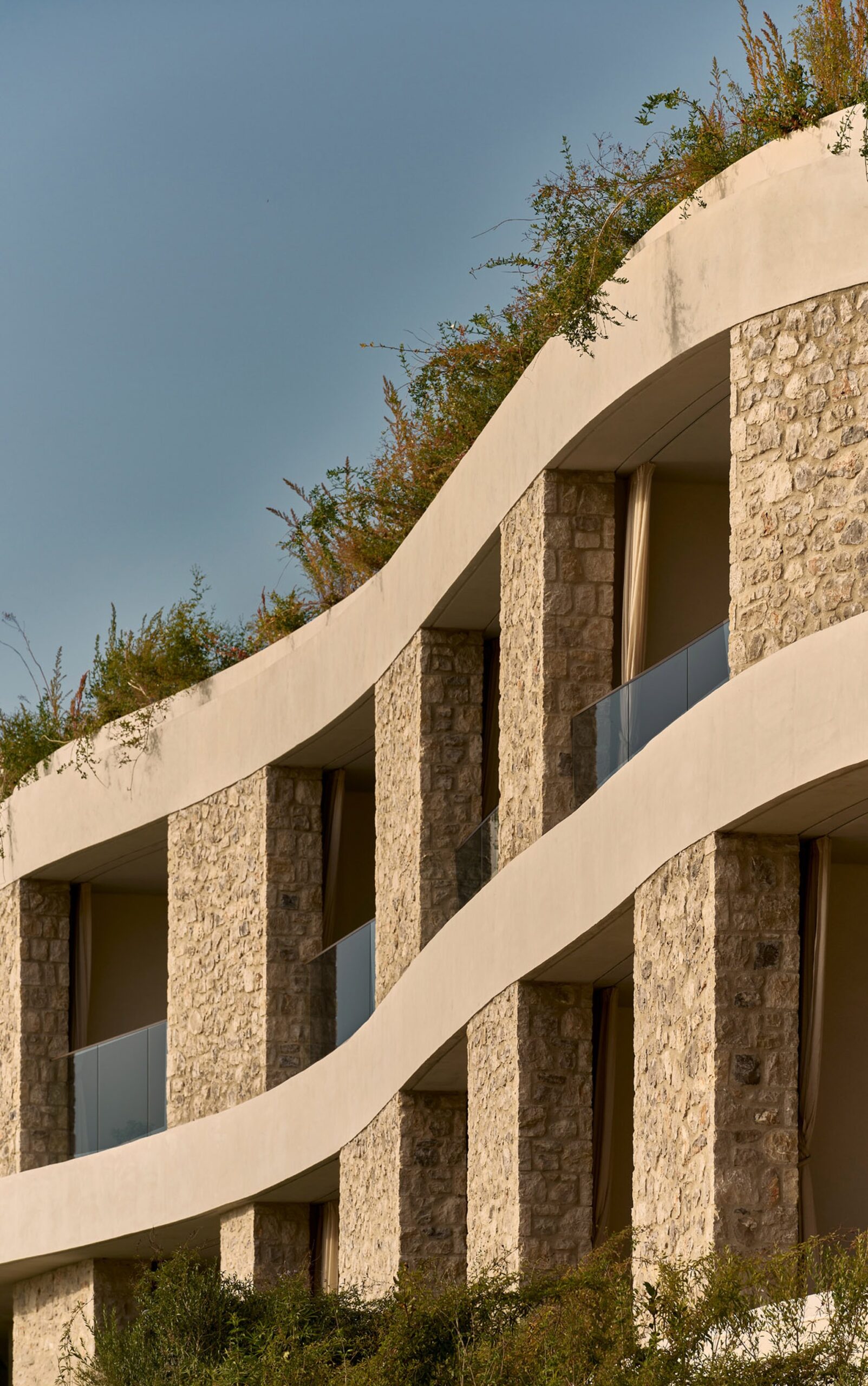
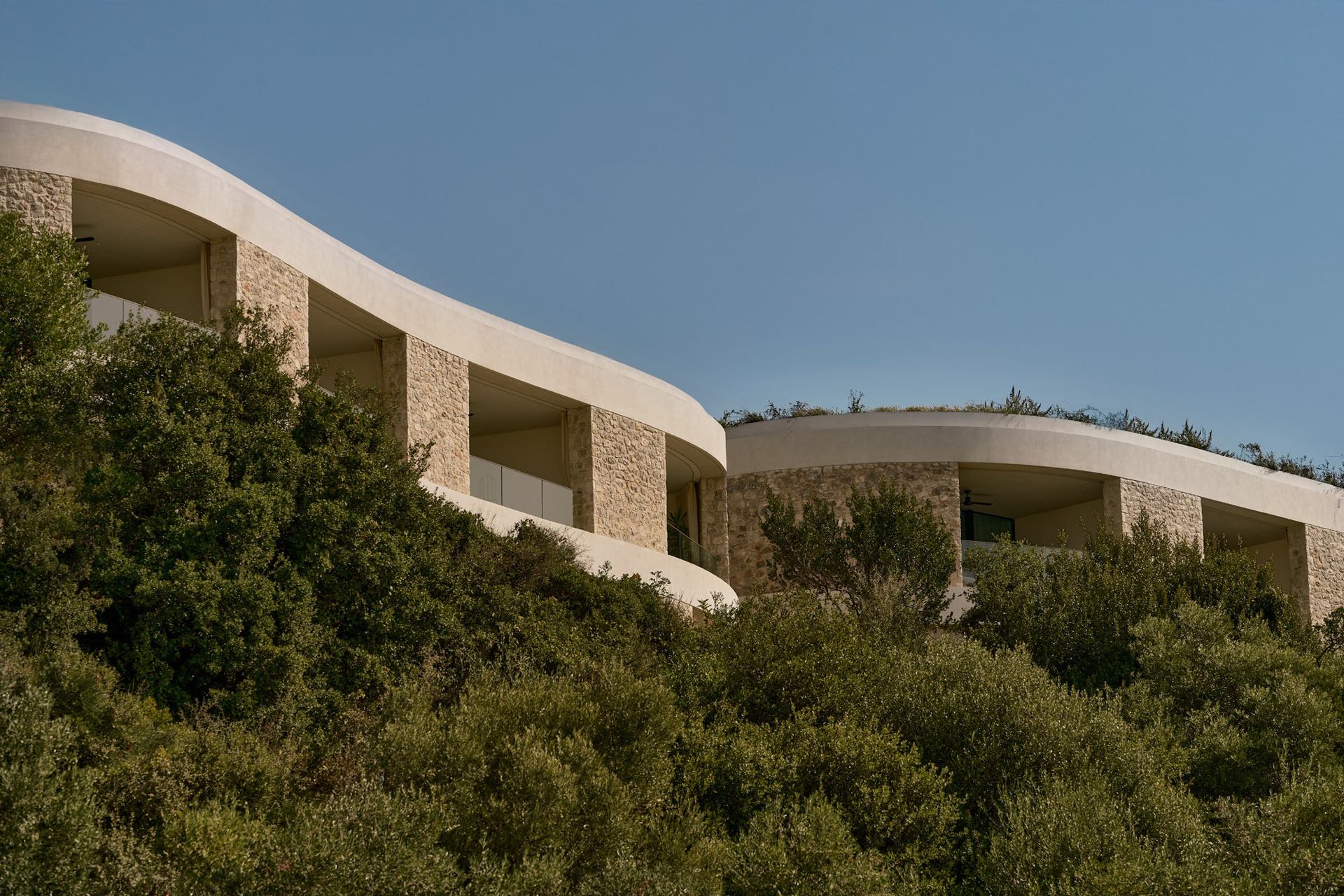
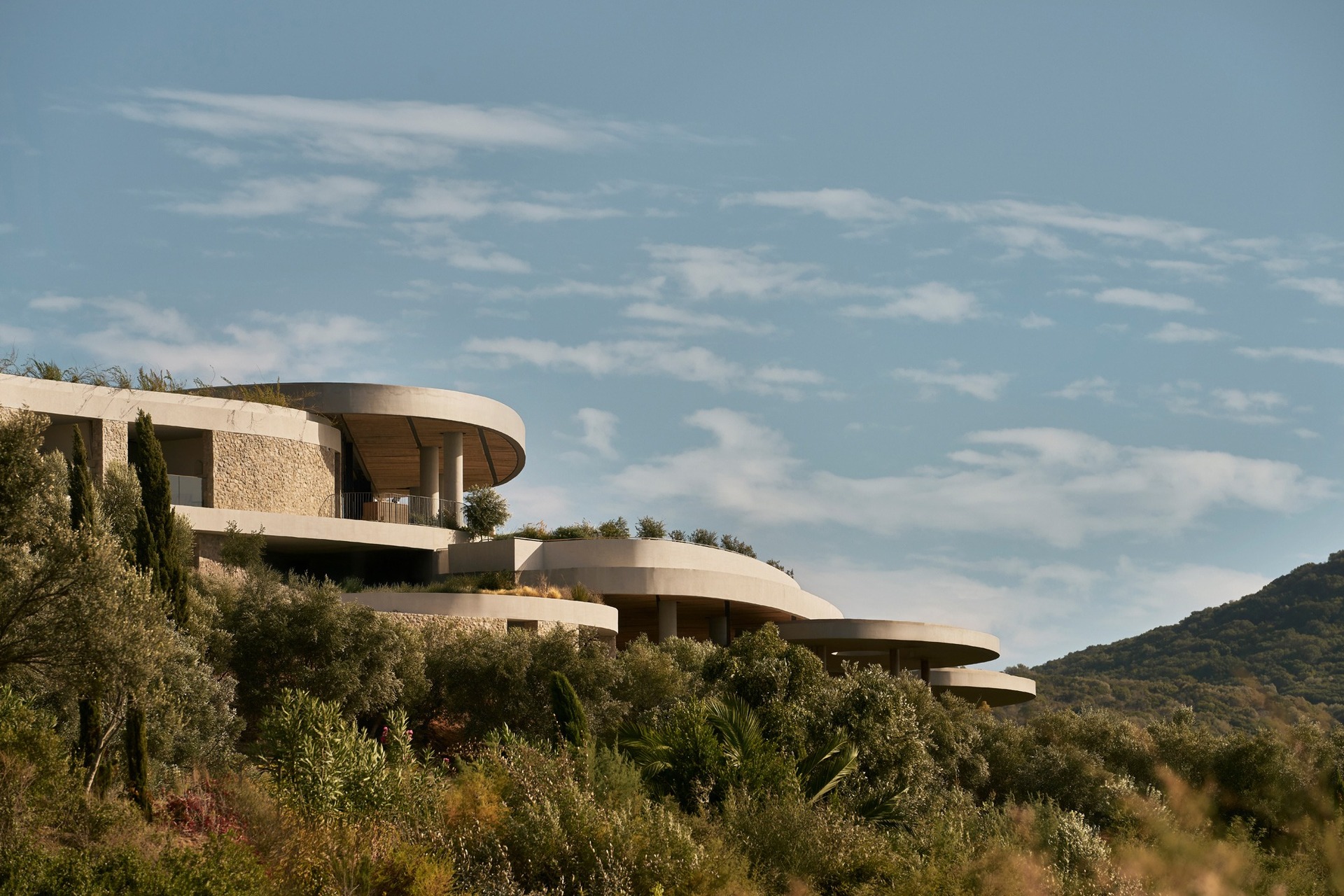
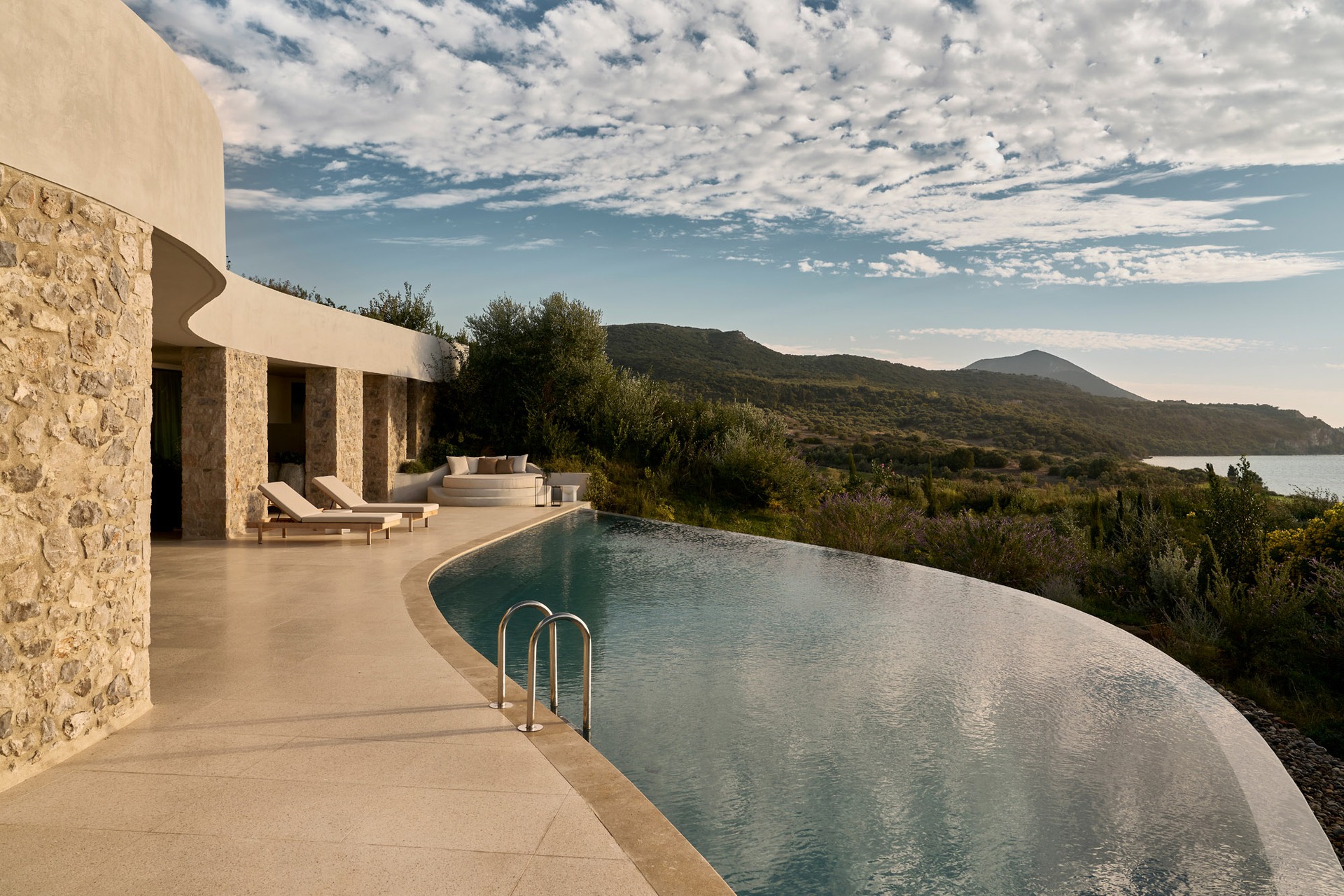
This strategy is applied at a larger scale, organizing the resort’s different building units along the contours of the hillside. The 48 earth-sheltered villas are arranged in stepped, undulating rows, ensuring uninterrupted panoramic views from every unit and creating successive horizons across the site.
Most villas are organized in pairs, with only two visible sides that disappear into the ground and independent entrances naturally separated by planted slopes. In this way, the architecture develops as an extension of the hillside, rather than imposing itself upon it.
Privacy, Autonomy and Semi-Outdoor Living
The dispersed organization of the resort enhances the guest experience in several ways. Each villa enjoys privacy, autonomy and surrounding gardens, while the relationship between interior and exterior is structured through a sequence of transitions.
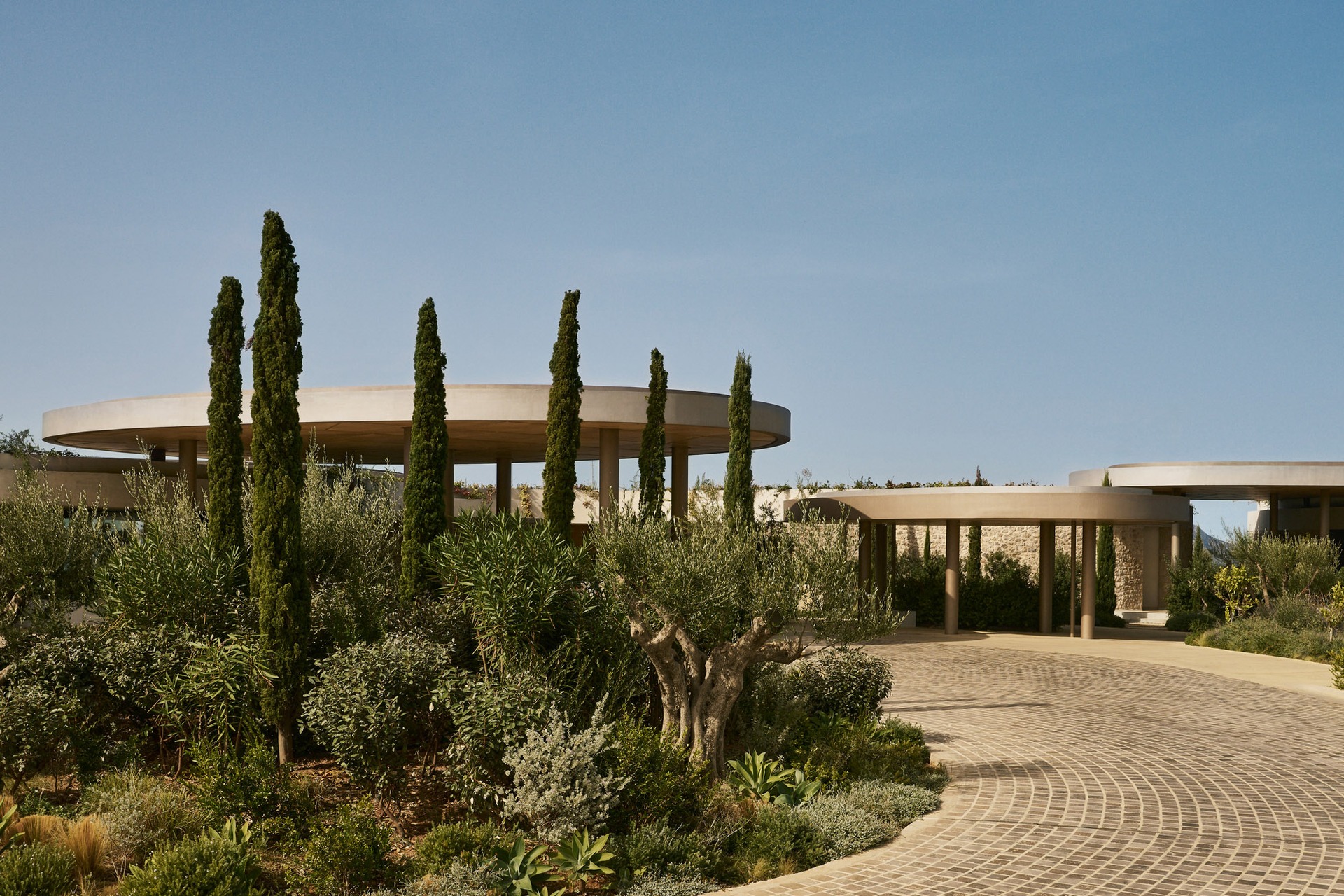
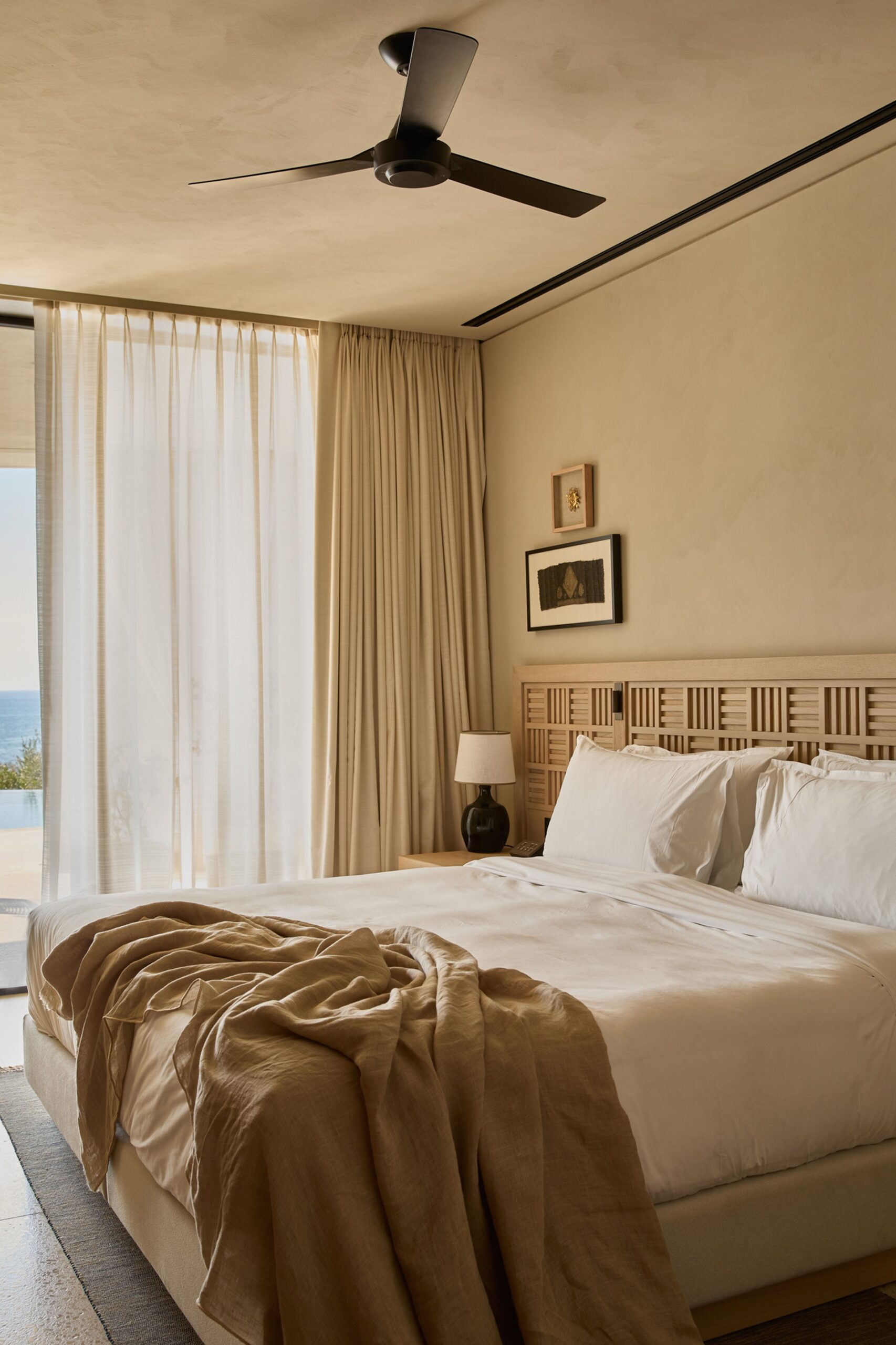
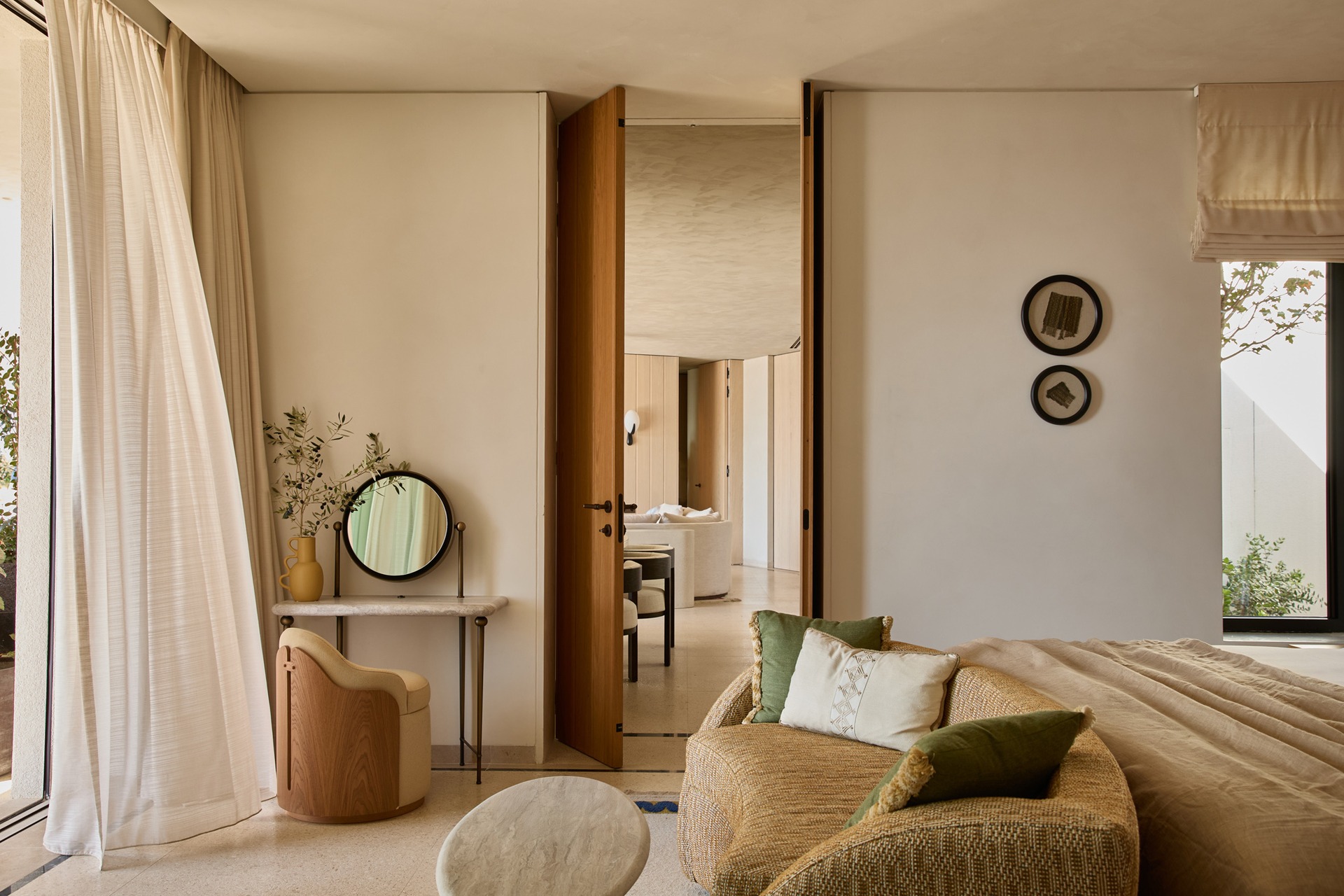
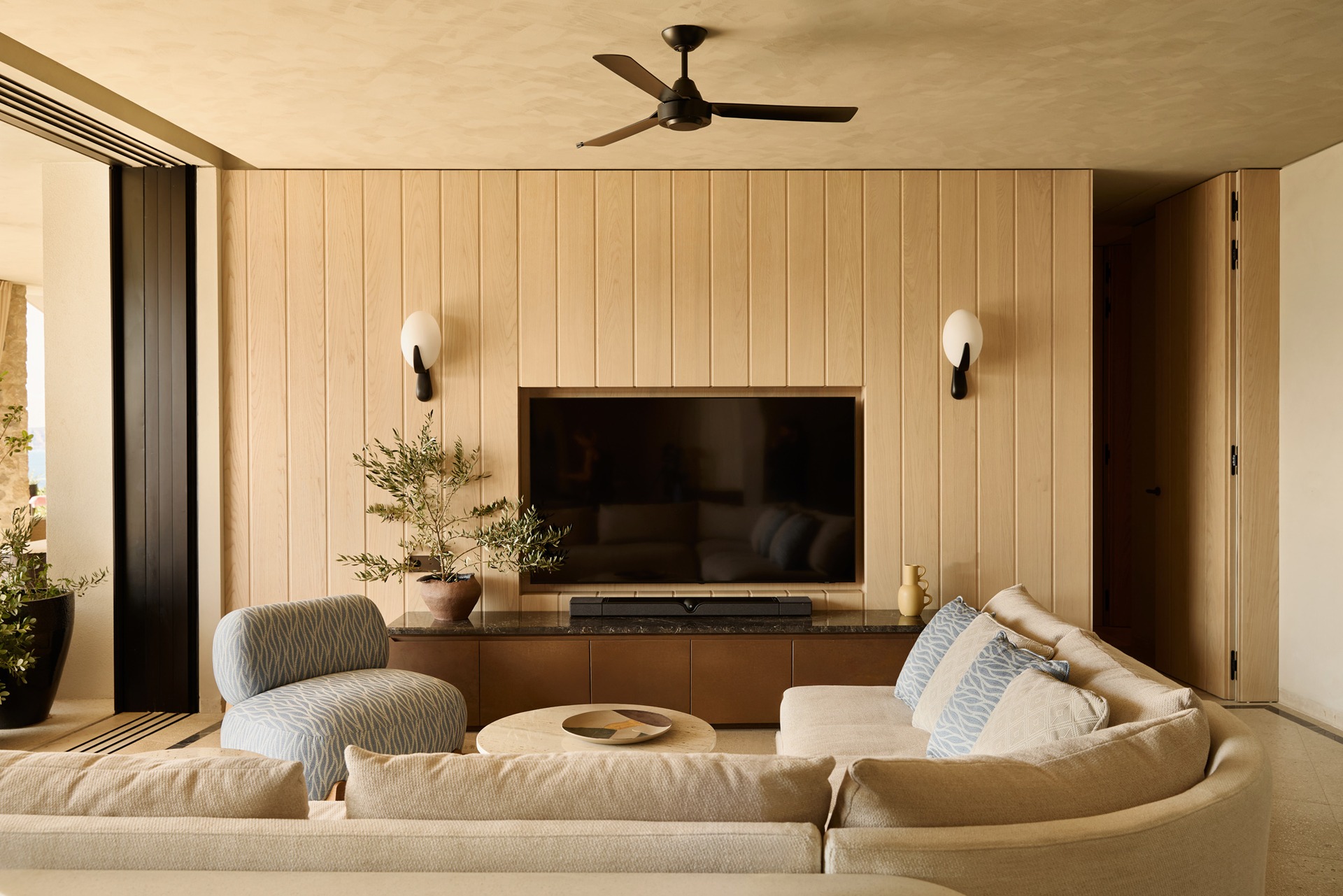
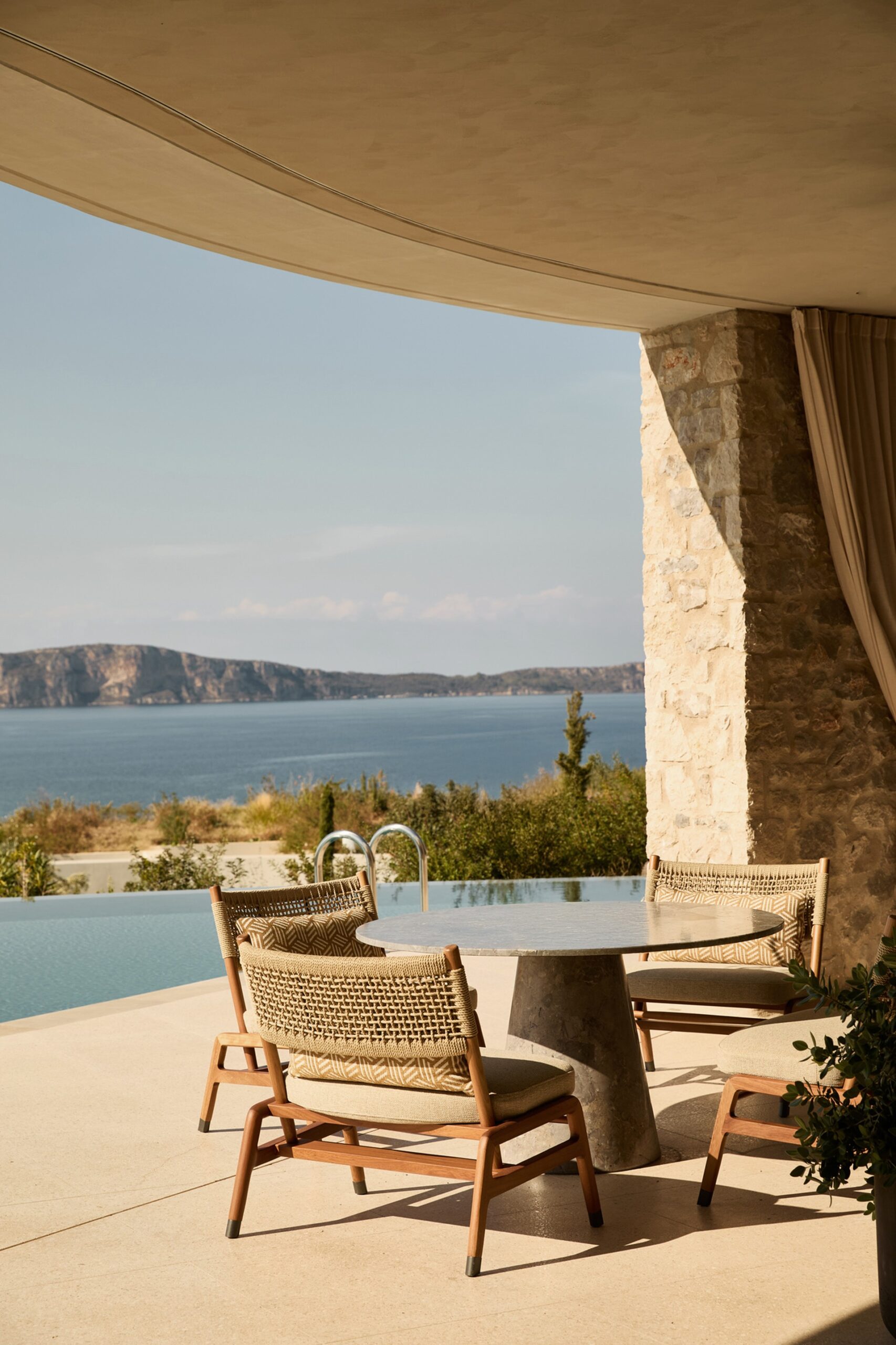
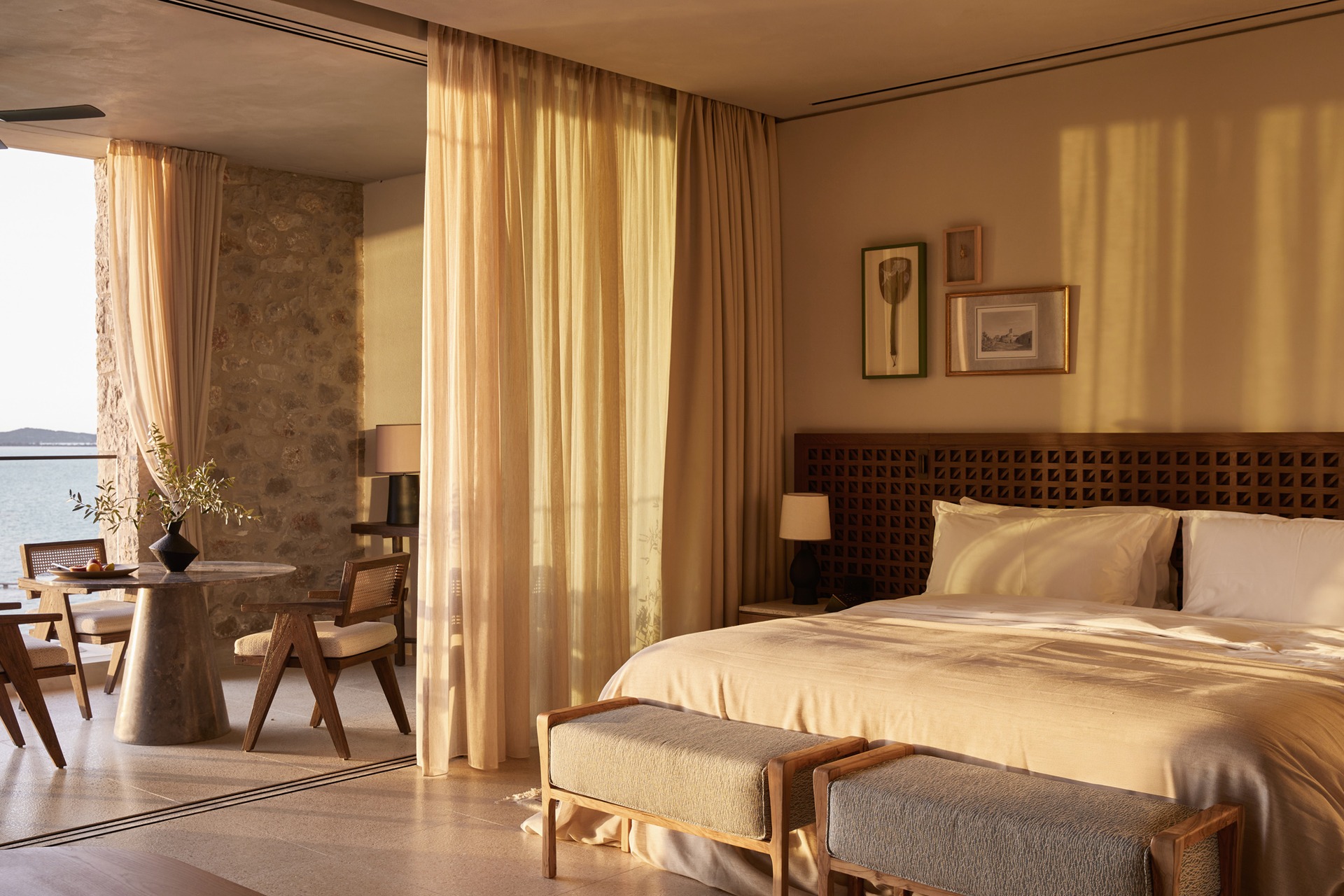
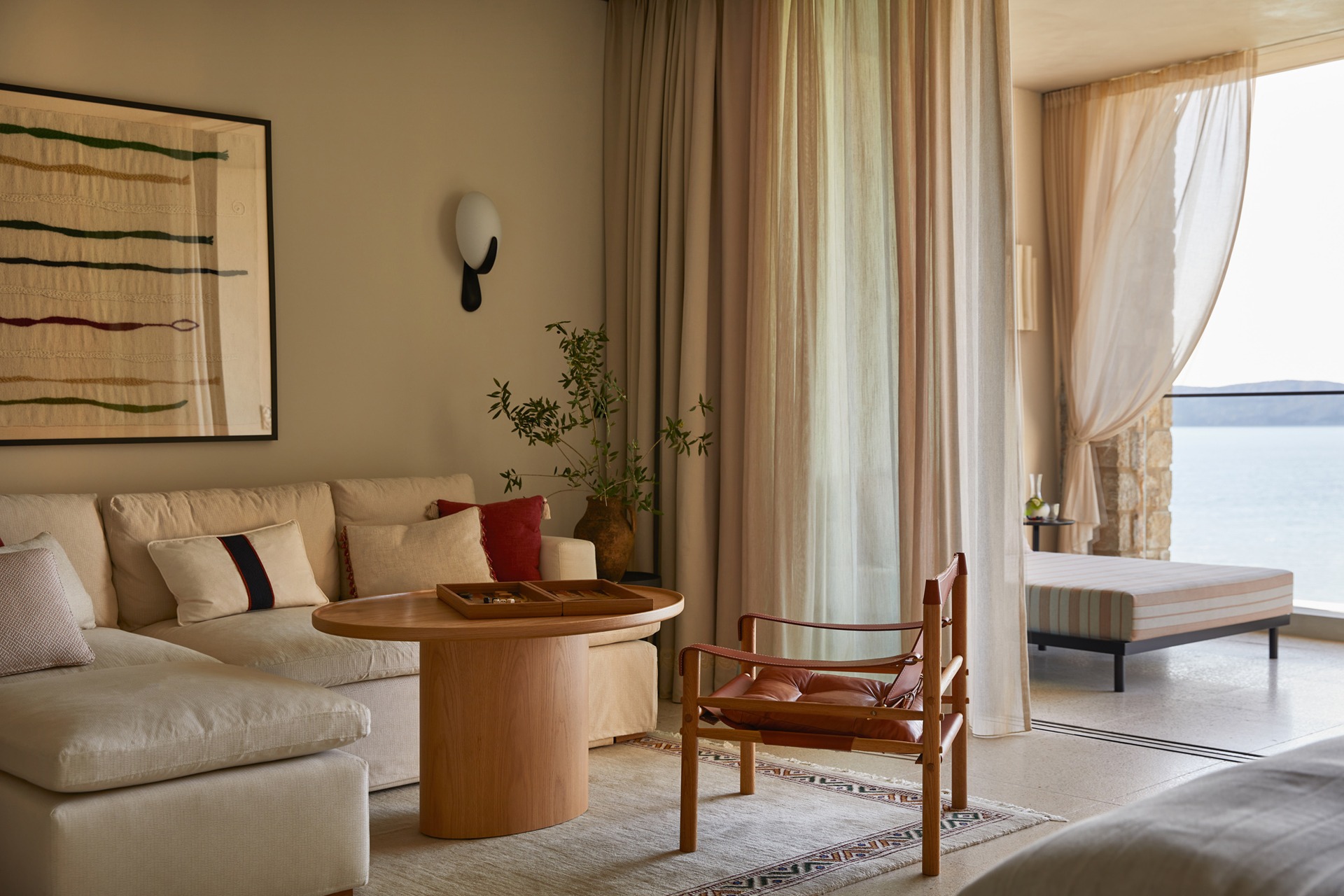
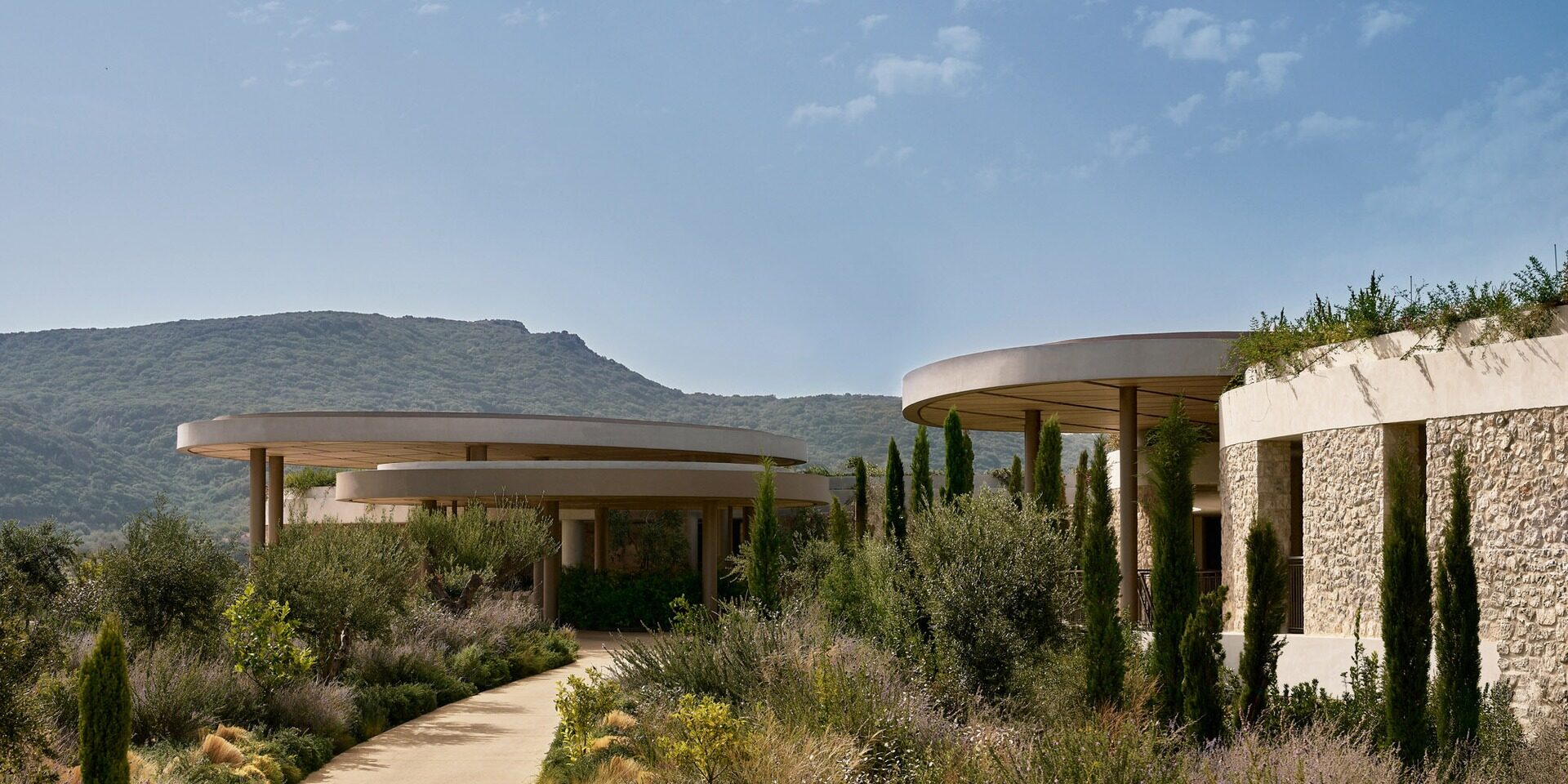
Interiors flow smoothly into shaded semi-outdoor living areas. Wide overhangs, deep-set openings and filtered views create a sense of calm and refuge, while maintaining contact with the broader landscape.
Restraint, Luxury and Material Presence
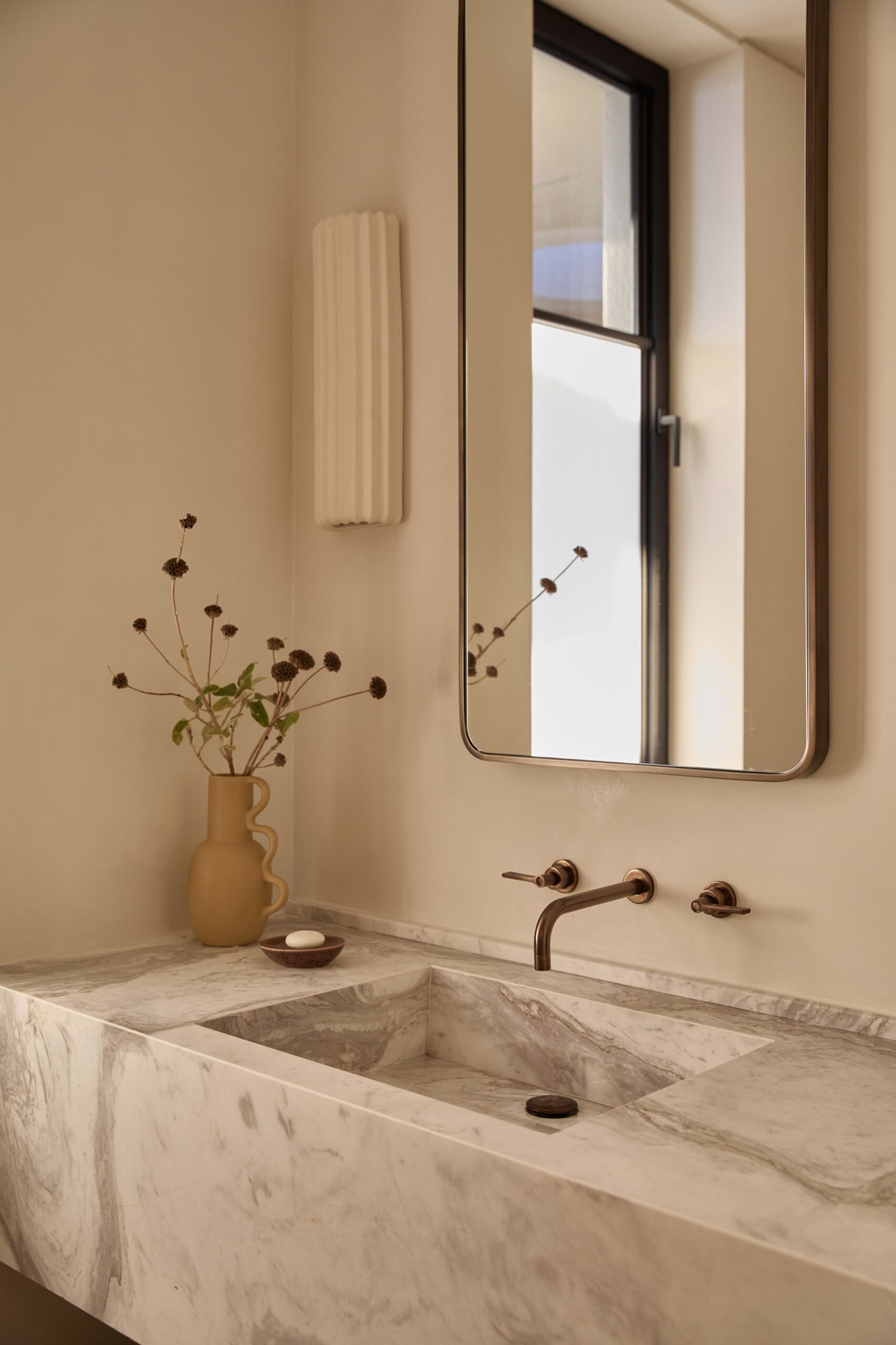
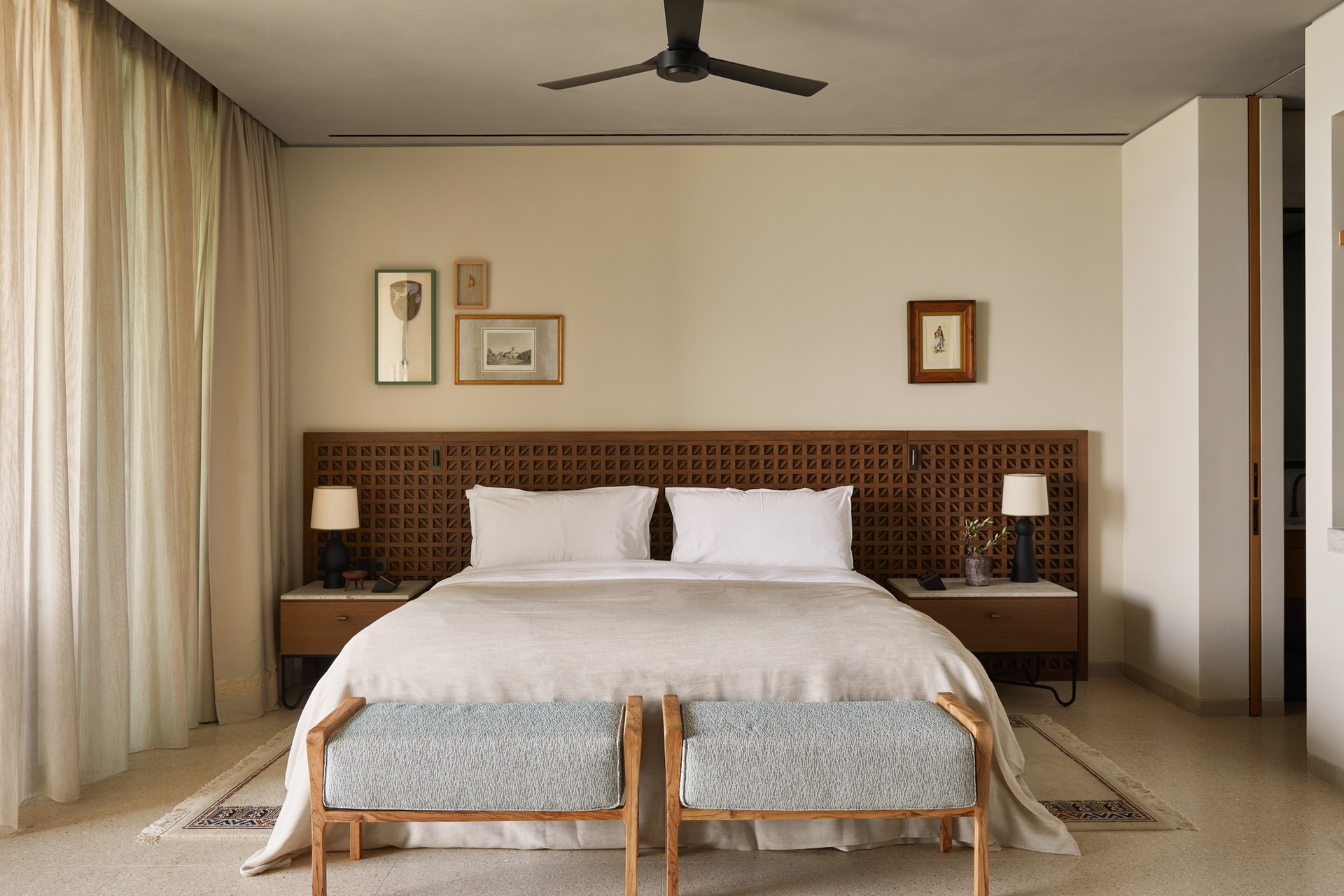
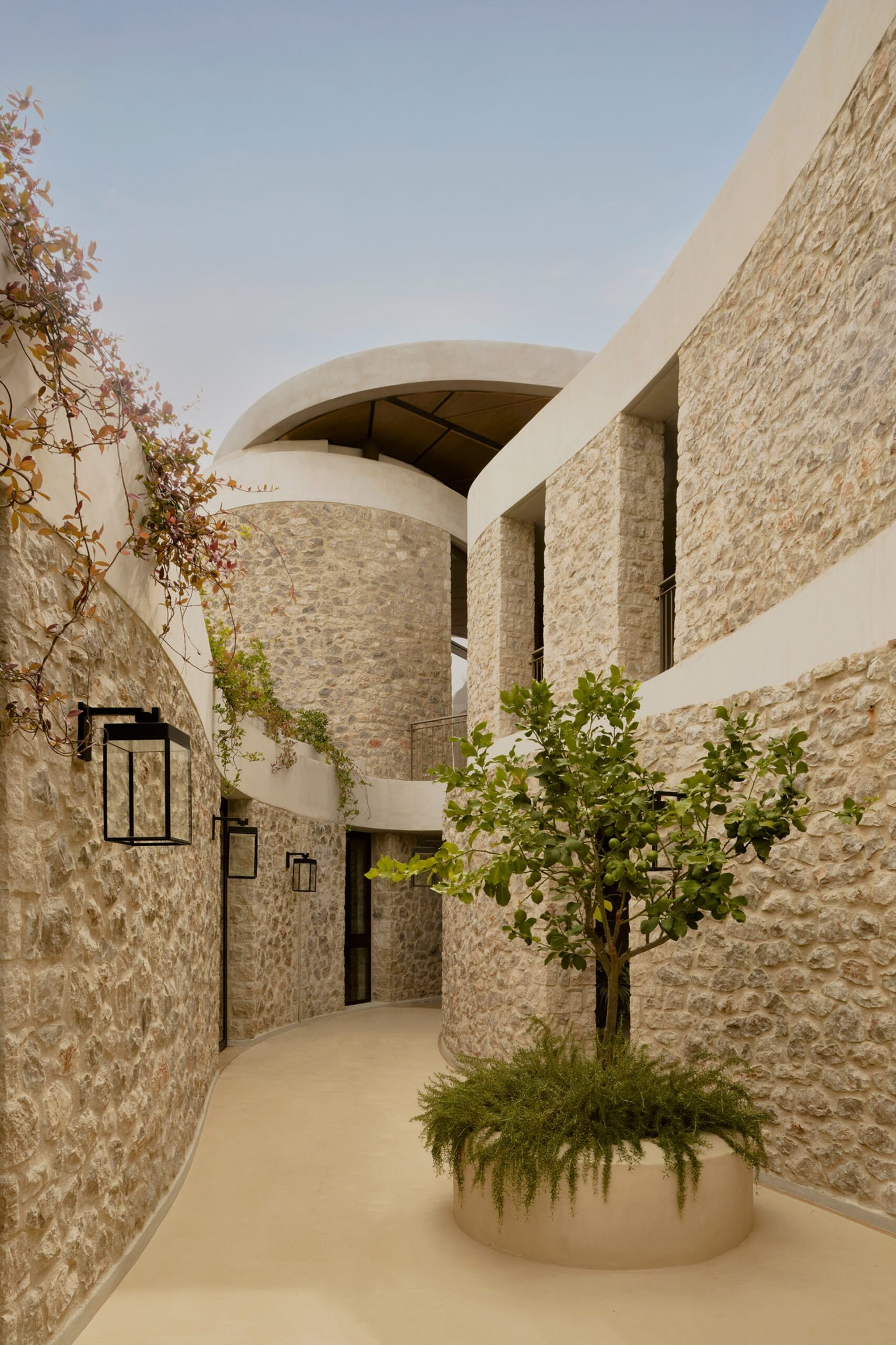
The resort combines restraint with richness. Stone and terrazzo are used in tactile, understated ways, while the interiors refer to Mediterranean textures and tones. Curated international details evoke the spirit of travel without distancing the experience from the place itself.
Space planning is intuitive and guest-centered, ensuring clear orientation, comfortable scale and carefully framed views. Circulation takes place outdoors wherever possible, allowing nature to remain a continuous presence throughout the resort.
Operational Foresight and Flexible Management
The resort also demonstrates operational foresight. Its layout supports scalable operation, as clusters of rooms or villas can be brought into or out of use seasonally, optimizing energy consumption.
Open-air circulation reduces the need for cooled corridors, while semi-protected spaces such as covered terraces and entry courtyards temper climate extremes, reducing mechanical loads and improving guest comfort.
A Contemporary Hybrid Typology
Creatively, the project avoids spectacle in favor of serenity. It does not mimic history, but listens to it. Traditional forms are abstracted rather than replicated, and reinterpreted through contemporary materials and construction methods.
The result is a unique hybrid typology, where the aesthetic of the “village” is not reproduced literally, but translated into a contemporary hospitality system. Architecture preserves local memory without becoming trapped in imitation.
Passive Strategies and Ecological Ambition
Sustainability guided every decision. Passive strategies include planted roofs, thermal mass and cross-ventilated spaces. Materials were sourced locally whenever possible.
Water-efficient landscaping, low-impact lighting and energy zoning further reinforce the ecological ambition of the project, aligning guest comfort with a lower environmental footprint.
A New Model for Hospitality
Mandarin Oriental, Costa Navarino offers a new model of resort-making: one that privileges relationship over image, groundedness over excess.
It demonstrates that a resort can be both luxurious and low-impact, international and deeply local — a place where architecture, landscape and guest comfort coexist in elegant alignment.