Best Of 2025
Selection:
Editorial Team ek magazine
Date:
December 2025

With the current year close to its end, the editorial team of ek magazine selected ten architectural projects featured in the print issues 294-302, to be illustrated on our website. Their categories follow the themes of the print edition, including residences, interiors, special-use buildings, hotels as well as renovation & reuse projects.
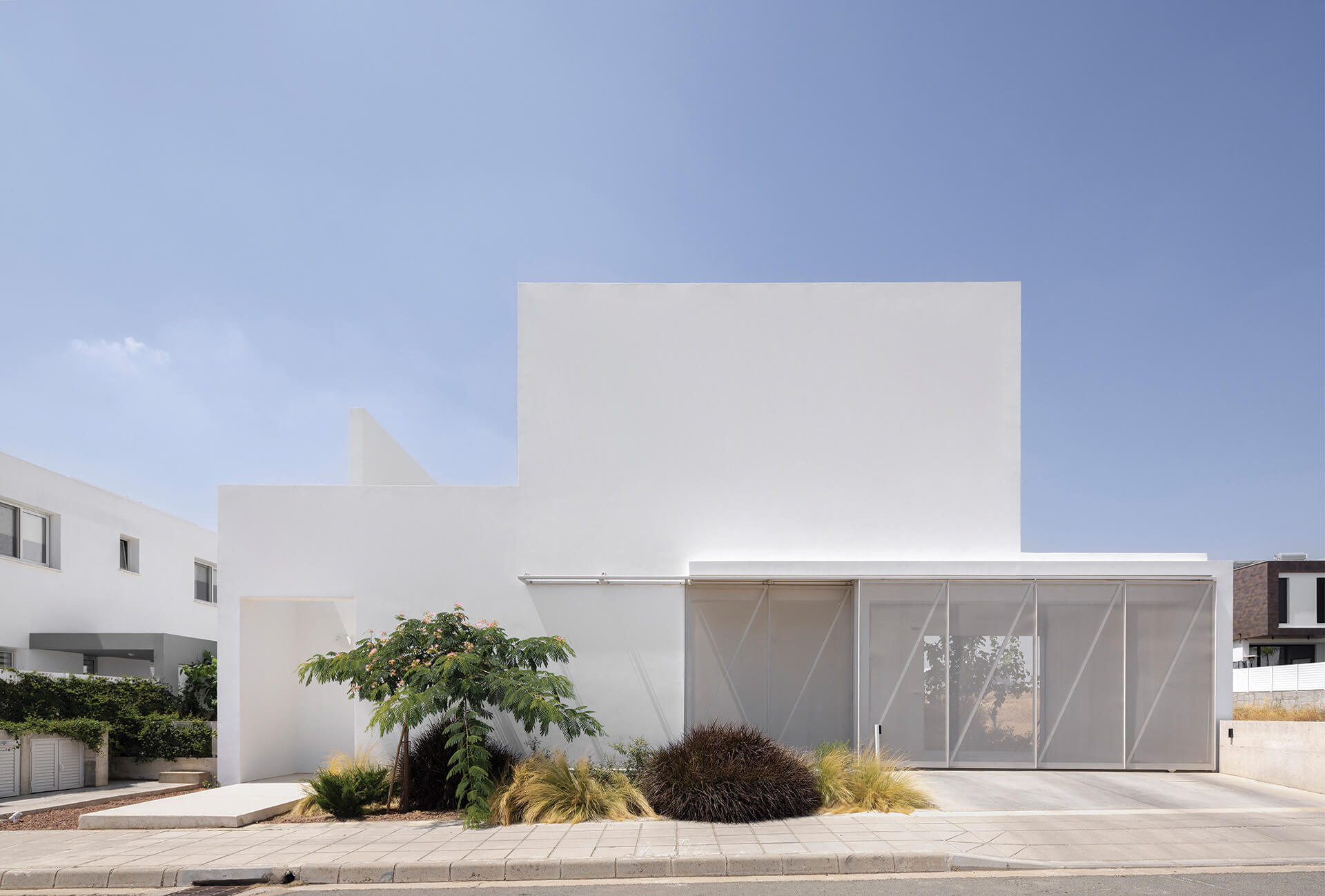
The residence is located in Lakatamia, a suburb on the outskirts of Nicosia. From the earliest stages of the design process, several key considerations were established, forming the foundation of the architectural proposal. Foremost among these was the need for discreet privacy -one that does not reject the surrounding urban fabric but instead maintains a thoughtful sensitivity toward it. Equally important was the intention to cultivate a direct, almost tactile relationship with the “private” natural environment of the site. The desire for generous natural light throughout all interior spaces was also a guiding principle, as was the requirement to accommodate the owners’ art collection under suitable conditions.
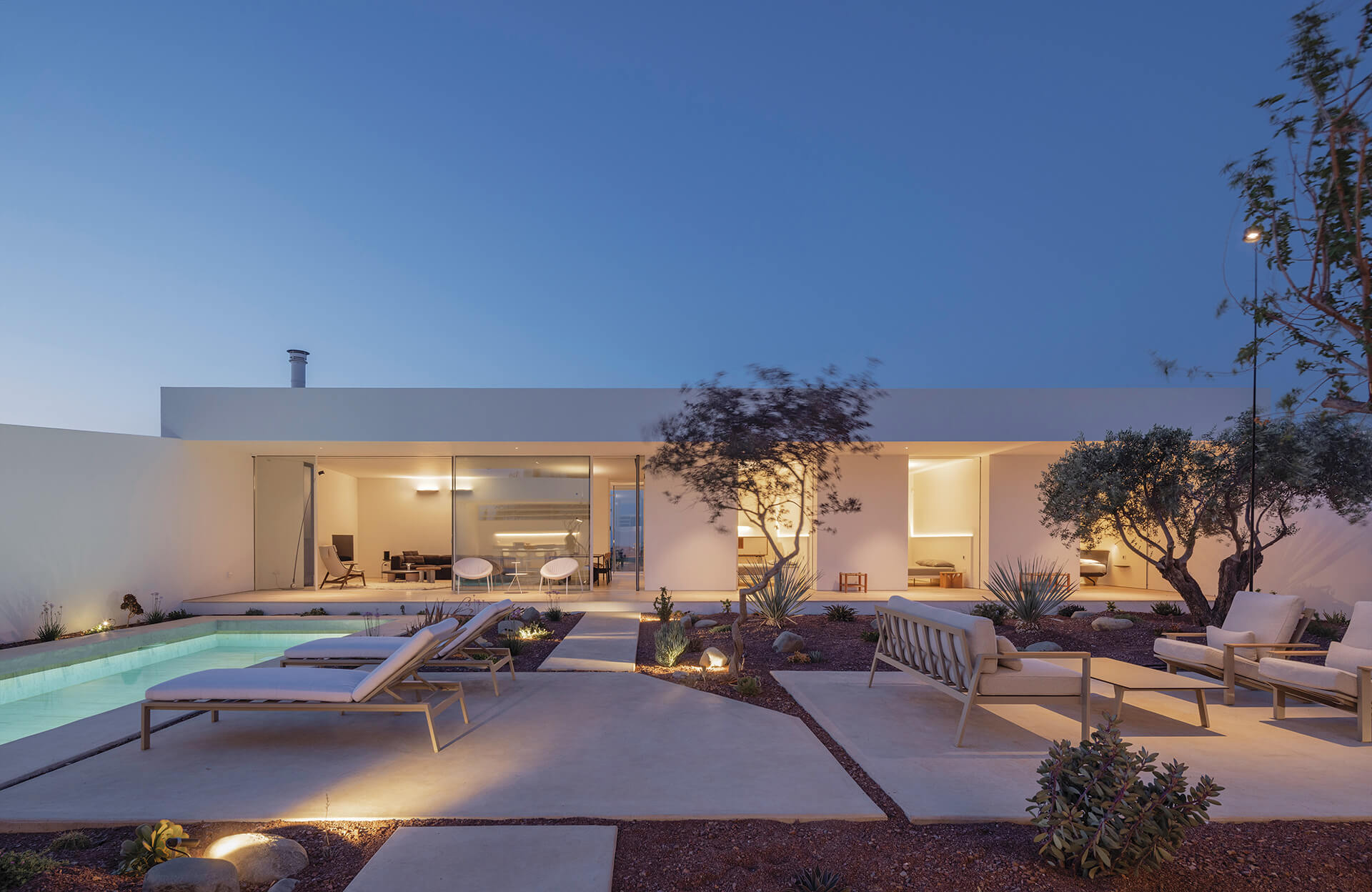
The residence seeks to spatially capture the encounter between memory and oblivion, emerging from the lived experiences of its place, where the play of childhood years was transformed into a tangible architectural intention. It is a gesture rooted in light, air, the immaterial, and the silence of the Mediterranean hinterland. The project is located in Kato Deftera, on the outskirts of Nicosia, in an area defined by a mild, dry Mediterranean microclimate and a landscape of low valleys and plains. Agricultural use of the land persists, engaging in a dialogue with the new residential fabric. The house does not intrude; it integrates, allowing the site to remain the protagonist.
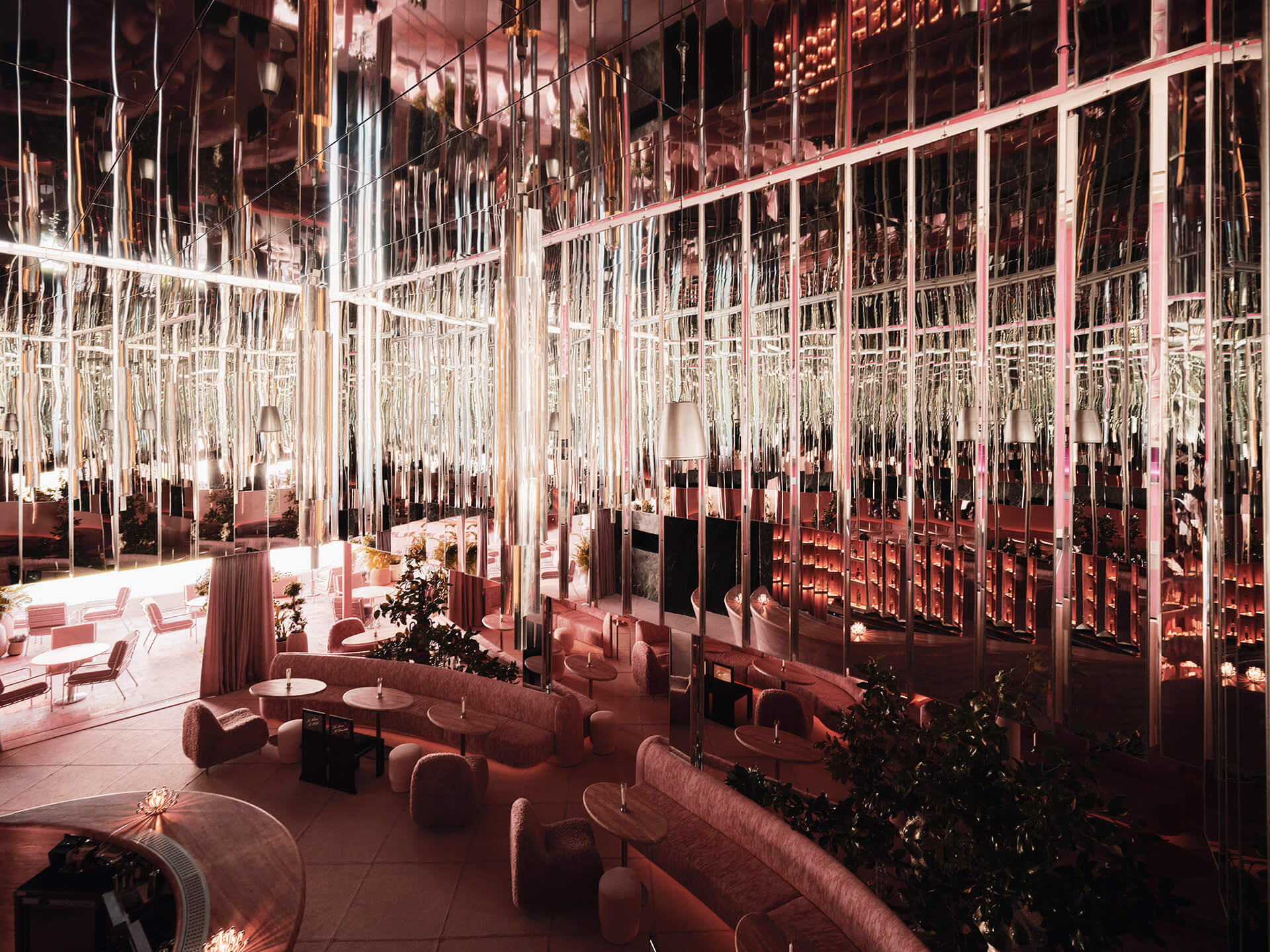
Semiramis, owned by collector Dakis Joannou, belongs to a portfolio of unique hotels designed by internationally acclaimed designers. When it first opened in the early 2000s, Karim Rashid’s bold interior design caused a stir in Kifissia, challenging the prevailing suburban aesthetics. Over time, a series of renovations gradually disconnected the bar-restaurant from the hotel’s original identity. The new space, Koumkan, is once again woven into the DNA of Semiramis, reflecting contemporary cultural, gastronomic, and social trends of Athens. Koumkan combines the singular identity of Semiramis with the timeless atmosphere of grand hotel lounges, reframed through a minimalist lens. By staging a sequence of distinct atmospheres, it creates a microcosm that encapsulates the character of iconic hotel reception spaces around the world. Visitors descend a travertine staircase toward a garden that is reflected in the mirrors cladding the wall.
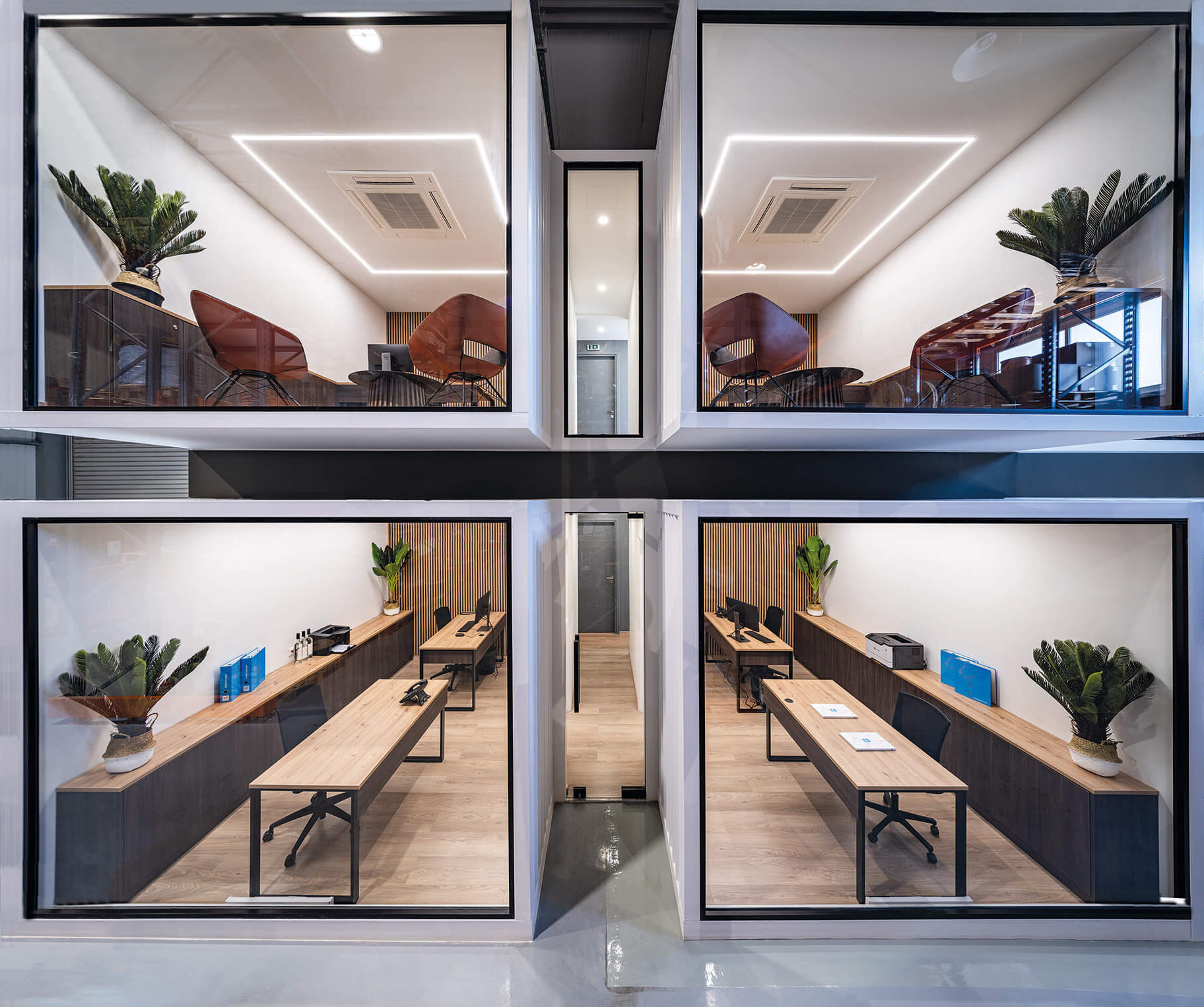
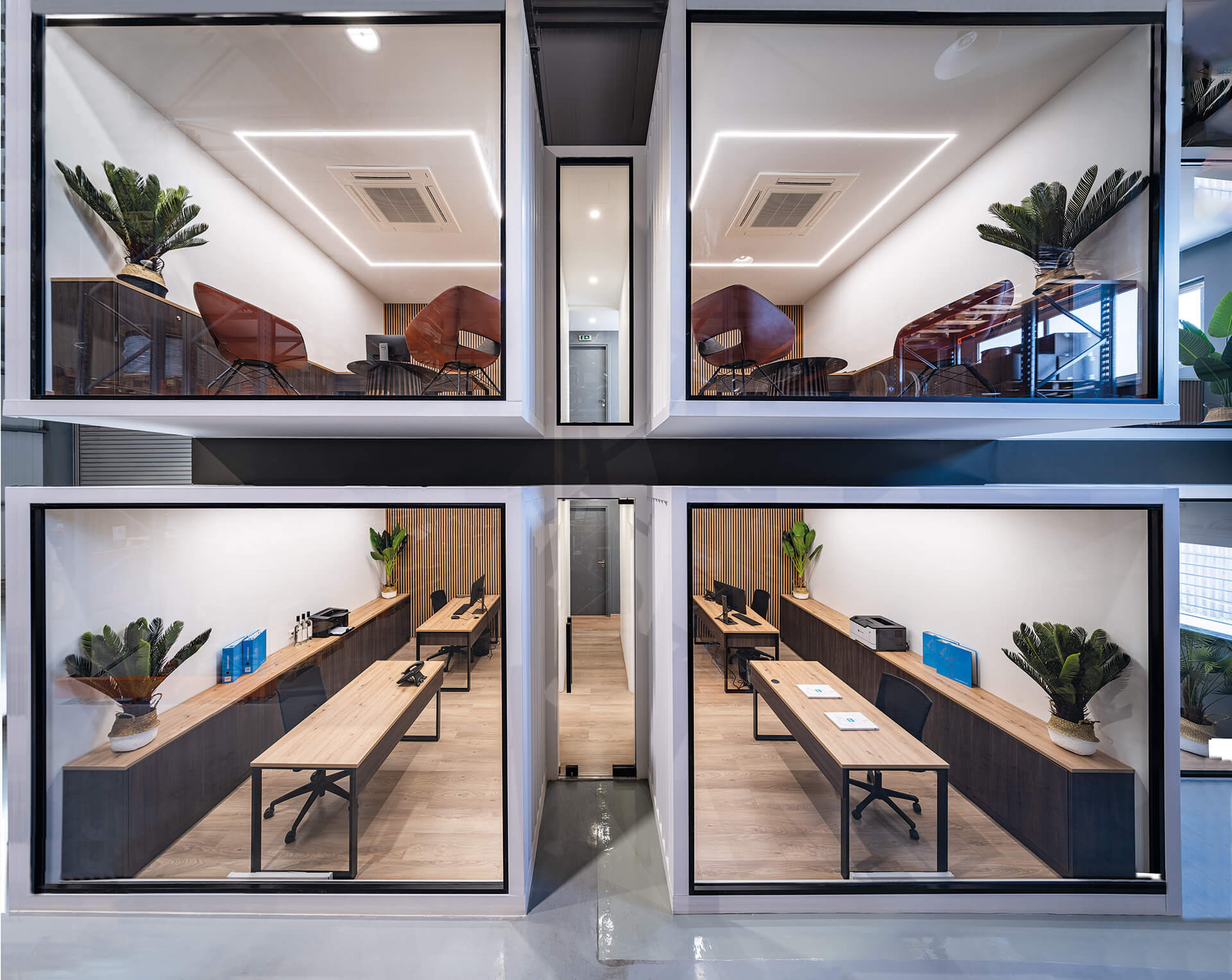
The new offices are housed within an industrial shell of 1,200 m², where tall metal racks for cable storage dominate the space from floor to ceiling. The central design idea focuses on the strategic placement of “work containers” that accommodate the staff offices. The container form was chosen as a characteristic expression of the company’s industrial identity and environmental ethos. Just as the company’s products are designed to be fully recyclable, the container, originally used for their storage and transport, is repurposed and transformed into office space. Two distinct zones are created on either side of the central storage and packaging area to ensure the uninterrupted circulation of machinery and personnel.
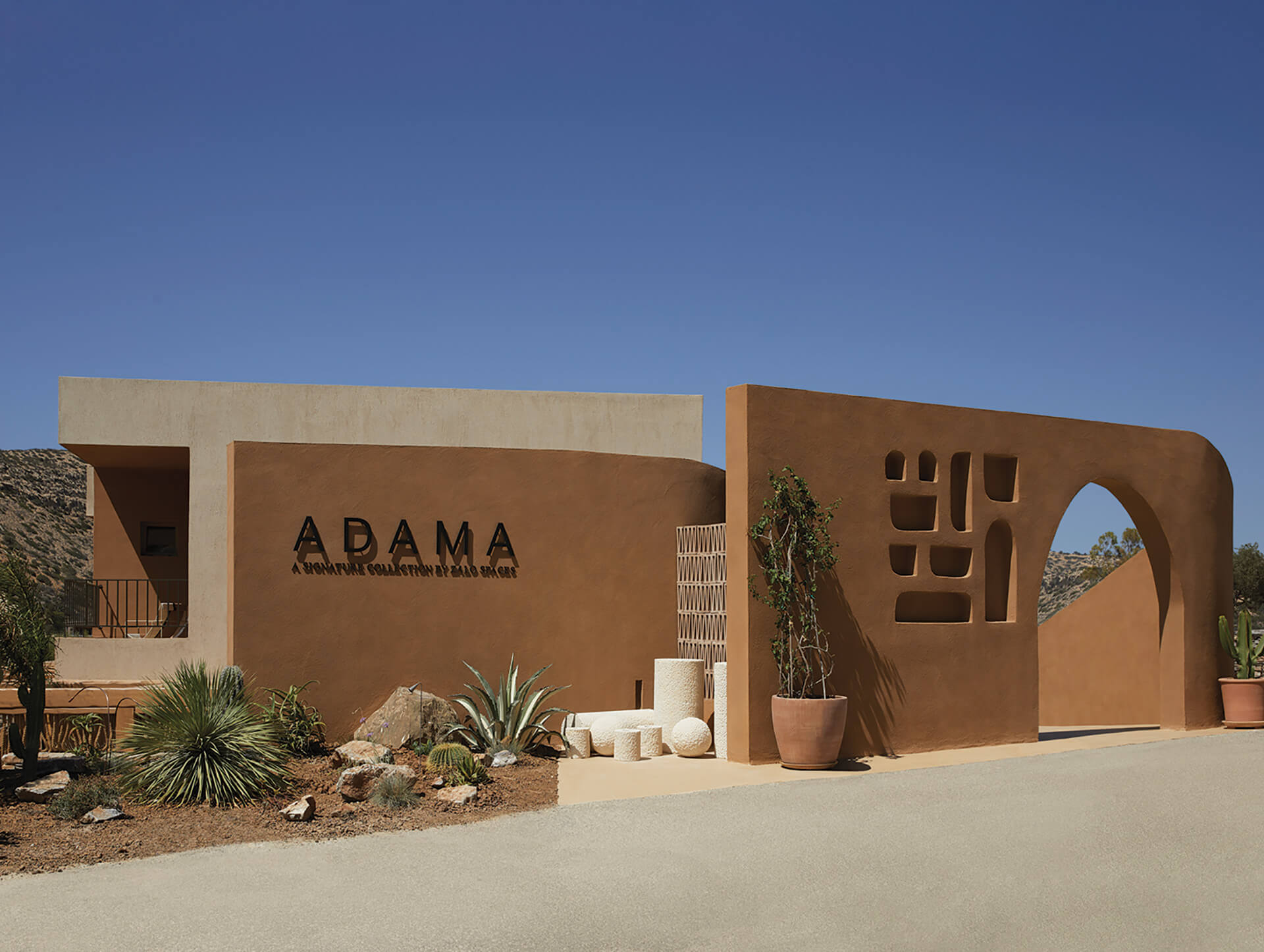
The complex is located in the seaside village of Matala, in southern Crete, surrounded by the area’s distinctive rocky formations that create a natural embrace around the site. The primary starting point of the design was the creation of a cluster of small buildings oriented around a shared central courtyard, reminiscent of the protected square of a small village. As a direct reference to the values and heritage of “togetherness” and communal life in Matala, the project reinterprets the traditional Greek island neighborhood, shaping a contemporary lodging for today. The building volumes are arranged to offer residents privacy while simultaneously encouraging coexistence and interaction in the shared courtyard. The relationships formed between the structures generate open and enclosed living spaces -both private and communal- each with its own distinct character.
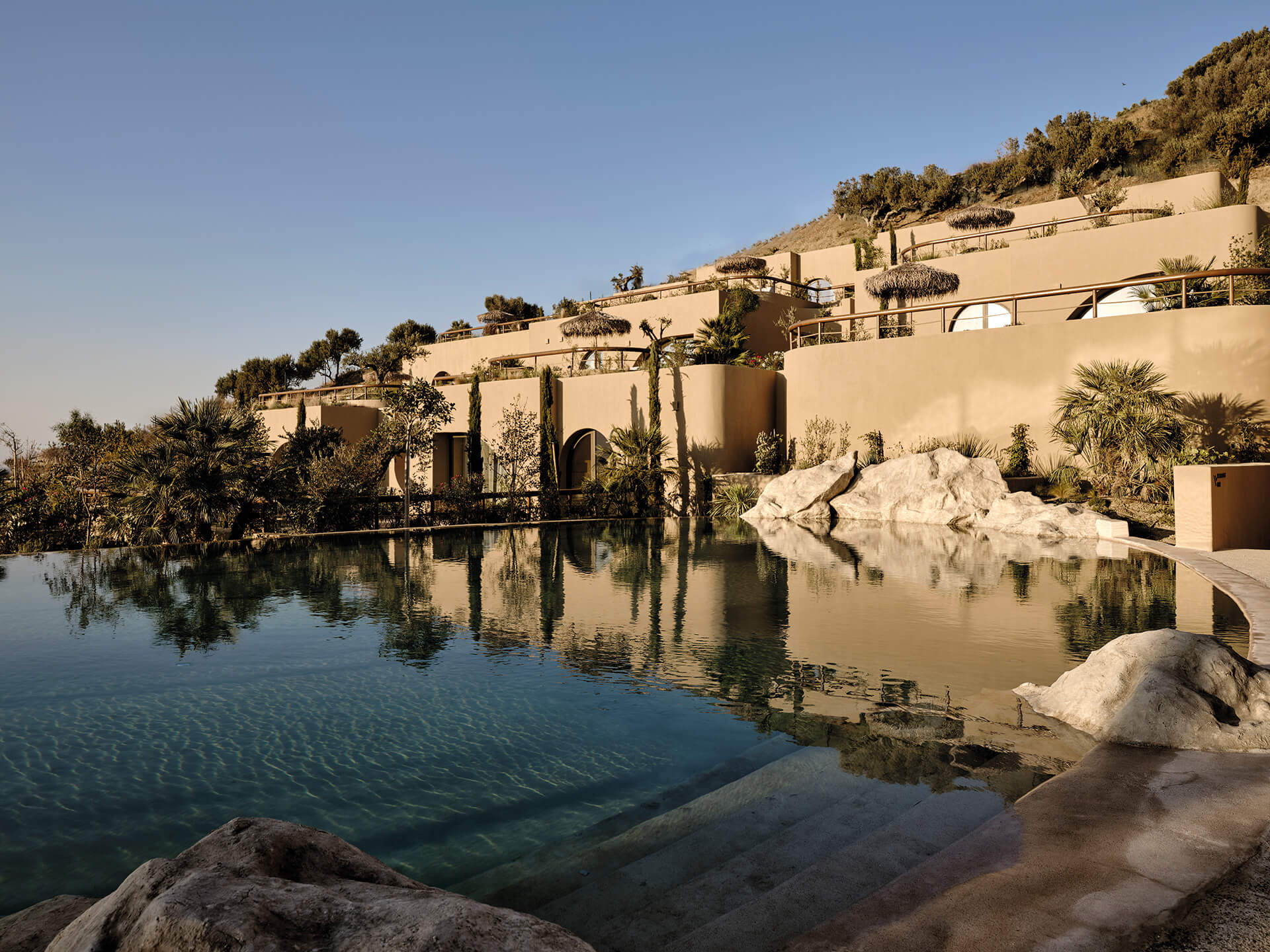
The project redefines Mediterranean hospitality through an architectural idiom that is rooted in tradition while remaining firmly oriented toward sustainability. Conceived as a retreat outside Chania, the project explores how cultural memory and contemporary design can converge to create a new model of regenerative hospitality. In full harmony with its natural setting, the design incorporates planted roofs with olive trees and Mediterranean vegetation across all buildings, enhancing thermal insulation, fostering biodiversity, and anchoring the project to its environment. The façades are articulated through a sequence of arches -both full and half forms- serving as abstract interpretations of the traditional geometries found in the Venetian and Ottoman architecture of Chania. This motif continues inside, where seamless microcement surfaces unify floors, ceilings, and walls.
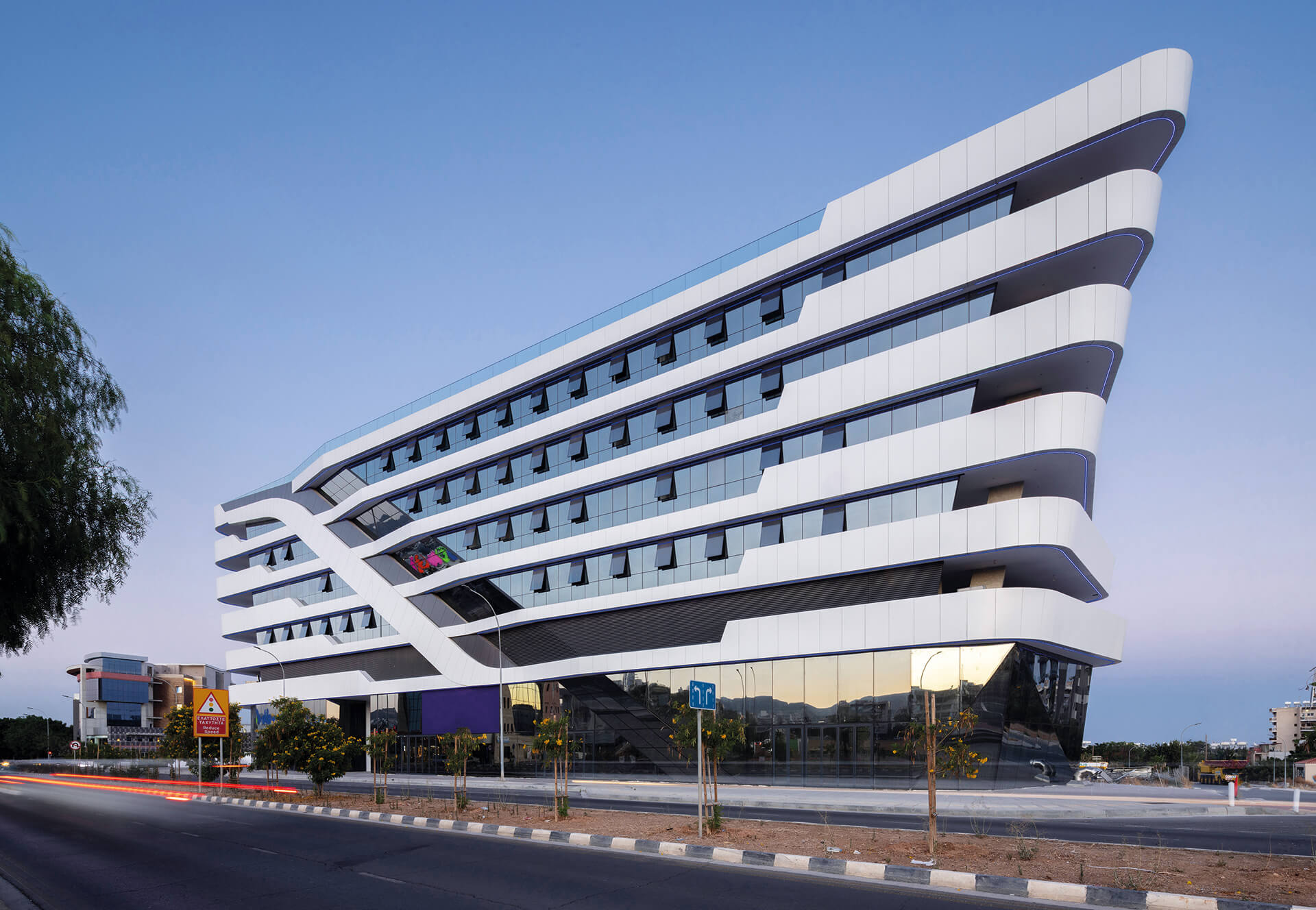
The project’s location -along one of Limassol’s most important commercial corridors, near a major junction- set from the outset the ambition to create a landmark building for the Mesa Geitonia area. This strategic position, coupled with the elongated geometry of the plot, informed the building’s distinctive massing from the very early design stages. To meet the project’s goal, the design adopts a linear, organically shaped volume that unfolds along the avenue, both asserting the presence of the complex and preserving the continuous flow and pulse of the commercial axis. The building is structured across five levels. The ground floor accommodates retail units, reflecting the commercial character of the street, while the four upper floors house office spaces that open toward the narrow façades through covered verandas.
In an area of the city with a distinctly industrial character, near the Athens-Lamia National Road, an unfinished pre-existing structure was reconstructed with the aim of preserving its load-bearing system while simultaneously accommodating an expanded building program, including a larger surface area of office spaces. A central condition for the design was the development of a new construction system that would not only adapt to the existing structure but also organize it, forming a unified architectural identity while responding to the bioclimatic requirements of a contemporary work environment. The new envelope, conceived as a thickened skin, either touches or stands slightly apart from the existing structure, thereby unifying enclosed spaces with outdoor areas, terraces, and balconies.
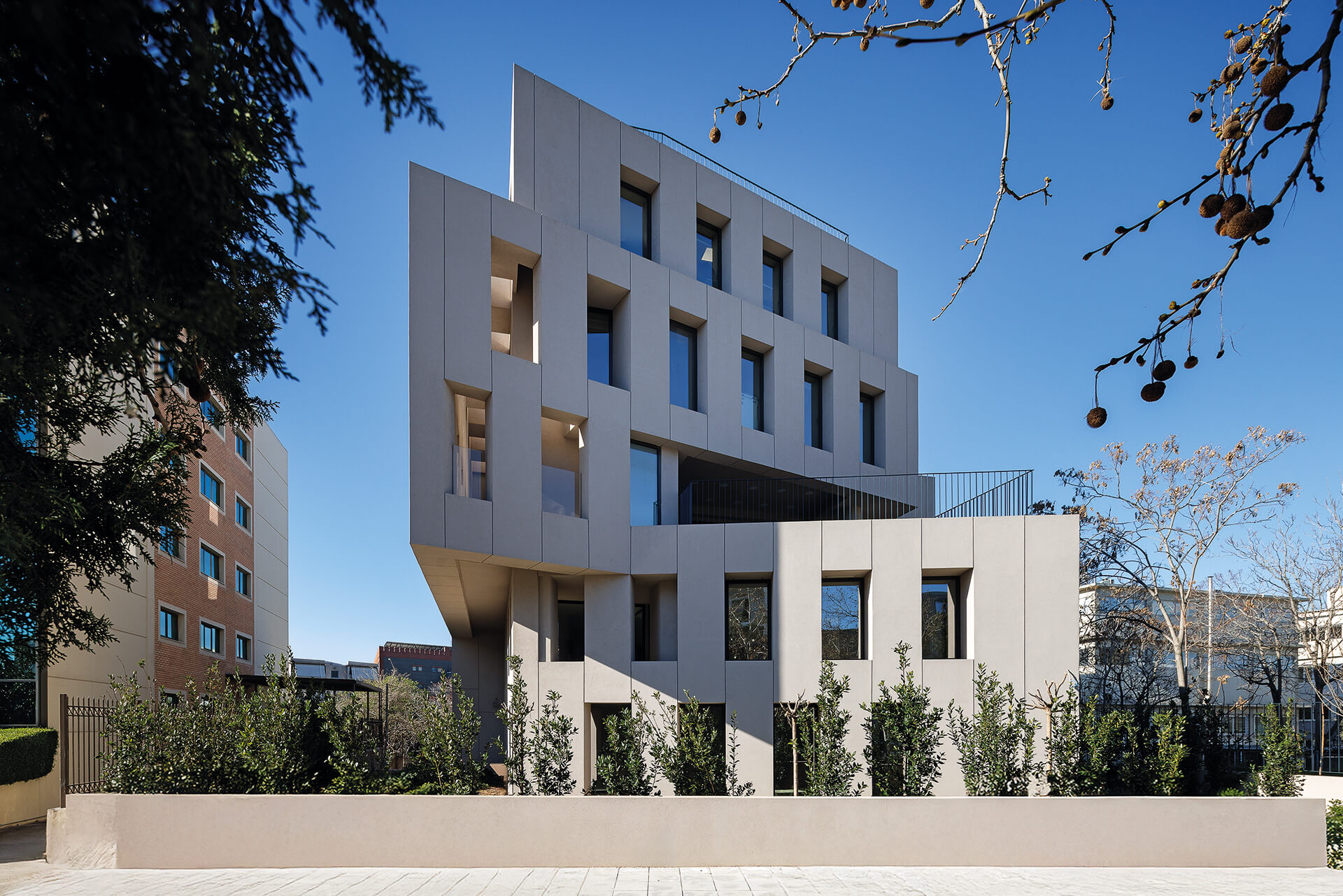
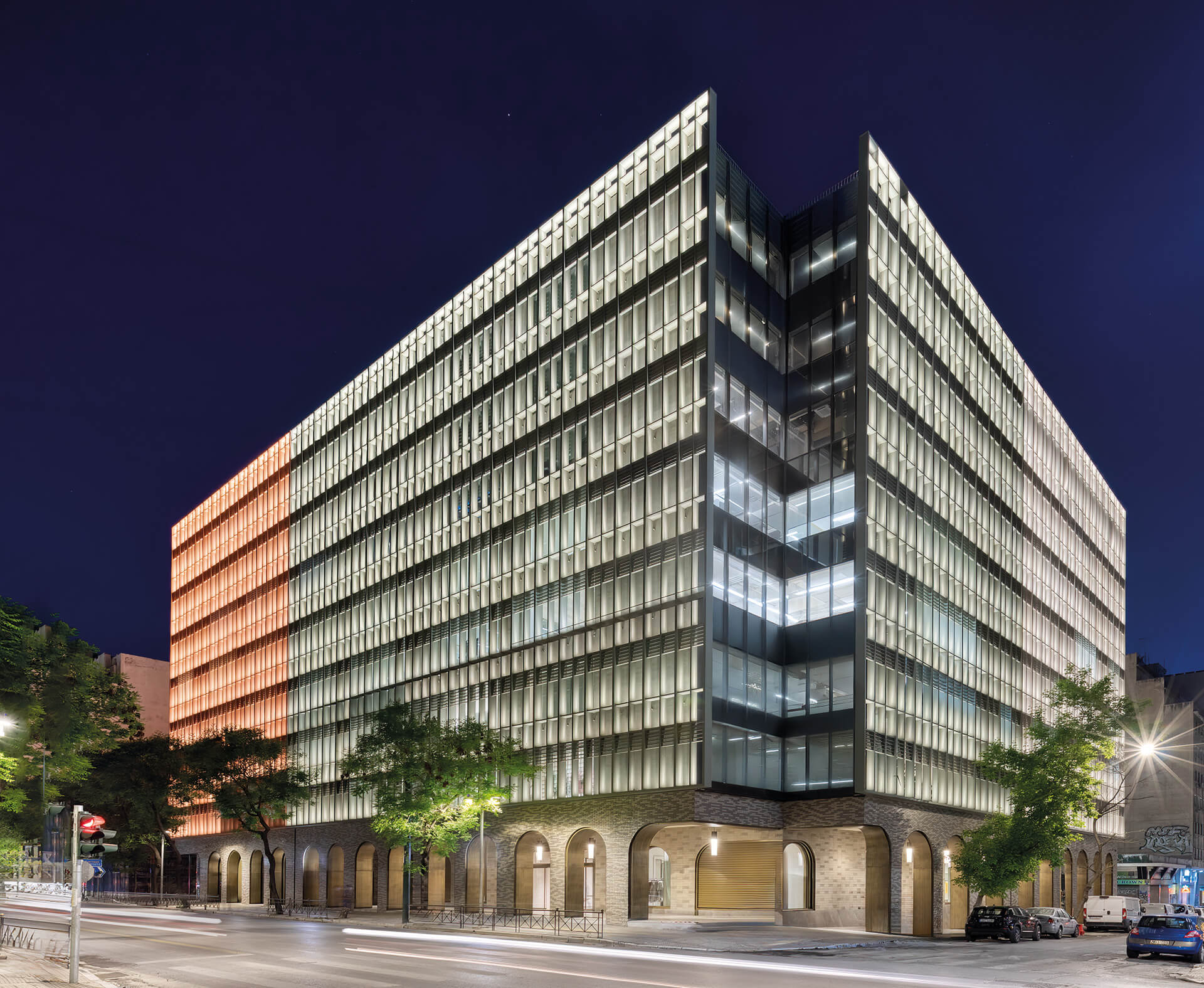
The project concerns the transformation of an existing shopping center on Pireos Street into a sustainable and pioneering office complex, complemented by the addition of a new, independent five-storey building. This new structure functions both as a landmark and as a catalyst for the revitalization and development of the wider area. The design is based on managing and upgrading the existing building stock, converting it into an energy-efficient structure with contemporary uses. The approach follows the principles of sustainability and the circular economy, incorporating the reuse of materials. The existing building is characterized by pronounced contrasts -most notably the introverted external facades versus the extroverted interior.
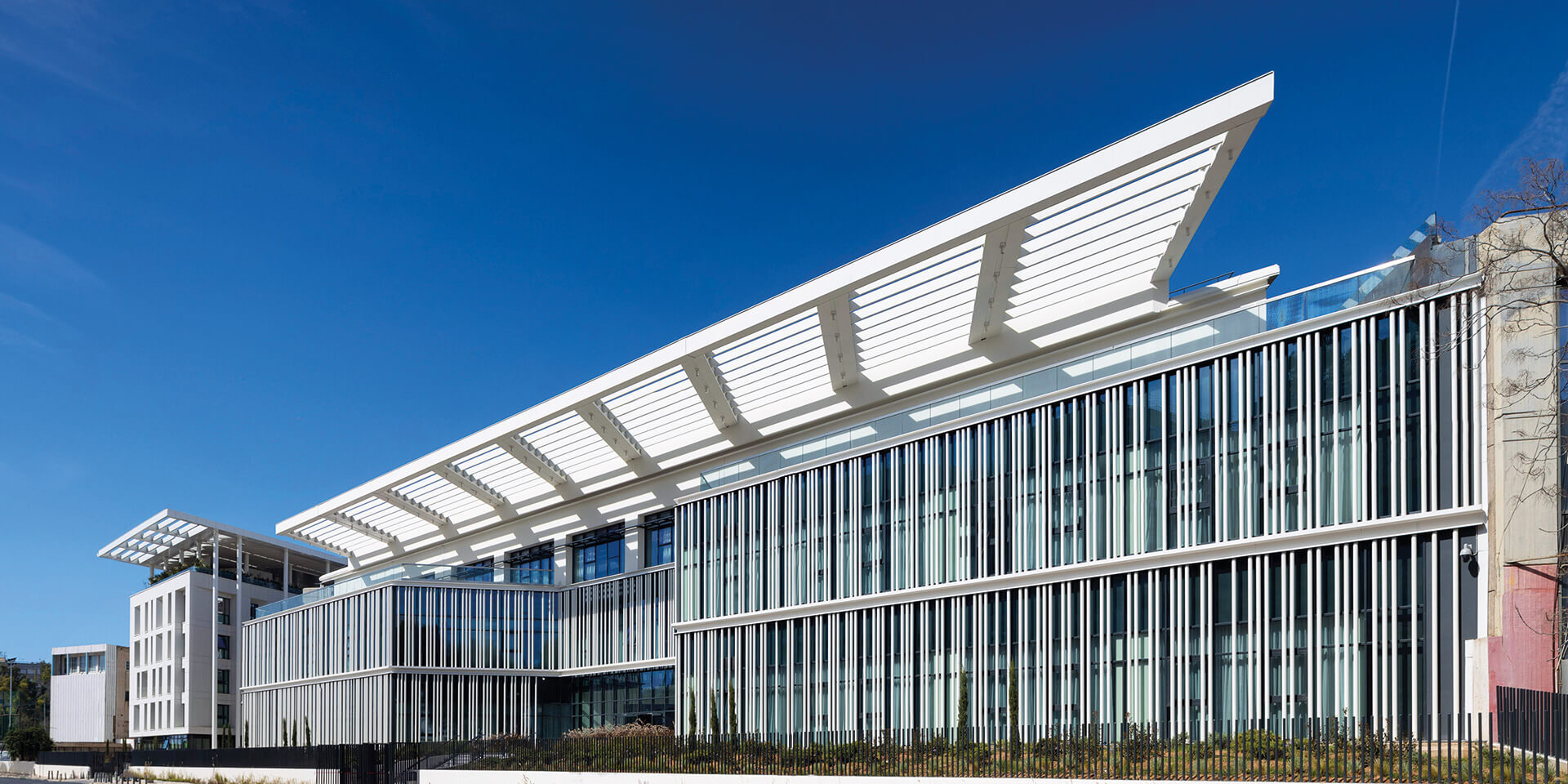
The architectural proposal for the adaptive reuse of the iconic Minion department store in the center of Athens posed a significant challenge, as the restoration of its extensive, abandoned shell became an opportunity for a design approach with a clear narrative and morphological intent. The central design idea interprets the historical layering of the urban block, shaped over time by the gradual consolidation of different properties during its operation as a department store. The selection of a three-color palette for the façade’s functions symbolically, subtly alluding to the composition of the individual buildings. In this way, the project establishes a dialogue with the surrounding urban fabric, expressed through a distinctly rationalist and understated rhythm.