10 Contemporary Workplace Design Projects
Selection:
Editorial Team ek magazine
Date:
April 2026
The editorial team of ek magazine selected ten architectural projects, featured in past print issues as well as the ek website, that showcase exceptional office-space design. These examples highlight how contemporary workplaces are evolving into dynamic, human-centered environments that redefine the relationship between architecture, productivity, and well-being.
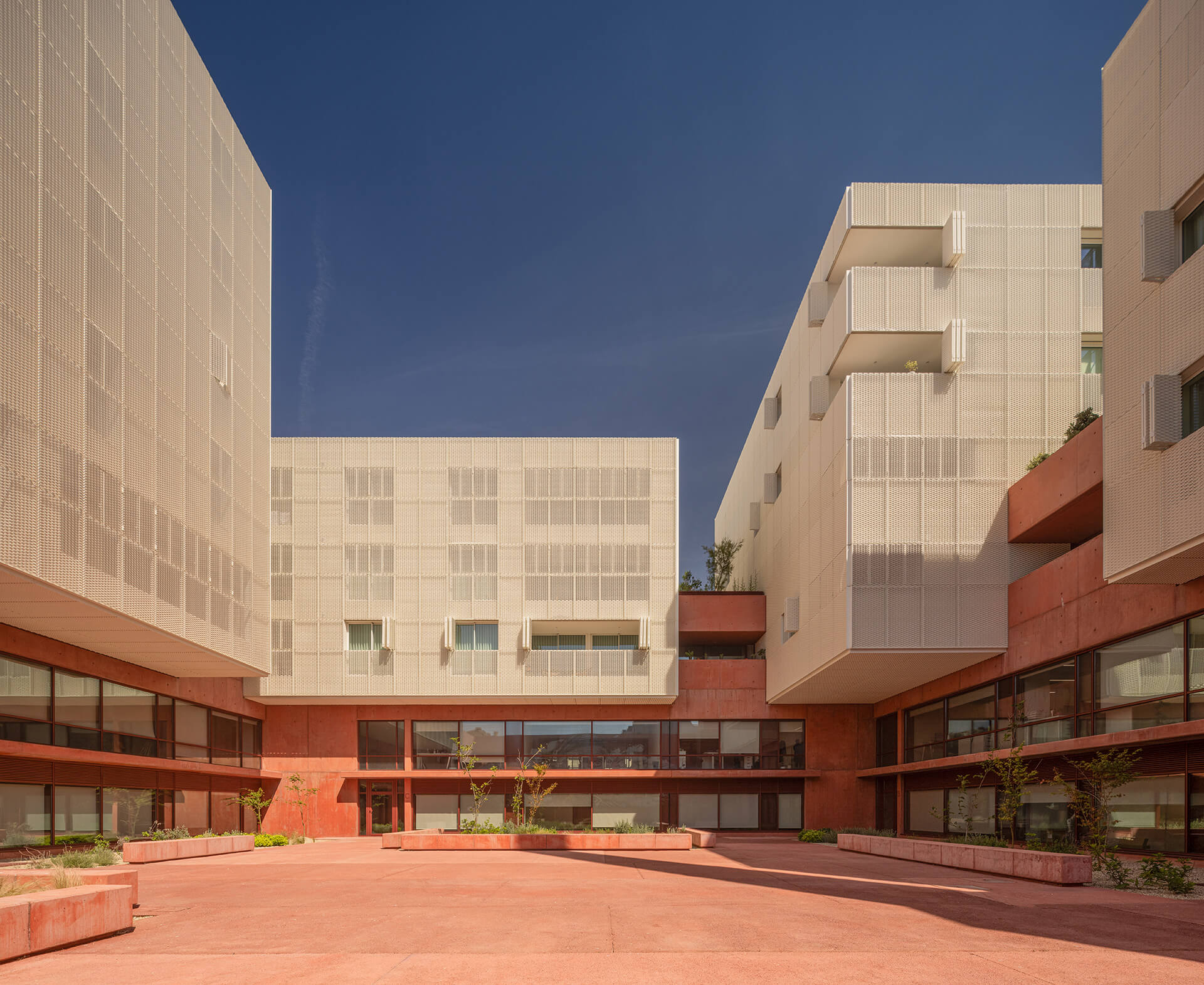
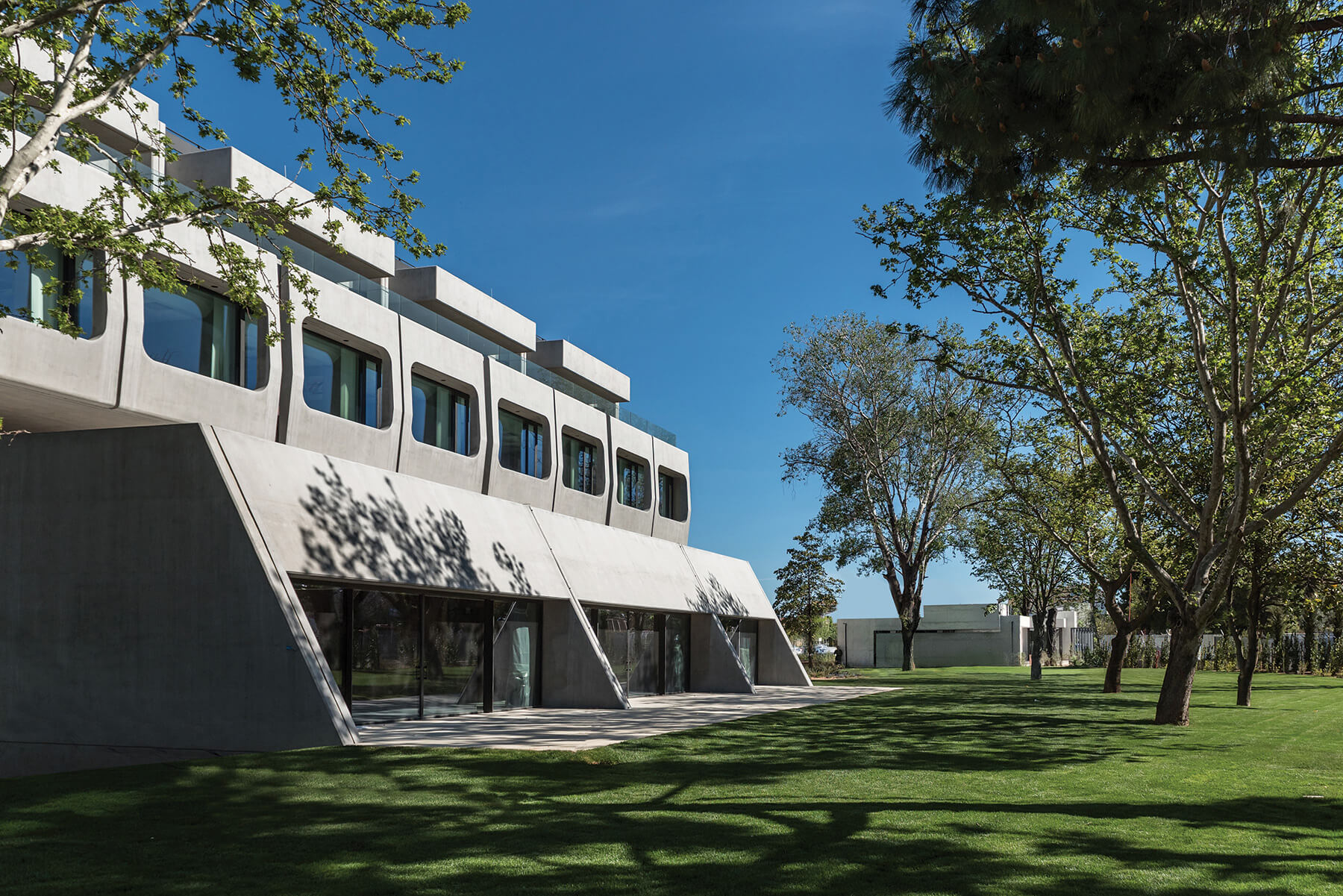
Set within the Matosinhos Sul Urbanization Plan by Álvaro Siza, the former Brandão & Companhia canning factory occupies a privileged position near the coastline, retaining a strong connection to the industrial past and maritime identity of the area. The intervention reinterprets this legacy through a mixed-use development that consolidates healthcare, commercial, office, and residential functions within a unified architectural system, restoring the original envelope and chimney while introducing a contemporary layer. The proposal addresses the fragmentation of the existing structure by re-establishing continuity within the urban fabric. While the original volumetry occupied almost the entire plot, the project introduces permeable and green voids that allow natural light and circulation to penetrate the block.
ek Issue: 251 | October 2020
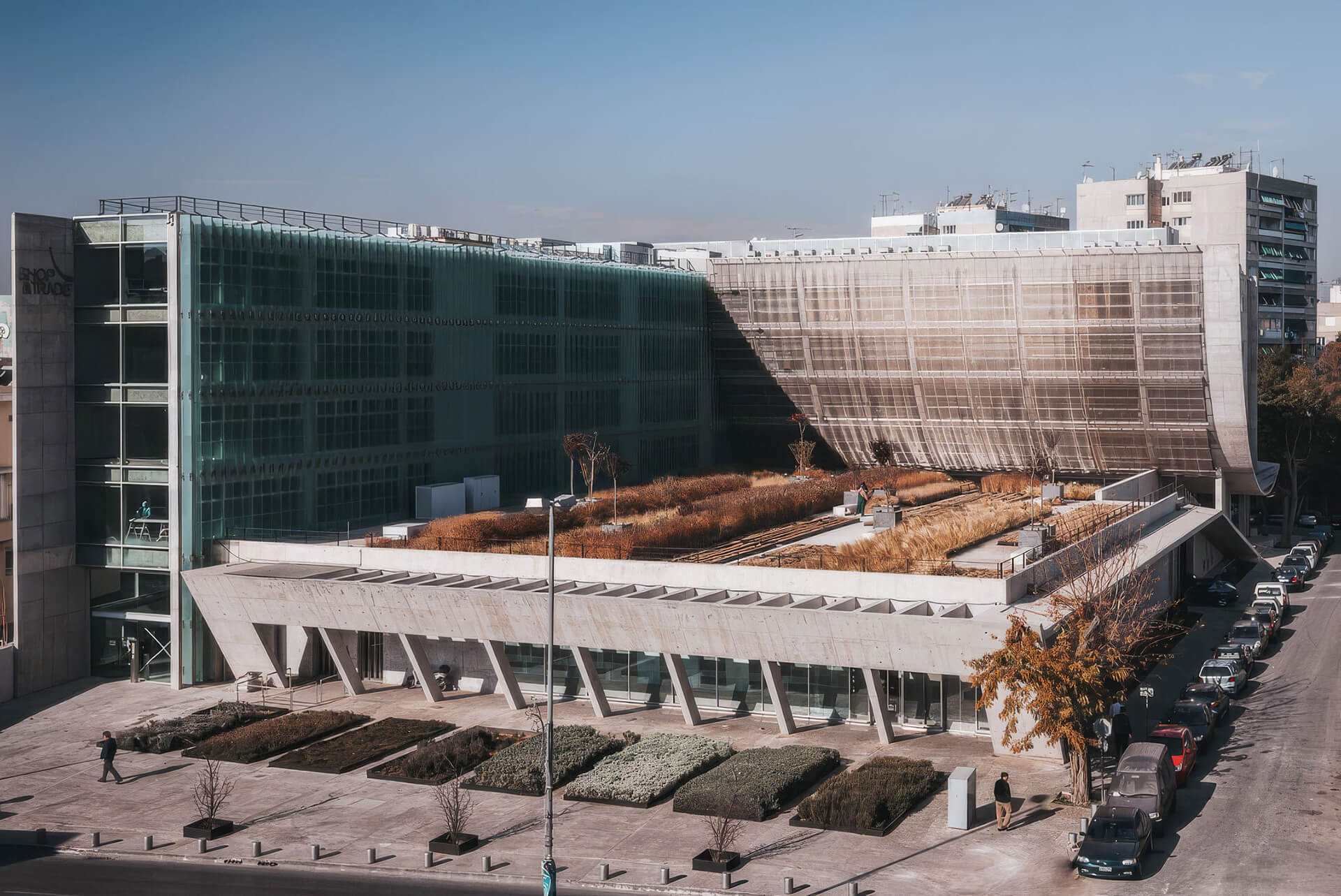
The existing building is one of the rare examples of the Brutalist architectural movement in Greece. It was constructed in 1972 and represents one of the most significant works by the Tombazis office. It served as a flagship for the company specializing in industrial concrete production. The revival of the historic building posed an ethical challenge in terms of the intervention limit on the existing structure. It is worth noting that over its 50 years of existence, the building had been covered in various hues and materials, with the most recent being an ochre shade, which obscured its original Brutalist texture. Therefore, the initial intervention focused on restoring the original (1972) composition of exposed concrete in all visible elements of the building (40,000 sqm).
ek Issue: 276 | April 2023
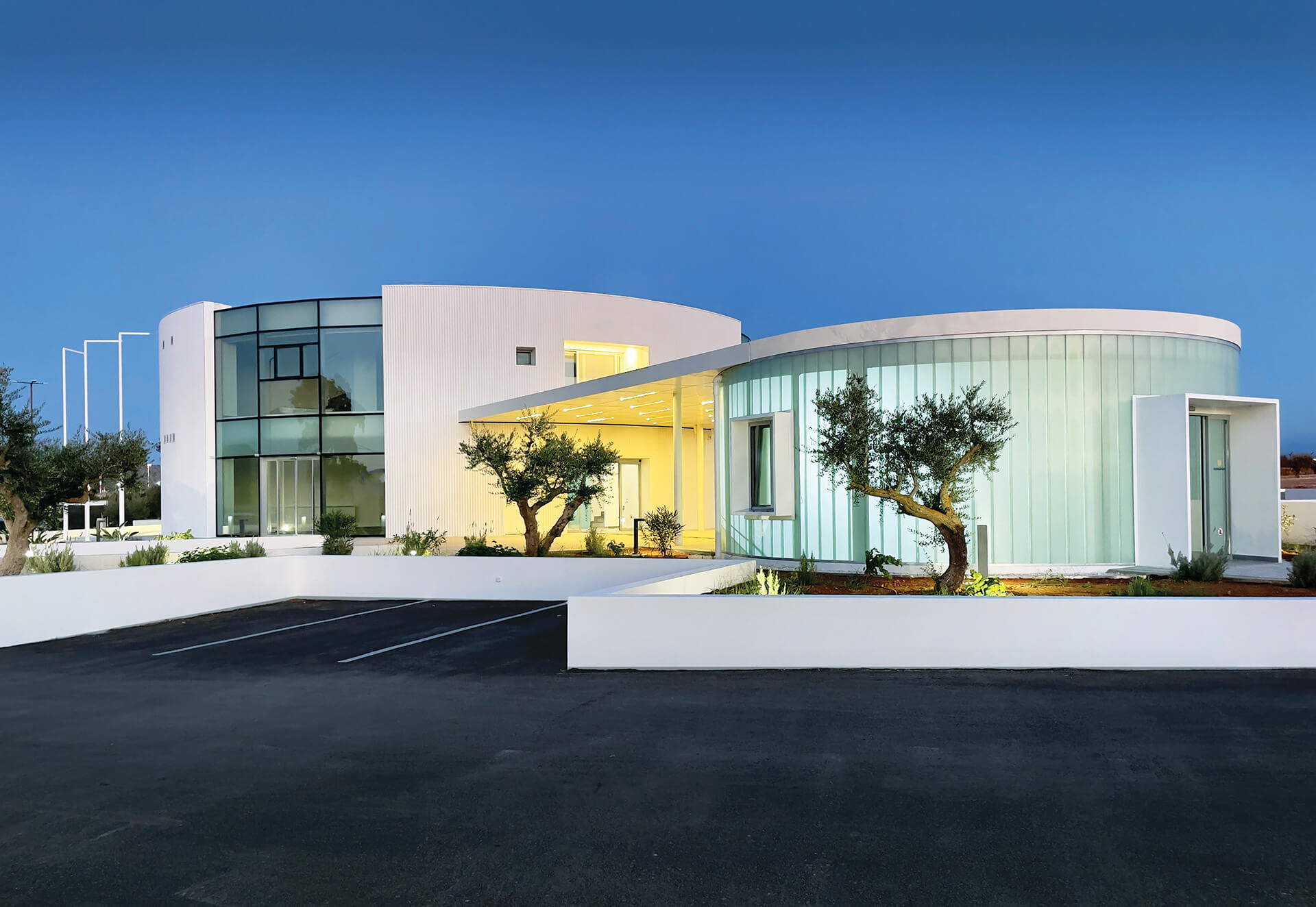
The project concerns the creation of a car rental hub, located along the main road axis connecting the airport with the city of Chania. The central design concept is defined by the positioning of a pair of circular buildings along the imaginary extension of the nearby runway. The geometry of the buildings is based on simple geometric forms, aiming to produce a clear and legible architectural ensemble. The two volumes are arranged on a unified plaza, which operates as a transitional element between built and unbuilt space. Between the two building entities, a metal canopy is introduced, functioning both as a unifying compositional element and as a threshold zone mediating the transition of visitors from the exterior into the interior of the complex.
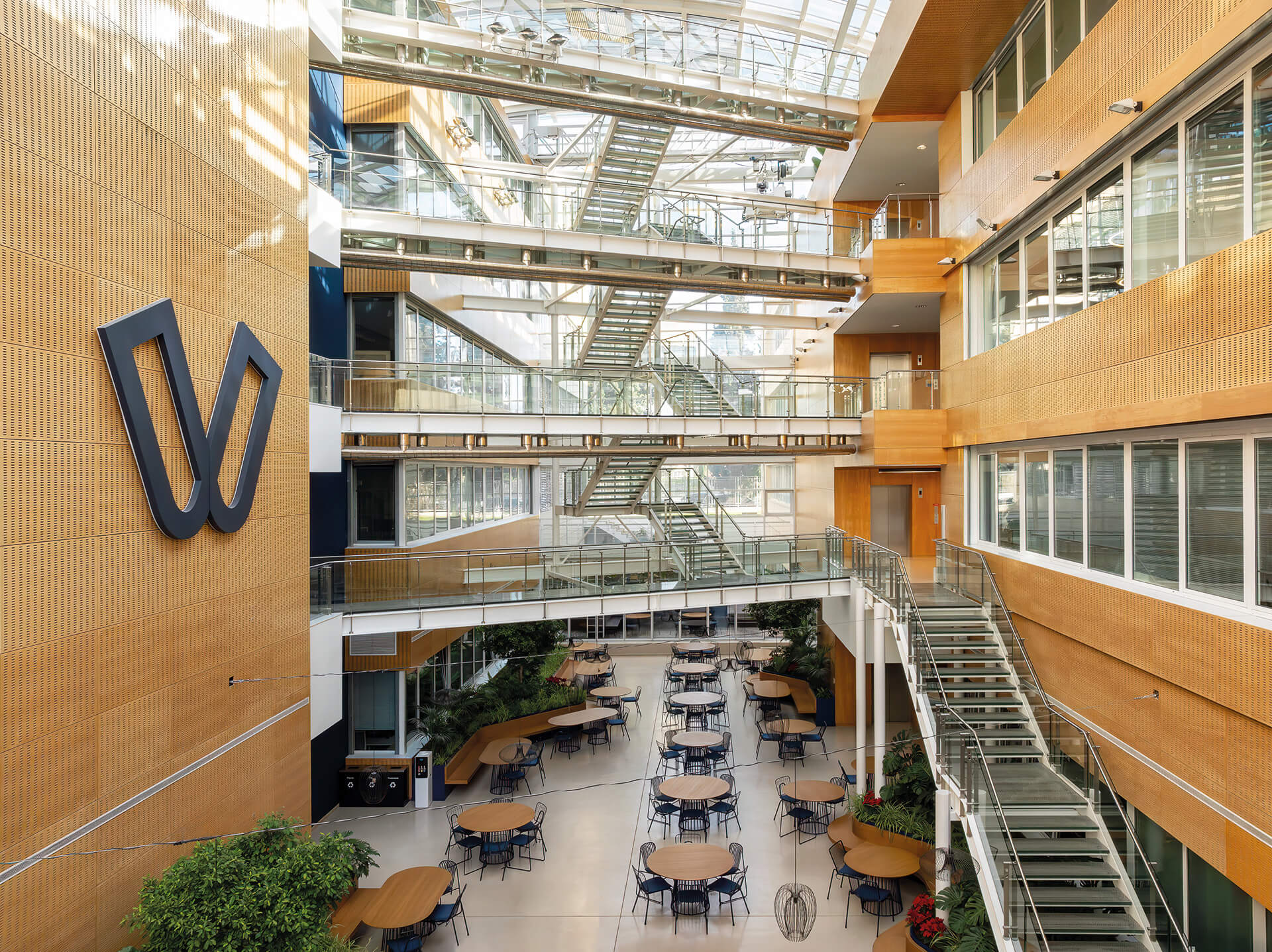
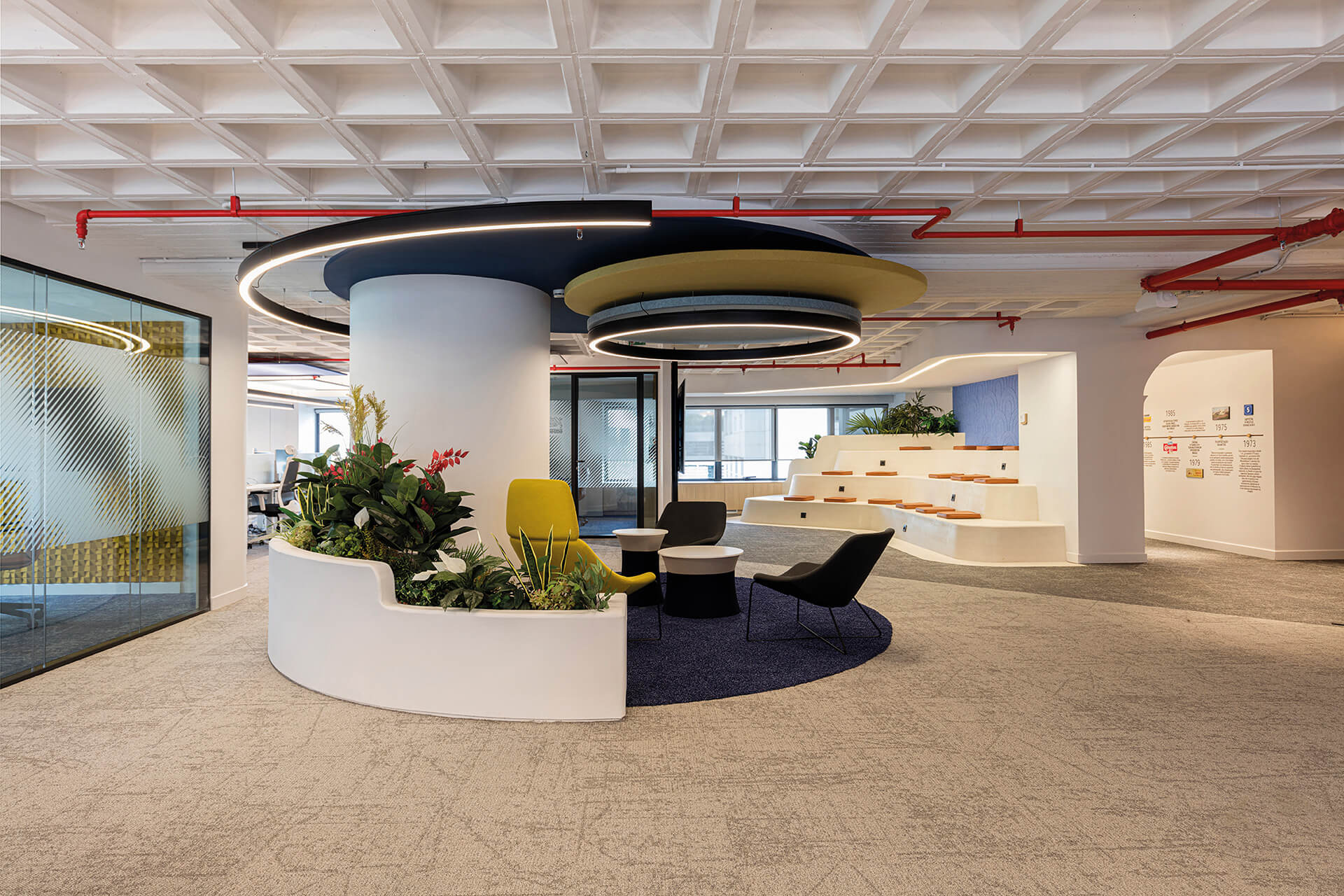
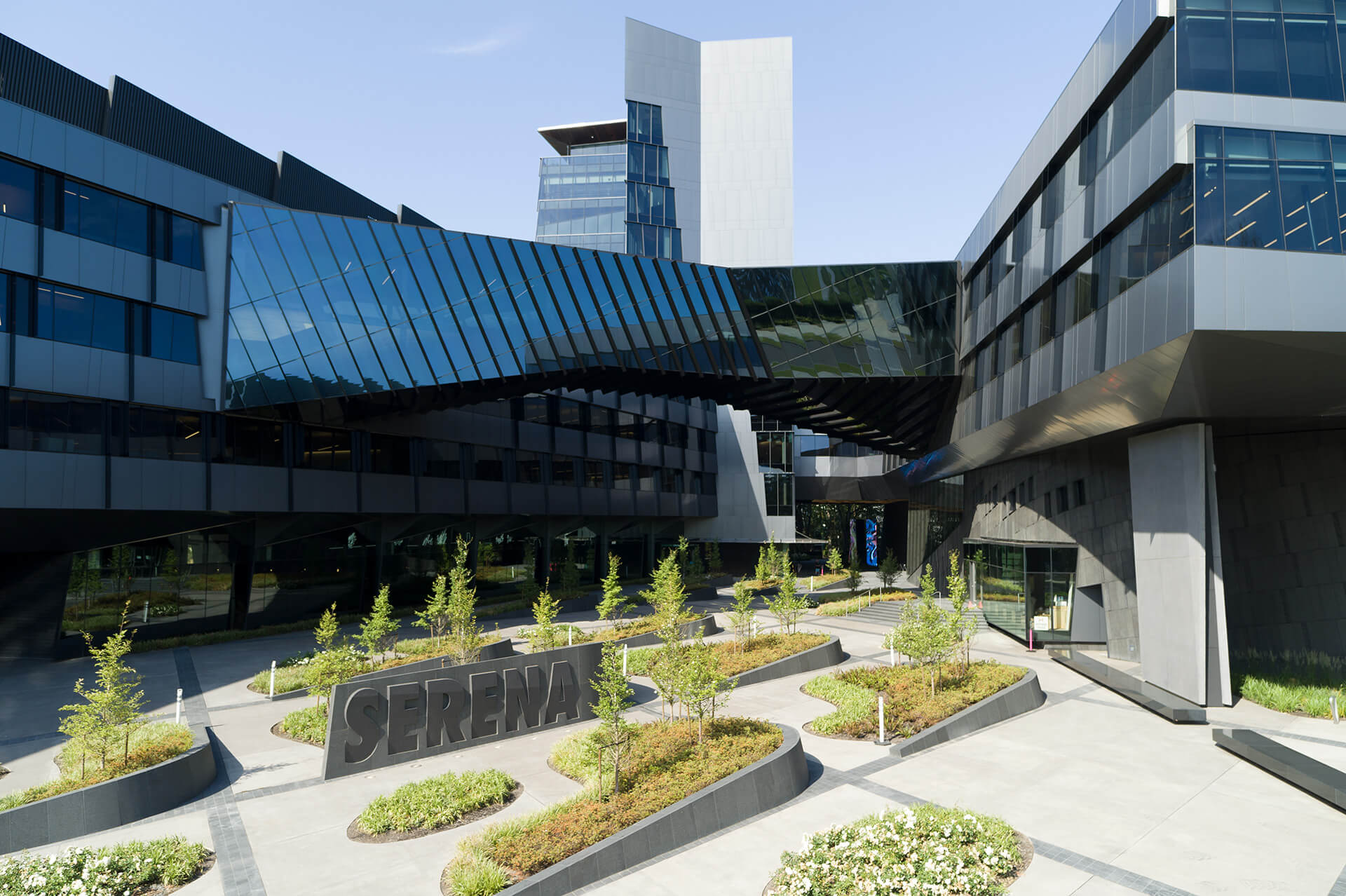
The company’s offices, belonging to a global leader in the food industry, have been fully renovated, transitioning from a traditional layout to a biophilic, innovative work environment. Moving away from the conventional closed-office typology, the new space adopts a variety of scenarios. Centered around an open plan logic, the design introduces flexibility, enabling the creation of spaces that support diverse modes of collaboration. Materials assume a defining role, shaping atmospheres that encourage a sense of engagement – an essential catalyst for fostering creativity. At the same time, sustainability is embedded as a key component, aligned with the company’s philosophy throughout the entire design process. Upon entry, the reception area conveys a welcoming character, with soft, curved wooden lines that gently embrace the Nestlé logo.
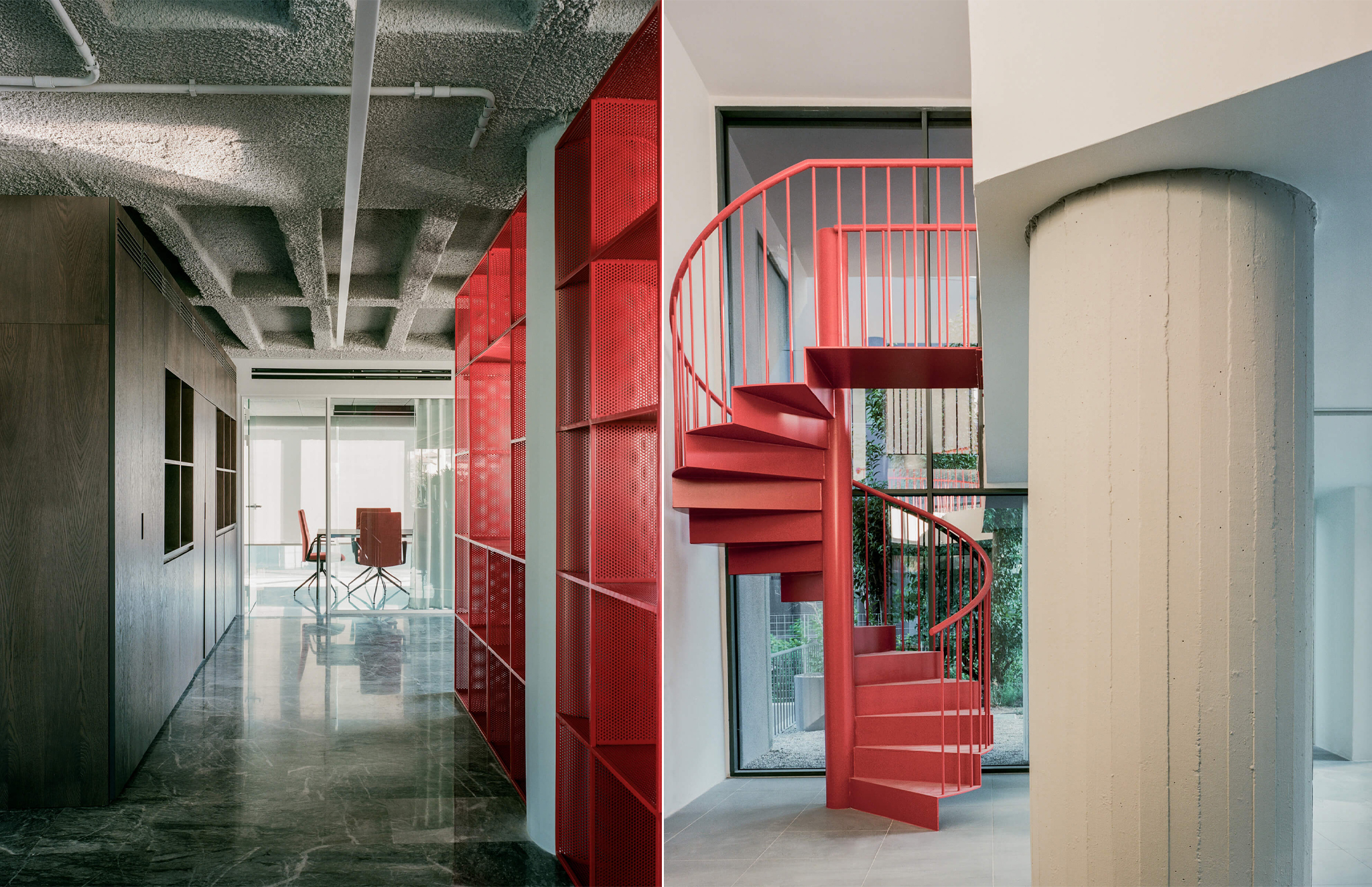
An existing 40-year-old office building is stripped back to its primary structure and comprehensively reinterpreted to respond to contemporary workplace demands. The initial massing logic is recovered and clarified, transforming what was once a fragmented and visually inconsistent assemblage into a cohesive composition. The building is rearticulated as a constellation of twelve distinct volumes, each defined by its own cladding strategy and spatial atmosphere, establishing a new architectural identity rooted in differentiation and clarity. The intervention operates through a process of subtraction and redefinition. By removing non-essential layers, the original structural framework is revealed and reorganized, allowing the building’s inherent geometry to be legible once again.
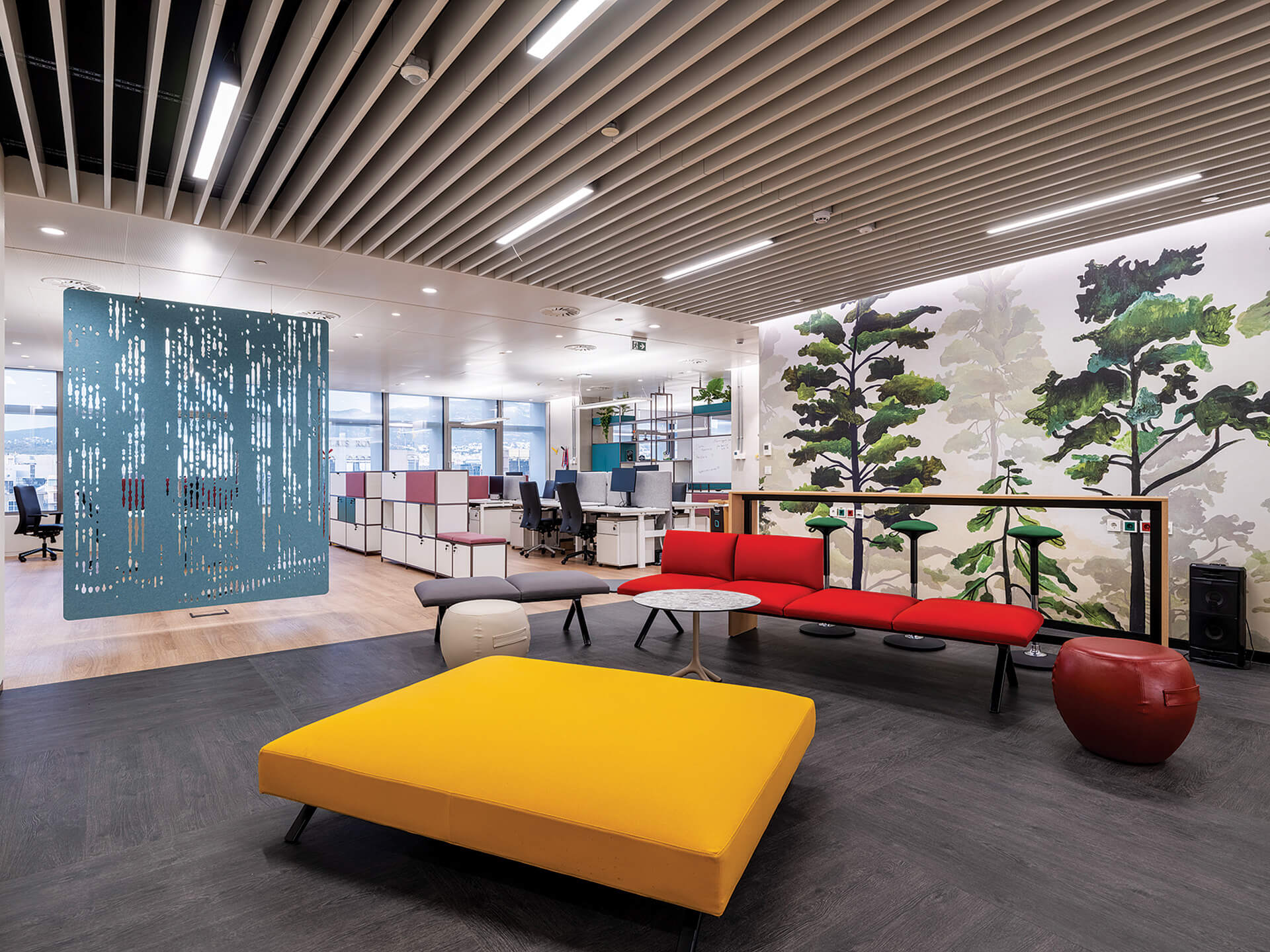
The OTE Headquarters in Athens is the realized architectural study of a multi-storey office building, star-shaped in plan, based on the proposal that was awarded second prize among twelve selected entries. The project concerns the renovation and reconstruction of office and communal spaces from the 2nd to the 13th floor; a decision made in 2019 within the framework of modernization and energy upgrading of the building envelope. The construction of the original volume began in 1974, with several modifications to the initial plans, while the building was ultimately put into operation in the 1980s, consolidating all services of the “Hellenic Telecommunications Organization.” On a plot of 52 stremmas, a building with a total floor area of 65,000m² was developed.
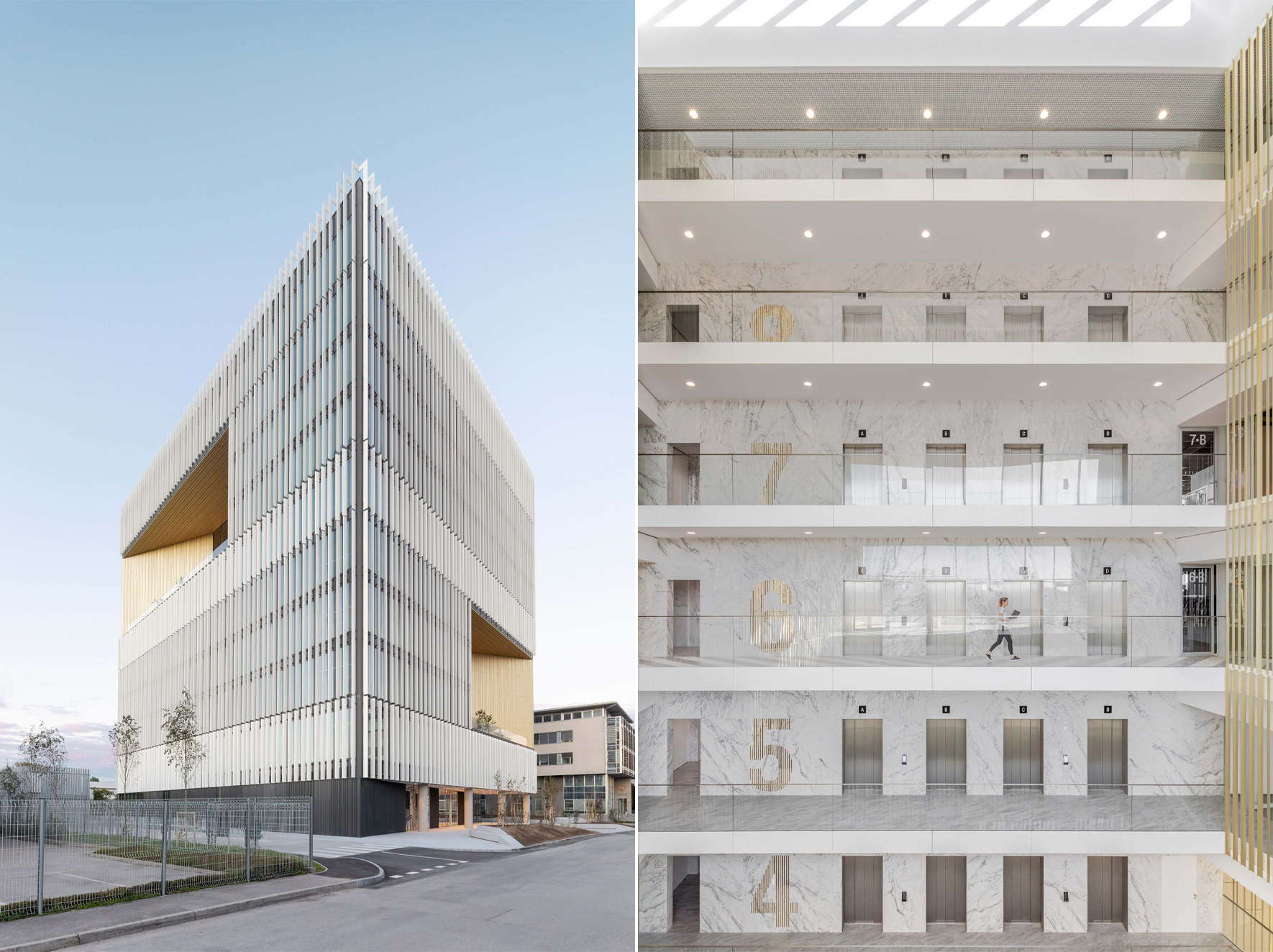
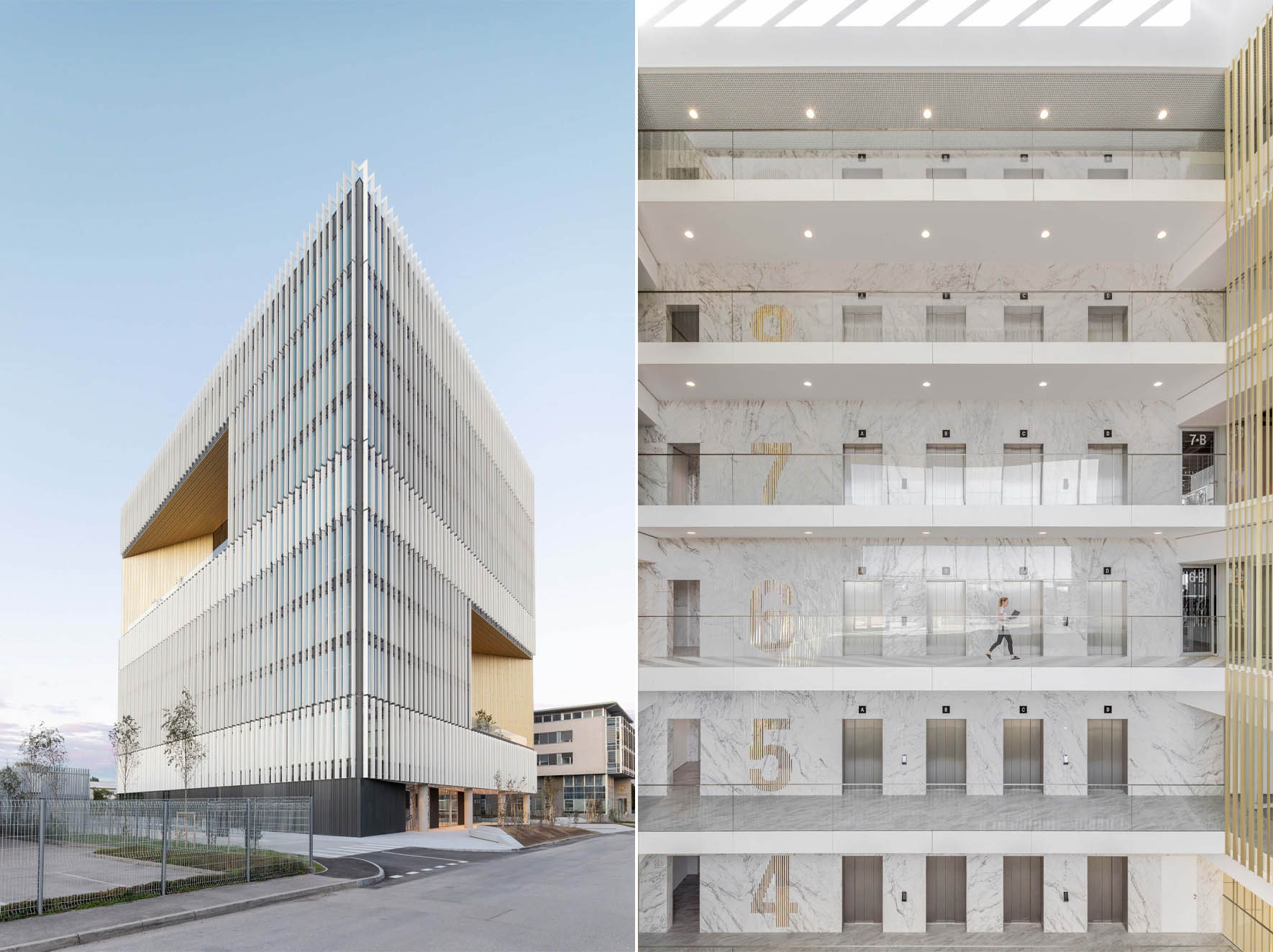
In 2019, the Dimnikcobau company organized an international competition to design the DCB business center in the Moste industrial zone of Ljubljana. The project transcends the building’s functional character as an office space turning it into an urban catalyst, adding value to this suburban area which is historically linked to generic spaces for business and logistics. The compact space of the new building, with the ground floor shaped like a rhomboid and 10 floors above ground level, is taller than neighboring buildings and dominates the landscape of the area. The diagonal displacement of the ground floor allows access to the central foyer consisting of a large atrium with a fluid shape and which goes up vertically to end in a skylight overhead. The atrium opens up to the exterior through two large windows that are the height of three levels, and which add a sculptural character to the space, allowing it to be bathed in natural light from two sides, as well as allowing views of the city’s outline and the mountainous Alpine scenery from its terraces.