From warm terracotta surfaces and sculptural perforated screens to off-white, green and blue ceramic finishes, ten projects demonstrate how ceramics can express colour, texture and spatial identity.
Ceramic surfaces can operate as backgrounds, filters, relief elements or primary contributors to the atmosphere of an interior. From small-format tiles and terracotta finishes to perforated screens and ceramic fragments, the material offers different ways of connecting architecture with light, touch and scale.
01. Wild Souls by studiomateriality
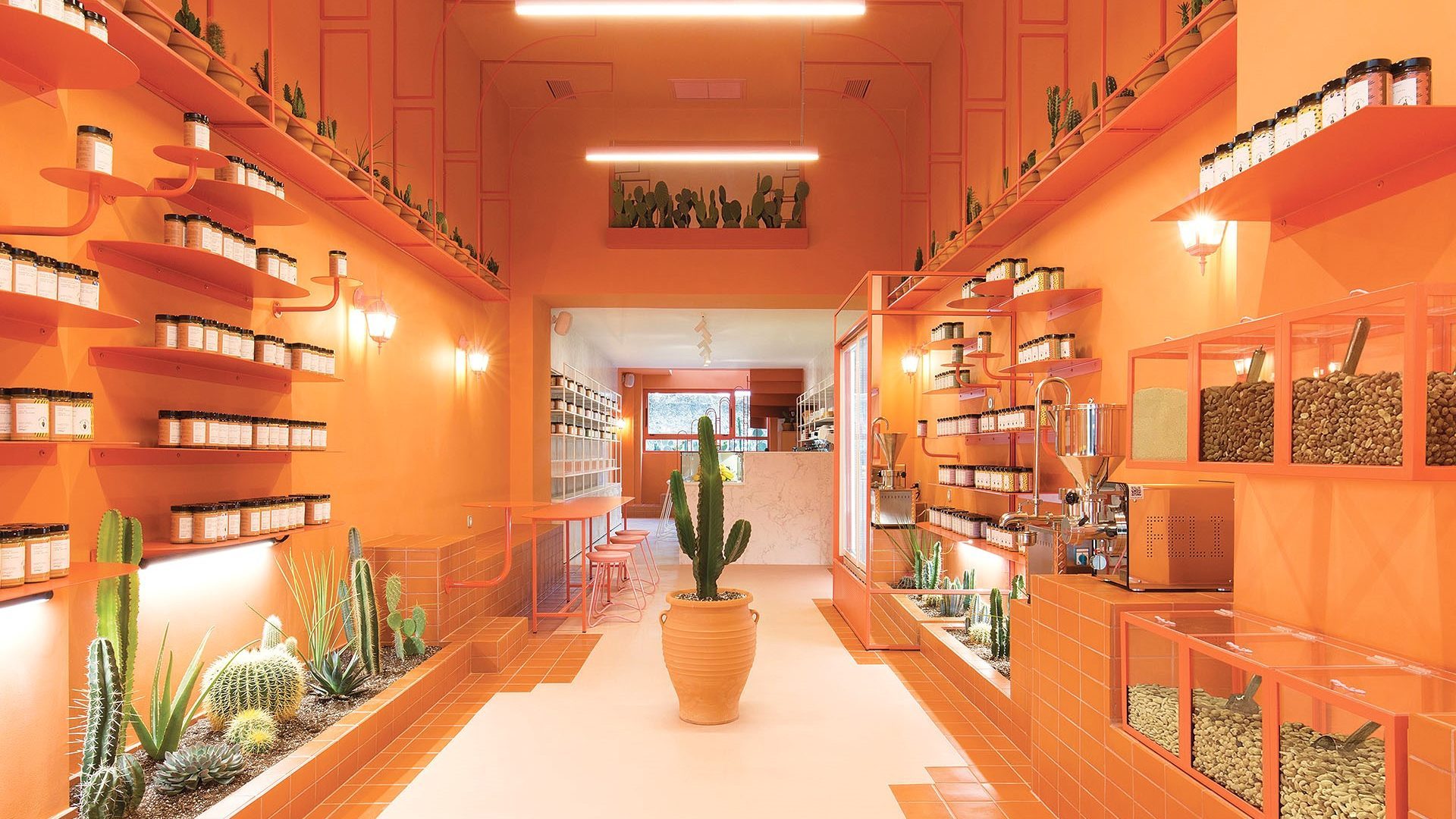
At Wild Souls, terracotta shapes almost the entire interior experience. Surfaces, shelves, bases and raised platforms organise the space through intense orange and earthy tones. At the same time, planting and lighting evoke the atmosphere of a garden, bringing the relationship between soil, vegetation and natural light into the interior.
First published in print: ek magazine 254 | January–February 2021
02. Pick Up All Day Coffee & Brunch in Crete by AT_office
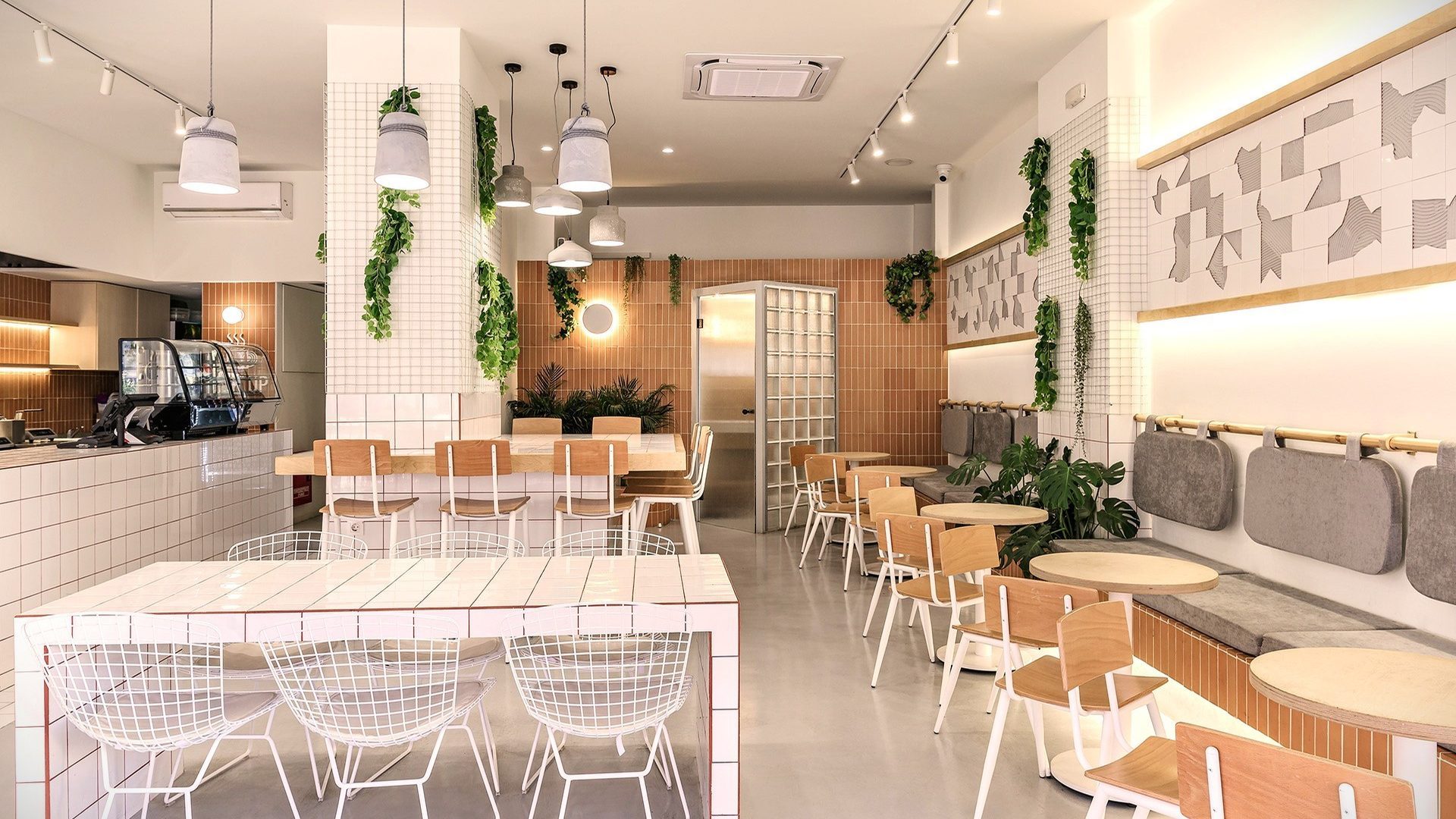
At Pick Up, terracotta is combined with glossy white ceramic tiles, polished cement screed and birch plywood surfaces. Ceramic finishes cover the counter, built-in seating and selected fixed elements, while a custom installation made from reused broken tiles adds a more handcrafted dimension. The coherent application of the materials reinforces the clarity of the geometry and the relationship between the interior and the street.
03. Liystor in Athens by XCollective
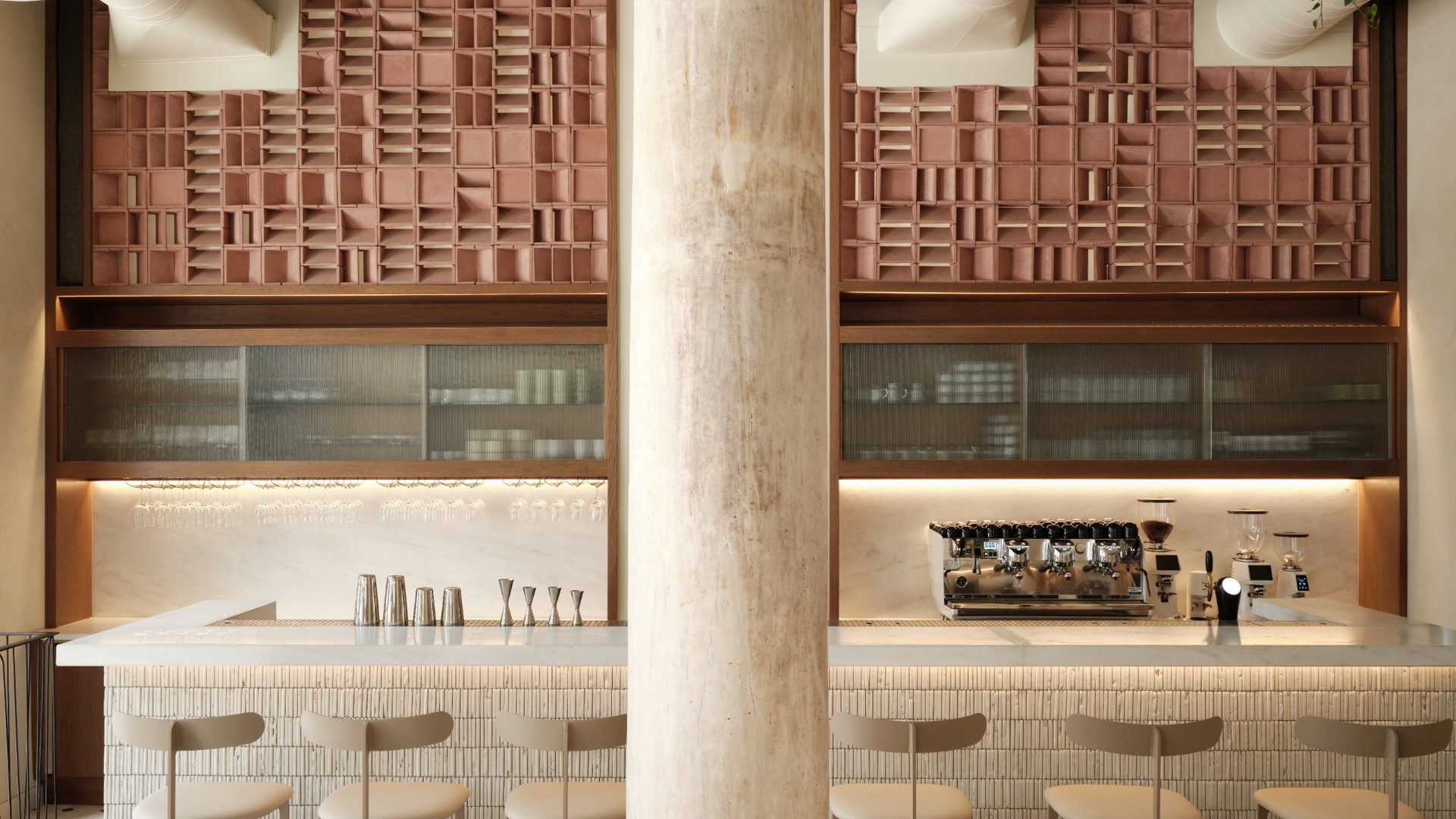
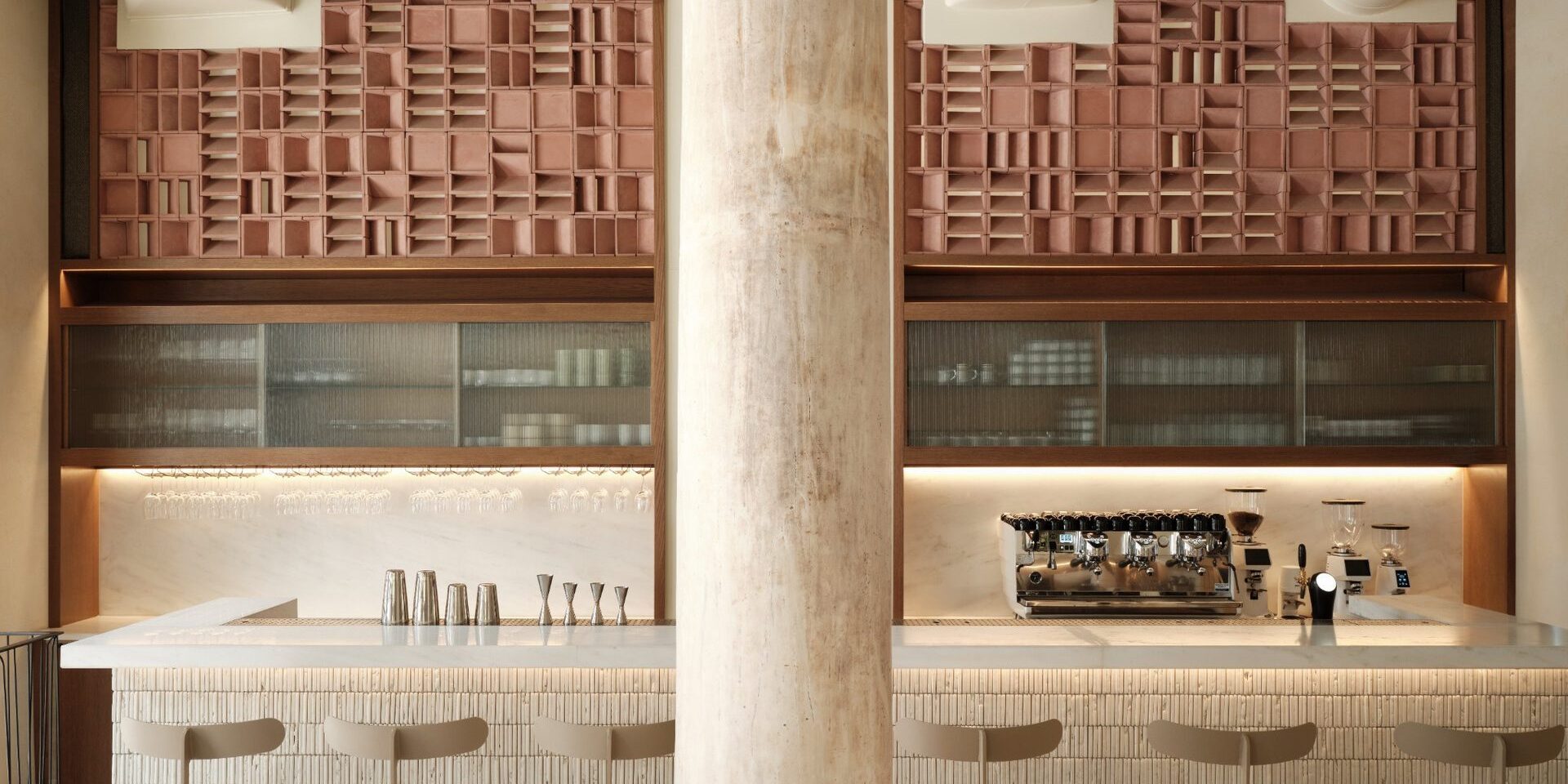
At Liystor, ceramics acquire a sculptural and spatial dimension. The relief surface above the bar forms a dense perforated pattern, functioning both as a decorative backdrop and as an element with a strong material presence. Below it, the off-white vertically ribbed cladding of the counter introduces a different scale and texture. Ceramic applications are therefore integrated into a complex interior that unfolds across multiple levels.
First published in print: ek magazine 304 | January–February 2026
04. Ace Hotel + Swim Club Athens by Georges Batzios Architects and Cigüe
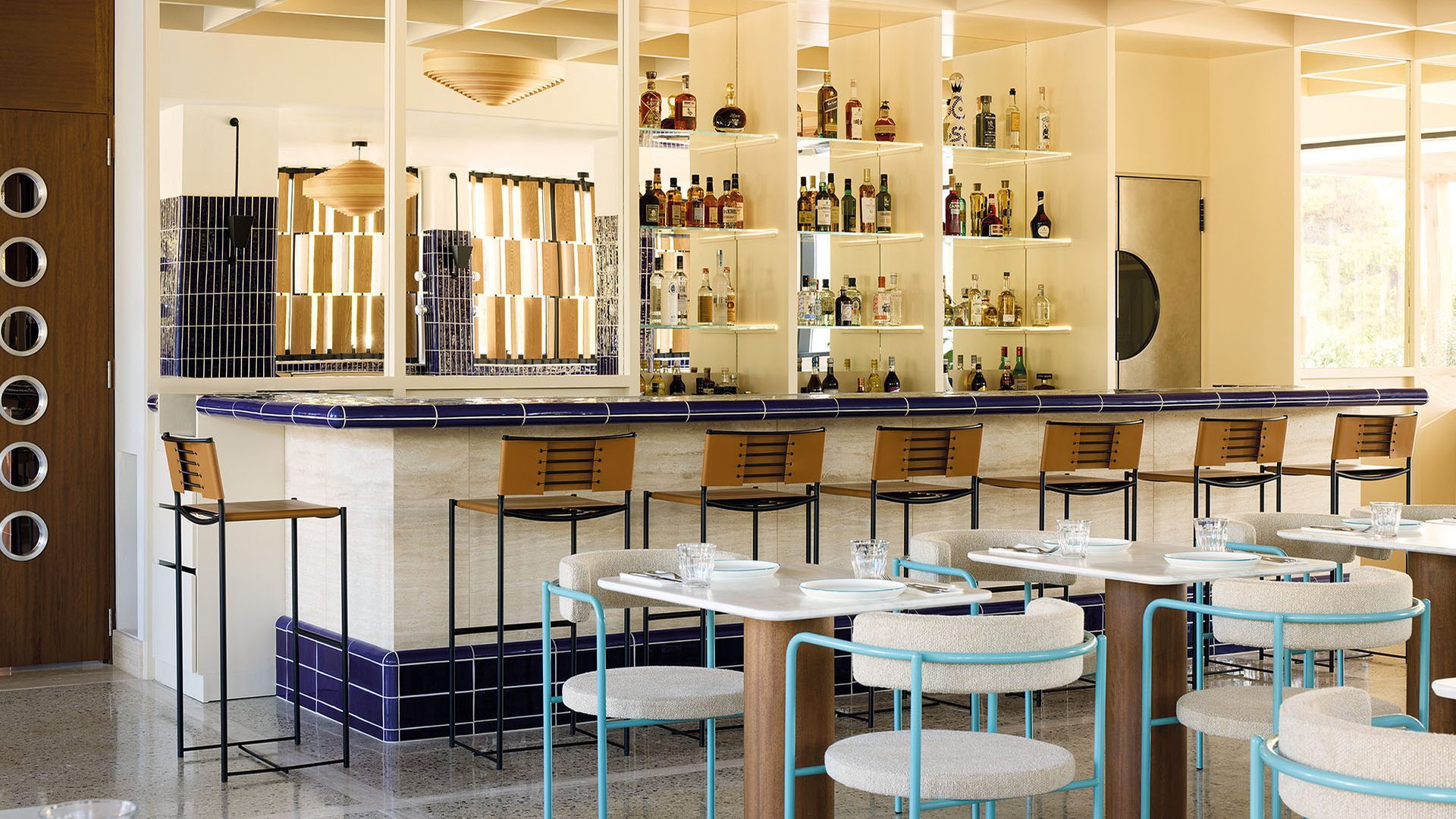
At Ace Hotel + Swim Club Athens, ceramic tiles form part of a broader composition that connects the existing building’s architectural character with the hotel’s new identity. Deep blue surfaces at the bar and around the mirrors add intensity to the off-white setting, while engaging with marble, wood, metal and terrazzo floors. Their use reinforces the geometric clarity of the public spaces and their relationship with the building’s modernist heritage.
First published in print: ek magazine 292 | November 2024
05. Bistro Siège Social and Café Social in Longueuil by blanchette archi.design
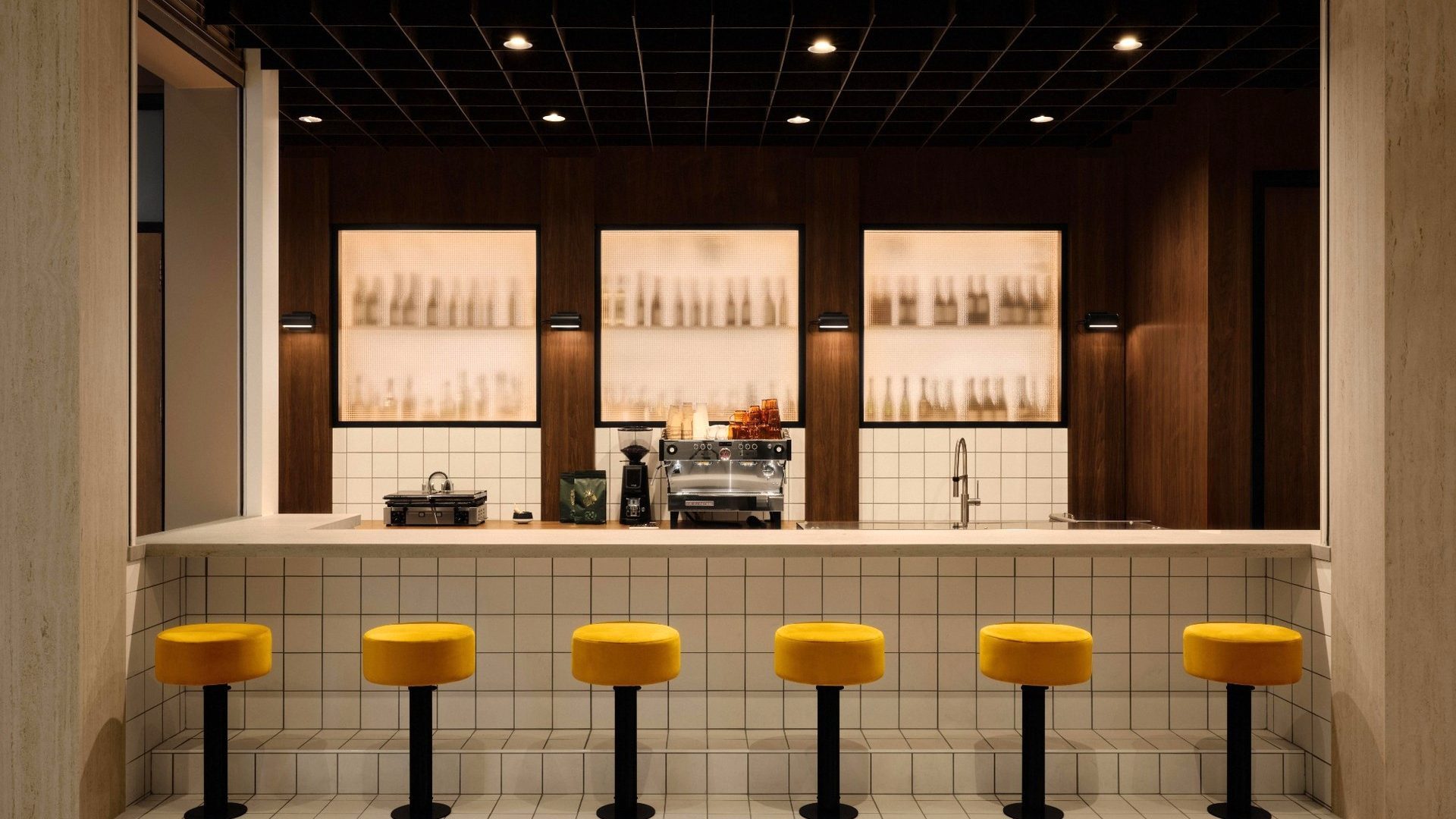
At Bistro Siège Social and Café Social, square white ceramic tiles extend beyond conventional wet areas. They cover vertical surfaces, counters and built-in elements, establishing a shared rhythm across the two distinct atmospheres. The joints create a graphic grid, while wood, travertine, earthy tones and planting add warmth and depth.
06. Residence Renovation in Chalandri by Motus Design & Architecture
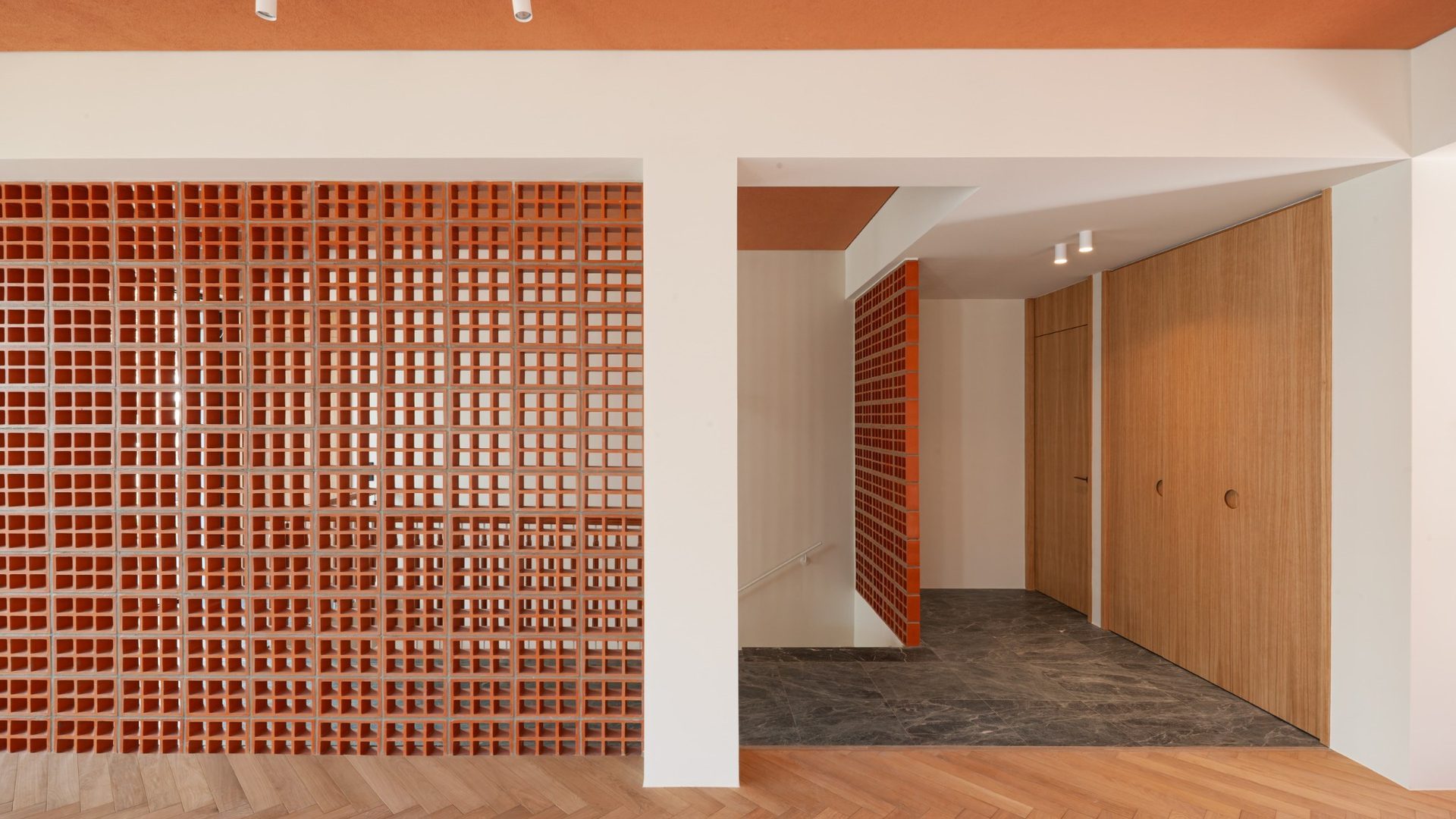
In the renovation of the Chalandri residence, ceramic claustra operate as filters between the different spaces. Terracotta allows light and shadow to shift throughout the day, while preserving visual continuity across the interior. Their use relates to the project’s references to Greek critical regionalism and gives the material both a functional and atmospheric role.
First published in print: ek magazine 307 | May 2026
07. Restoration and Extension of Karradeiou School in Chios by Local Local
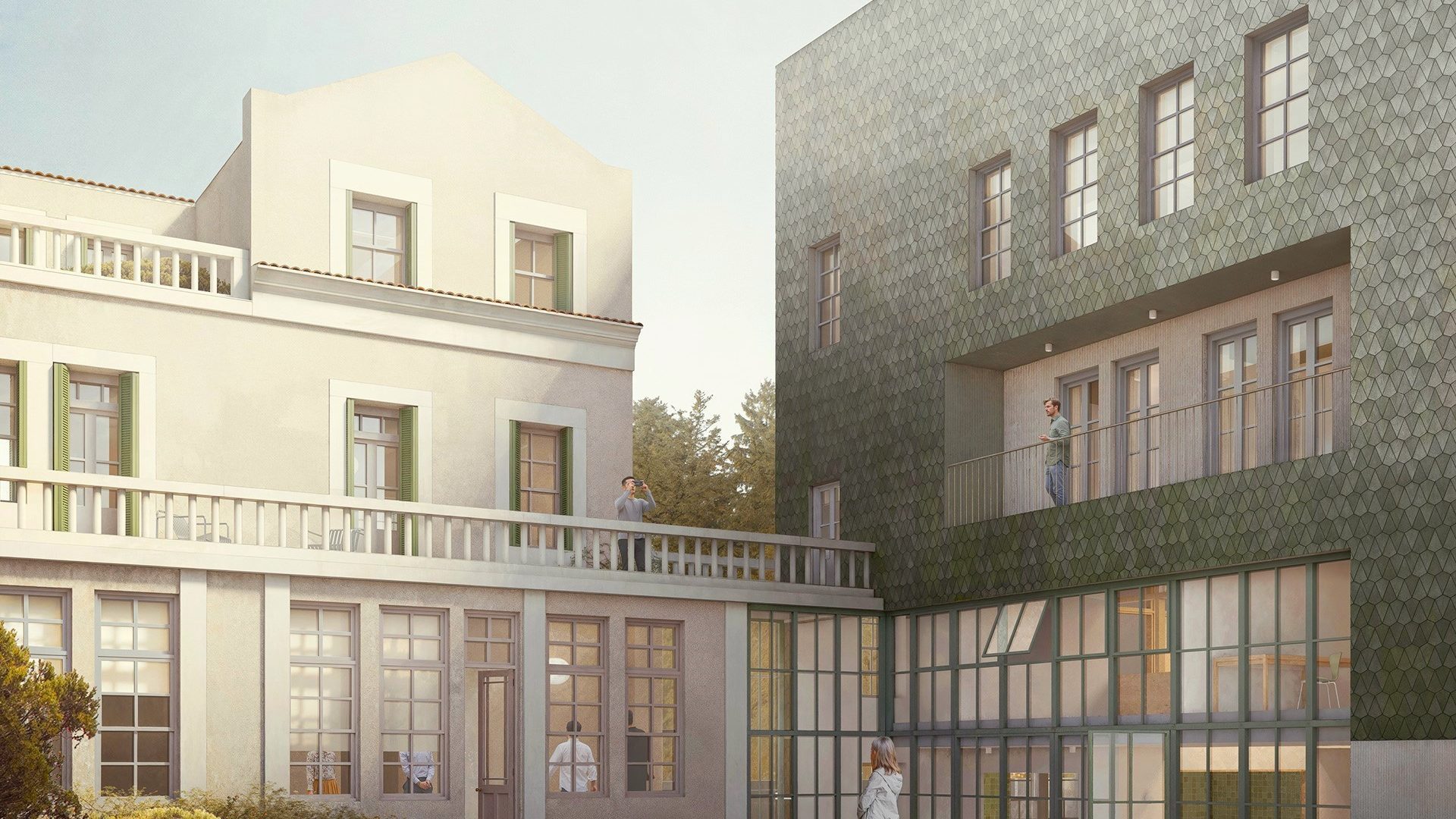
In the proposal for the restoration and extension of Karradeiou School, the ceramic surface characterises the new part of the building. Small ceramic elements form a textured, off-white and grey-green façade that distinguishes the extension from the historic building without separating it from its context. The ceramic finish becomes a means of connecting the new structure with the scale, memory and material character of the place.
08. Brooklin Apartment in São Paulo by Küster Brizola Arquitetos
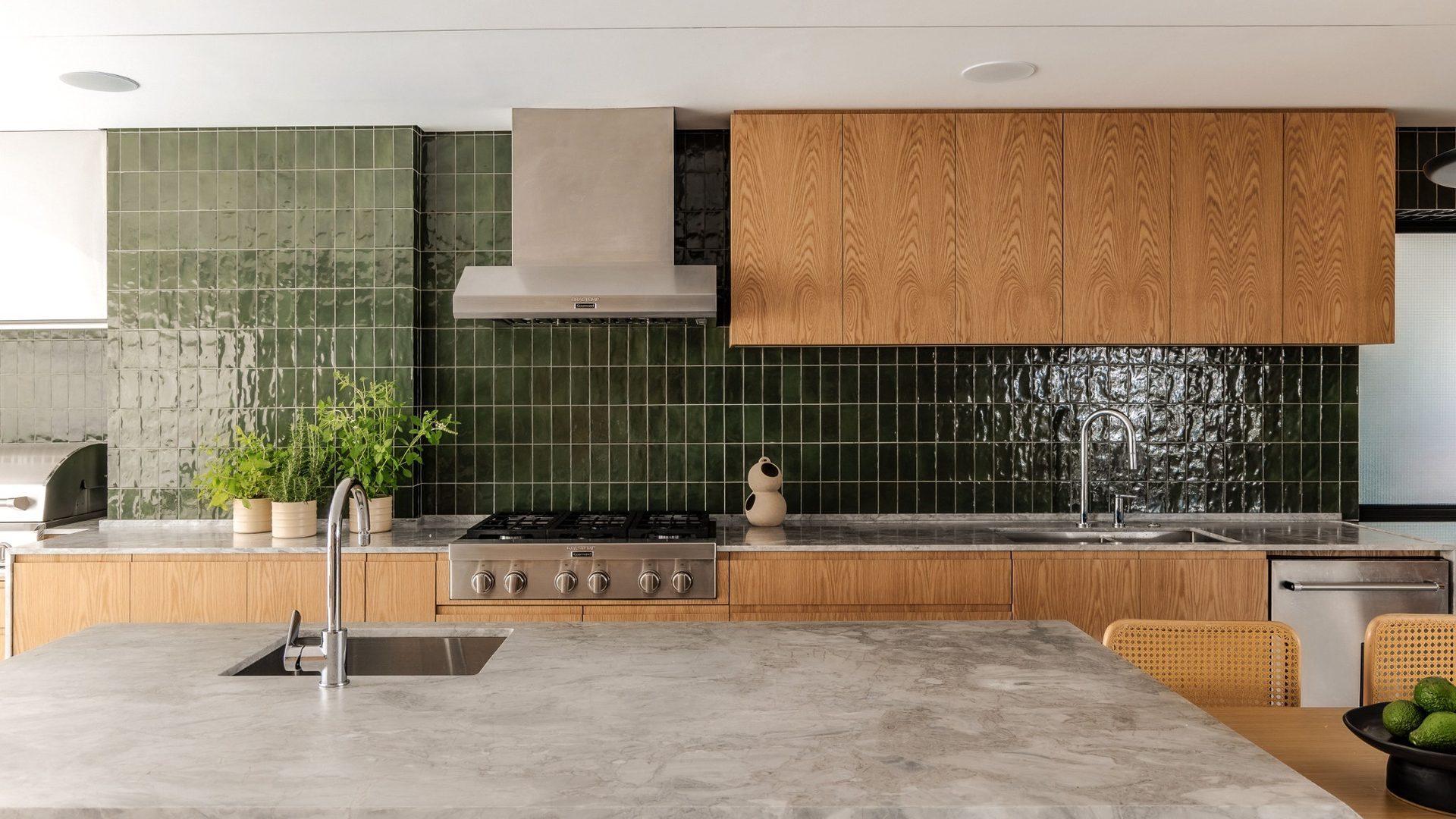
At Brooklin Apartment, the green relief ceramic tiles in the kitchen form the main material accent of the composition. Their glossy, slightly irregular surface adds depth, while the green tones balance the warm palette of timber and earthy materials. Together with the large-scale checkered floor and pale surfaces, the ceramic finish gives the kitchen a strong identity without separating it from the rest of the apartment.
09. MANU Fish Restaurant in Athens by studiomateriality
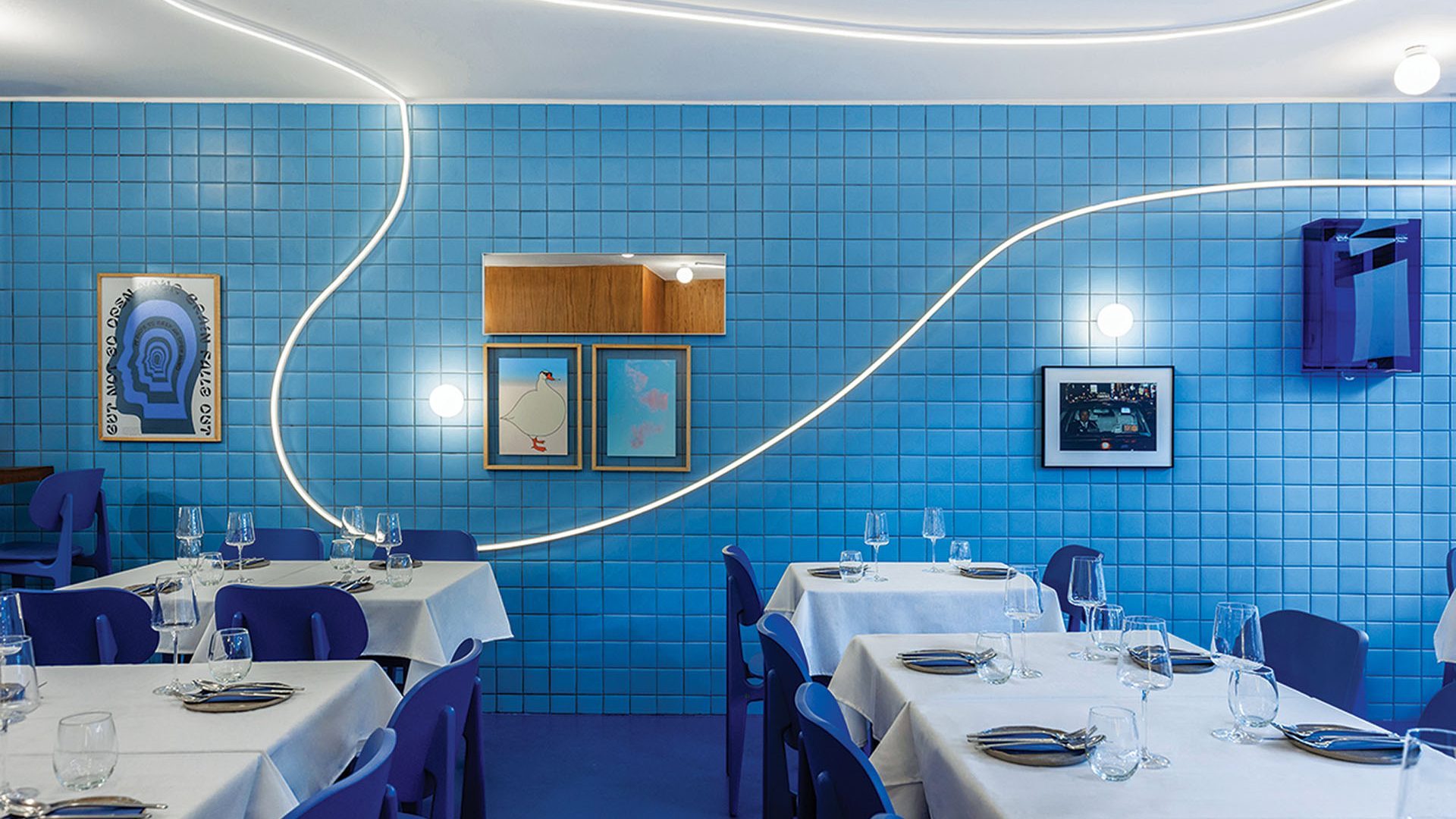
At MANU Fish Restaurant, blue ceramic tiles cover the wall and create a continuous setting for the dining experience. The surface continues onto the floor and is combined with blue seating, white tablecloths and a curved luminous line. Ceramics function as both a colour and spatial background, evoking the sea and reinforcing the restaurant’s direct, almost theatrical identity.
First published in print: ek magazine 304 | January–February 2026
10. Bardem Cocktail Bar in Helsinki by Fyra
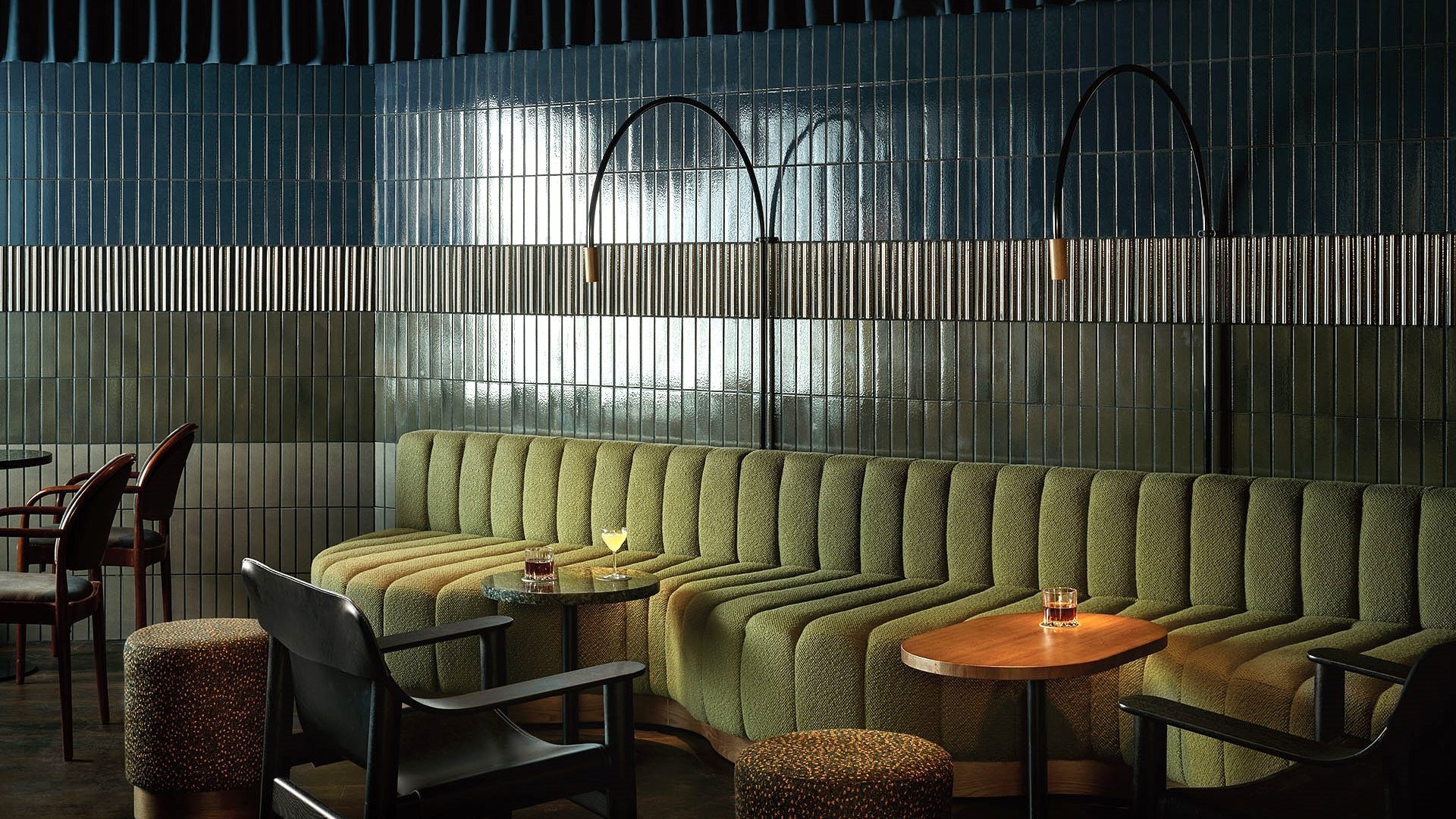
At Bardem, glossy ceramic tiles cover the wall behind the seating area and are arranged in horizontal bands of different tones. The ribbed central strip adds relief and alters the reflections of the low lighting. Combined with dark curtains, timber and the green upholstered seating, the ceramic surface creates the darkest and most atmospheric expression of the material in the selection.
From terracotta interiors and perforated screens to glazed tiles and textured façades, these projects treat ceramics as more than a finish. Colour, relief, joints and reflections become tools that shape atmosphere, organise space and connect each project with its context.
Related Posts