10 Hospitality Projects through Adaptive Reuse
Selection:
Editorial Team ek magazine
Date:
September 2026
Adaptive reuse has become one of the most significant sustainability strategies in contemporary architecture. Working with existing buildings reduces the need for new construction, limits the consumption of embodied energy and preserves materials, construction systems and layers of collective memory.
In hospitality architecture, adaptive reuse involves the demanding process of adapting older buildings to contemporary standards of comfort, operation and technical performance. It is not limited to converting a former industrial or historic building into a hotel. It can also take the form of reactivating existing hospitality structures, reinterpreting the relationship with a historic setting or retaining the landscape as an active part of the guest experience.
This selection of Monthly Picks brings together ten projects that approach adaptive reuse in different ways, from former sanatoria and industrial buildings to historic residences, stone houses and urban hotels.
First published in print in ek issue 282 | November 2023
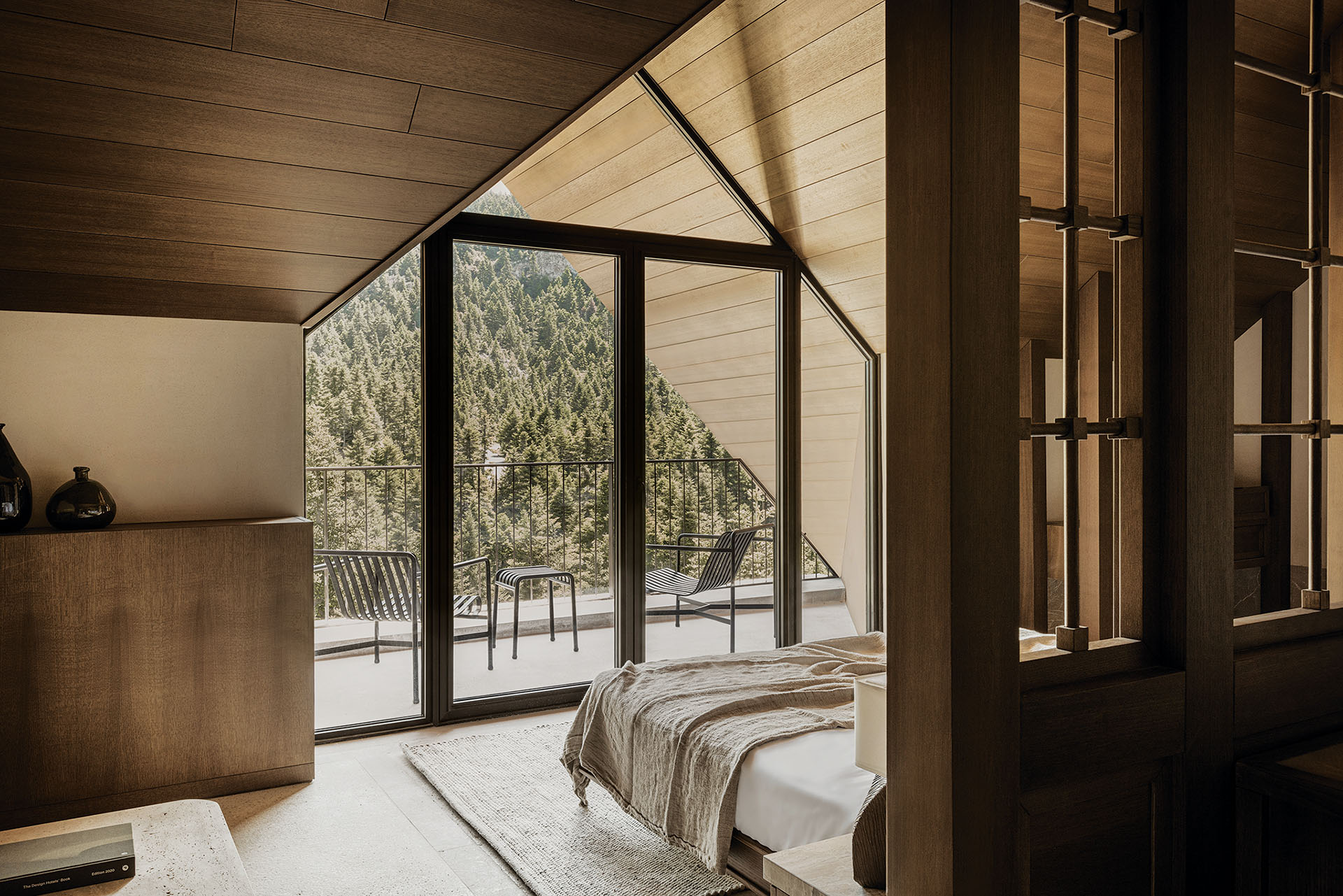
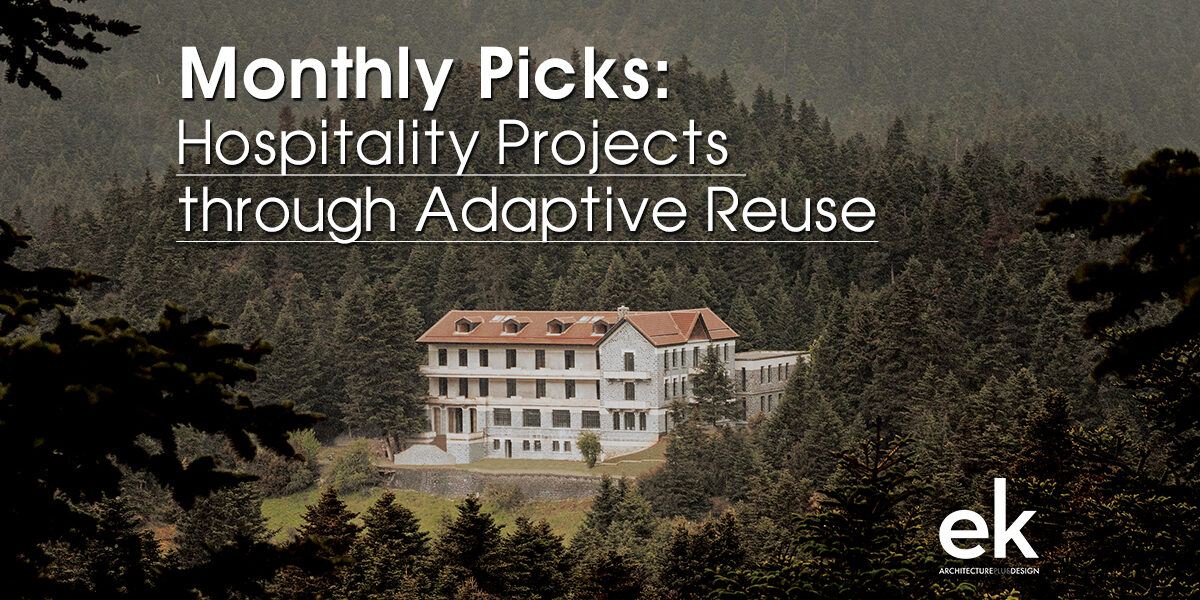
A former sanatorium dating from 1929, located on Mount Mainalo, has been brought back into use as a 32-room hotel. The project by K-Studio and Monogon builds on the existing organisation of the building while retaining its character as a place of retreat, treatment and communal living.
The hotel programme develops within the existing shell, while the materiality, shared spaces and relationship with the forest remain central to the experience. The past is not treated as a decorative backdrop, but as the starting point for the building’s new use.
First published in print in ek issue 292 | November 2024
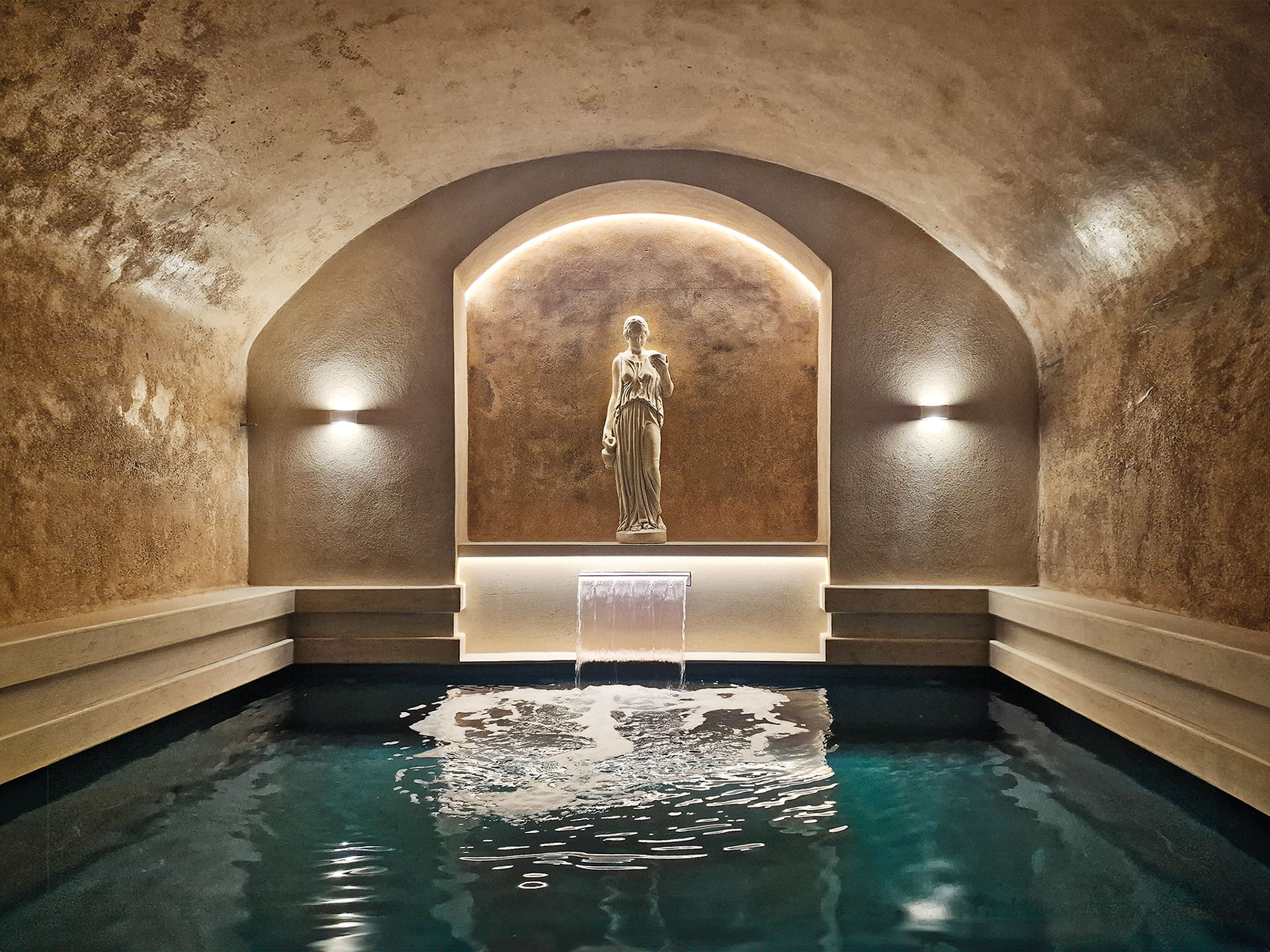
In Vaporia, Syros, a nineteenth-century residence has been converted into a hotel. The intervention retains the stone masonry, painted ceilings and marble floors, while former cisterns are incorporated into the new programme as a hammam, jacuzzi and indoor pool.
The conversion is organised through the coexistence of old and new elements. The defining features of the original residence remain legible, while the requirements of contemporary hospitality are introduced without erasing the building’s different temporal layers.
First published in print in ek issue 292 | November 2024
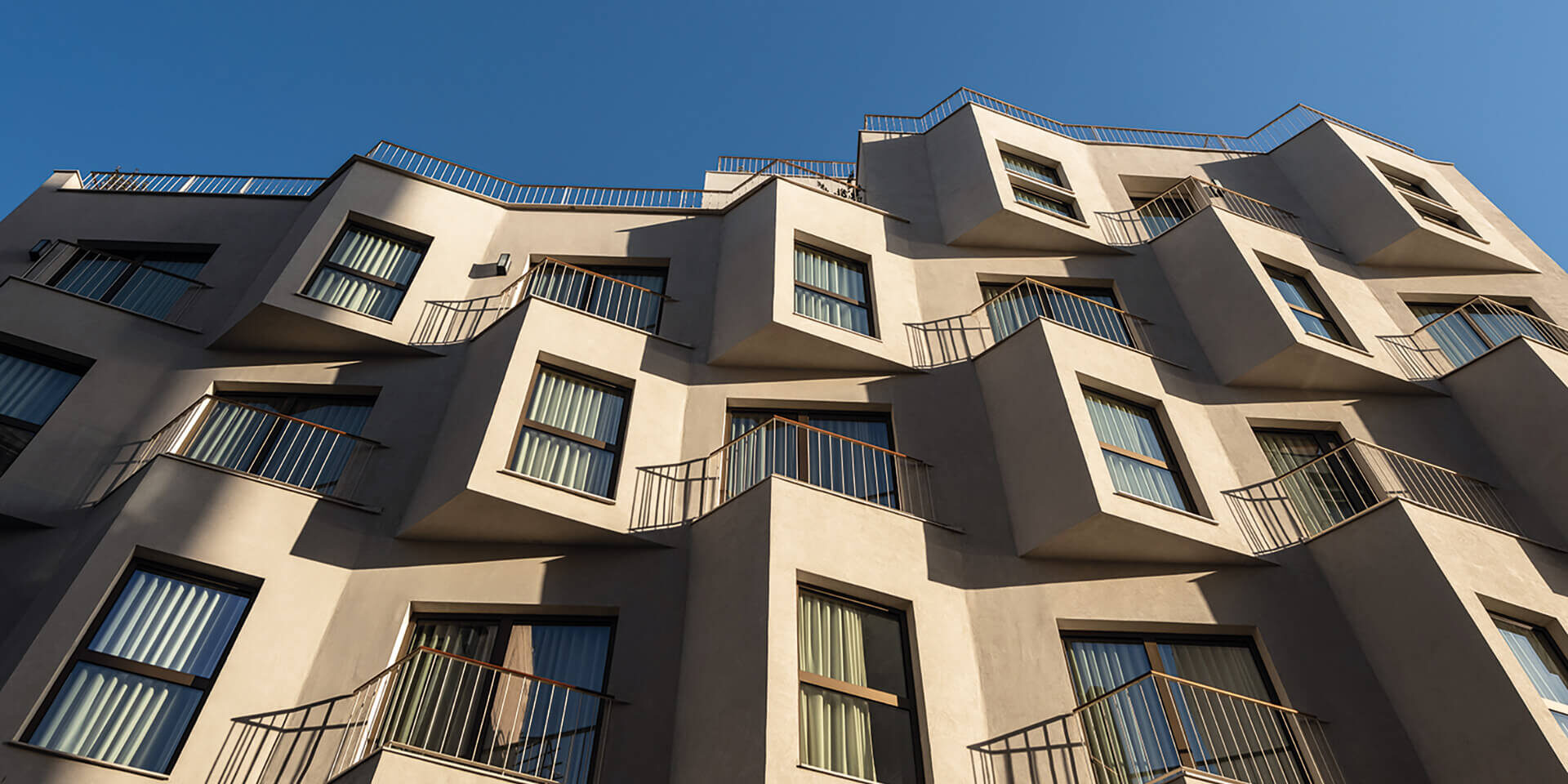
The former Metaxa distillery at the port of Piraeus has been reconstructed as a 101-room hotel. The new programme occupies a building with a strong industrial identity, retaining its connection to the history of production and the character of the port district.
Adaptive reuse operates here on two levels: it concerns both the transformation of the existing building and the reactivation of a section of Piraeus’ urban waterfront. The hotel remains connected to the productive and commercial environment that surrounds it.
First published in print in ek issue 290 | September 2024
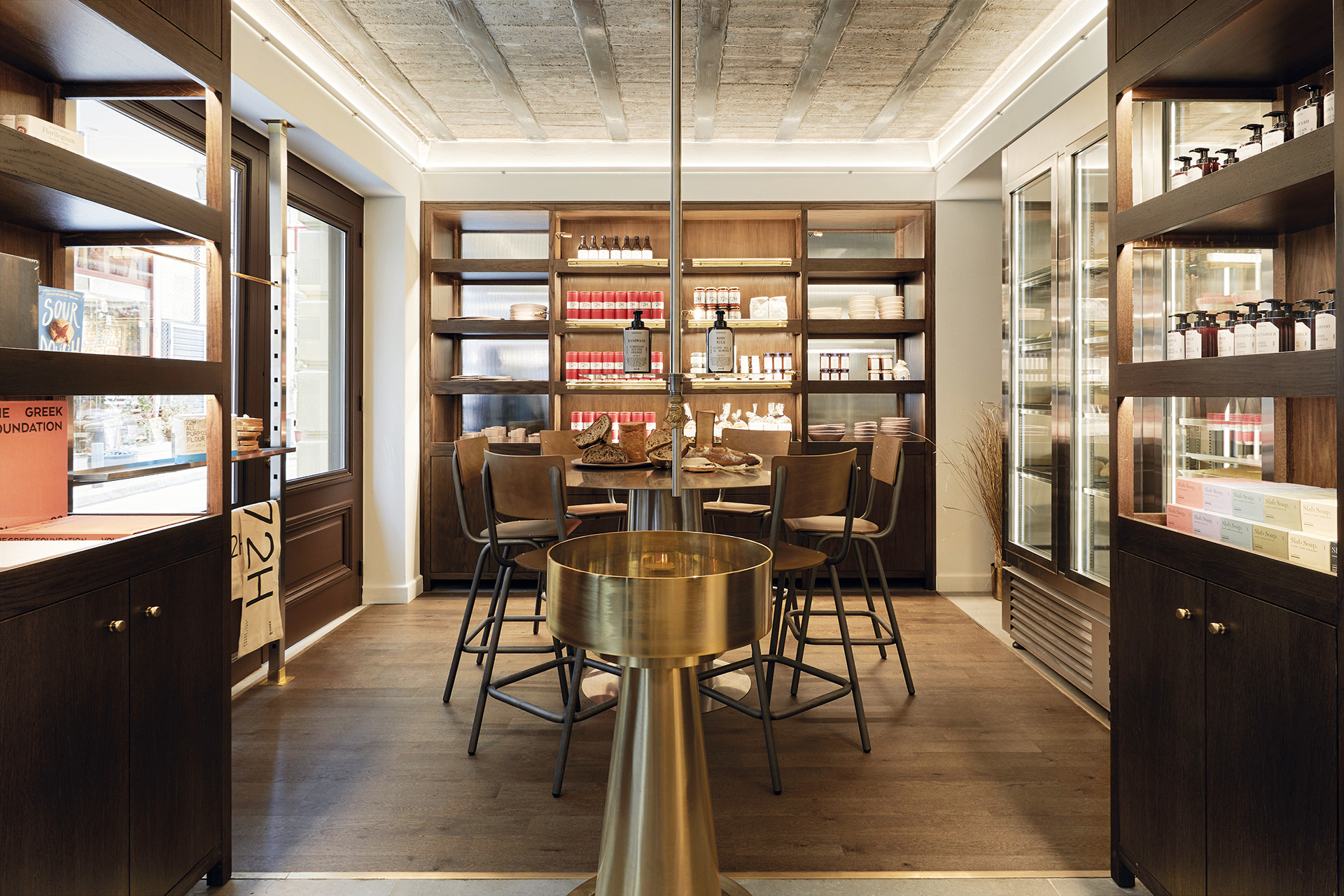
Ergon Bakehouse Hotel and Bakery extends the idea of adaptive reuse from the building shell to the programme. The hotel, bakery, shop and restaurant are organised as a single environment in which hospitality is directly connected to production, consumption and everyday use.
The project does not treat the hotel as an isolated destination. Instead, it creates a hybrid setting where different functions coexist and remain visible. Adaptive reuse is therefore expressed through the way an urban property accommodates a complex and publicly oriented hospitality programme.
First published in print in ek issue 270 | September 2022
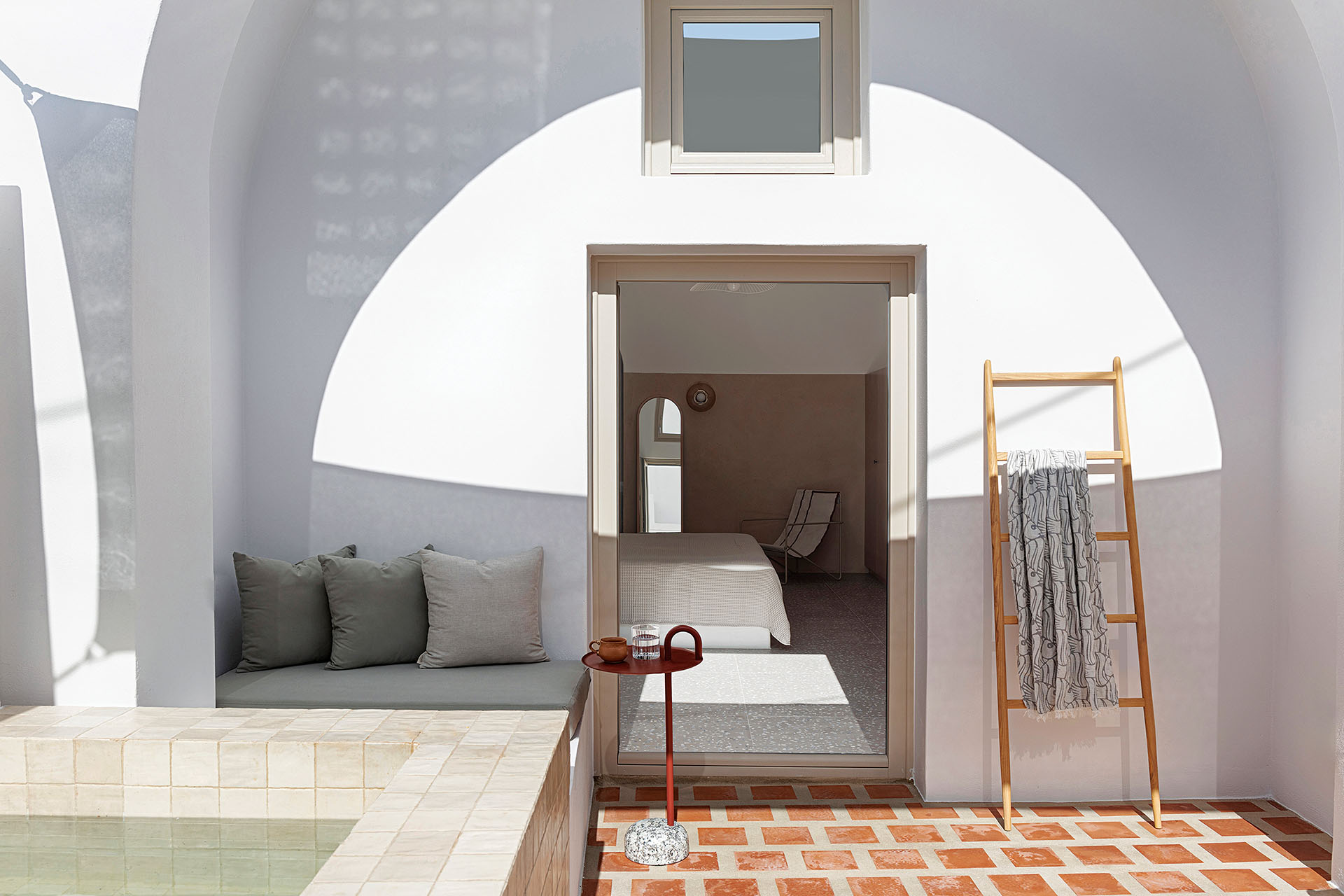
In the centre of Fira, Kapsimalis Architects transform a former two-storey family residence into a five-suite hotel. The project preserves and reinterprets the existing structure, while restored Cycladic forms, natural materials, ceramic screens and planting shape the identity of the new hospitality environment.
The adaptation concerns both the spatial organisation and the management of natural light, ventilation and outdoor areas. The principles of vegan hospitality are translated into the architecture through the selection of materials, the planting and the retention of the building’s relationship with the dense urban fabric of Fira.
First published in print in ek issue 299 | July–August 2025
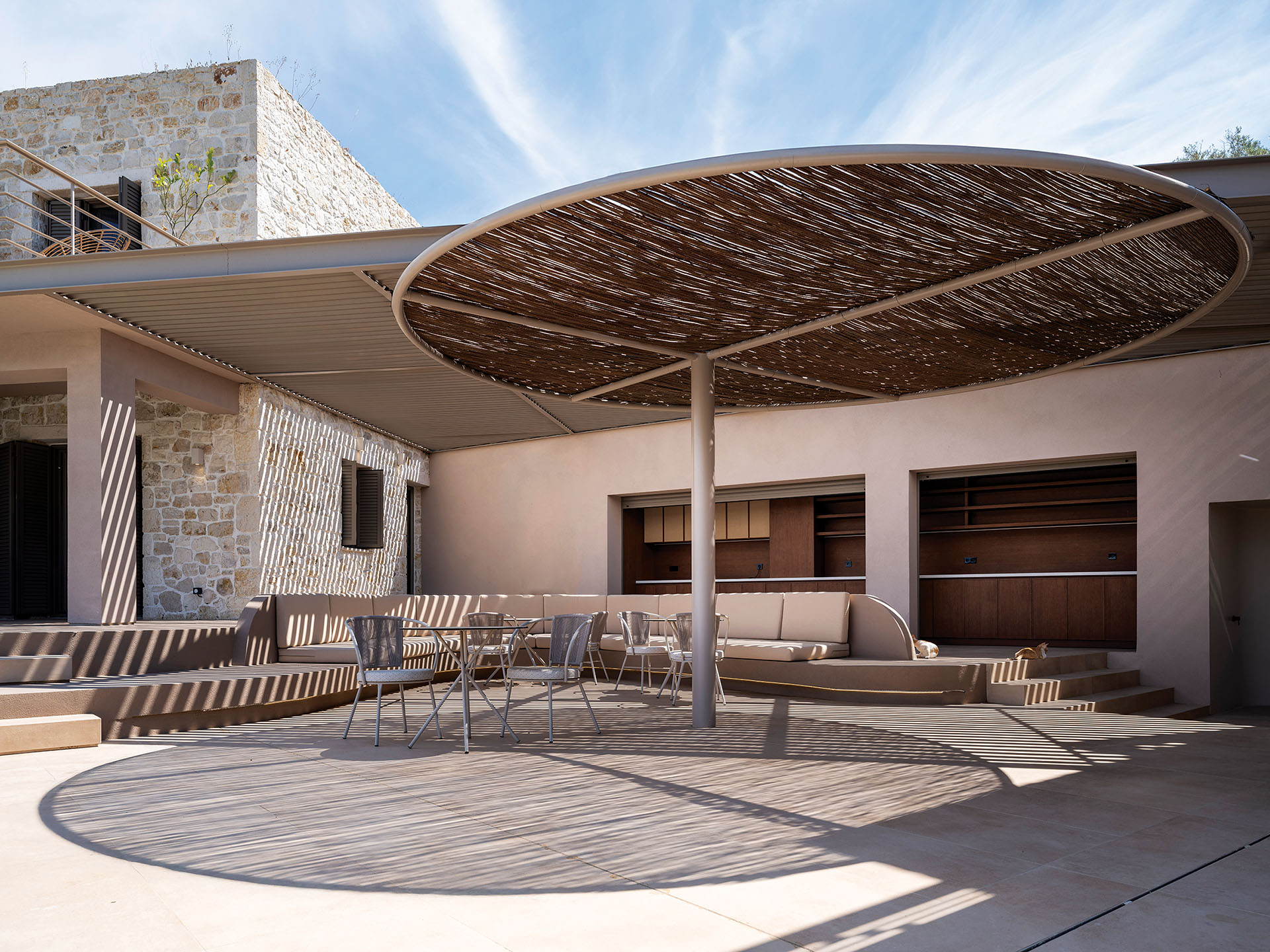
Two existing stone houses set within an olive grove in Meganisi have been converted into a boutique hotel. The intervention retains the principal shells and their relationship with the landscape, adapting the interior organisation to the requirements of contemporary hospitality.
The project’s small scale allows for the careful management of the existing elements and reduces the need for extensive new construction. Stone, planting and topography operate as a single system into which the new use is integrated without cancelling the character of the site.
First published in print in ek issue 302 | November 2025
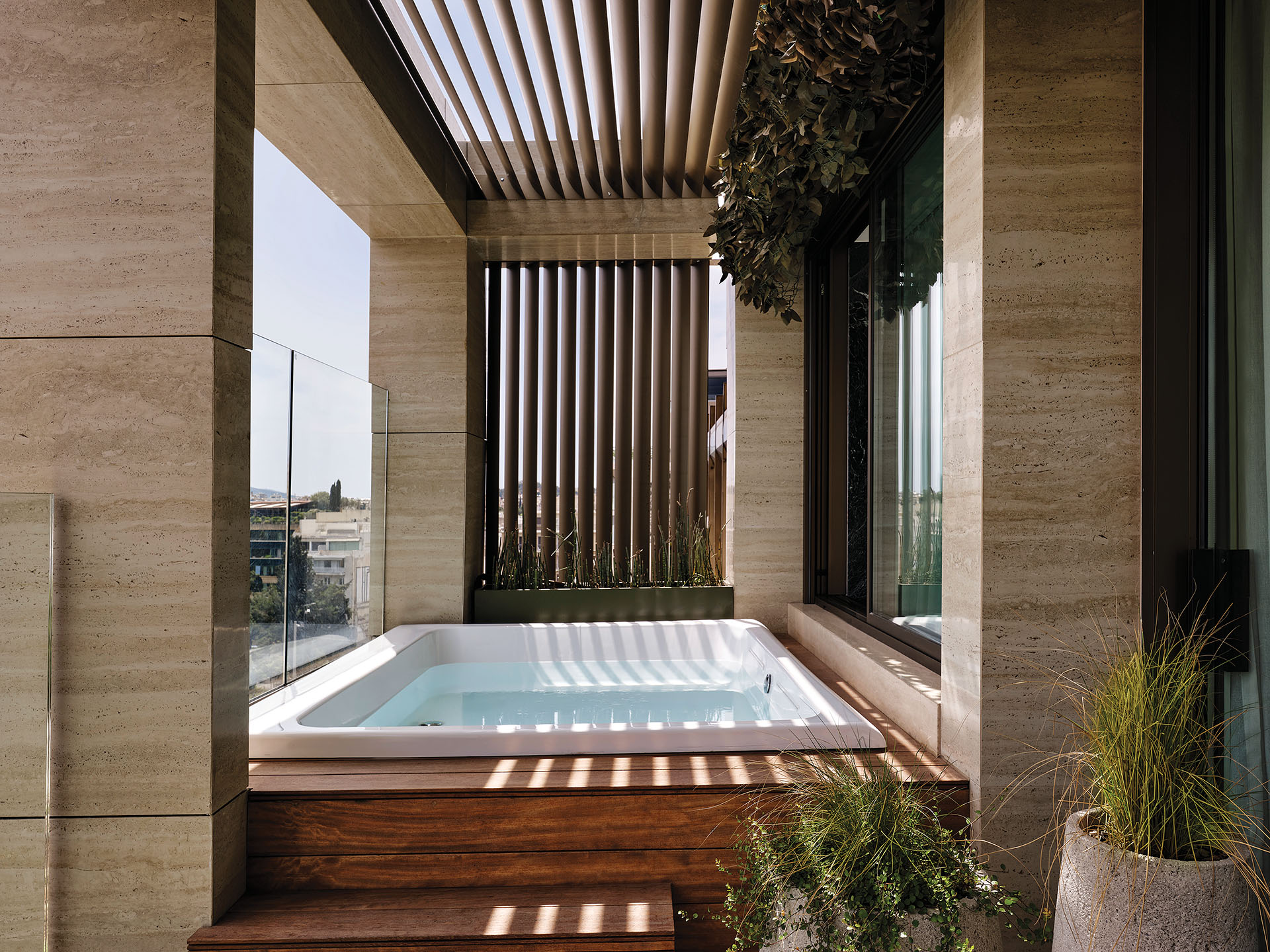
Anthology of Athens is located opposite the Temple of Olympian Zeus and Hadrian’s Gate. In this case, adaptive reuse can be understood as the reactivation of the relationship between a contemporary urban hotel and the historic and urban context of the area.
The project by Elastic Architects refers to classical architecture through proportion, vertical organisation, framed balconies and the articulation of the façade. Marble, oak, relief surfaces and integrated planting extend this relationship into the interiors. Historic memory is not reproduced as scenography, but used as a framework for shaping a new urban hospitality experience.
First published in print in ek issue 302 | November 2025
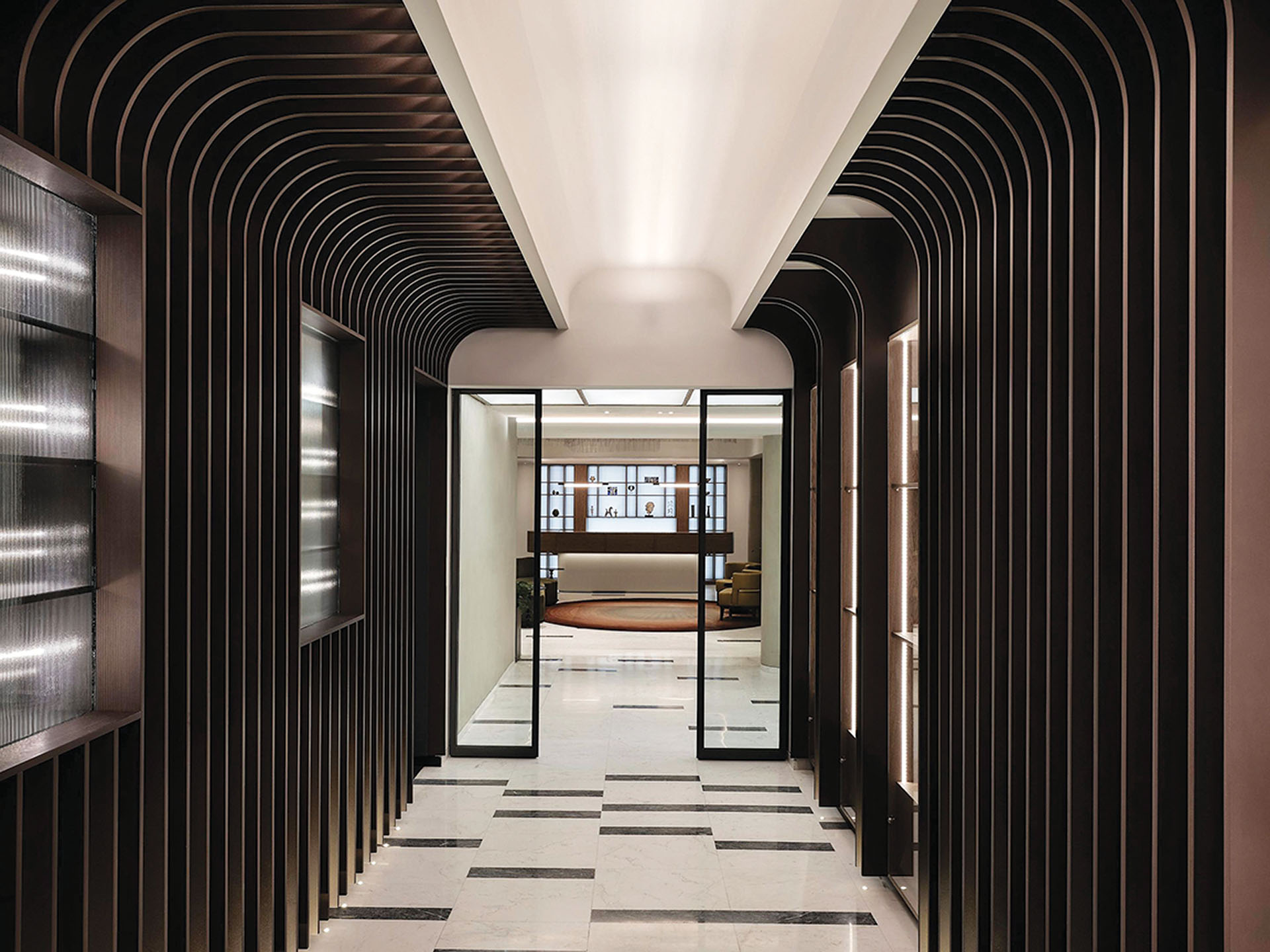
The historic Electra Hotel at 5 Ermou Street has been redesigned as Electra Rhythm Athens. The project includes 101 rooms in four different types, as well as spaces addressed not only to hotel guests but also to the everyday life of the city.
Most of the façade has been retained, while the lower section has been redesigned with an olive-green zone, arched openings and a lit canopy. The reference to the Athenian stoa re-establishes the hotel’s relationship with public space, while the new functions expand the role of the existing building within central Athens.
First published in print in ek issue 299 | July–August 2025
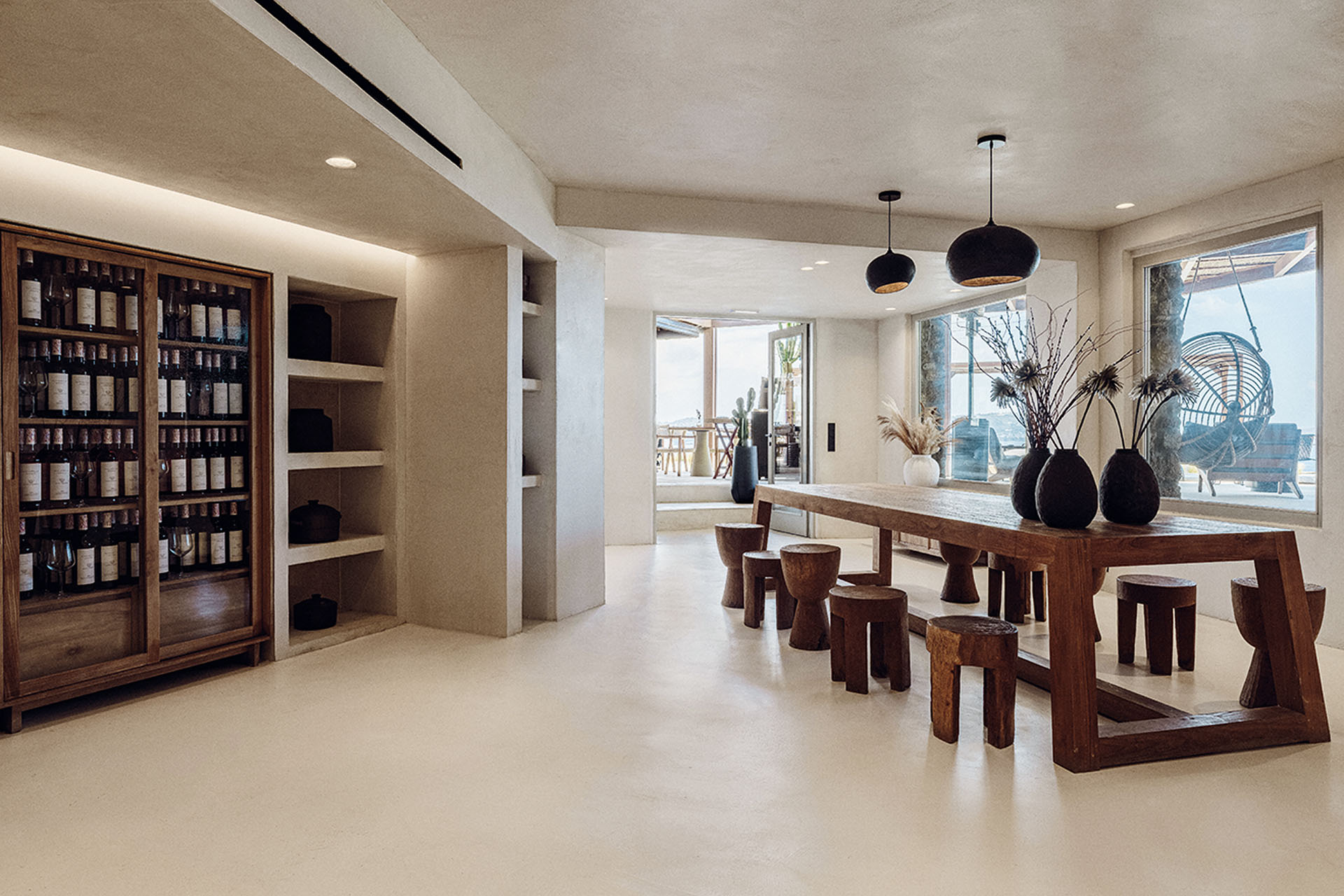
The redesign of Rocabella Mykonos concerns an existing hospitality complex and its relationship with the Cycladic landscape. The new architectural language is based on stone, timber, earthy surfaces, planted roofs and the retention of protected routes through the complex.
The intervention does not seek to replace the existing identity entirely, but to recompose its materials and outdoor spaces. Adaptive reuse operates as a process of gradual transformation, through which the hospitality infrastructure is upgraded without becoming detached from the landscape.
First published in print in ek issue 282 | November 2023
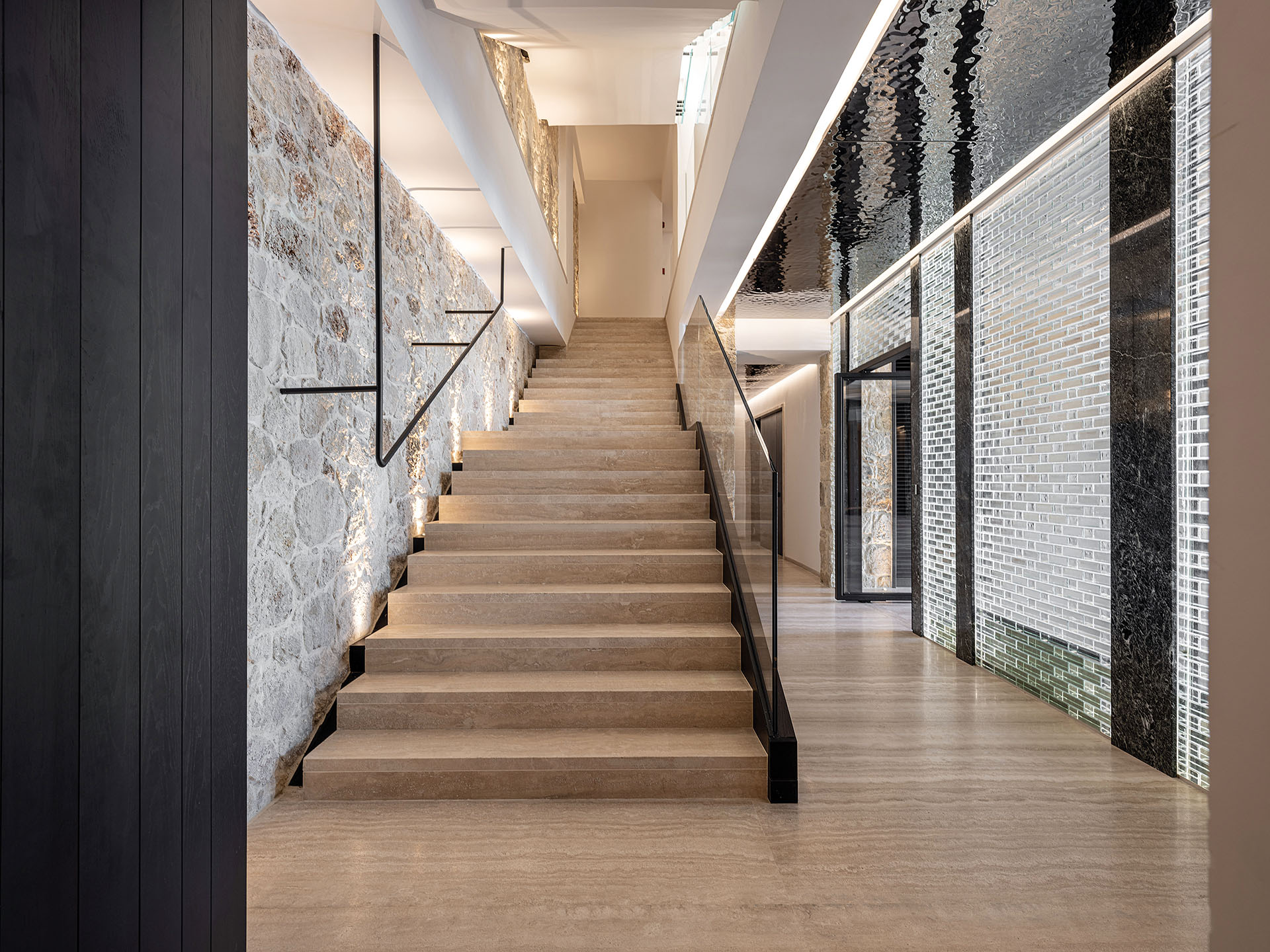
Four former tanneries in the Tabakaria district of Chania have been converted into a 20-suite hotel. The new use preserves the industrial identity of the buildings and their relationship with the steep coastline, transforming an inactive production complex into a hospitality destination.
The history of production remains legible through the masonry, the circulation routes and the arrangement of the buildings. The intervention works with the differences between the individual structures rather than artificially unifying them, organising the hotel programme as a continuation of the existing fabric.
From the direct conversion of former industrial and therapeutic buildings to the reactivation of existing hotels and the reinterpretation of historic settings, these projects demonstrate that adaptive reuse is not a single aesthetic direction. It is a way of designing from what already exists —the building, the materials, the landscape, memory and the city— and transforming these elements into an active part of contemporary hospitality.